

According to official figures from the National Steering Committee on the Search, Collection, and Identification of Martyrs' Remains, there are still more than 300,000 martyrs' graves whose identities have not been determined, and approximately 175,000 sets of martyrs' remains have yet to be found.
More than 50 years have passed, and they still lie somewhere deep in the forests and cold mountains, their families anxiously awaiting news and loved ones mourning their loss. Meanwhile, the search and recovery efforts are becoming increasingly difficult due to dwindling information and fewer witnesses, and the terrain and landmarks are constantly changing over time.
The Party, the State, and the People have always considered the search, collection, and identification of the remains of fallen soldiers as a particularly important political task, a sacred responsibility, reflecting the morality and conscience of the nation; it is carried out continuously and without interruption. Not only are searches conducted in former battlefields within the country, but functional forces are also stationed in neighboring countries, ready to depart at any time if any clues are discovered.
However, the results have not yet met expectations. During the period 2021-2025, nearly 7,000 remains of fallen soldiers were searched for and collected nationwide. Nearly 13,500 samples (including remains and samples from relatives) were received, leading to the identification of over 100 fallen soldiers using DNA testing and over 2,500 soldiers using empirical methods. Nearly 60,000 biological samples were collected to build a gene bank for the relatives of fallen soldiers.
To alleviate the pain of the families of fallen soldiers; to bring them back to their homeland, to their families, and with their names remembered; we need to be even more decisive.
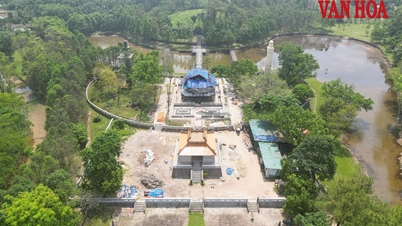
On April 2nd, at the Quang Tri Ancient Citadel National Special Historical Site, government leaders launched the "500-Day Campaign to Intensify the Search, Collection, and Identification of Martyrs' Remains." The goal is to search for and collect 7,000 martyrs' remains and identify approximately 18,000 remains by the 80th anniversary of the Day of War Invalids and Martyrs (July 27, 1947 - July 27, 2027). To achieve this goal, it is necessary to improve the quality of implementation, innovate methods, promote the application of science and technology, and mobilize the entire political system to participate in this sacred campaign.
Several specific solutions have been outlined, including building, standardizing, and digitizing databases; ensuring data is complete, accurate, and capable of being connected, shared, and effectively utilized; promoting the application of digital maps in identifying search areas; and applying biotechnology and DNA testing. It also involves mobilizing the participation of the entire society, with the military as the core force, and the active participation of political and social organizations, scientists, units, businesses, and the people; prioritizing the reception and verification of information from veterans and historical witnesses; and promoting public awareness so that each citizen and each family can contribute information, memories, and actions.
When searching for, discovering, collecting, and identifying the remains of fallen soldiers, it is not only a professional task of the relevant authorities; but also a movement embraced by the entire nation. We believe that we will achieve new results in fulfilling our responsibilities and obligations to the heroic martyrs who fell for the Fatherland.
Source: https://baophapluat.vn/nhiem-vu-thieng-lieng.html
![[Photo] Prime Minister Pham Minh Chinh receives the Chinese Ambassador to Vietnam](https://vphoto.vietnam.vn/thumb/1200x675/vietnam/resource/IMAGE/2026/04/05/1775397481797_ndo_br_dsc-5512-jpg.webp)









































































Comment (0)