Excitement at the new schools.
As the start of the school year approaches, schools in Ho Chi Minh City are busy preparing by cleaning classrooms, decorating entrance gates, and rehearsing cultural performances in anticipation of the big event. In many localities, the joy is further amplified by the timely inauguration of new schools, built with investments of hundreds of billions of dong, allowing teachers and students to welcome the new school year.

On the morning of September 4th, the People's Committee of Binh Loi commune (formerly Binh Chanh district) inaugurated Vuon Thom Primary School and Binh Loi Secondary School. Vuon Thom Primary School covers an area of nearly 13,000 m² , comprising 30 classrooms, a boarding area, a swimming pool, a multi-purpose hall, and other functional rooms, with a total investment of 135 billion VND. Binh Loi Secondary School, covering over 24,000 m² , includes 45 classrooms, a boarding area, a multi-purpose hall, a canteen, and a swimming pool, with an investment of over 180 billion VND.

Expressing her delight at teaching at the brand-new school, Ms. Phan Thi Thanh Truc, a teacher at Vuon Thom Primary School, said: “The complete facilities will help me effectively implement the 2018 general education program, and at the same time provide first-grade students with many interesting experiences in a new environment.”



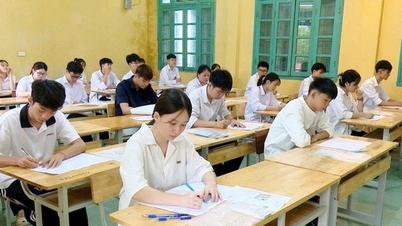
However, with nearly 2.6 million students after the merger, Ho Chi Minh City still faces a major challenge as the number of classrooms has not yet met the target of 300 classrooms per 10,000 people. Speaking to reporters, leaders of many schools in Ho Chi Minh City (formerly Binh Duong province) said that in the 2025-2026 school year, the sharp increase in the number of students will lead to overcrowding in schools.
In An Phu ward, the new school year has 23,116 students, an increase of 1,700 compared to the previous year, but only 8 schools. At the primary level, more than 10,500 students are divided among 5 schools, meaning half of the students only attend school for one session per day. At the secondary level, the entire ward has only one school to accommodate 4,763 students, divided into 103 classes.
An Phu Primary School currently has 3,367 students. To accommodate them all, the school has to utilize almost all of its functional rooms to create 71 classrooms, each with over 50 students. Because it cannot offer boarding facilities, the school has to partner with 6 external institutions to provide students with accommodation and meals for the second session, which mainly focuses on skills development (3 lessons/day). Similarly, Thai Hoa Secondary School (Tan Khanh Ward) is also overcrowded with 3,300 students, far exceeding its designed capacity of 45 classrooms. The school has had to convert 5 subject-specific rooms into classrooms, leaving no laboratory for students.
For the new school year, the entire former Binh Duong region has over 530,000 students, an increase of nearly 27,000 – the highest increase in the past 5 years. To address the shortage of classrooms, Ho Chi Minh City plans to utilize merged commune and ward offices to convert them into educational facilities. According to Ms. Nguyen Thi Nhat Hang, Deputy Director of the Ho Chi Minh City Department of Education and Training, this school year, Ho Chi Minh City will put into use 1,287 classrooms from the state budget and approximately 390 classrooms from social contributions. In the former Binh Duong region alone, 14 school buildings will be put into use, including 7 upgraded and expanded projects, 2 newly constructed projects, and 5 projects replacing existing ones or built on new land.
Urgent need to build more new schools.
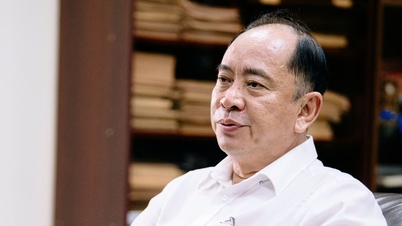
With the goal of achieving 300 classrooms per 10,000 people, the Ho Chi Minh City Department of Education and Training is implementing a project to build 4,500 classrooms. Mr. Tran Khac Huy, Head of the Planning and Finance Department of the Ho Chi Minh City Department of Education and Training, stated that completing all 4,500 classrooms this year is highly unlikely. Currently, the Department is focusing on reviewing land resources in the former Binh Duong and Ba Ria - Vung Tau areas, prioritizing projects that can commence immediately. Projects that are feasible but lack funding will be proposed for inclusion in the public investment plan for the next phase. "By the end of the year, we expect to only complete about 2,500 - 2,700 classrooms," he said.


According to Mr. Huy, the slow progress is partly due to the fact that before the merger, some districts and counties did not thoroughly assess the legal aspects, planning, or investment potential when reviewing land resources. Many projects that seemed feasible were actually on "unclear" land, lacked educational planning, or were subject to disputes. Some localities proposed 10 projects, but after evaluation, only 2-3 projects were deemed feasible.
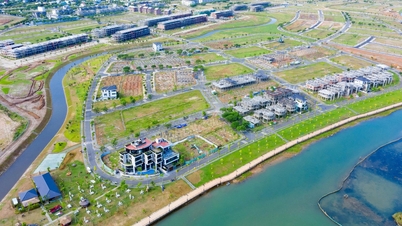
Due to the slow progress in constructing new classrooms, the Department of Education and Training has reported to the Ho Chi Minh City People's Committee to conduct a comprehensive review. Feasible projects will be submitted to the City Council for approval and included in the medium-term public investment plan, while unfeasible projects will be eliminated or further efforts will be made to resolve the issues. In the former Binh Duong and Ba Ria - Vung Tau areas, there is still a lot of available land, and the Department of Education and Training is accelerating the review process to ensure timely allocation for school construction. In addition, Ho Chi Minh City will establish an inter-agency task force to regularly inspect and review project management boards at the district, ward, and commune levels and report to the Ho Chi Minh City People's Committee. Through this, local authorities will prioritize allocating land for education in areas lacking school facilities.
Source: https://tienphong.vn/nhieu-truong-moi-tphcm-van-qua-tai-post1775522.tpo