My hometown was very poor back then. My parents were farmers who spent their lives toiling in the fields. Every day, my mother would prepare meals, light the fire, and quietly give the best portions to her husband and children. Even now, I still remember my mother's thin, sun-tanned hands nimbly scooping rice and picking out each eggplant and piece of fish for her children.

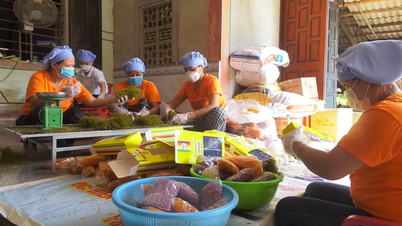
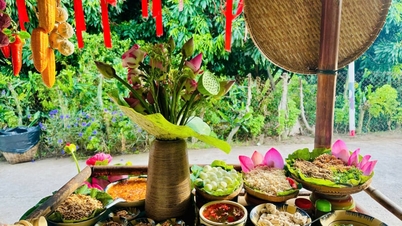
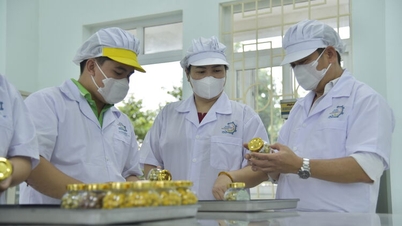
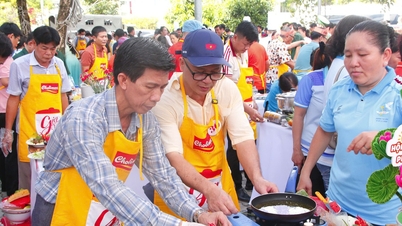
Back then, a typical meal consisted of nothing more than a bowl of boiled water spinach with pickled star fruit, a plate of salted or fermented fish, and a jar of pickled eggplant. (Illustrative image)
Back then, our meals consisted of nothing more than a bowl of boiled water spinach with pickled starfruit, a plate of salted or fermented fish, and a jar of pickled eggplant. White rice was scarce. The rice pot was usually mixed with potatoes, corn, or cassava, which the adults in my village jokingly called "fried egg rice." Yet, the whole family would gather around the old wooden tray, on low stools, listening to Dad tell stories and Mom reminding my siblings and me to eat well so we would grow up quickly.
I remember those afternoons returning from tending buffalo and cutting grass, my stomach rumbling with hunger. Even just a bowl of rice mixed with pickled eggplant or a piece of fermented fish tasted incredibly delicious. During meals, my father would often pick the best parts for my siblings and me, then admonish us: "Our family is poor, and this land is full of rocks, but a person's ambition must not be buried by the rocks. You must study hard so that you can have an easier life than your parents."
Those words stayed with me throughout my formative years. It was my mother's hard work, my father's struggles, and the simple meals that taught me to value every grain of rice, to love labor, and to never allow myself to be lazy. I studied with all my determination as a way of repaying my parents' kindness.

Comrade Le Ba Khanh Trinh (the author) always empathizes with and is ready to share with the people in the border areas of Tuyen Quang province.



At the age of 19, I enrolled in the Border Guard Academy. In the early days of my military service, the scorching sun on the training grounds and the strict discipline did not deter me. Compared to the years of meager meals of potatoes, corn, and cassava, and the arduous life my parents led, all those hardships seemed insignificant.
I chose to become a border guard because of the stories my father told at the dinner table, the nights we spent together in the yard listening to him recount the years of fighting to protect the southwestern border. Those stories instilled in me the dream of wearing the green uniform of a soldier.
Having worked for many years on the border, every time I visited the ethnic minority communities, sitting by the fire with them and sharing a simple meal of vegetables, pickled eggplant, and dried fish, I would catch glimpses of my own family from years past. I understood more deeply the hardships of the people in the highlands, and I increasingly appreciated the motto of the Border Guard: "The outpost is our home, the border is our homeland, and the ethnic minorities are our brothers and sisters."
Perhaps it's because my family experienced times of hardship that I easily empathize with the lives of the people living in border areas. Each meal with the villagers is not just a meal, but also a sharing experience, a motivation for me to stay committed to the border region, working with my comrades to help the people develop their economy, maintain peaceful lives, and firmly protect the sovereignty of the Fatherland.

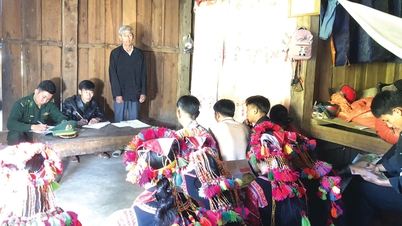
Comrade Le Ba Khanh Trinh (second from the right) and officers and soldiers of the Tuyen Quang Provincial Border Guard guide local people in developing their family economy .



Every time I return to my unit after completing a mission, or every night patrolling the border mountains, the image of my mother by the fire, the humble meal with the familiar jar of fermented fish sauce, comes to mind. It was that simple meal that nurtured my childhood and fostered the spirit of a border guard soldier today.
Life is more comfortable now, and the family meals I have on leave are more delicious than before. But for me, no flavor is as deeply meaningful as my mother's fermented eggplant sauce. It's the flavor of maternal love, of silent sacrifice, of the difficult years that taught me to live responsibly, to love people, and to keep the oath of a Border Guard soldier to the Party, the Fatherland, and the people.
Source: https://phunuvietnam.vn/nho-bua-com-mam-ca-cua-me-238260627125344728.htm

![[Photo] Thousands of people participate in a run to show their support for the campaign "Sharing a common determination to build drug-free communes, wards, and special zones".](https://vphoto.vietnam.vn/thumb/1200x675/vietnam/resource/IMAGE/2026/06/27/1782554475933_0673e2a3df7b5e25076a-8283-jpg.webp)



































![[Photo] A phone-free summer afternoon at the village library](https://vphoto.vietnam.vn/thumb/1200x675/vietnam/resource/IMAGE/2026/06/27/1782551770949_anh-1-jpg.webp)