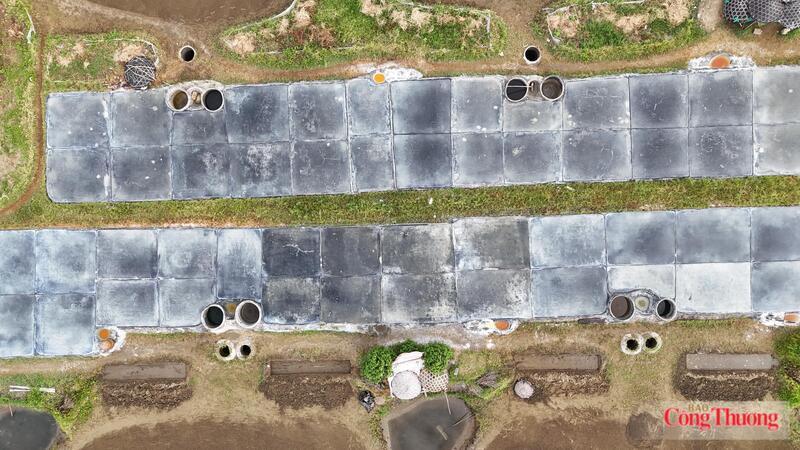
In June, the central region of Vietnam is scorched by the hot, dry winds from Laos . While people seek refuge from the sweltering heat in air-conditioned tents, on the Chau Ha salt fields (Mai Phu commune, Ha Tinh province), the hunched backs of salt farmers still bob up and down on the vast white salt paddies.
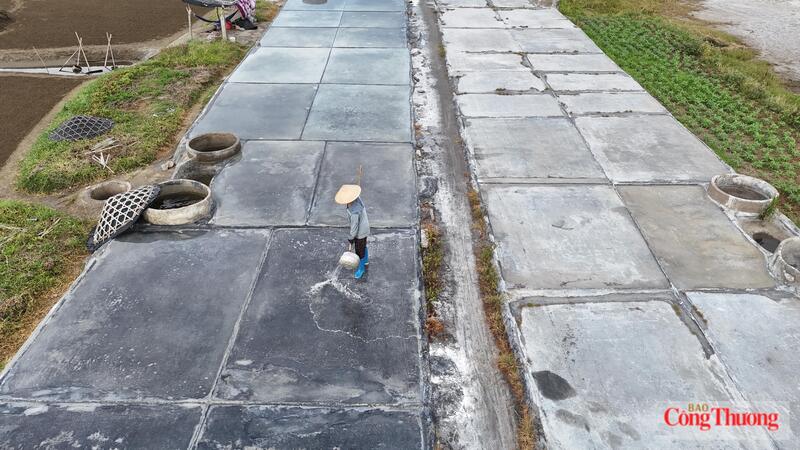
The salt harvesting season usually begins in March, but the peak and best-yielding period is in May and June each year.
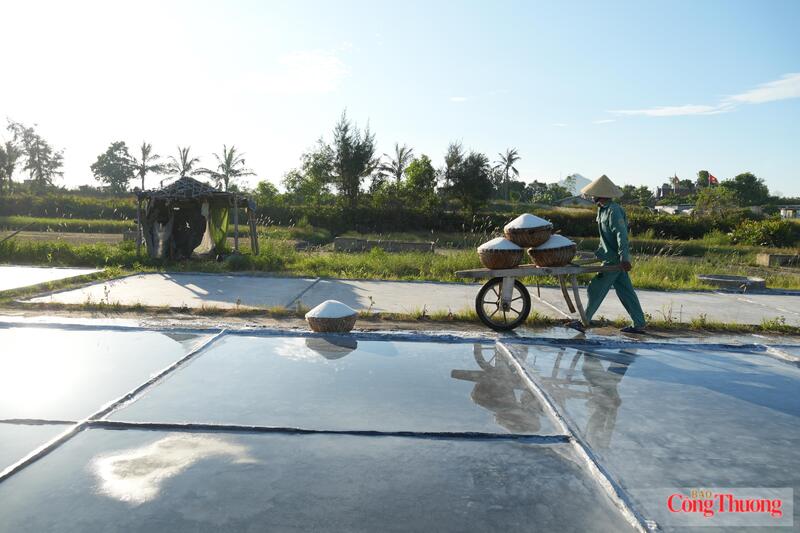
The hotter the sun, the faster the salt crystallizes, meaning salt makers have to expose themselves to the scorching sun from early morning until late afternoon.
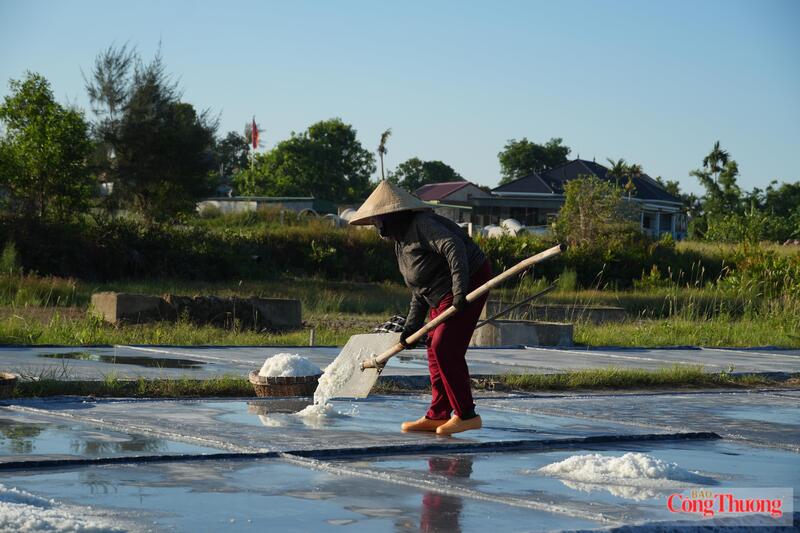
To obtain pure white salt crystals, people have to go through a series of extremely meticulous and arduous processes.
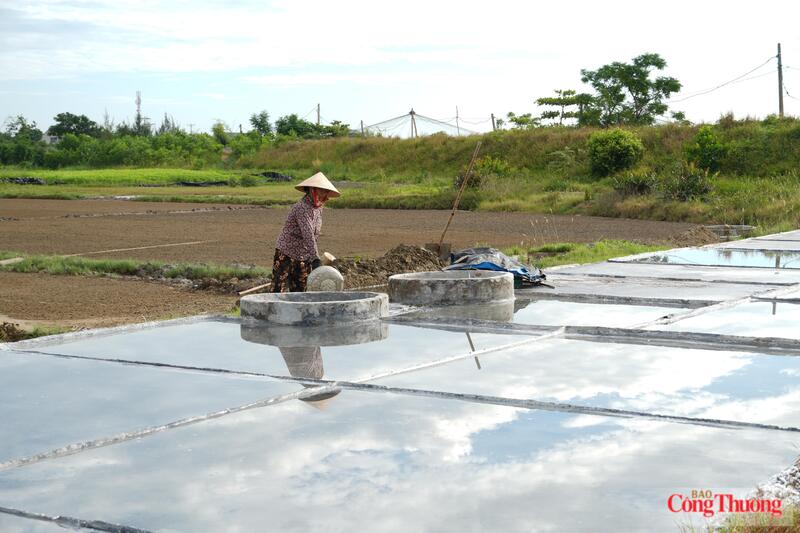
First, pits are dug to collect saltwater brought in from the sea, then the water is channeled into filtration tanks. Only when the seawater reaches the required salinity is it poured into drying ponds to dry in the sun.


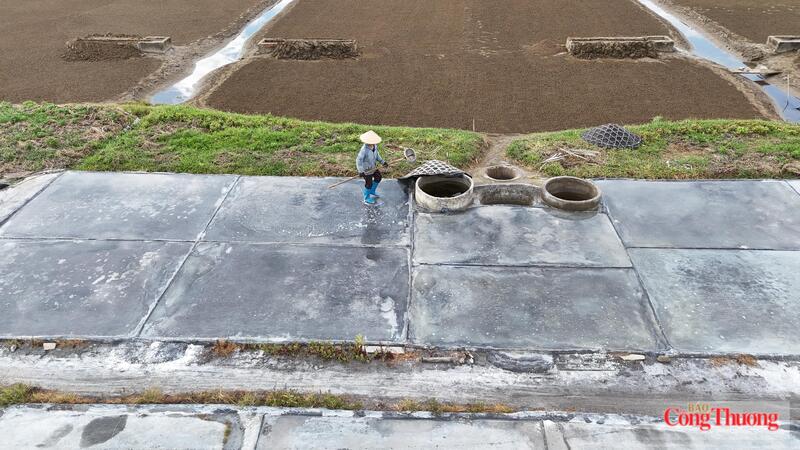
Under the intense heat of the sun, the water evaporates, leaving behind shimmering white salt crystals that reflect the harsh sunlight.
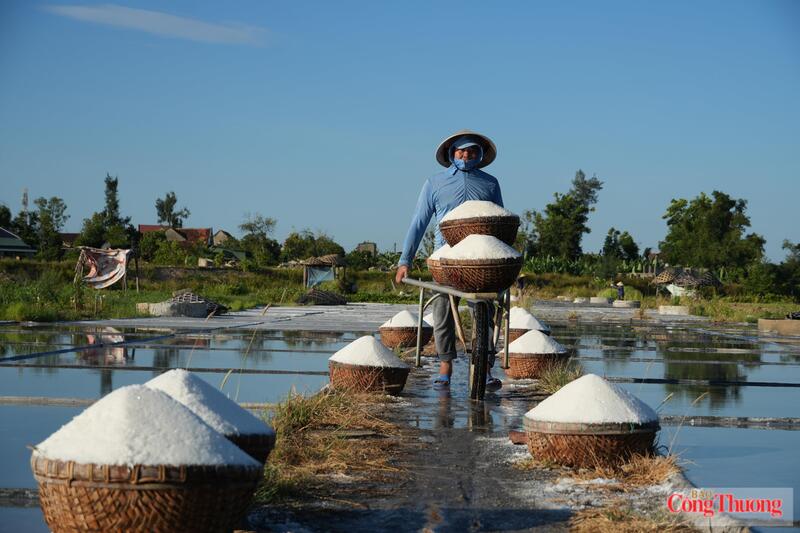
Mr. Le Xuan Toan, from Chau Ha village, Mai Phu commune, Ha Tinh province, shared that salt making is becoming increasingly arduous. “The hotter the sun gets, the more people seek shade, but we have to go out to the fields. We work tirelessly from dawn until sunset. On these extremely hot days, even with our combined efforts, my wife and I can only harvest about 2 to 3 quintals of salt,” he explained.
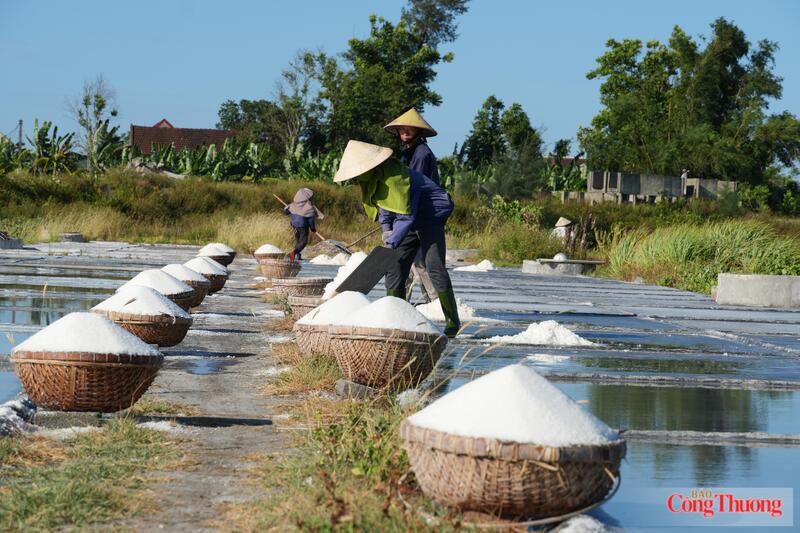
When asked why he clung to the profession despite the low income, Mr. Toan sighed, gazing into the distance. "This is a trade passed down from our ancestors for generations. It's a shame to abandon it, but it's a burden to continue. As long as I have the strength, I'll keep working, because seeing the fields left abandoned breaks my heart," Mr. Toan lamented.
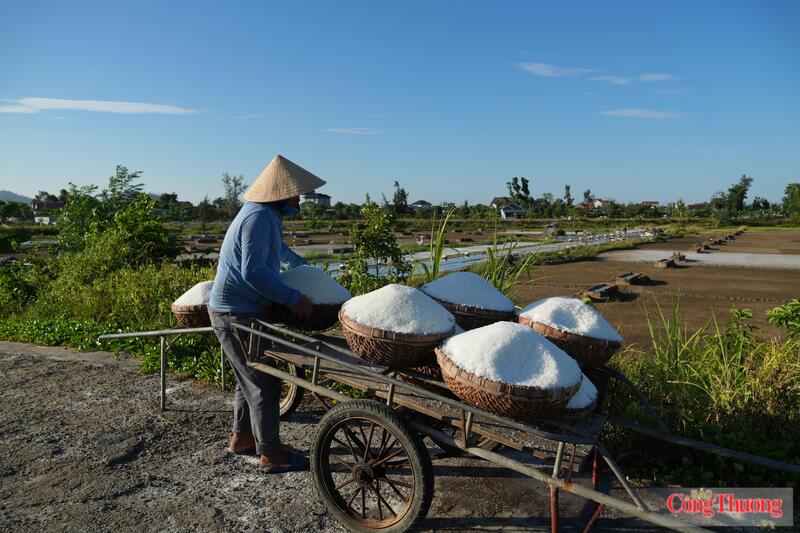
According to local residents, the salt-making village is now run solely by elderly people, with the young men working as factory workers or going abroad for labor. "In ten years, when this older generation passes away, the Chau Ha salt fields will only exist in our memories," said Mr. Phan Huy Thanh, head of Chau Ha village.
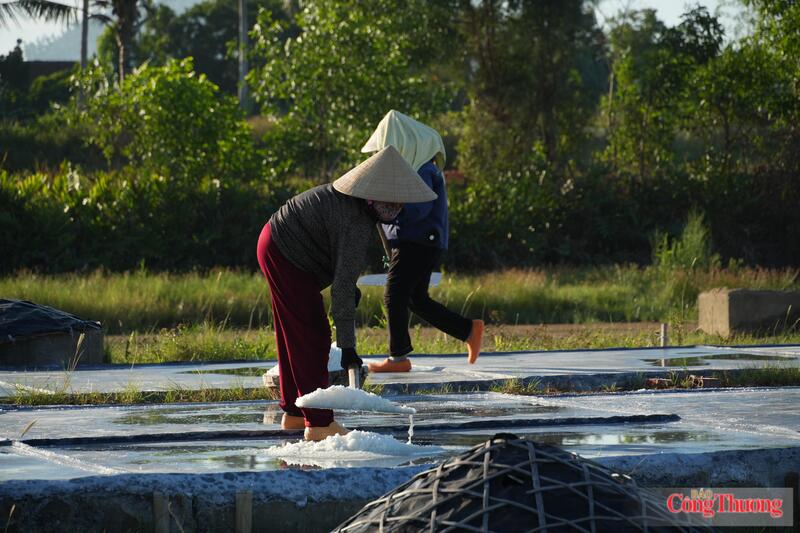
Despite their precarious incomes, the elderly workers here continue to work diligently every day, keeping the lagoons sparkling white with seawater.



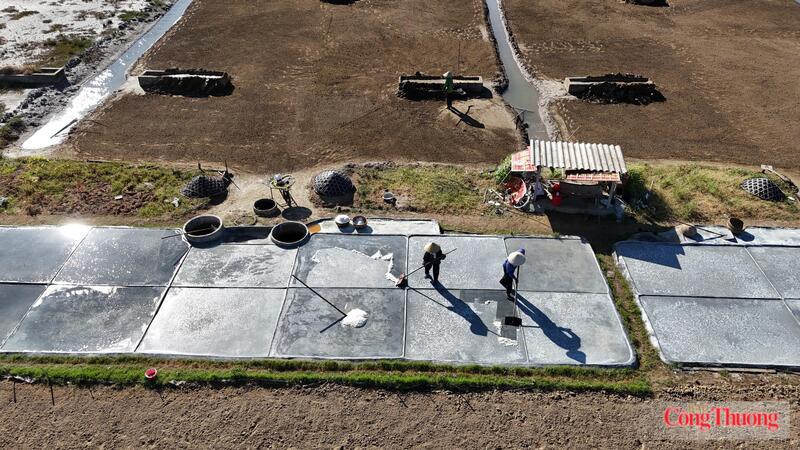
They are trying to preserve a cultural aspect, a traditional craft of their homeland, with all the pride and self-respect of people from the coastal region.
Source: https://congthuong.vn/nhoc-nhan-nghe-muoi-chau-ha-463463.html
![[Photo] Strengthening character and expertise: Intense training for artillery soldiers.](https://vphoto.vietnam.vn/thumb/1200x675/vietnam/resource/IMAGE/2026/06/30/1782815602541_lu-368-1875-4571-jpg.webp)