

Four mega-projects will transform Can Gio.
These days, the people of Can Gio island district are counting down the days to April to witness the groundbreaking ceremony for the Can Gio reclaimed land urban area. Conceived in the 2000s, this is the most anticipated project in the transformation of Ho Chi Minh City's only coastal island district. At a meeting with Ho Chi Minh City People's Committee leaders on March 6th, Ms. Cao Thi Ha An, Director of Project Development at Vingroup , expressed her desire for the People's Committee and relevant departments to support the acceleration of legal procedures so that the company can begin construction of the Can Gio reclaimed land urban area project before April 30th, to celebrate the 50th anniversary of national reunification, and to complete it by 2030. It is understood that everything is almost complete, and the mega-project has set its groundbreaking date for mid-April.
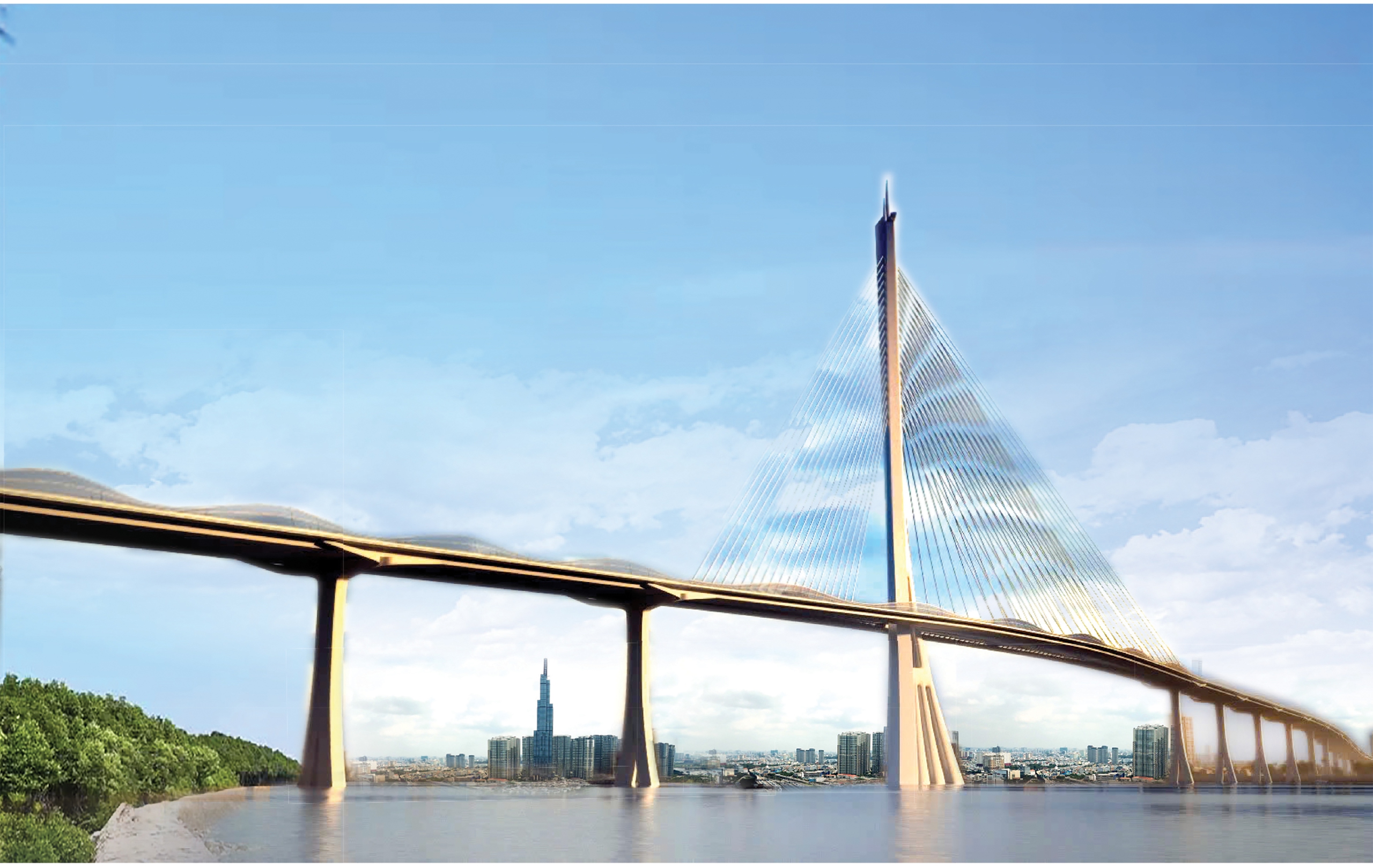
Perspective view of the Can Gio bridge connecting the mainland city center with the island district.
PHOTO: DEPARTMENT OF TRANSPORTATION AND PUBLIC SERVICES - INDEPENDENT
Proposal to assign Ho Chi Minh City to build the Thu Thiem - Long Thanh railway.
The Ministry of Construction has proposed that the Prime Minister assign Ho Chi Minh City to implement the Thu Thiem - Long Thanh urban railway line, connecting Tan Son Nhat and Long Thanh international airports. According to the Ministry of Construction, the Ho Chi Minh City master plan until 2040, with a vision to 2060, includes two railway lines. One is Urban Railway Line 6, connecting Tan Son Nhat airport with the Thu Thiem - Long Thanh railway (Phu Huu interchange). The other is Urban Railway Line 2, connecting Tan Son Nhat airport to Thu Thiem station. Both lines will then share the infrastructure of the Thu Thiem - Long Thanh railway line to connect to Long Thanh airport.
Currently, Ho Chi Minh City's planning has identified metro lines 6 and 2 as being under the investment of the Ho Chi Minh City People's Committee; the Thu Thiem - Long Thanh line is under the investment of the Ministry of Construction. To expedite the connection between Tan Son Nhat and Long Thanh airports, ensuring consistency and synchronization in construction, operation, and maximizing the utilization of land around the project area, the Ministry of Construction proposes that the Prime Minister agree to assign the Ho Chi Minh City People's Committee as the managing agency for the Thu Thiem - Long Thanh metro line project. If assigned as the competent authority, the Ho Chi Minh City People's Committee will receive all existing research results from the Railway Project Management Board - Ministry of Construction to continue preparing for and implementing the investment. At the same time, this ministry also proposed that the Government consider and approve the addition of the Thu Thiem - Long Thanh railway line to the list of pilot projects for special mechanisms and policies to develop the urban railway network system in Hanoi and Ho Chi Minh City, which the National Assembly approved in Resolution 188.
The project covers a planned area of approximately 2,870 hectares with a total investment of nearly 9 billion USD, a projected population of nearly 230,000 people, and the potential to welcome 8-9 million tourists annually. Aimed at developing into a coastal tourism urban area, resort tourism, conference and convention center, smart city, high-tech service area, housing, services, hotels, etc., the project is expected to transform Can Gio into a tourism, resort, and investment destination capable of competing with reclaimed land areas worldwide, such as those in Singapore, Miami (USA), and Australia.
In addition, Vingroup has also submitted a document to the Ho Chi Minh City People's Committee and the Department of Transport and Public Works detailing its proposal to build an urban railway line connecting the city center (Nguyen Van Linh Street, District 7) to Can Gio District. This railway line is already included in the revised planning of Ho Chi Minh City's metro network. Vietnam's largest private enterprise group wishes to build this line under a public-private partnership (BOO contract) – Vingroup will invest in construction using its own capital and mobilized capital in accordance with the law, and will own, operate, and manage the project after completion. The line will be a double-track, 1,435 mm gauge, elevated railway with a length of 48.5 km, designed for a speed of 250 km/hour, and capable of carrying 30,000-40,000 people per direction per hour.
If approved, Vingroup plans to complete the pre-feasibility study report this year, submit it to the competent authorities for inclusion in the planning and approval of the investment policy; then proceed with land compensation and clearance to officially start construction in 2026, complete trial operation and hand over the project in 2028.
In support of the Can Gio reclaimed land urban area project, Ho Chi Minh City is aiming to commence construction of the Can Gio Bridge, costing over 11,000 billion VND, and the Can Gio International Transshipment Port, costing nearly 5 billion USD. Initially, the Can Gio Bridge project was scheduled to begin construction on April 30th, but due to the lack of approval for the city's master plan until 2040, with a vision to 2060, the project lacked the necessary basis to be submitted to the City People's Council for consideration of investment policy. After the city's master plan is approved, the Department of Transport and Public Works stated that it will finalize the documentation and submit the pre-feasibility study report for approval to the competent authority, and commence construction of the project this year, with completion expected in 2028.
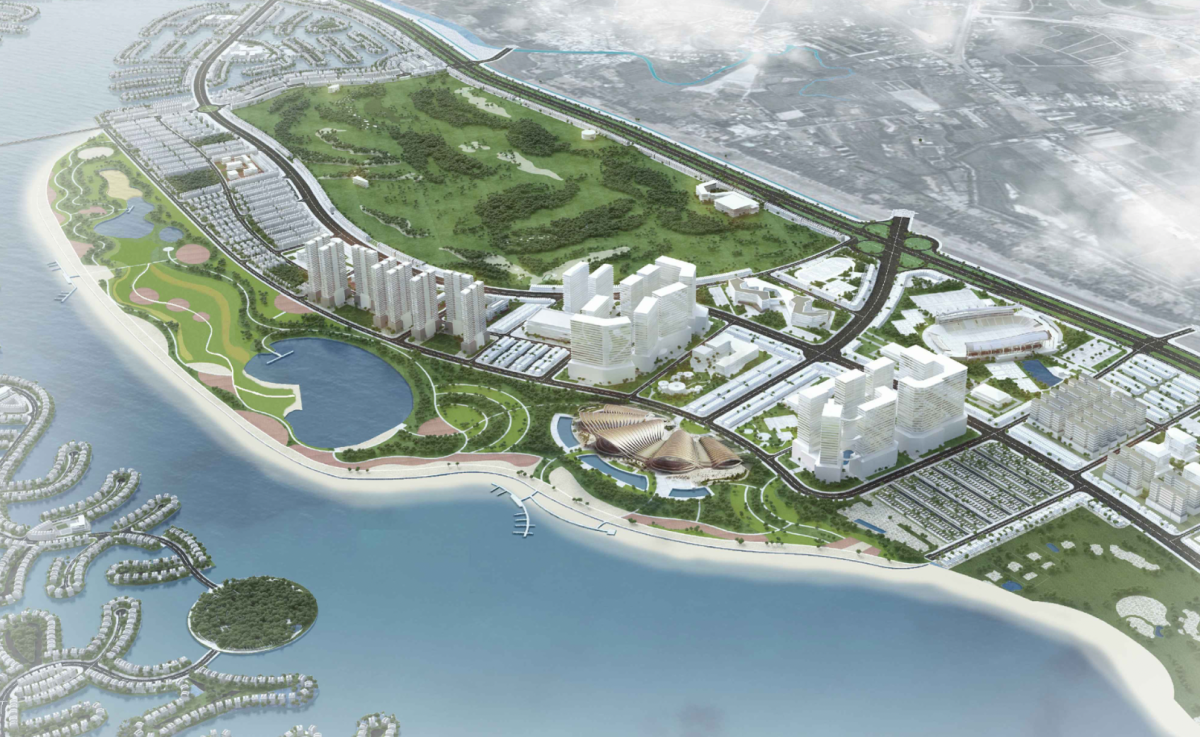
Perspective view of the Can Gio reclaimed land urban area, preparing for construction to begin.
PHOTO: VG
Meanwhile, the Can Gio mega-port project received government approval for investment in January and benefits from special mechanisms and policies, with the goal of becoming operational in 2027. The research unit estimates that the first-year cargo throughput will reach approximately 2.1 million TEU (1 TEU equals 1 20-foot container). After 7 investment phases, the cargo throughput of the Can Gio International Transshipment Port could reach 16.9 million TEU by 2047 – half of Singapore's current throughput. The port is expected to contribute 34,000 - 40,000 billion VND to the state budget annually when operating at full capacity.
Witnessing the transformation of Can Gio from a time when the only way to reach the mainland was by ferry, to the replacement of the Dan Xay ferry by the Rung Sac road, the connection of clean water, and the arrival of electricity, the Chairman of the Ho Chi Minh City Real Estate Association (HoREA), Le Hoang Chau, affirmed that this island district, one of the poorest in Ho Chi Minh City, is approaching its second transformation. A reclaimed land urban area will turn Can Gio into a world-class resort city; a super container transshipment port will transform Can Gio into an international logistics center; and direct connections to the city center by both road and high-speed rail… All these projects will open up "golden" opportunities for Can Gio to restore its former status as a famous ocean-going port on the Asia-Europe maritime route. At the same time, it will attract many talented people and provide conditions for developing historical and ecological tourism. The Binh Khanh area will also have the opportunity to develop into a very important urban center.
"The people of Can Gio deserve a better life through these infrastructure projects. Can Gio deserves such substantial investment. Can Gio plays a crucial role historically, currently, and in the future, not only for Ho Chi Minh City but also for the entire Southern Key Economic Region," Mr. Chau emphasized.
Two billion-dollar bridges connect the two banks of the Saigon River.
Opening the "grand celebration" of Ho Chi Minh City's transportation sector this year is the billion-dollar pedestrian bridge project across the Saigon River. The investor, Nutifood Nutrition Food Joint Stock Company, is rushing preparations for the groundbreaking ceremony on March 29th, one month ahead of schedule. The bridge is expected to be completed in 2027, becoming a unique architectural landmark of Ho Chi Minh City, while also boosting tourism and connecting the city center with the new Thu Thiem urban area (Thu Duc City). The pedestrian bridge is situated in a strategically important location – the Saigon River, part of the city's more than 300-year history. It is also a frequent venue for major events and a popular tourist attraction. Therefore, the construction of a pedestrian bridge connecting the two banks of the Saigon River is considered by city leaders to bring many great values, not only helping to promote and transform Thu Thiem into an economic, financial, and service center, but also creating a cultural and tourism highlight.
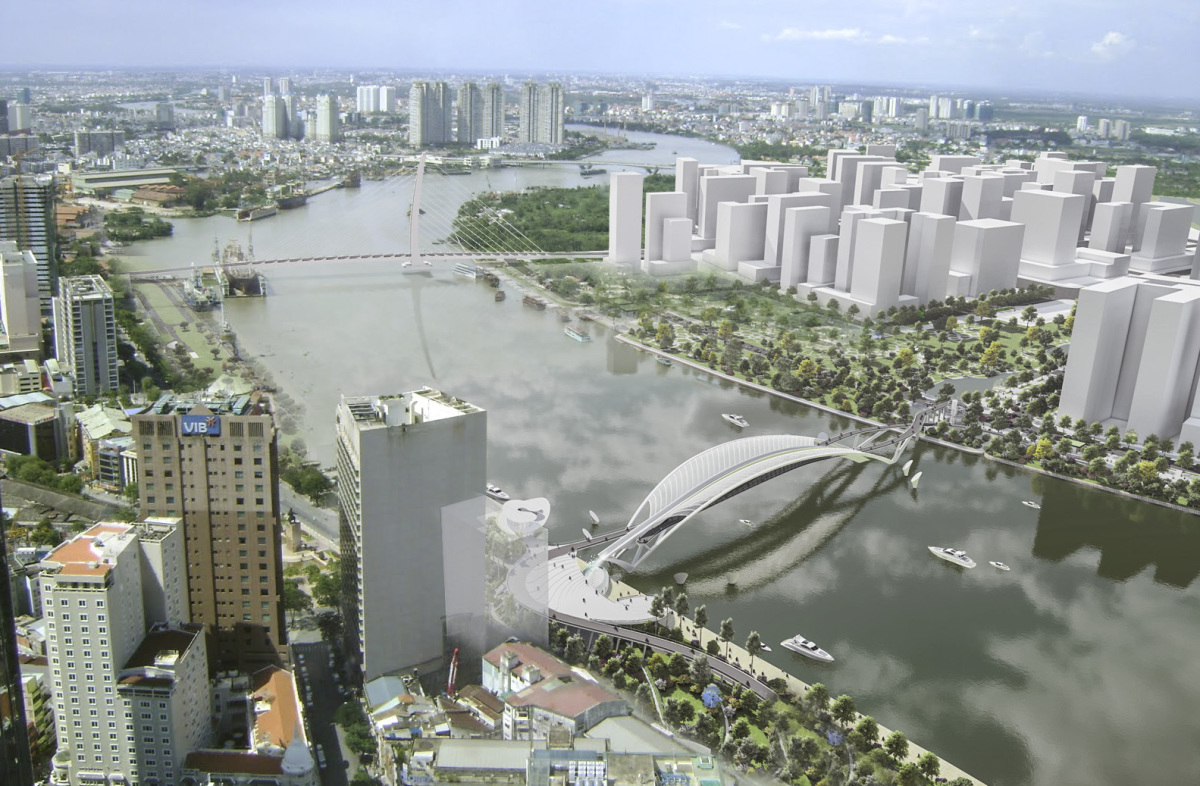
Construction on the pedestrian bridge connecting District 1 to the Thu Thiem New Urban Area will begin on March 29th.
PHOTO: TN
Following the commencement of the 1 trillion VND pedestrian bridge project, the Thu Thiem 4 bridge, connecting the Tan Thuan 2 Bridge - Nguyen Van Linh intersection (District 7) to the North-South axis intersection - Bui Thien Ngo Street (Thu Thiem New Urban Area), will also soon begin construction. Initially, the Ho Chi Minh City Department of Transport proposed a bridge clearance of 15 meters, which could be increased to 45 meters if needed, with a total investment of over 6 trillion VND. However, due to the city's plan to develop the Nha Rong - Khanh Hoi port into an international passenger port, the clearance issue has been reconsidered. Similar to the Can Gio bridge, the Thu Thiem 4 bridge is currently awaiting the updating of the Nha Rong - Khanh Hoi port planning into the revised master plan of Ho Chi Minh City until 2040, with a vision to 2060, before submitting the pre-feasibility study report for approval. The Department of Transport anticipates commencing construction of the Thu Thiem 4 bridge in 2025 and completion in 2028.
Once completed, the bridge will help alleviate congestion on existing routes such as Ton Duc Thang, Nguyen Tat Thanh, Khanh Hoi Bridge, Huynh Tan Phat, and Nguyen Van Linh, while also shortening travel time between Thu Duc City, Binh Thanh District, and Districts 7, 8, Nha Be, and Binh Chanh.
Dr. Hoang Ngoc Lan (Institute of Smart Cities and Management, University of Economics Ho Chi Minh City) assessed that these two bridges play a crucial role in the development of both banks of the Saigon River. While pedestrian bridges "carry" the task of opening up urban and cultural spaces, bridges connecting traffic and allowing vehicles to pass, such as the Thu Thiem 4 bridge, will be a driving force for the development of the Thu Thiem urban area. Shanghai (China) has a similar context to Ho Chi Minh City, with the bustling Shanghai waterfront on the west bank and the Pudong area on the east bank, which was once a remote agricultural area like the Thu Thiem swamp nearly 20 years ago. When the Shanghai government set the goal of developing the East Bank into a special economic zone, it started by simultaneously building many connecting bridges and constructing a solid infrastructure system. In just 20 years of establishment and development, Pudong has become one of the most bustling and prosperous areas in the world.
"Wherever the bridge connects, the eastern bank of the Saigon River will be transformed and developed. Currently in Vietnam, almost no locality has established a beautiful and well-planned system of public spaces along the river. If Ho Chi Minh City can create a complete system of bridges connecting the parks on both the east and west banks of the Saigon River, it will become a strength of the city's riverside urban landscape," commented Dr. Hoang Ngoc Lan.
A rush to give the streets a new look.
Besides key infrastructure projects, districts and communes across the city are intensively renovating roads and improving drainage systems, giving the city a new look in preparation for the grand celebration. Hundreds of sidewalks and alleys in the inner city are being renovated with various items such as paving with tiles and granite, replacing manhole covers, etc. The median strips on many roads are also being repainted. To date, some roads in the central area such as Pham Ngoc Thach, Nguyen Van Chiem, Nguyen Trai, and the section before the Phu Dong roundabout (District 1) have been completed with granite paving, making the sidewalks more spacious. To minimize the impact on people's daily lives and businesses, the excavation and concrete pouring process is concentrated at night. During the day, workers mainly install curbs and complete the paving.
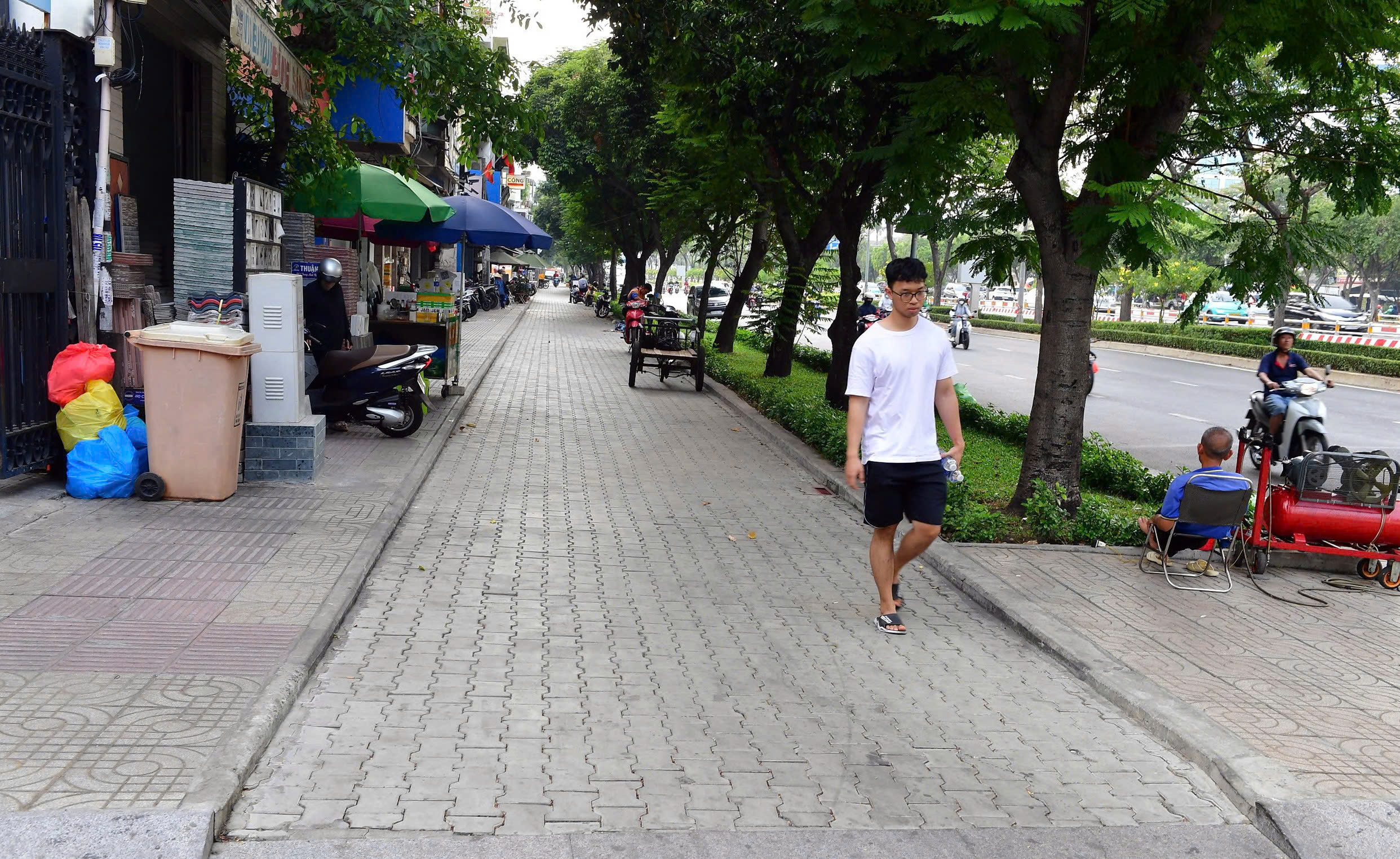
Sidewalks have been renovated across the board, contributing to improved urban aesthetics.
PHOTO: PHAM HUU
On some streets such as Nguyen Huu Tho (connecting Nha Be District - District 7), Dien Bien Phu (Binh Thanh District), and Phan Xich Long (Phu Nhuan District), sidewalks have not only been upgraded and replaced with new tiles but also adorned with fresh flower pots, bringing new life to the city.
According to a report by the Ho Chi Minh City Urban Infrastructure Investment and Construction Project Management Board (Urban Infrastructure Board), approximately 7 urban beautification projects, aimed at improving the landscape and living environment for residents in the area, were launched to celebrate the 50th anniversary of national reunification. These include: the project to dredge and build infrastructure for the Xuyen Tam canal (Binh Thanh District, Go Vap District); and the project to illuminate the architecture of conservation works including the Thu Ngu flagpole, Mong Bridge, the City Children's House, Ben Thanh Market, the Ho Chi Minh City Museum, and the Ton Duc Thang Museum.
Residents of the city and visitors from all over will soon be able to travel on new, spacious, and clean roads, sharing in an atmosphere of emotion and pride during the upcoming grand celebration.
Many unique and meaningful tours in Ho Chi Minh City during the April 30th holiday.
To commemorate the 50th anniversary of national reunification, marking the continuous development of tourism in Ho Chi Minh City, the Department of Tourism and related units are honoring 50 distinctive symbols – landmarks that have contributed to making Ho Chi Minh City an integrated, culturally diverse, vibrant, yet also deeply endearing and compassionate city. These include historical sites such as the Ho Chi Minh City Museum of Fine Arts, the Thu Ngu flagpole, the Ho Chi Minh City People's Committee headquarters, the Saigon Commando historical site system, and Nha Rong Wharf; cultural and spiritual sites such as the Ong Ba Chieu Mausoleum, water puppetry, and traditional music; and culinary sites such as sidewalk cafes, Saigon-style banh mi (Vietnamese sandwiches), and broken rice dishes. Travel agencies have developed many unique tours, taking tourists to explore all these historical sites, rediscovering the imprint of Saigon - Ho Chi Minh City - Memories of 50 years from the past to the present, with destinations such as the Saigon Commando Museum with its above-ground bunker and secret mailbox associated with the Saigon Commandos before 1975...
Thanhnien.vn
Source: https://thanhnien.vn/nhung-cong-trinh-mo-van-hoi-moi-cho-tphcm-185250320231131517.htm

![[Image] National Assembly discusses the implementation of the socio-economic development plan.](https://vphoto.vietnam.vn/thumb/1200x675/vietnam/resource/IMAGE/2026/04/20/1776696707422_ndo_br_img-20260420-185419-jpg.webp)

![[Photo] General Secretary and President To Lam meets with National Assembly delegates from ethnic minorities.](https://vphoto.vietnam.vn/thumb/1200x675/vietnam/resource/IMAGE/2026/04/20/1776696701056_a1-bnd-8331-3342-jpg.webp)











![[PHOTO] The most beautiful sidewalks in Saigon that captivate people, captured with smartphones.](https://vphoto.vietnam.vn/thumb/402x226/vietnam/resource/IMAGE/2026/04/21/1776707735189_anh14_rlcz.jpeg)






































Comment (0)