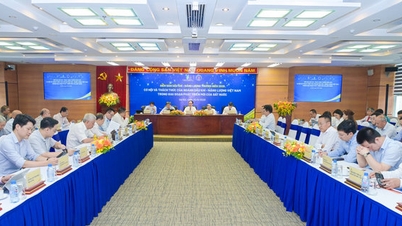
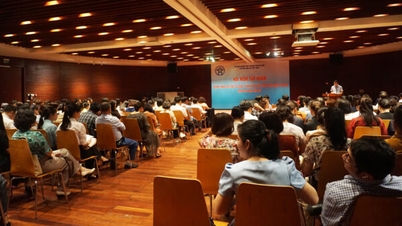
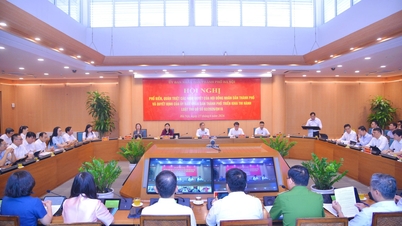
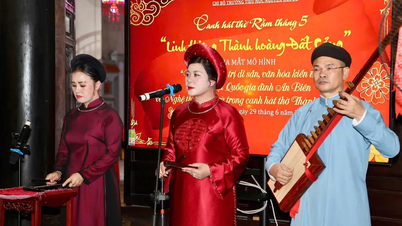
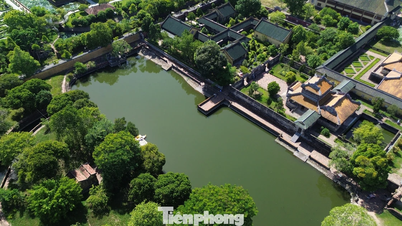
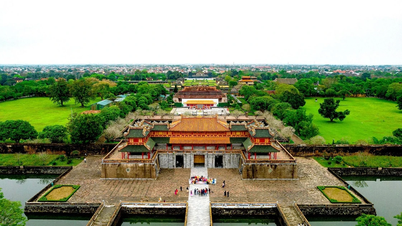
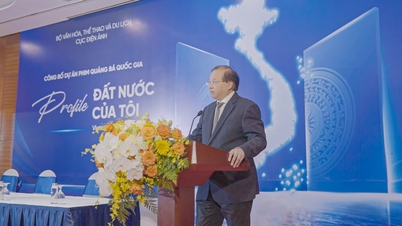
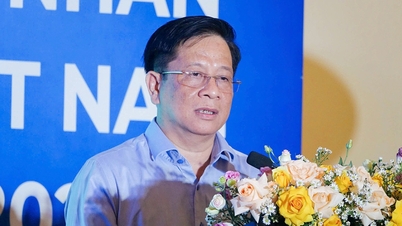
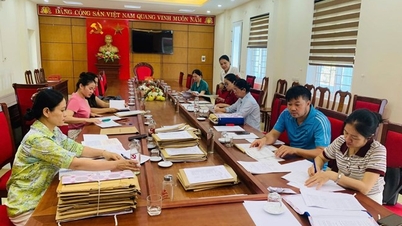
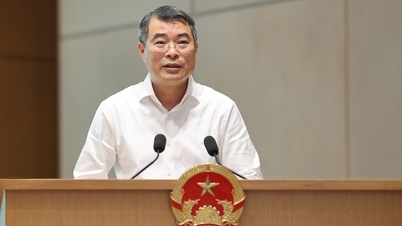
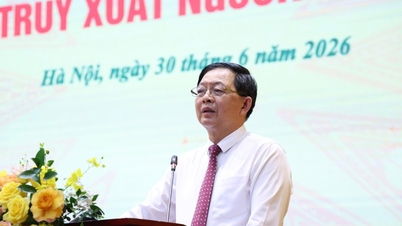
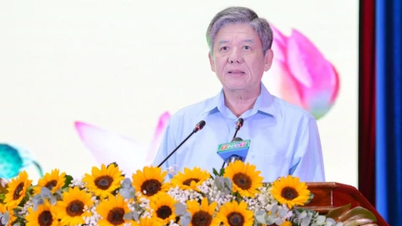
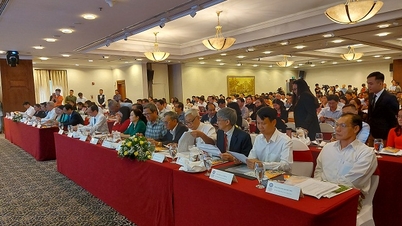
Attending the seminar were delegates including: Assoc. Prof. Dr. Bui Hoai Son, Standing Member of the National Assembly's Committee on Culture and Education; Prof. Dr. Le Hong Ly, President of the Vietnam Folk Arts Association; Assoc. Prof. Dr. Tran Duc Cuong, President of the Vietnam Historical Science Association; Dr. Pham Quoc Quan, Member of the National Heritage Council, former Director of the Historical Museum; Mr. Nguyen Xuan Thuy, President of the Hanoi Fine Arts Association; representatives from the School of Interdisciplinary Sciences and Arts (Vietnam National University, Hanoi); the University of Industrial Fine Arts; and representatives from several companies operating in the creative field…

Hanoi is the heart of the nation, a heroic capital, and a city for peace. In 2019, Hanoi became the first city in Vietnam to join the UNESCO Creative Cities Network in the field of design. This is both an honor and a great responsibility, placing an urgent demand on continuing to identify, recognize, and effectively utilize cultural resources to serve the goal of rapid and sustainable development of the capital city.
Cultural symbols are the crystallization of historical values, traditions, and the identity of a community, expressed through highly recognizable images. Beyond their identifying significance, cultural symbols play a crucial role in preserving and transmitting cultural memories and values across generations. Simultaneously, they serve as an important means of promoting image, fostering exchange, and strengthening cultural connections in the context of international integration. In the current era, with the development of the cultural industry becoming a key strategic direction, cultural symbols are increasingly seen as a resource for transforming traditional values into products, services, and creative experiences, contributing to socio-economic development.


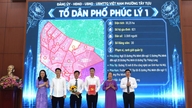


The seminar recorded many heartfelt and responsible opinions from experts, scientists, managers, and representatives of the young creative community. All opinions highly appreciated the significance of the seminar organized by the Department of Culture and Sports, considering it a practical activity aimed at identifying, selecting, and promoting the value of distinctive cultural symbols of the capital city.
The discussion focused on several key issues, including: perspectives and criteria for selecting cultural symbols; proposals for 10 characteristic symbols in various fields such as cuisine, heritage, traditional crafts, and cultural spaces; and the potential application of these symbols in communication, design, and the development of the cultural industry. In particular, many opinions emphasized the need to transform heritage into cultural IP, so that cultural values are not only preserved and honored but also become protected intellectual property, exploited rationally, benefiting the community and making a practical contribution to the socio-economic development of the capital city.
Associate Professor Bui Hoai Son, Standing Member of the National Assembly's Committee on Culture and Education, highly appreciated the Hanoi Department of Culture and Sports' organization of the seminar. According to him, before selecting a specific symbol, Hanoi needs to build a comprehensive system of cultural symbols based on clear, scientific criteria that are practically applicable.
Associate Professor Bui Hoai Son believes that Hanoi's cultural symbol must represent the capital's identity, reflect the depth of Hanoi's story, have broad social recognition, be capable of being designed and developed into a cultural industry product, and at the same time ensure community involvement, sustainability, and intellectual property protection. Regarding implementation, a competition to create a Hanoi cultural symbol could be considered, but it's crucial to avoid turning the competition into a subjective selection, not equating the cultural symbol with the logo, and not commercializing heritage at all costs.
Sharing the same view on the necessity of establishing criteria, Associate Professor Tran Duc Cuong, Chairman of the Vietnam Historical Science Association, believes that the selection of Hanoi's cultural symbol should stem from correctly identifying the "nature" of the capital city – the political and cultural center of the country, a land with a history spanning over a thousand years. Therefore, this is not an easy task, requiring many discussions, research, and clarifications. This seminar serves as a starting point, suggesting important ideas for the process of selecting Hanoi's cultural symbol.
According to Professor Dr. Le Hong Ly, President of the Vietnam Folk Arts Association, Hanoi's cultural symbols need to meet basic criteria: they must be unique to Hanoi; have existed for a long time in the capital city; be deeply ingrained in the spiritual life of Hanoians; be unique and original; and at the same time be easily recognizable, understandable, and adaptable in contemporary life.
Dr. Pham Quoc Quan, a member of the National Heritage Council and former Director of the History Museum, also believes that the seminar is a necessary catalyst, contributing to guiding the process of selecting cultural symbols for Hanoi. According to him, along with developing a set of criteria, Hanoi needs to focus on creating a database of cultural symbols, providing a scientific and practical basis for identifying, preserving, promoting, and effectively exploiting the distinctive cultural values of the capital city.




Speaking at the seminar, Comrade Pham Tuan Long, Member of the Hanoi City Party Committee and Director of the Hanoi Department of Culture and Sports, expressed his sincere gratitude for the insightful and heartfelt contributions of the experts and scientists. He emphasized that identifying and selecting cultural symbols of the Capital City is a fundamental issue, aiming to ensure that the chosen symbols accurately reflect the historical and cultural values and unique identity of Hanoi, while also meeting the requirements of recognition, dissemination, and development in contemporary life.
This seminar is an important first step in a new task, requiring a serious and systematic process of research, exchange, and absorption of information. The Hanoi Department of Culture and Sports hopes to continue receiving insightful and practical opinions from experts, scientists, universities, and the design and creative community of the Capital in the next steps, thereby perfecting the scientific and practical basis for effectively implementing the task assigned by the City.
Minh Nguyen
Source: https://sovhtt.hanoi.gov.vn/nhung-goi-mo-ve-lua-chon-bieu-tuong-van-hoa-ha-noi/

![[Photo] Strengthening character and expertise: Intense training for artillery soldiers.](https://vphoto.vietnam.vn/thumb/1200x675/vietnam/resource/IMAGE/2026/06/30/1782815602541_lu-368-1875-4571-jpg.webp)