Sweat, tears, and even danger.
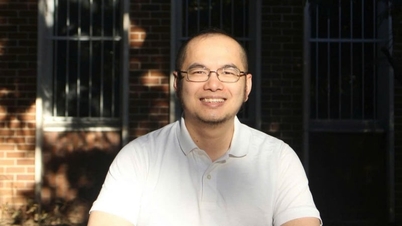
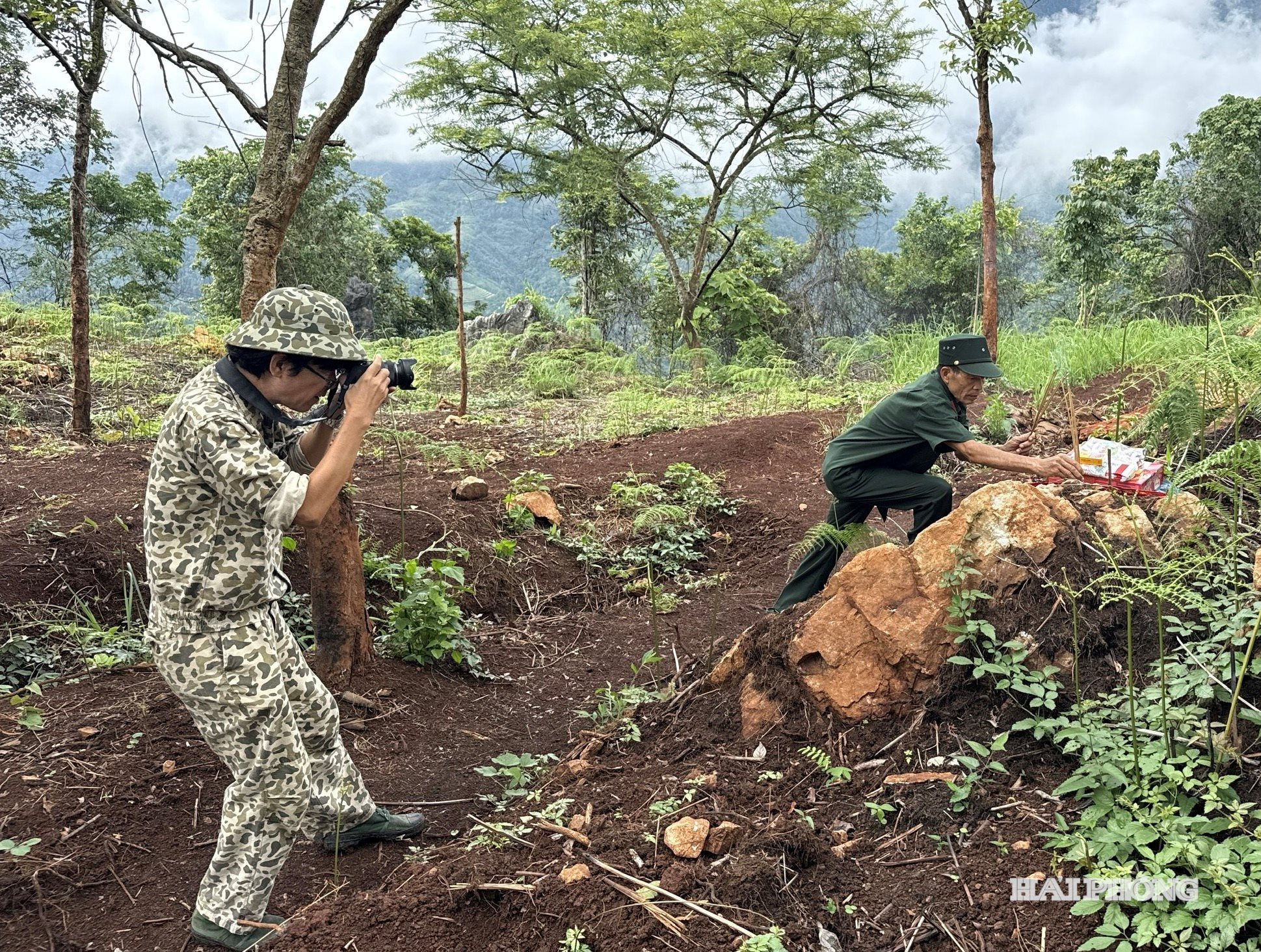
"I want these photos to tell the story of bringing them home, so that today's generation understands that behind the peaceful life lies the sacrifice of countless soldiers who fell for the Fatherland," photographer Giang Son Dong began his story with a touching statement.
That is also the reason why he volunteered to join the team searching for and collecting the remains of fallen soldiers in the 500-day campaign to search for and collect the remains of fallen soldiers.
Upon learning about the 500-day campaign to search for and collect the remains of fallen soldiers, he proposed to the Vietnam Association of Photographic Artists to collaborate on a program documenting this special journey. Of many former battlefields, he chose Vi Xuyen because it was the site of some of the fiercest battles in the war to protect the northern border.
"I've been to Vi Xuyen many times before, photographing the landscapes, the people, and the Vi Xuyen National Martyrs' Cemetery. But this time is completely different. This is the most special assignment of my professional life," he said.
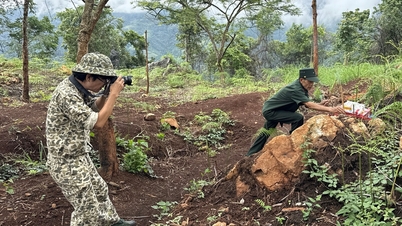
On June 21st, he joined the team. From the very first days in Thanh Thuy commune, his every step was closely followed by the bomb disposal team and the engineering corps carrying out the task of clearing mines.
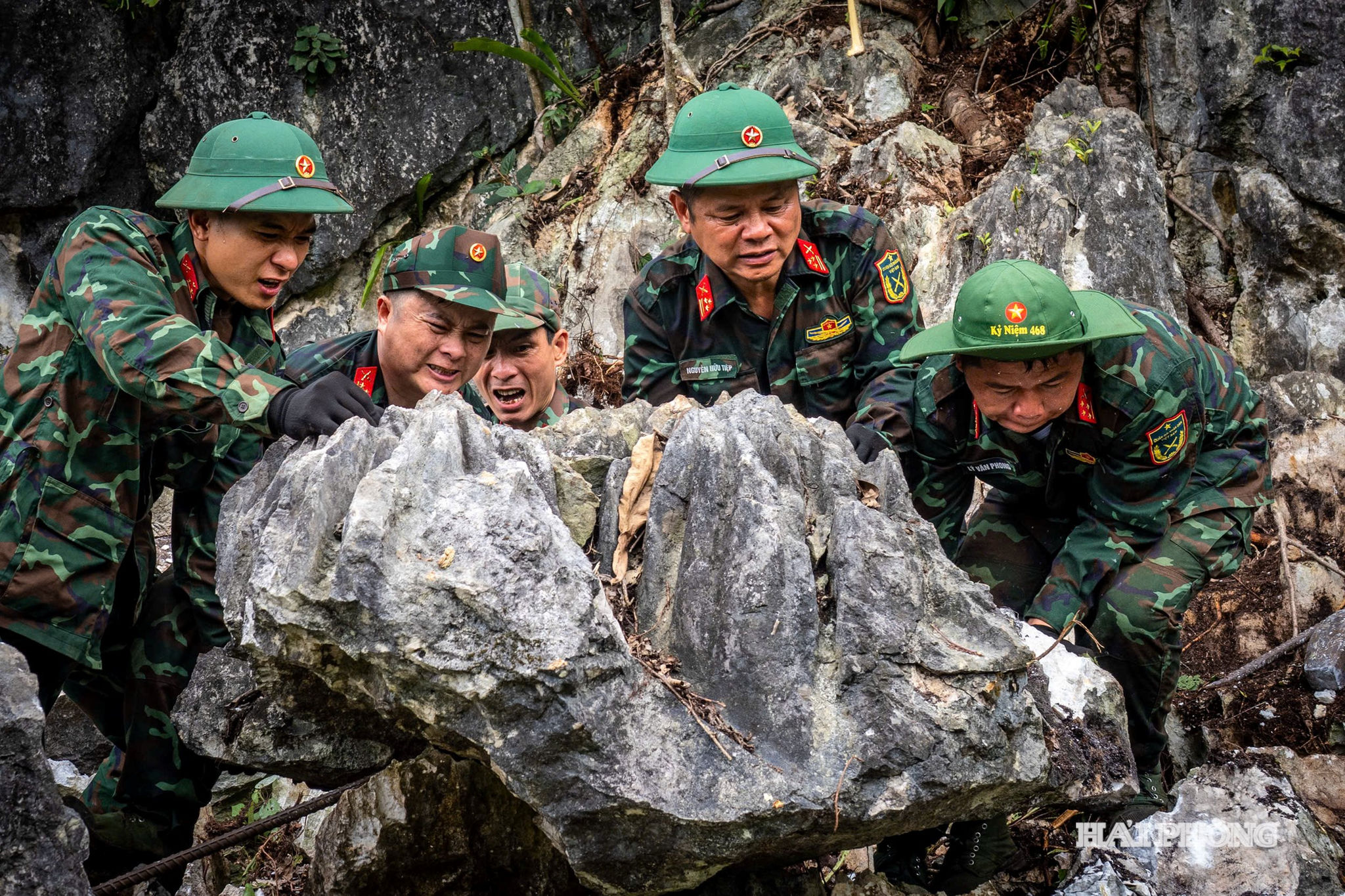
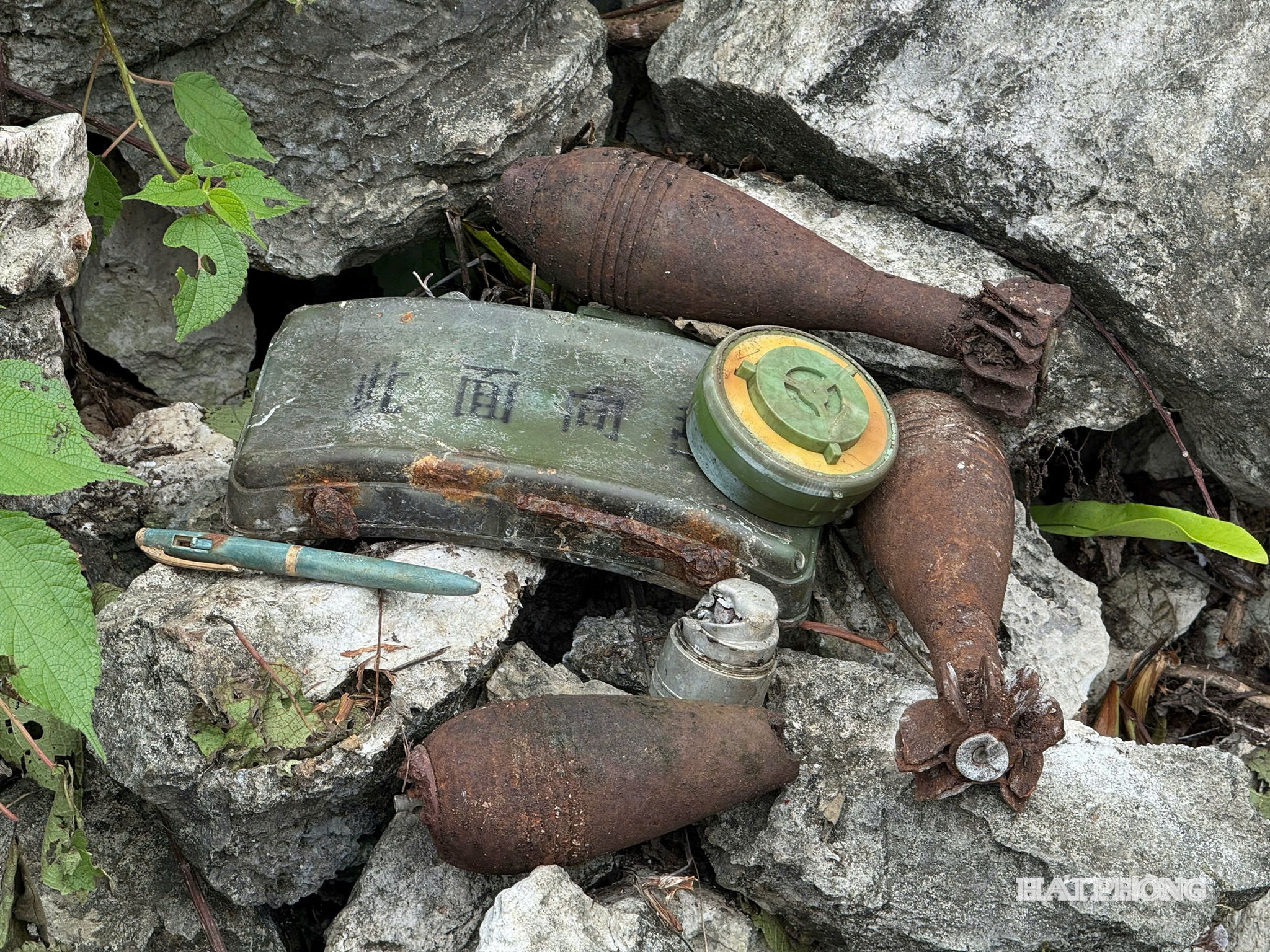
The terrain was far more treacherous than imagined. Steep slopes, sheer cliffs, and slippery ground after the rain made movement even more dangerous than it already was. And especially, there were still a large amount of unexploded bombs and explosives left over from the old battlefield.
"I prepared very carefully for the climb, bringing the most compact camera and lightweight clothing, but I didn't think there were so many landmines up here," he recounted.
The combat engineers constantly reminded him to follow the footprints of the person in front of him, trying to step on rocks instead of soft ground. Although many areas had been cleared, the danger was always present.


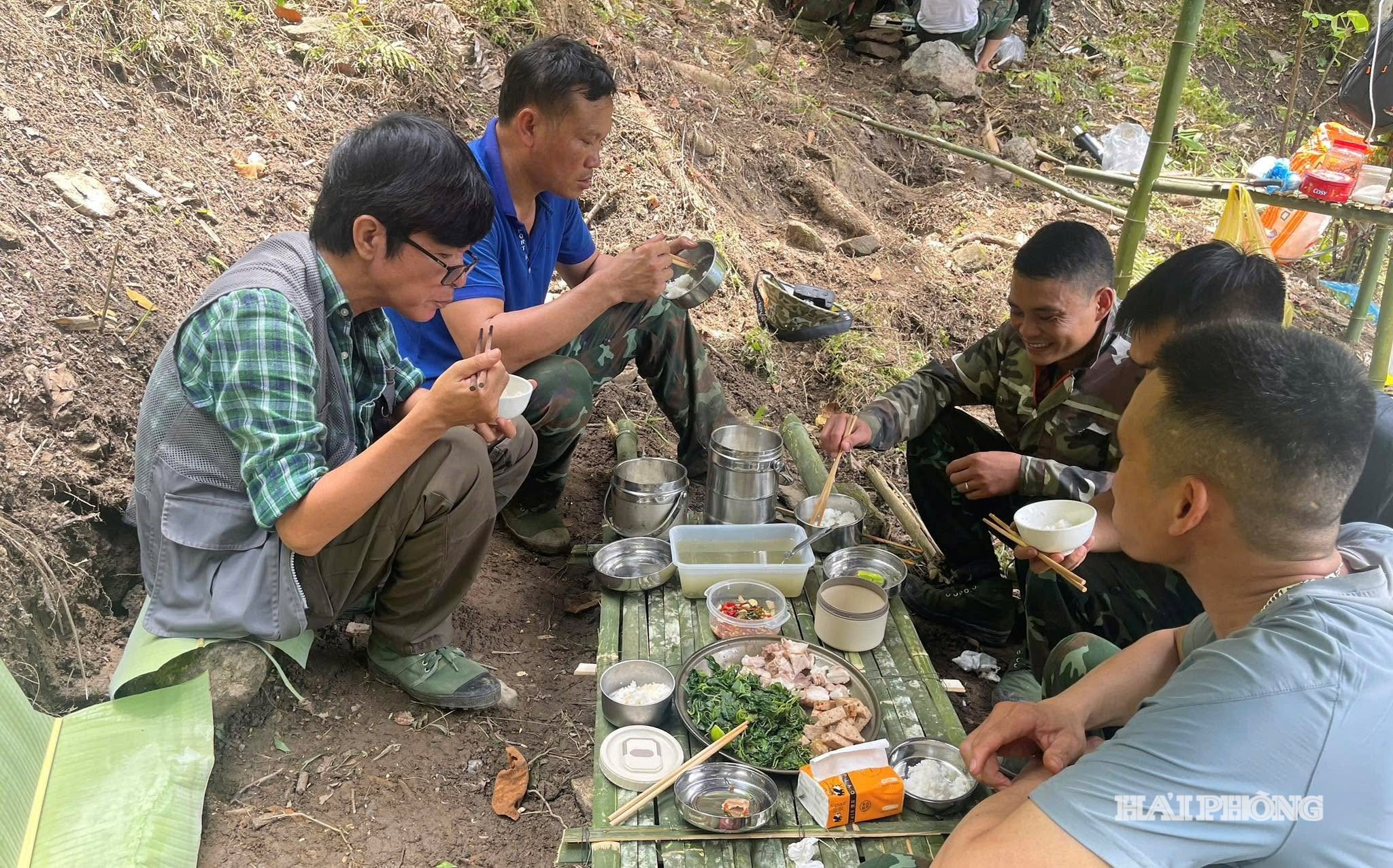
During the days he accompanied the team, he and the soldiers would set off around 6:30 a.m., have lunch right in the forest, and then continue working until late evening before returning. The rainy season brought an increase in mosquitoes, leeches, and other insects.
When asked if he was worried about the danger, Giang Son Dong shared: “People ask me if I’m afraid. Actually, I used to be a soldier. When the COVID-19 outbreak hit Bac Giang, I volunteered to go into the epicenter to document the fight against the pandemic. So I think if my death is useful for the people and the country, then I am willing.”
What moved him most wasn't the danger, but the feeling that with each step he was taking, he was walking through places where so many soldiers had fallen. A veteran told him that in some battles, so many soldiers were killed that their bodies were even hit by enemy artillery fire multiple times. There were companies where almost no one ever returned.
These images preserve memories.
If there was one thing that haunted Giang Son Dong the most after his days accompanying the repatriation team, it wasn't the treacherous cliffs or the unexploded bombs and mines. It was the mementos of the soldiers.
Amidst the layers of earth and rocks after more than 40 years, there are still water bottles engraved with names, pieces of belts, toothbrushes, fragments of soldier's uniforms... He also witnessed many veterans, wounded soldiers, and former soldiers of Vi Xuyen returning to the battlefield, tracing their memories to point out to the recovery team the locations where their comrades had fought.
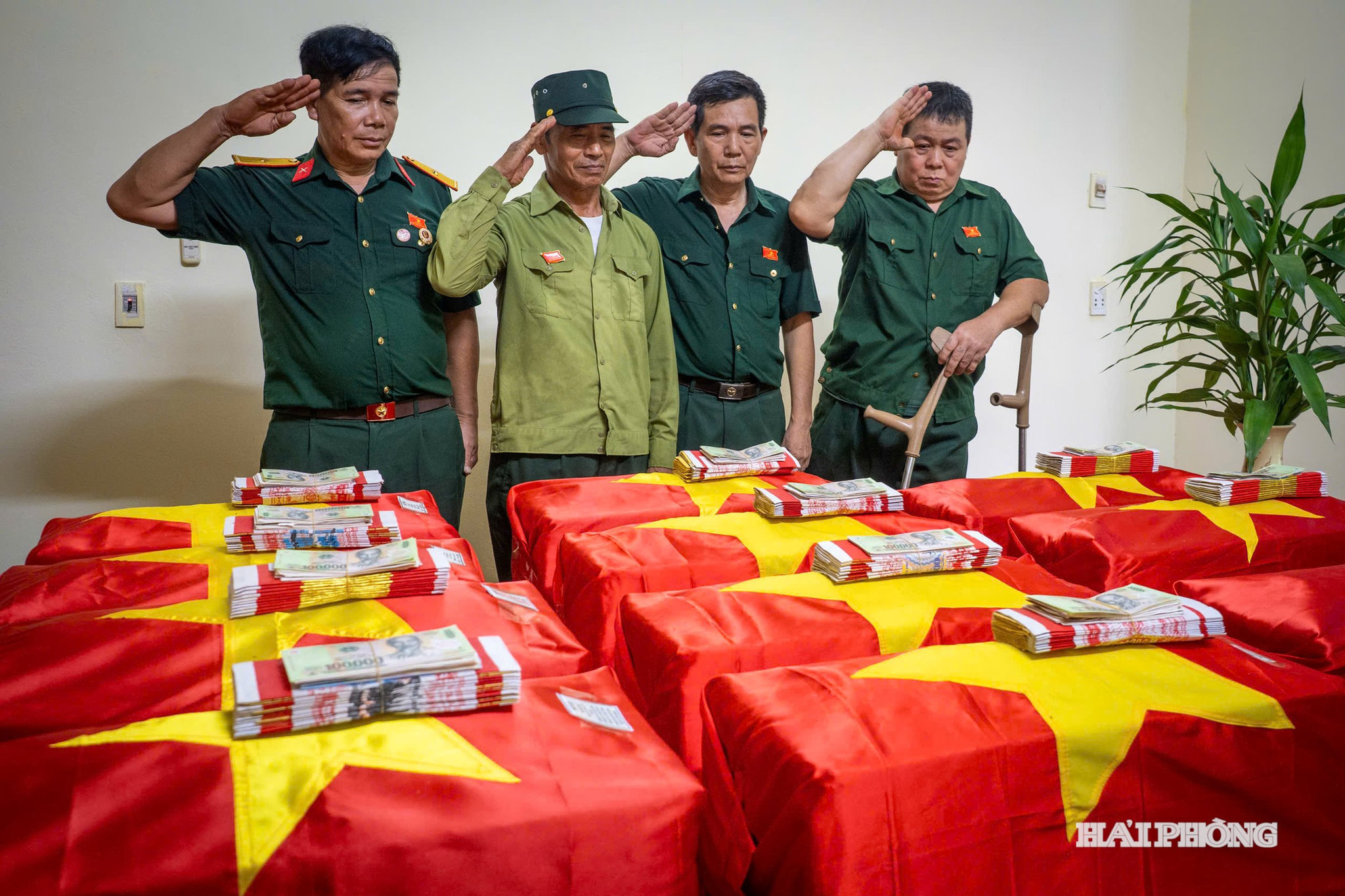
Of the thousands of photos taken during nearly a week accompanying the repatriation team, Giang Son Dong said there was one picture he would never forget. It was the moment the remains of fallen soldiers were found on Hill 685. As soon as he pressed the shutter, he couldn't contain his emotion at the sight of these soldiers, who had been buried in the mountains for over 40 years, finally being found by their comrades. But when he returned to edit the photos and looked at that particular image for a long time, he unexpectedly burst into tears.
"At that moment, I cried like a child. They had been lying there for over 40 years, amidst the rocky mountains, without a single incense stick, without any family members by their side," Giang Son Dong said, his voice choking up before he burst into tears.
Perhaps it was also one of the rare occasions when the artist, who had worked on many major themes, couldn't hide his emotions. It was the first time he had undertaken a project about searching for the remains of fallen soldiers. It was also the first time he deeply felt that behind each set of remains found lay a journey of perseverance, responsibility, and silent sacrifice.
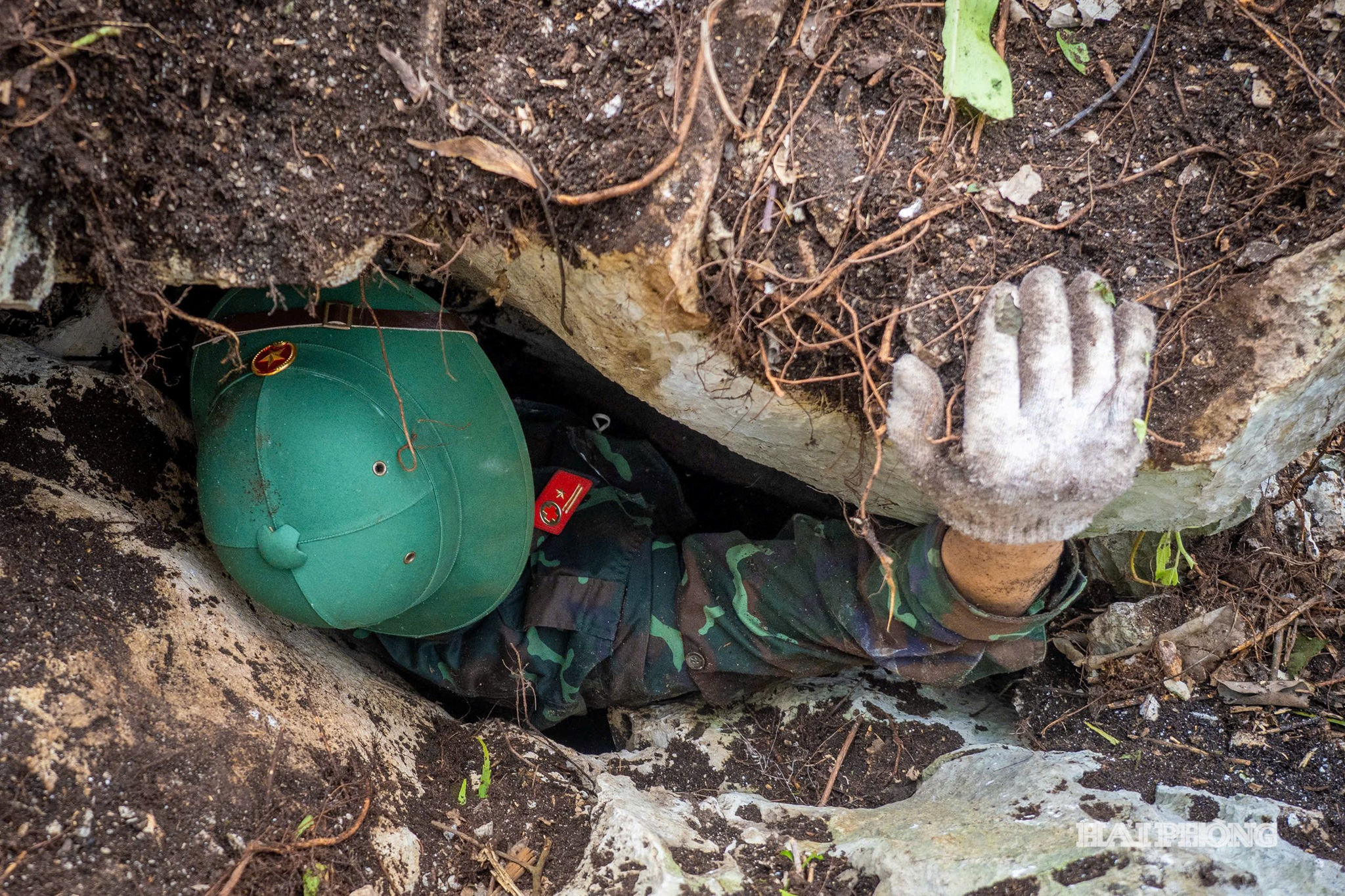
Of the thousands of photos he's taken, he's not overly concerned with technique or awards. He says, "The most important thing is the moment." It could be the silent gaze of a combat engineer discovering another relic, the tears of a veteran standing before the place where his comrades fell, or the tender care of soldiers today as they gather the remaining remains amidst the mountains and forests.
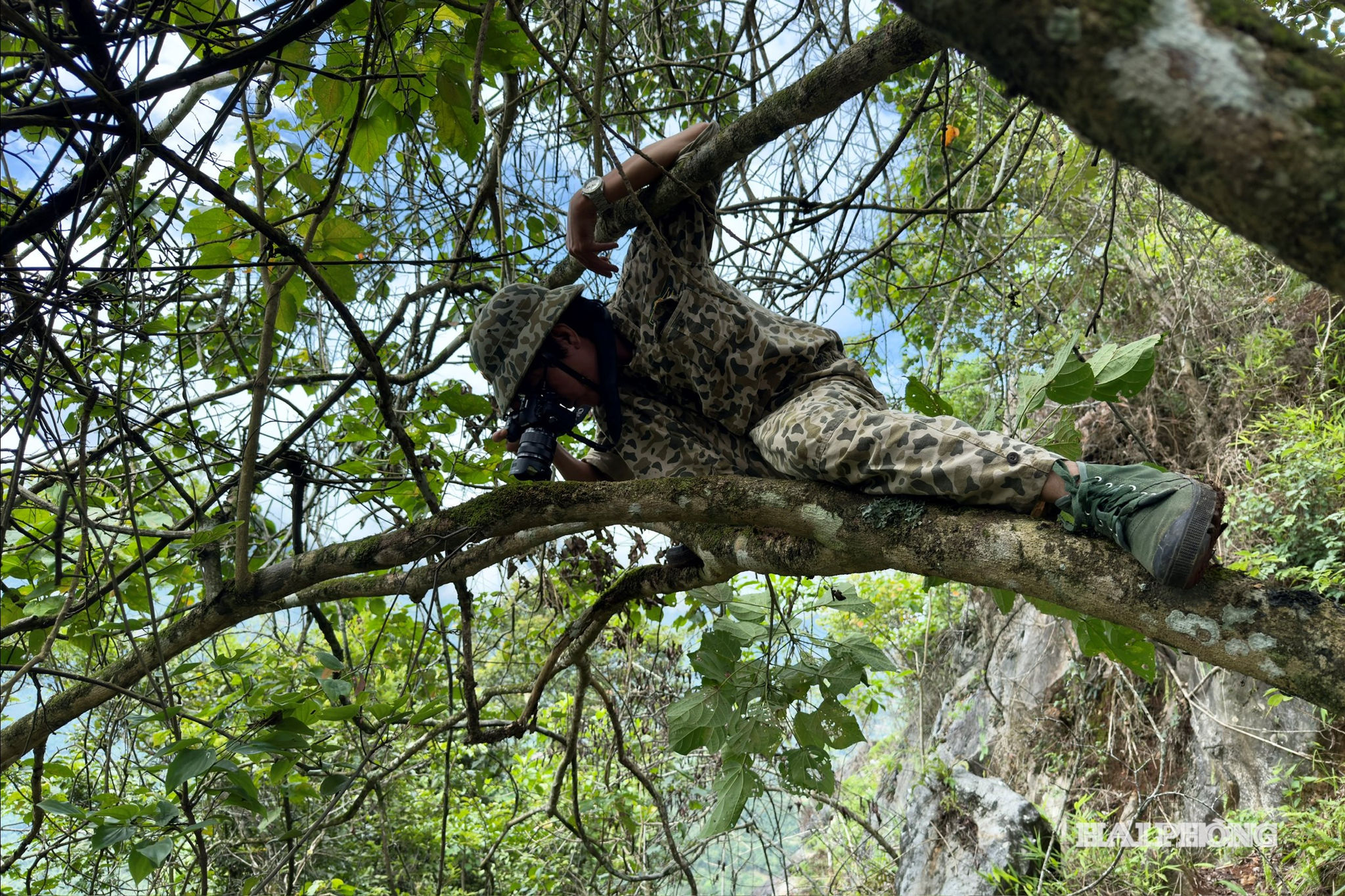
There were certain angles where, because drones weren't allowed, he had to cling to tree trunks and follow the edge of the cliff to film. Looking down into the bottomless abyss, he often felt a shiver down his spine, but all those feelings were put aside when faced with a moment that could never be repeated.


After nearly a week of following the expedition, Giang Son Dong has taken thousands of photos at most of the high points of the Vi Xuyen battlefield. At the end of July, he will return to capture the moment the martyrs are buried at the martyrs' cemetery. These will be the final photos to conclude the series documenting the journey of bringing them back to their comrades and homeland.
"I just hope these photos help more people understand that to have the peaceful life we have today, our fathers had to sacrifice their blood and youth. That's also how our generation pays tribute to those who fell," he said about the meaning of the photo series.
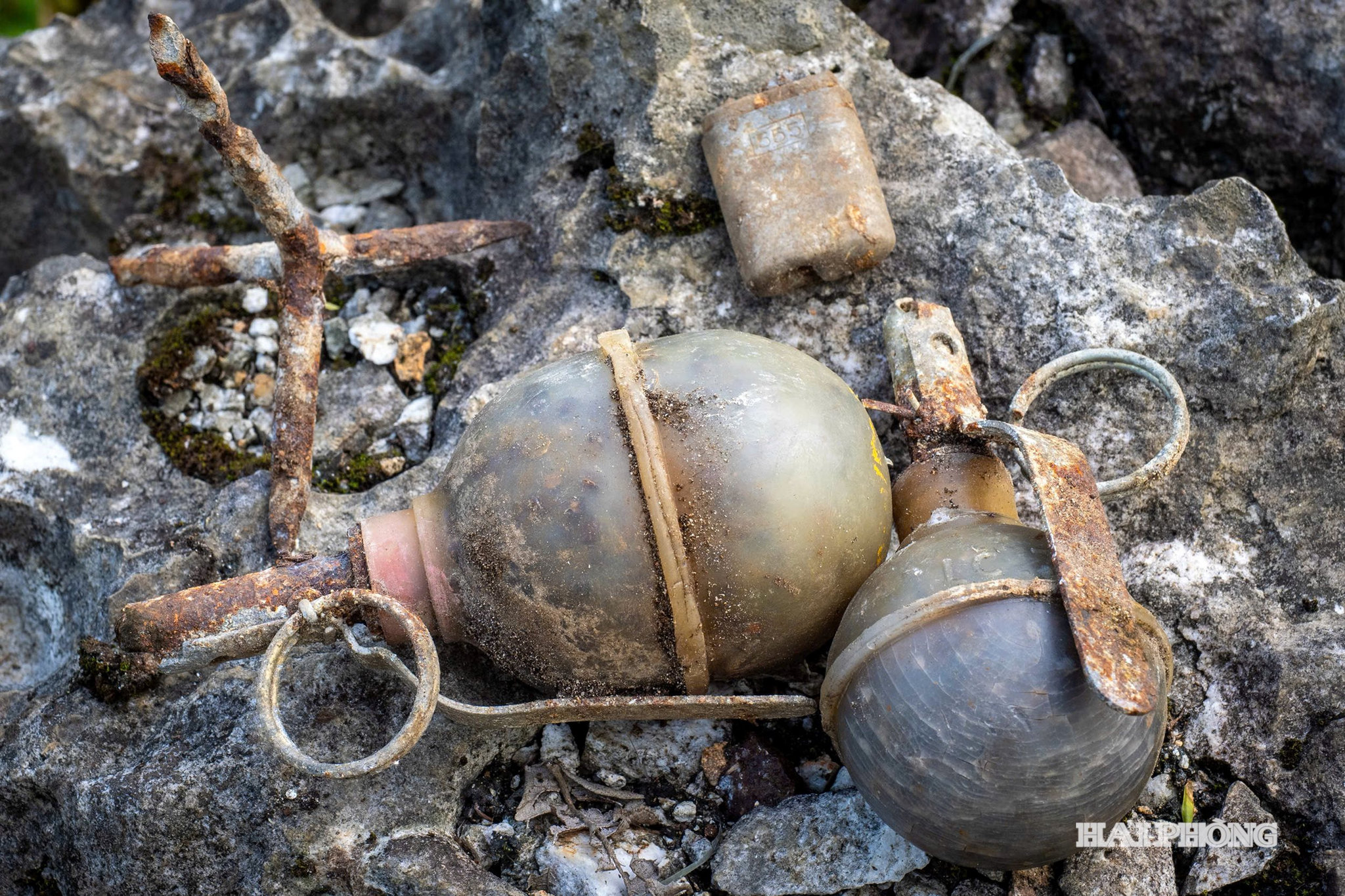
Instead of directly wielding a pickaxe to search for the remains of fallen soldiers, Giang Son Dong chose to use a camera. Today, soldiers silently bring their comrades home with their own hands, while the artist preserves that journey through his photographs. Two different jobs, but sharing the same purpose: preserving the memory of sacrifice and spreading the principle of "drinking water, remembering the source" to the community.
Because when these photos are published, the journey of bringing the fallen soldiers home will not only end on the slopes of Vi Xuyen mountain, but will continue to live on in the memories of millions of Vietnamese people.
PHUONG LINHSource: https://baohaiphong.vn/nhung-khuon-hinh-tu-vung-dat-lua-546872.html