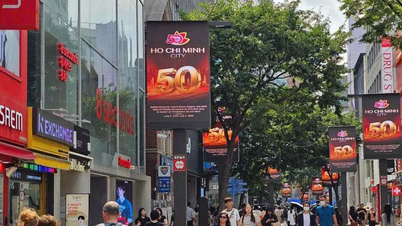
Half a century has passed since the city of Saigon - Gia Dinh was officially named after President Ho Chi Minh . That historical milestone is still preserved in the memories of witnesses and through time-worn journalistic documents, reminding us of that sacred moment for the city named after Uncle Ho.
Witnesses to a historic day
We met with Mr. Le Van Nuoi, former member of the 6th National Assembly , in late June. At 74 years old, his memory is still sharp, remembering every day, every scene, every face, as if the events of 50 years ago had just happened yesterday.
He fondly recalled that on April 25, 1976, more than 23 million voters nationwide participated in the first general election after the country's reunification, electing 492 representatives to the 6th National Assembly. Two months later, on June 24, 1976, the 6th National Assembly – the National Assembly of unified Vietnam – opened its first session at Ba Dinh Hall.
The Ba Dinh Hall was packed with delegates from all over the country. Between the rows of seats, handshakes and warm embraces followed one another. People who had only known each other through the battlefield, through newspaper articles, or through stories were now meeting in person. In the hall were leading comrades, renowned generals, artists, and Heroes of the Armed Forces...
All gathered together in a special moment of national history. On the agenda, the National Assembly passed two historically significant resolutions: changing the name of the Democratic Republic of Vietnam to the Socialist Republic of Vietnam and officially renaming Saigon - Gia Dinh City as Ho Chi Minh City.
About a week before the meeting, the delegates were sent all the necessary documents. The delegation from Saigon - Gia Dinh City also met to prepare the content and study the program before departing for Hanoi . But according to Mr. Le Van Nuoi, even though they knew the content beforehand, no one could fully imagine the emotions when the historic moment actually occurred.
“When the National Assembly began discussing the renaming of Saigon-Gia Dinh City to Ho Chi Minh City, it immediately received the unanimous agreement of all National Assembly delegates. Everyone knew that this aspiration had been expressed by cadres, soldiers, and people of the South since 1946. So, from July 2, 1976, Saigon-Gia Dinh City officially bore the name Ho Chi Minh City,” he recounted.
Recalling the day the city was named after President Ho Chi Minh, Mr. Le Van Nuoi remembers a special incident that occurred about a year before the 6th National Assembly session. Around 1 AM on May 1, 1975, while imprisoned in a "tiger cage" at solitary confinement camp No. 7, Con Dao prison, along with four other political prisoners, he suddenly heard shouts from the other cells, carried by the sea breeze: "Hail to Saigon - Ho Chi Minh City, completely liberated! Hail! Hail!"
"We were stunned, thinking we'd misheard," he recalled. That was also the first time he heard the name Ho Chi Minh City – a name later officially adopted by the 6th National Assembly and becoming a source of pride for generations of the city's residents.
Born alongside the city's new name.



Going back to that special historical moment, there were babies whose first cries marked the day the city officially bore the name of President Ho Chi Minh. After several visits, we met Ms. Nguyen Thi Thanh Binh, Deputy Secretary of the Party Branch of Ward 14, Vinh Hoi Ward Party Committee. Ms. Binh was born on July 2, 1976, turning 50 years old on the very day the city celebrated its half-century anniversary of being named after President Ho Chi Minh. For her, that birthday is a source of special pride.
The name Thanh Binh also reflects the family's hopes and aspirations, wishing that after the war, the country would enter years of peace, and its people would live in tranquility and happiness. According to her, the name is also associated with the family's joy as the city enters a new chapter in its history.
"I still consider myself very lucky. I was born on the day the city was named after President Ho Chi Minh, and I grew up witnessing the city's transformation," shared Ms. Nguyen Thi Thanh Binh.
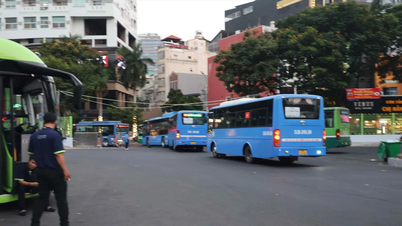
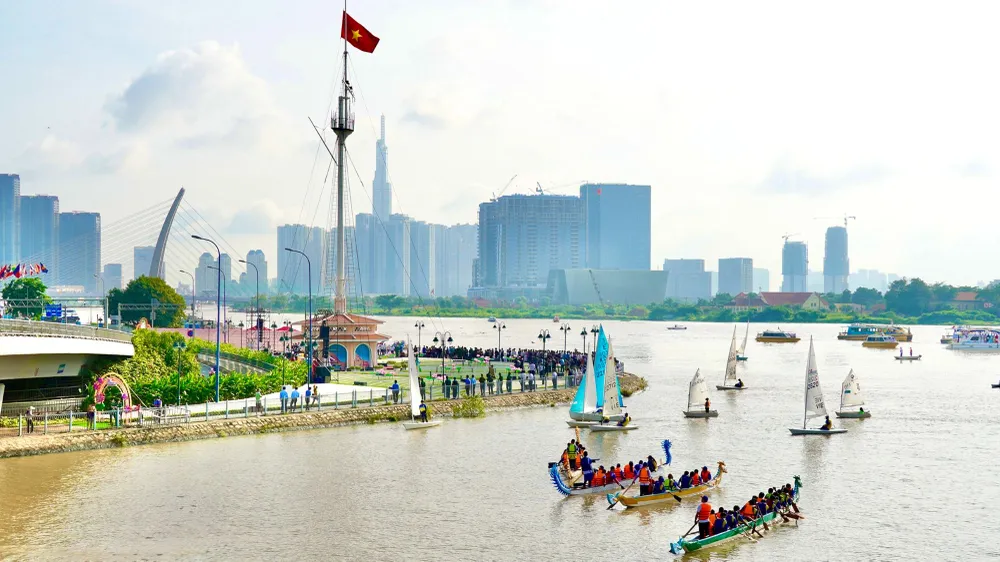
Looking back over half a century, her memories are intertwined with the daily changes in Ho Chi Minh City. From the gradually widening of small roads, the construction of new bridges connecting the two banks, the increasingly完善 transportation system, to the emergence of public works and new urban areas...
The city is constantly changing its appearance and also opening up many opportunities for those born and raised here. Since the beginning of 2025, she has been entrusted with the position of Secretary of the Party Branch of Ward 14.
After the administrative reorganization, she continued to participate in the neighborhood Party committee and held the position of Deputy Secretary of the Party branch. For Ms. Binh, contributing to the city doesn't necessarily have to start with grand things. It could be building a happy family, raising children well, preserving neighborly relations, or being dedicated to each task in the neighborhood. After 50 years, the compassionate city we see today has been built upon these very simple things.
Preserving memories through old newspaper pages.
As a newspaper collector in Ho Chi Minh City for over 30 years, Mr. Huynh Minh Hiep is currently the Deputy Chief of the Office of the UNESCO Center for Research and Conservation of Vietnamese Antiquities. He has diligently collected thousands of newspapers, documents, and artifacts. His collection includes many valuable documents reflecting the development of the Saigon - Gia Dinh - Ho Chi Minh City region, from the early days after liberation to the city's renewal and development.
In particular, Mr. Hiep always gave special attention to newspapers published immediately after July 2, 1976, such as the Tin Sang Daily and the Van Nghe newspaper published on July 3, 1976...
If the 1976 newspapers recorded the moment of the birth of the name Ho Chi Minh City, then the pages of the Saigon Liberation newspaper, which Mr. Hiep cherishes, continue that story with the rhythm of a reviving city. In particular, the Spring issue of Saigon Liberation newspaper in 1977 (Year of the Snake) is considered by Mr. Hiep to be a significant milestone, as it marked the first spring after the city officially bore the name of President Ho Chi Minh and the country was unified under the name of the Socialist Republic of Vietnam.
Fifty years after the city was named after President Ho Chi Minh, what moved him most when looking back at old documents was the city's daily transformation. From newspaper pages preserving images of the city in the early years after reunification to the dynamic, modern Ho Chi Minh City of today, it has been a long journey of effort, creativity, and aspiration for development.
Half a century has passed since the city was officially named after President Ho Chi Minh, but the memories of those who witnessed that milestone and the preserved documents continue to remind today's generation of the pride, responsibility, and aspiration to build Ho Chi Minh City in the new era of development.
The first person to propose the idea of naming the city after President Ho Chi Minh was...



Dr. Tran Huu Nghiep was born in 1911 into a farming family in Ba Tri, Ben Tre province (now Vinh Long province). After graduating from high school in 1931, Tran Huu Nghiep passed the entrance exam to the Faculty of Medicine at the University of Indochina in Hanoi, then went to Paris (France) for further studies for two years, returning to Vietnam in 1937. When the resistance war broke out, following the call of President Ho Chi Minh, he joined the revolution, using his medical expertise to serve the resistance.
In July 1976, the National Assembly of Vietnam officially passed a resolution renaming Saigon - Gia Dinh City to Ho Chi Minh City. However, few people know that exactly 30 years earlier, on August 25, 1946, in Hanoi during autumn, with streets adorned with fluttering red flags bearing yellow stars, the Central Committee held a meeting in the Southern Region office, and Dr. Tran Huu Nghiep was the first to propose naming the city after President Ho Chi Minh, replacing Saigon - Gia Dinh.
A day later, the delegation from the South, who were in Hanoi, submitted a petition to the National Assembly and the Government, requesting that the name of Saigon - Gia Dinh City be changed to Ho Chi Minh City to symbolize the fighting, sacrifice, and resolute defense of the Fatherland by the people of the South. The petition was signed by 57 people, including Dr. Tran Huu Nghiep.
Dr. Tran Huu Nghiep passed away on December 23, 2006, in Ho Chi Minh City at the age of 96. His life was a prime example of a true patriotic intellectual who set aside fame and fortune to dedicate his life to the revolution and the national liberation struggle. He devoted himself entirely to the cause of educating people, training medical professionals, and caring for the health and well-being of the people.
Writer, Colonel DO VIET NGHIEM
Source: https://www.sggp.org.vn/nhung-ky-uc-di-cung-ten-goi-post860379.html