

Notably, the competency assessment exams organized by universities themselves have also undergone appropriate adjustments.
ADJUSTING THE STRUCTURE OF THE EXAM AND SUBJECTS
Organized since 2018, the aptitude test of the Vietnam National University Ho Chi Minh City (VNU-HCM) has attracted more than 100,000 candidates from 1,815 high schools and is used by nearly 100 educational institutions for admissions. In preparation for 2025, VNU-HCM has announced its new guidelines for organizing the exam, highlighting several notable changes.

Dr. Quach Hoai Nam, Vice Rector of Nha Trang University, expressed concern about the situation where candidates focus solely on social science subjects for the aptitude test.
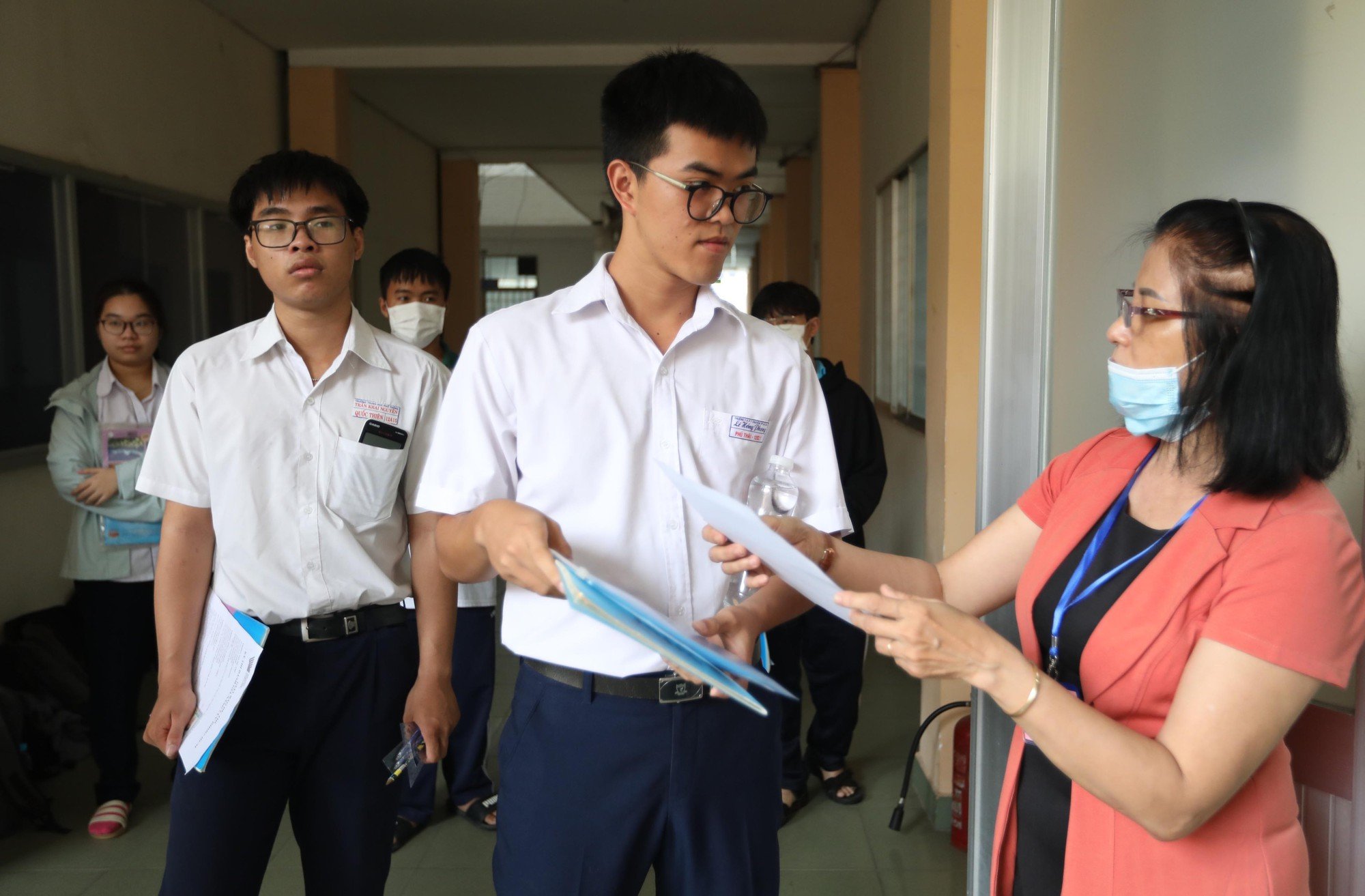
According to Dr. Nguyen Quoc Chinh, Director of the Center for Testing and Evaluation of Training Quality (Vietnam National University Ho Chi Minh City), from 2025 onwards, the competency assessment exam organized by the university will continue to be implemented in a stable manner, based on the foundation of the previous phase. Specifically, the exam will continue to be conducted using the objective multiple-choice test method on paper, simultaneously organized in many localities to facilitate participation for candidates. At the same time, the exam structure will be adjusted to suit the changes in the 2018 General Education Program.
The adjustments compared to the current exam focus on the problem-solving section. Candidates will be able to choose to work on 3 out of 6 problem groups during the exam, instead of having to answer all the questions in this section as before.
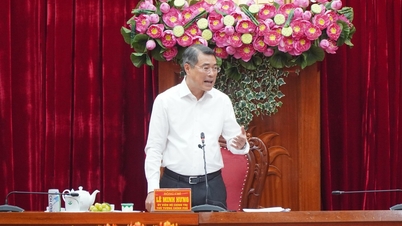
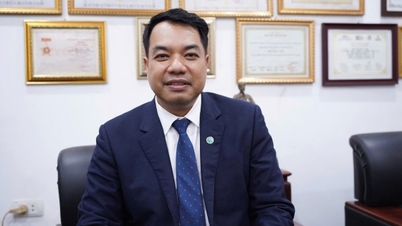
Dr. Nguyen Quoc Chinh , Director of the Center for Testing and Evaluation of Training Quality (Vietnam National University Ho Chi Minh City)
Over the years, the structure of the aptitude test has consisted of three parts. Part 1, with a maximum score of 300 points (40 questions), assesses knowledge of literature, vocabulary usage, reading comprehension, and analysis of Vietnamese and English texts. Part 2, worth a maximum of 300 points, includes 10 questions on general mathematics, 10 questions on logical reasoning and identifying logical patterns, and 10 questions on data analysis with given data tables. Part 3, worth a maximum of 500 points, consists of questions related to natural and social sciences , with 10 questions each in chemistry, physics, biology, geography, and history. With a total maximum score of 1200 points, candidates need to answer all 120 multiple-choice questions within 150 minutes.
However, according to the draft structure of the competency assessment exam from 2025, although it still consists of 3 parts, the structure of part 3, which deals with problem-solving, has changed. Candidates can choose to answer questions from 3 out of 6 subject groups: physics, chemistry, biology, history, geography, and economic and legal education. Thus, compared to the previous competency assessment exam structure, the exam structure from 2025 will include a new subject group related to economic and legal education – content that appeared in the 2018 General Education Program.
"The adjustment compared to the current exam focuses on the problem-solving section. Candidates will be able to choose to work on 3 out of 6 problem groups during the exam, instead of having to answer all the questions in this section as before," Dr. Chinh further explained.
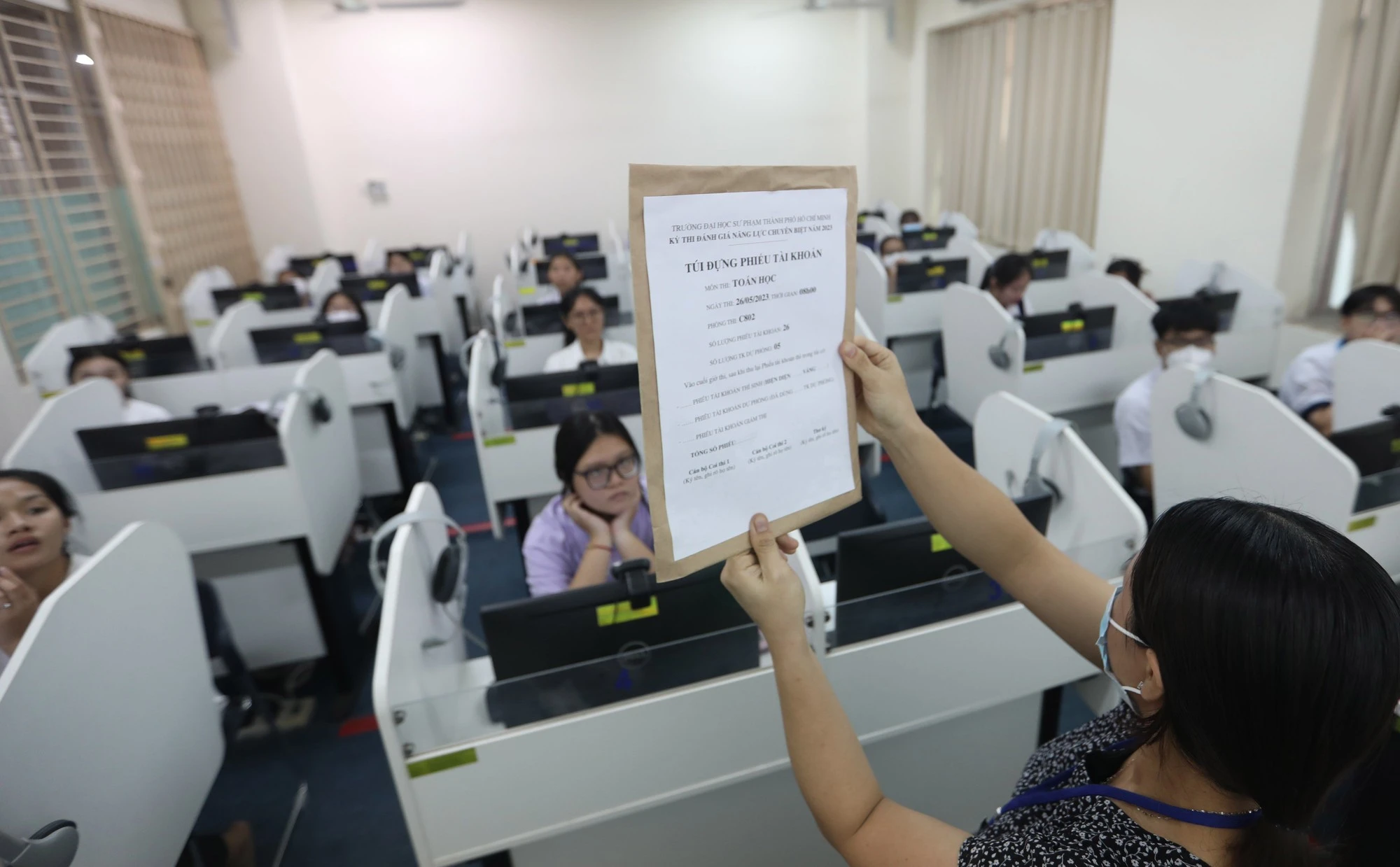
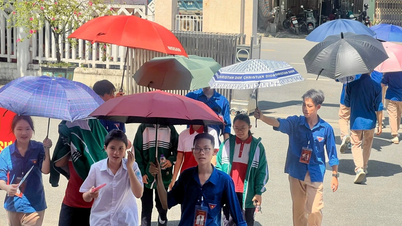
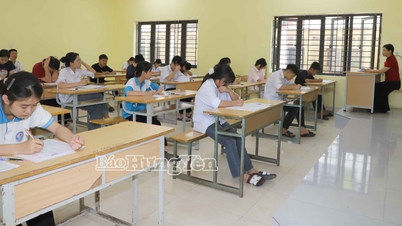
Candidates participating in the 2023 aptitude test of the Vietnam National University Ho Chi Minh City.
SHOULD CANDIDATES BE ALLOWED TO CHOOSE THEIR EXAM SUBJECTS?
Following the Ho Chi Minh City National University's plan to change the structure of the competency assessment exam starting in 2025, representatives from several universities have expressed concerns.
Speaking at a conference organized by the Vietnam National University Ho Chi Minh City on November 24th, Dr. Quach Hoai Nam, Vice Rector of Nha Trang University, expressed his concern about the Vietnam National University Ho Chi Minh City's aptitude test allowing candidates to choose subjects in the problem-solving section. The Vice Rector analyzed this concern based on the current trend of students choosing subjects to study and take exams.
Mr. Nam said, "We surveyed a high school with seven classes, but only one class studied physics. It's not certain that students in that physics class would choose chemistry or biology." Given the recent trend of students leaning heavily towards social sciences, Mr. Nam believes it will be difficult for universities to train students in fields requiring a stronger foundation, such as engineering and technology. "The target audience for natural science fields is shrinking, which will be a challenge for universities recruiting for engineering and technology programs," Mr. Nam worried.
Regarding this issue, Dr. Nguyen Quoc Chinh stated that the exam's perspective is to assess the most basic competencies required for university studies. Specifically, in addressing the problem, Dr. Chinh said the expert team will consider solutions to encourage candidates to focus more on natural sciences, with an appropriate weighting between different fields. "The Vietnam National University Ho Chi Minh City will publish more detailed information on the number of questions in each field, from mathematics, English, physics, etc. From there, universities can proactively use the exam results to suit the specific characteristics of each ngành (field of study) and school. For example, based on the scoring scale for each section, Nha Trang University, when selecting candidates for the mechanical engineering technology program, could apply a weighting factor to the mathematics and physics scores to select suitable students," Dr. Chinh shared.
Ho Chi Minh City University of Education has been organizing a specialized competency assessment exam for the past two years. At the end of 2024, the university will release sample exam questions for the 2025 exam.
Dr. Nguyen Duc Nghia, former Deputy Director of the Vietnam National University Ho Chi Minh City, believes that the goal of universities is to recruit enough students and recruit the right people. "The easiest way to recruit enough students is through high school transcripts, but the results from high school transcripts are not reliable. We have very complete statistics showing the unreliability of these results," Dr. Nghia said, adding that universities need to rely on more reliable results, such as the high school graduation exam. However, by 2025, in the context of the new curriculum, Dr. Nghia believes that aptitude tests for universities will become even more important.
Have the other separate exams changed?
According to Master Nguyen Ngoc Trung, Vice Rector of Ho Chi Minh City University of Education, the specialized competency assessment exam organized by the university from 2025 onwards will closely follow the 2018 General Education Program. The question bank will be inherited and newly developed, and fully tested on various student groups to select the most suitable candidates.
According to Master Trung, the exam will be streamlined, stress-free, and held multiple times a year to give students more opportunities to take the exam and assess their abilities. Students don't need to prepare anything other than studying well in the high school curriculum; no exam preparation is required. The school plans to maintain the stability of the subjects and aim to improve the quality of the exam questions to assess the ability to apply knowledge to solve real-life problems. The school will release sample exam questions at the end of 2024.
Saigon University and Ho Chi Minh City University of Banking jointly organized a computer-based entrance examination. Using a question bank from the National Center for Examination and Quality Assessment of Education (Ministry of Education and Training), in 2023 both universities organized an examination consisting of seven independent subjects: mathematics, English, physics, chemistry, biology, history, and geography. Candidates took the exam in a multiple-choice format for each subject; the mathematics exam lasted 90 minutes, and the remaining subjects lasted 60 minutes.
The Vietnamese-German University has also been organizing its own entrance exam using the TestAs test for many years. Dr. Ha Thuc Vien, Vice Rector of the Vietnamese-German University, said this is a form of aptitude test for international students who want to apply to universities in the Federal Republic of Germany. "Therefore, the TestAs exam in 2025 does not need to adjust the content of the aptitude assessment. However, for other admission methods, such as using the results of the high school graduation exam or high school academic records, the university has already started adjusting the methods and subjects used for admission since 2023. This adjustment is a preparation for 2025 when the first cohort of students from the 2018 General Education Program will apply to universities," Dr. Vien said.
Source link



![[Photo] General Secretary and President To Lam presides over the meeting to approve the draft report on the results of the second inspection by the Politburo of the Standing Committee of the Hanoi City Party Committee.](https://vphoto.vietnam.vn/thumb/1200x675/vietnam/resource/IMAGE/2026/05/26/1779789811432_a2-bnd-4430-9620-jpg.webp)




























































































Comment (0)