

 |
| "Veteran" bullfighter Nong Van Lau. |
The Hmong people are grateful to the Party.
The Hmong people in Mo Chi migrated from Cao Bang in 1992-1993. At that time, production conditions were very difficult due to the sloping, barren land and fragmented fields. Therefore, corn yields were only about 46 quintals/hectare, and rice 47 quintals/hectare, which was not enough to ensure food security for large households. At times, the village experienced food shortages for 2-3 months a year; many children did not start first grade until they were 10 years old, and most dropped out after completing primary or secondary school.
But those difficulties are a thing of the past, said Ngo Van Chu, head of the Lead Mine hamlet: "Over the past ten years, thanks to poverty reduction programs and preferential loan sources, livestock farming has gradually become the main source of livelihood for the people here."
From the National Target Program for socio -economic development in ethnic minority and mountainous areas to the 2037 Project of Thai Nguyen province, many households have received capital support to develop their buffalo and cattle herds, thus escaping poverty. Typical examples include the families of Mr. Hoang Van Nguyen and Mr. Truong Van Thanh, who borrowed capital to raise 6 buffalo and cattle; and Mr. Hoang Van Ty's family, who received 50 million VND to build a house and nearly 20 million VND to buy breeding cattle. In 2025, 60 households in the hamlet will continue to receive loans totaling over 4.6 billion VND from the Social Policy Bank for livestock investment.
With the capital raised, the households have expanded their livestock farming. Currently, the entire hamlet has more than 270 buffaloes and cows. Seven to eight households raise 5-7 animals each; the remaining households maintain 1-2 animals. The current price of live cattle is about 100,000 VND/kg; a mature animal weighing about 400 kg can be sold for 40 million VND.
For many households, this is an important source of savings for house repairs, production investment, and their children's continued education. The average income reaches approximately 30 million VND per household per year. In 2025, the hamlet will have 30 poor households; it is expected that this number will decrease to 24 poor households and 10 near-poor households in 2026.
Promising to be exciting at the festival.
In a conversation with us on the first day of spring, the head of the Lead Mine hamlet, Ngo Van Chu, outlined many aspects of the hamlet's future. He particularly spoke about an upcoming event in the Lead Mine that he believes will become a unique highlight: bullfighting as part of the Cultural Festival of Ethnic Groups in La Hien commune (scheduled for March 21st). The competitions will be organized according to weight categories (420-500kg and 360-420kg).
The information from the head of the Mỏ Chì hamlet, Ngô Văn Chú, piqued our curiosity. Seemingly understanding our question, he explained: According to Hmong tradition, from a young age, when we herd cattle, we are taught how to organize bullfights. In the past, the Hmong people often organized bullfights in the fields before they had designated fighting grounds.
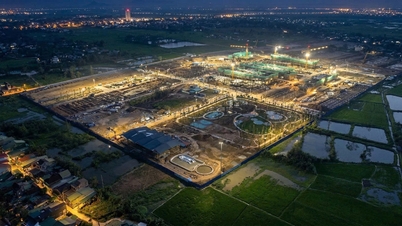
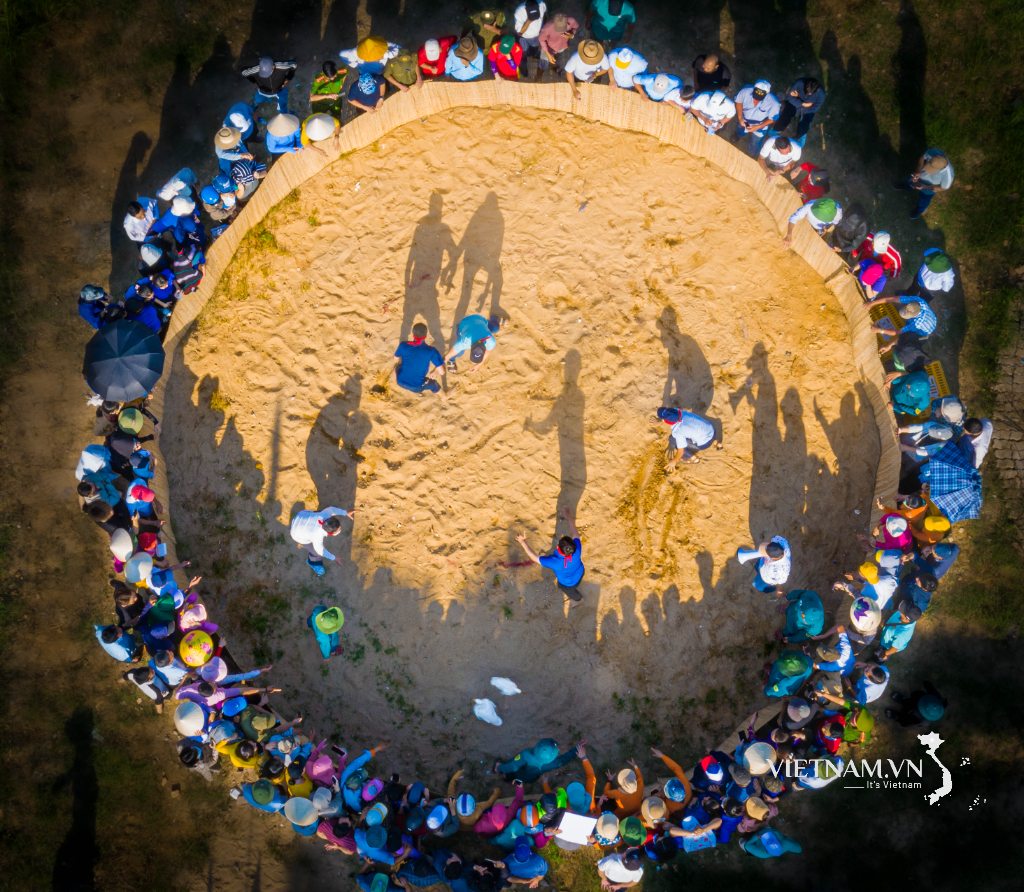
To create a bullfighting arena, local residents contributed their labor to level and renovate the site of an old lead ore waste dump, transforming it into a spacious arena approximately 40 meters wide on each side. Since the Lead Mine hamlet acquired this arena, many bull owners from Quang Son, Than Sa, and other areas have brought their bulls here to compete. This led to the formation of the Lead Mine Bullfighting Association, comprising 32 members from the three communes of La Hien, Quang Son, and Than Sa, with the majority being from Lead Mine. The association has submitted an application to the commune authorities to establish a club, aiming for more organized and systematic operations.
 |
| The bullfighting arena as seen from above. |
The village head's story led us to Mr. Ly Van Nung, deputy head of the Mo Chi bullfighting group. As someone who owns many fighting bulls (at one point, he owned dozens of fighting bulls - in 2018), his family currently has 5 bulls, 2 of which are raised for fighting.
Mr. Ly Van Nung said: fighting bulls not only need to be big and strong, but they must also know how to "lock horns," how to poke and lift their opponents. "Long horns without knowing how to lock them will still result in defeat. They must be resilient and have spirit." Sitting nearby, Mr. Nong Van Lau, 80 years old, the longest-serving fighting bull breeder in Mo Chi village, added: Fighting bulls must be raised for at least 5-8 years to be "mature." If they don't reach that level, they will be sold for meat. The price of fighting bulls is therefore much higher than that of beef cattle. Selling one bull brings in as much money as a whole year of growing corn or rice on sloping land.
In our minds, bullfighting in Mỏ Chì was probably similar to buffalo or bullfighting elsewhere. But no, we were wrong. After the bullfight, whether they win or lose, the "bull fighters" return to their pens, are cared for, and are considered valuable assets of the family. The winning bull is kept for breeding and is the pride of the owner and the entire village.
 |
| The Mỏ Chì bullfighting team inspects their bulls before the competition. |
Perhaps this difference will create a unique appeal for the Mỏ Chì bullfighting festival, so Comrade Ninh Văn Hào, Secretary of the Party Committee of La Hiên commune, enthusiastically stated: Bullfighting is not only a traditional cultural activity but also an attractive tourism product with great potential.
In the Community Tourism Development Plan for the period 2025-2030, Mo Chi village, along with Lai village and Tan Son, were selected as destinations. And if this model is successful, Mo Chi village will be the most unique tourist destination, as it is right next to the Than Sa - Phuong Hoang Nature Reserve.
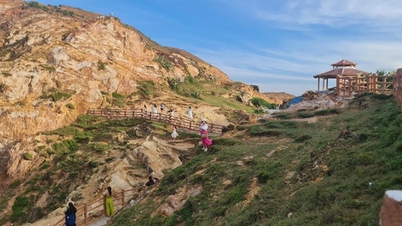
Nguom Rock Shelter, Rainfall Waterfall, Seven-Tier Waterfall, Phieng Tung Cave… Visitors to Mo Chi will experience treacherous mountain roads, chase clouds on the peaks, take photos with buckwheat flowers, enjoy men men (a local dish), listen to Mong flutes, and watch bullfighting… The local government is determined to gradually improve infrastructure, support people in renovating stilt houses, and create a space for experiencing Mong culture.
The information from the Party Secretary of La Hien commune accompanied us as we left the village in the evening. On the concrete road back to the provincial center, we shared the joy of seeing a Lead Mine undergoing a transformation. This change stems from the attention of the Party and the State, and from the belief in a bright future held by the Mong ethnic people here.
Source: https://baothainguyen.vn/xa-hoi/202603/niem-tin-tren-dinh-mo-chi-fbd75b4/



























































Comment (0)