

 |
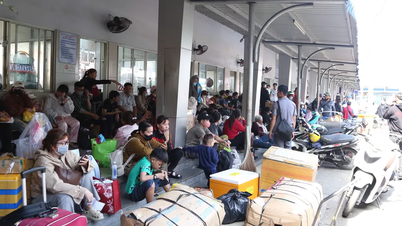
| The Ministry of Construction's working group directly inspected transportation operations at Bien Hoa Bus Station. Photo: An Nhon |
Following on-site inspections and working sessions with Dong Nai province, the Ministry of Construction's delegation highly appreciated the local authorities' management efforts; and also made several important recommendations to overcome difficulties and ensure that the transportation supply chain remains uninterrupted.
Proactively control and stabilize freight rates.
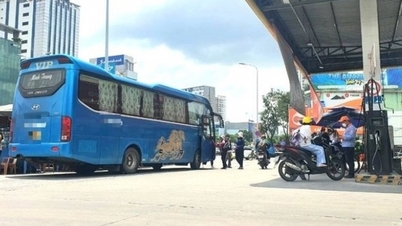
Recently, a delegation from the Ministry of Construction, led by Deputy Director of the Transport and Traffic Safety Department (Ministry of Construction) Do Cong Thuy, worked in Dong Nai province on the management and stabilization of transport fares amidst fluctuating input costs, especially fuel. In addition to hearing reports from departments, agencies, and businesses, the delegation directly inspected Bien Hoa Bus Station (one of the province's important transport hubs). The inspection focused on the declaration and posting of ticket prices, transport business conditions, and the actual operation of vehicles.
According to observations, most transport businesses in the area are still striving to maintain prices, or only adjusting them within the permitted range. Mr. Ha Van Thinh, representative of a company operating the Bien Hoa Bus Station - Vung Tau Bus Station route, said: Although fuel costs have increased significantly recently, the company has not proposed raising prices but has chosen to reasonably reduce the number of trips to maintain operations. This reflects the reality of the difficulties faced by transport businesses: a sharp price increase would lead to a loss of customers, but maintaining prices would result in no profit. The challenge of stabilizing fares and finding a harmonious balance between businesses and the public is becoming increasingly urgent.
According to information from Bien Hoa Bus Station, the unit currently operates 19 fixed inter-provincial routes and 7 bus routes (including 2 subsidized bus routes: routes 2 and 7). Notably, by the beginning of April 2026, 4 businesses had proposed fare increases, ranging from 5.8% to 27%. However, subsidized bus routes and all intra-provincial routes will maintain their fares to ensure the essential transportation needs of the people.
Mr. Trinh Hoai Vinh, Deputy Director in charge of Bien Hoa Bus Station, said: Adjusting prices is necessary but must be reasonable. If the increase is too high, it will cause passengers to turn away from public transport, thereby negatively impacting the revenue of businesses.
From a business perspective, Mr. Lam Anh Tuan, representative of Dong Nai Bus Station and Transportation Services Joint Stock Company, commented: The current fare adjustments have not kept pace with the increase in gasoline and diesel prices. Businesses are forced to cut costs and optimize operations to keep ticket prices stable, accepting lower profits to retain customers.
According to Mr. Nguyen Hong Bao, a specialist in the Vehicle and Driver Management Department (Department of Construction), in the face of pressure from rising and unpredictable fuel prices, the unit has proactively implemented many operational solutions to limit the ripple effect on transportation activities and social life. The focus is on requiring transportation businesses to review and optimize their operational plans, allocate vehicles according to actual needs, and minimize empty runs to reduce fuel costs. Simultaneously, they are promoting the application of science and technology and digital transformation in management and operations to improve production and business efficiency.
Currently, the province has 23 fixed-route passenger transport businesses, 16 public bus transport businesses (including 4 operating in exchange with Ho Chi Minh City), and 10 taxi businesses. Monitoring has shown that 11 fixed-route businesses and 5 bus businesses have adjusted their fares upwards. Specifically, the maximum increase for fixed routes is 41%; for buses, the maximum increase is 55%. Regarding taxis, no businesses have yet declared fare increases since March 1, 2026.
According to Mr. Phan Hong Quang, Deputy Director in charge of the Public Passenger Transport Management Center (Department of Construction), the unit has requested bus transport businesses to strictly comply with regulations on pricing as soon as fuel costs fluctuate. In the coming time, the center will continue to review and control price adjustments, while improving service quality to better meet the travel needs of the people.
In response to this situation, the Department of Construction has intensified its efforts to receive and review price declaration documents from transportation companies; and simultaneously implemented the market price reporting regime as prescribed. Price management has been tightened, especially in cases of significant price increases, to ensure transparency and alignment with fluctuations in input costs.
Towards sustainable solutions
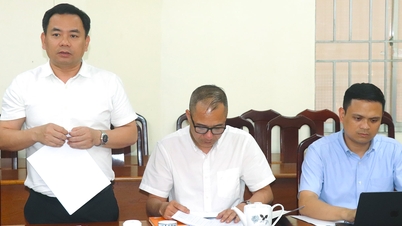
The working group from the Ministry of Construction assessed that establishing inspection teams in many localities is necessary in the context of sharply fluctuating fuel prices, in order to promptly grasp the situation and strengthen supervision of transportation fare management. The work focuses on assessing the impact of fuel prices on transportation operations and supply, checking compliance with regulations on price declaration and listing; and simultaneously resolving difficulties and obstacles to ensure smooth road transport operations and prevent disruptions to the supply chain.
Tighten inspections and crack down on abnormal price increases.
In the coming period, the unit will continue to closely monitor fuel price developments to promptly advise the Provincial People's Committee on appropriate management solutions. Simultaneously, the department will strengthen inspections of price declarations and listings; organize specialized inspection teams for units with unusual price increases; and require businesses to reduce costs and improve management efficiency to alleviate price pressure.
Deputy Director of the Department of Construction
BRIGHT AND INTELLIGENT BRAIN
During the working visit, the delegation noted that Dong Nai province has proactively monitored fuel price fluctuations, ensured the supply of gasoline and diesel, and implemented measures to support businesses in stabilizing their operations. In particular, transportation businesses in the area have shared and cooperated with the government in stabilizing ticket prices, contributing to ensuring people's travel needs and maintaining the transportation supply chain. However, in the context of a volatile market, strengthening management remains a pressing requirement. The working group requested that relevant agencies continue to tighten the declaration and listing of prices and strictly handle violations.
To improve management efficiency and ensure long-term stability, Deputy Director of the Transport and Traffic Safety Department (Ministry of Construction) Do Cong Thuy suggested that agencies and units in Dong Nai continue to pay attention to implementing the Ministry of Construction's directives. Specifically, it is necessary to strengthen communication and guidance for businesses to fully and accurately declare prices in accordance with market fluctuations. In addition, the Department of Construction needs to strictly control freight transport activities, review businesses' pricing plans, and enhance the application of information technology in management. The Department of Industry and Trade is tasked with inspecting the supply of petroleum products and preventing hoarding. The Department of Finance should study tax support mechanisms to reduce cost pressure on businesses.
From the business perspective, the requirement is to strictly list and sell tickets at the correct prices; and proactively adjust business plans to suit fuel price fluctuations. Notably, the transition to electric vehicles is seen as a long-term direction to reduce dependence on gasoline and contribute to stabilizing fares. "It is necessary to ensure a balance of interests between the State, businesses, and the people, thereby contributing to socio-economic stability," Mr. Do Cong Thuy emphasized.
An Nhon
Source: https://baodongnai.com.vn/kinh-te/202604/no-luc-binh-on-gia-cuoc-van-tai-4e51dbe/



































































































Comment (0)