From the entrance gate of Kana A hamlet (Cu M'gar commune), the smooth, straight concrete road leading to the hamlet's water source crosses many intersections, winding between closely packed houses and the lush green of trees. During the coffee harvest season, as the sun sets, the aroma of ripe coffee permeates the cool air, and groups of villagers line up to go down to the water source to carry water back home.
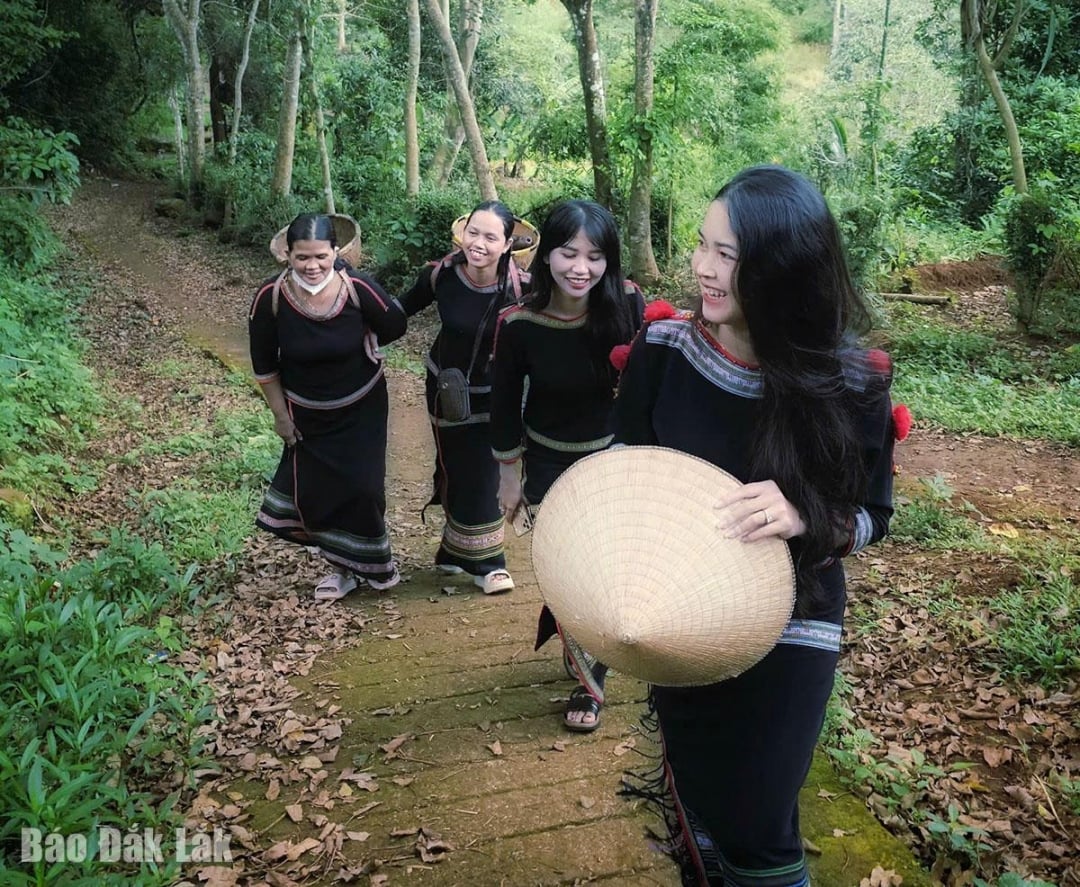 |
| After filling their boats with water from the dock, the women of Sah B village (Ea Tul commune) return home, bringing with them joy and a sense of community. |
Following that path, after more than ten minutes of walking, the pristine Kana A village water source appeared amidst the vast forest. The gentle sound of flowing water blended with the chirping of birds, creating a soothing symphony of the mountains and forests. Mrs. H'Brem Êban, a villager, gently bent down to wash her face with the cool water and then collected water in dried gourds. She shared that since childhood, she had followed her mother to the water source to fetch water for daily use. "Now every house has a drilled well and clean water piped in, but my family and many people in the village still prefer to come to the water source to fetch water for cooking, making tea, and brewing rice wine... The water here is very clear and sweet. Those who drink the water from the source will be protected by the water spirit and granted good health," Mrs. H'Brem said, carefully arranging the full gourds into her basket.


In Sah B village (Ea Tul commune), every morning the elderly still leisurely go to the village's water source to wash their faces and hands as a ritual to greet the new day. Village elder Y Lem Nie recounts that in the old days, when the village was established, the first thing was to choose a place with an abundant and clean water source for the entire community. "The water source is the soul of the village. Even though life has changed, the Ede people have never forgotten this place, the source of life. It is the thread that connects the past with the present," elder Y Lem confided.
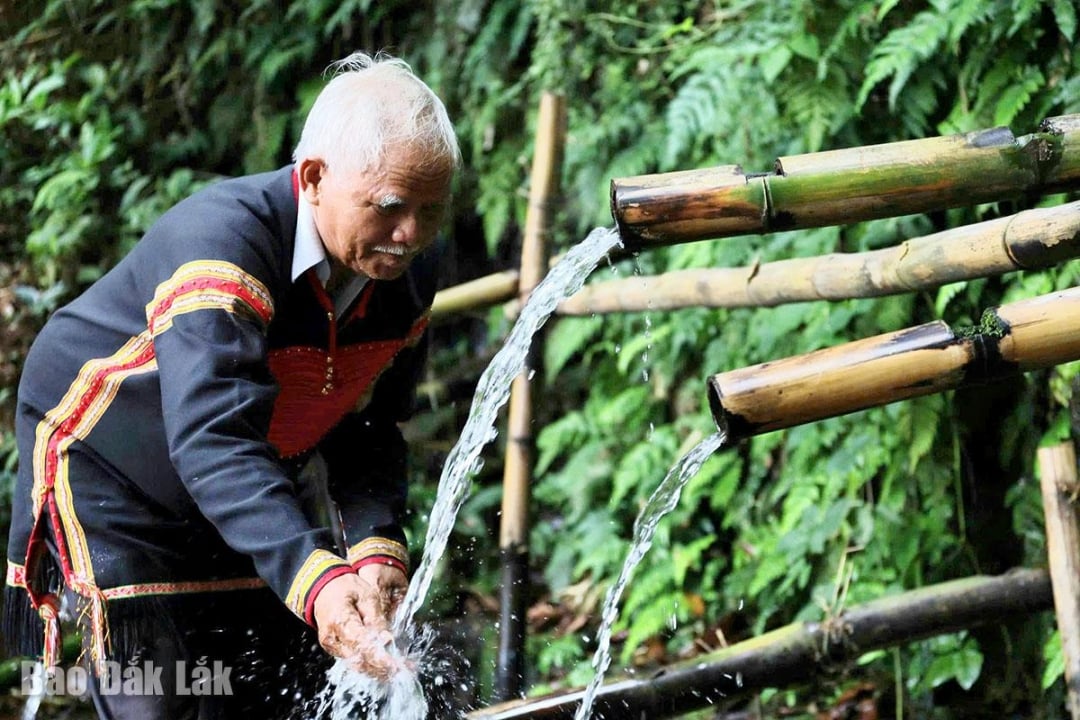 |
| Every morning, old man Y Liem (from Sah B hamlet, Ea Tul commune) goes to the water source to wash his face as a ritual to greet the new day. |
For the Ede people, the water source is the heart of the village. They believe that spirits reside there, providing cool, clean water to sustain them. After each harvest season, the villagers hold a ceremony to thank the spirits, pray for favorable weather, peace in the village, and a bountiful harvest. The ceremony usually takes place in the second or third lunar month each year and includes the following main rituals: worshipping ancestors, worshipping the water source, worshipping the village's earth god, giving thanks, and praying for the health of the water source's owner. In a warm and solemn atmosphere, the shaman prays for the water source to always be clean and never dry up, and for future generations to cherish the village's source of life. The ceremony concludes with the resounding rhythm of gongs, cheers, the warm aroma of rice wine, and the joyful sounds of traditional dances.
There was a time when this beautiful custom seemed to be forgotten, but now it is being strongly revived. In 2024, Sah B village (Ea Tul commune) coordinated with relevant agencies to organize the restoration of the water source worship ceremony.
In the whirlwind of development, these refreshing streams not only quench thirst but also evoke memories of previous generations, those who preserved the communal way of life and love for their villages. Many villages have revived the water-worshiping ceremony, so that the sound of gongs, the aroma of rice wine, and the traditional dances resonate once again amidst the mountains and forests, reminding everyone to cherish their source of life and their ethnic identity.



Mr. Dung
Source: https://baodaklak.vn/van-hoa-du-lich-van-hoc-nghe-thuat/202510/noi-mach-nguon-van-hoa-ede-chay-mai-b730d1d/