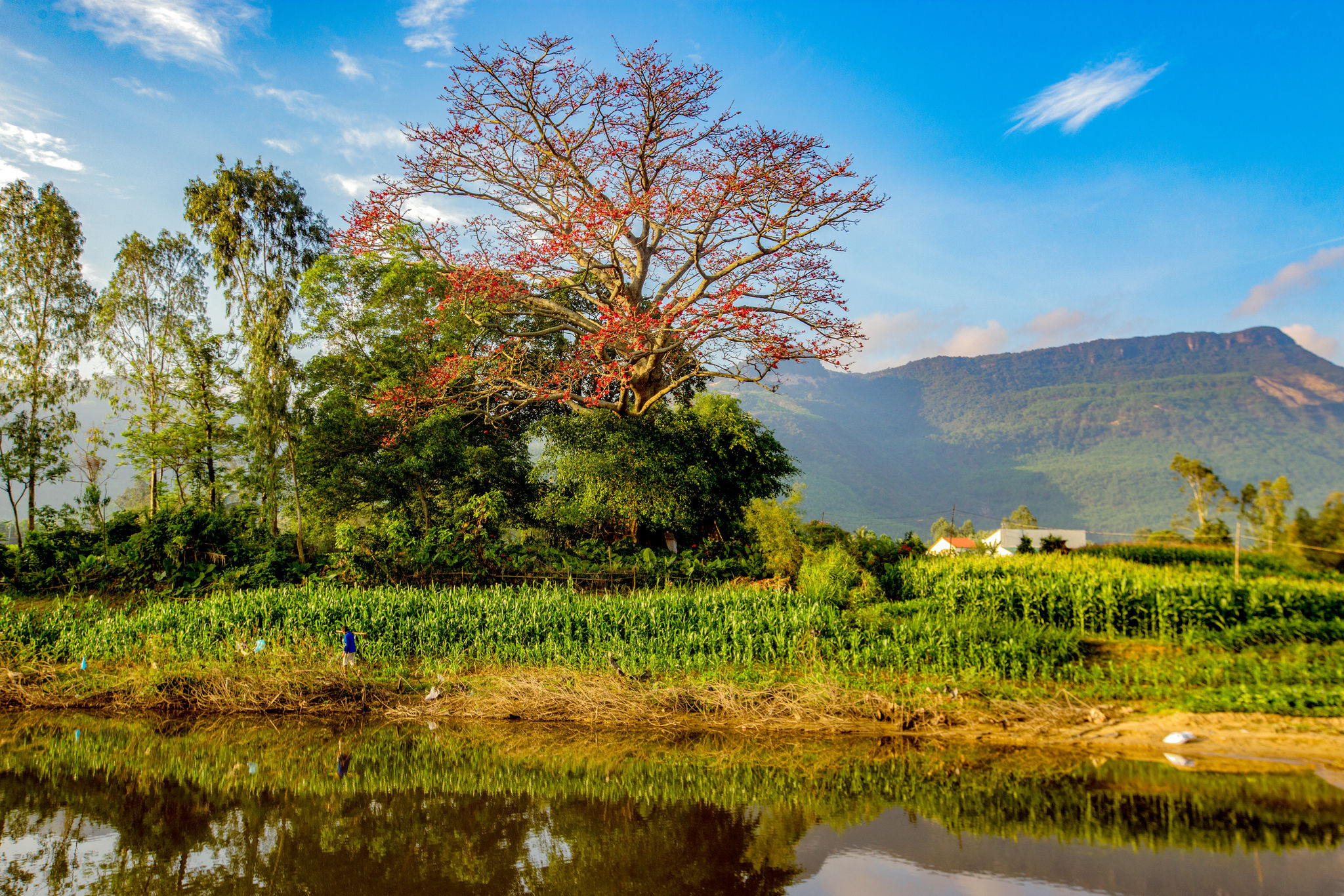
Tree shadows - village shadows
Throughout the formation and development of Quang Nam province, trees have not only been a part of nature but also closely intertwined with the history, culture, and lives of the local people. When waves of Vietnamese migrants came south to cultivate the land, alongside the ancient villages of the indigenous Cham people, Quang Nam still had vast areas of forests, mountains, rivers, ponds, swamps, and wild coastal plains. In these conditions, forest trees were both an obstacle that needed to be cleared and an essential resource, providing materials for building houses, constructing boats, and crafting tools for survival.
In the process of establishing villages, trees not only contributed to shaping the landscape but also played a role in creating the cultural identity of the community. People in the past often chose places near rivers, at the foot of mountains, or in fertile areas with lush vegetation to settle. Rows of trees surrounding the village created natural boundaries, acted as windbreaks, preserved the soil, and protected the community.
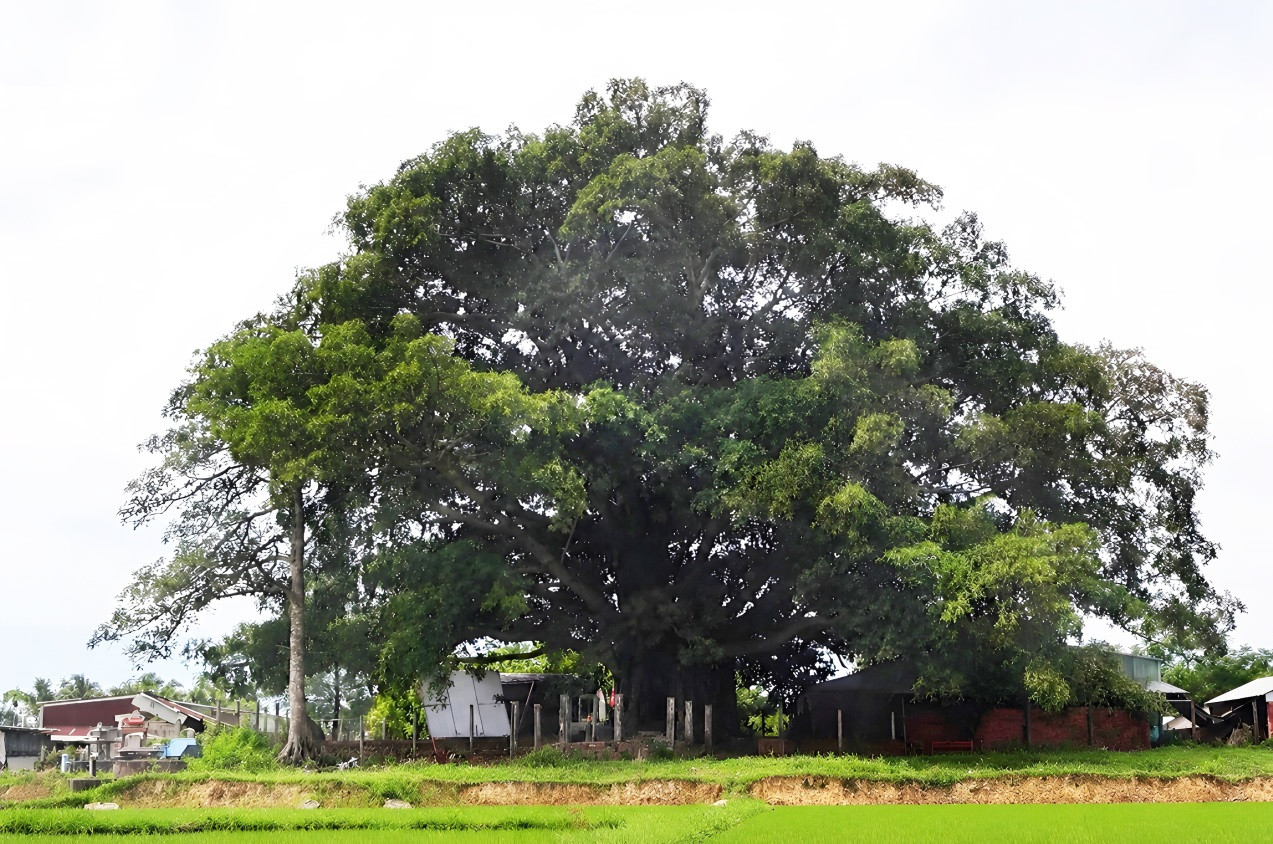
Many place names in Quang Nam province are associated with ecological characteristics or the names of trees, such as Dong Tram, Nui Que, Duong Thong, Chien Dan village, Cay Dua hamlet, Cay Coc crossroads… These place names reflect the close relationship between people and the natural environment and show that trees have become ingrained in local memory as a cultural identifier.
In the village communal house – the center of community life – ancient trees are considered an inseparable element. In many villages of Quang Nam province, the communal house is often associated with banyan, persimmon, fig, bodhi, or tamarind trees hundreds of years old. Their wide canopies cast shade over the courtyard, creating an ancient and sacred atmosphere. Under the shade of these ancient trees, community activities have taken place for generations, such as village festivals, Ky Yen ceremonies, and traditional opera performances. According to folk beliefs, ancient trees not only provide shade but also gather the spiritual energy of heaven and earth; the older the tree, the more sacred it is considered by the community, with incense burning year-round.



Life under the shade of ancient trees
The area around the well is always shaded by trees. The well provides a source of water for daily life and also serves as a gathering place for the community. Banyan trees, fig trees, coconut trees, or other trees with wide canopies are often planted near the well to retain water and provide shade for people to rest.
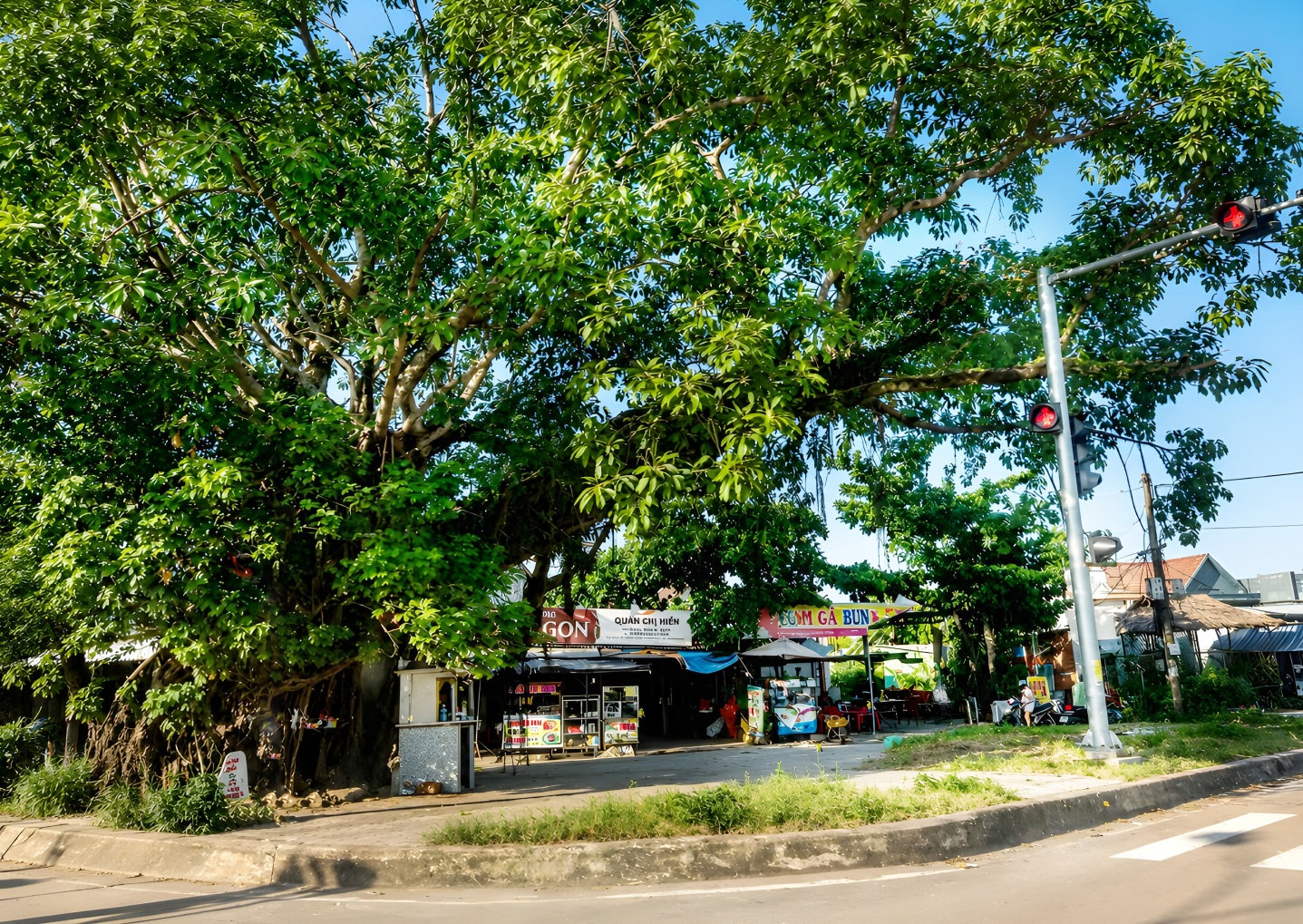
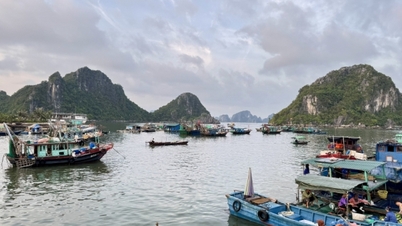
Riverbanks in Quang Nam province are very important as the lives of the inhabitants are closely tied to and depend on the rivers. Along the banks of the Thu Bon, Vu Gia, Truong Giang, and Tam Ky rivers, rows of bamboo and ancient trees often appear. They both hold the land together and provide safe anchorage for boats traveling upstream on the trade routes from the sea.
In the rural markets of Quang Nam province, trees are an indispensable part of daily life. Many small markets are formed under the shade of large trees or alongside rows of trees along the roadside. In the harsh climate of Central Vietnam, the shade of trees provides shelter for people to gather and trade daily.
In coastal estuaries, trees play a crucial role in establishing the ecological environment and protecting the lives of the inhabitants. Vegetation such as mangroves, nipa palms, and rows of casuarina trees stretching along the sand dunes not only help to retain soil and protect against waves but also contribute to the distinctive landscape of the coastal region.
During the war years, the old-growth forests in western Quang Nam province became solid "shields" protecting revolutionary bases. From Nuoc La, Nuoc Oa, Phuoc Tra to Hon Tau, the forest canopy, along with the support of the people, contributed to protecting the revolutionary forces, just as the image says: "The forest shelters the soldiers, the forest surrounds the enemy."
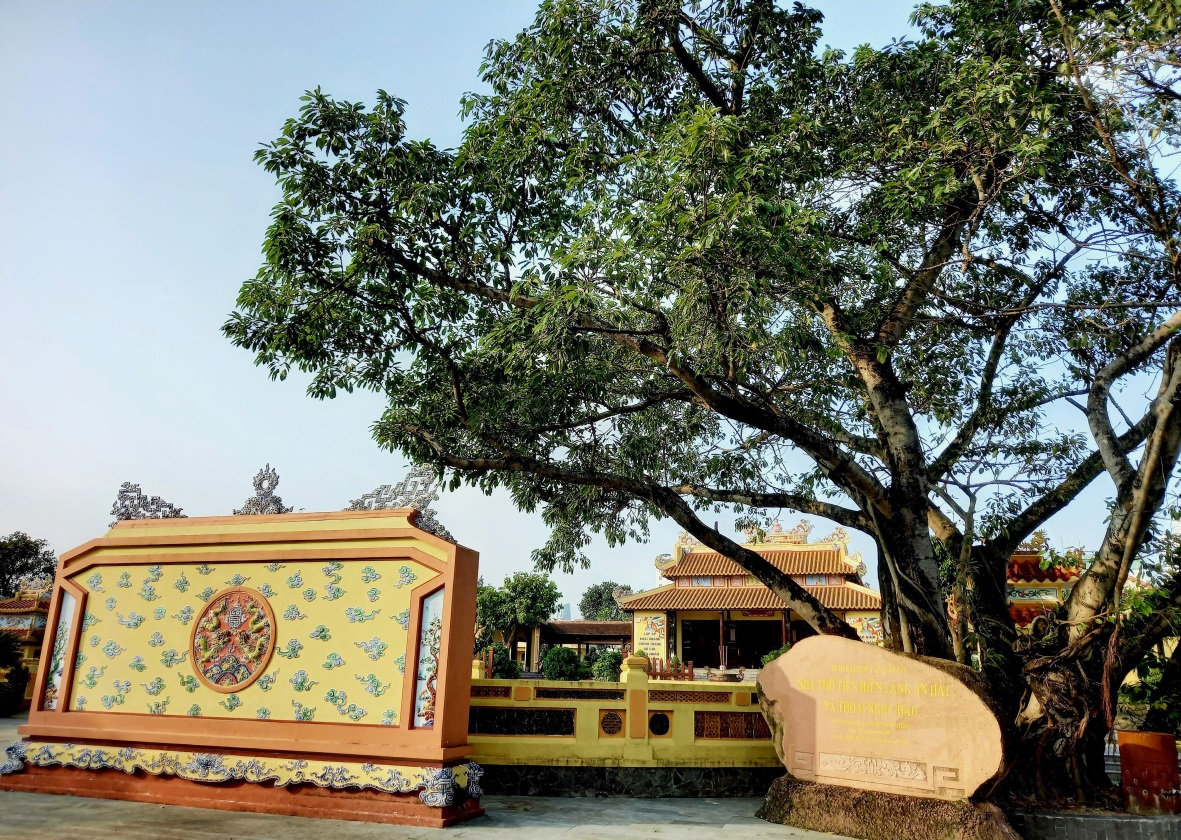


Each ancient tree seems to carry its own story. They are not simply biological entities but also "memory legacies," preserving the cultural layers of a region. There is Tam Ky, preserving the town's memories with its rows of golden crape myrtle trees along the river; and there is also the presence of ancient trees in the city along the Han River, such as the banyan tree at An Thi ferry terminal, the banyan tree at Do Xu, the banyan tree at the ancestral church of An Hai village, the rows of mahogany trees along Quang Trung street, and the vibrant red flame trees in summer on Le Loi street, which both created the landscape of Da Nang in the past and remain unforgettable images for the city's residents…
Today, in the context of rapid urbanization and the increasingly evident impacts of climate change, preserving green heritage is not only about protecting the environment but also about preserving the cultural values of the community. Ancient trees in a region can be considered a special form of ecological and cultural heritage, worthy of being cherished just like other tangible and intangible heritage. For beneath each ancient tree, layers of historical and cultural sediment of the rich traditions of Quang Nam province still remain.
Source: https://baodanang.vn/noi-thoi-gian-neo-lai-3342876.html













![[Video] Weather forecast for tonight and tomorrow, July 4, 2026: The remnants of Typhoon No. 1 will cause widespread and prolonged heavy rain in Northern Vietnam.](https://vphoto.vietnam.vn/thumb/402x226/vietnam/resource/IMAGE/2026/07/03/1783083905760_thum-dem-png.webp)