

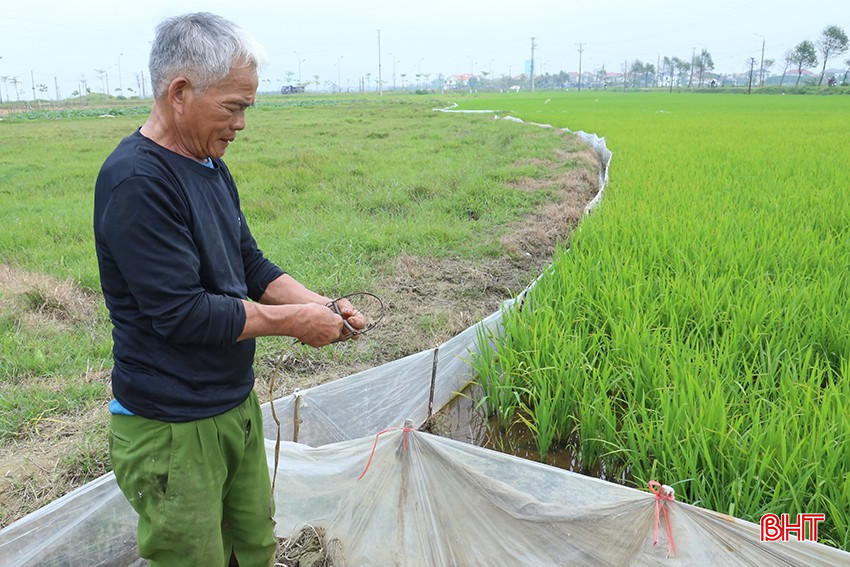
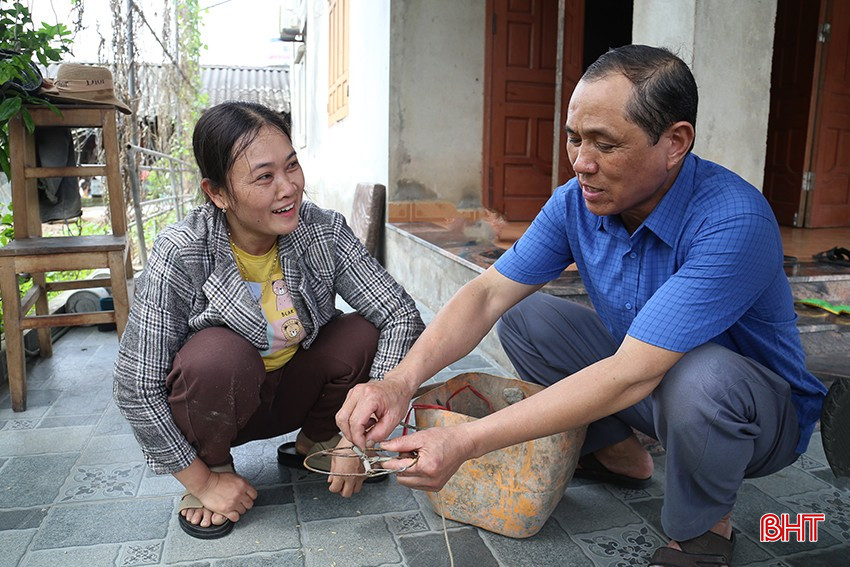
Carrying his equipment, from early morning, Mr. Vo Viet Hoa (Lien Nhat Hamlet, Thach Ha Ward, Ha Tinh City) went to the fields to "spread" nearly 200 crescent-shaped rat traps along the edges of his family's nearly 3-hectare rice paddies.
Mr. Hoa said: "This year's spring rice crop has seen a significant increase in rats. Everywhere I go, I hear farmers expressing their worries and discussing various ways to exterminate them. The rice is in the late tillering and heading stage, with tender, sweet stems, so the rats are gnawing at them even more. If the young panicles are completely eaten at this time, recovery is impossible, greatly affecting the final yield."
In the fields of Dong Mon ward (Ha Tinh city), farmers are also having to focus on exterminating rats continuously day and night.
Ms. Nguyen Thi Hien (Tien Tien residential area, Dong Mon ward) said: “I'm afraid rats will destroy my rice crop, so I have to go to the fields every day. People here buy the improved traps made by Mr. Nguyen Tien Duong (the person who invented the improved crescent-shaped rat trap - PV), and they are very effective; some nights we catch 7-10 rats.”
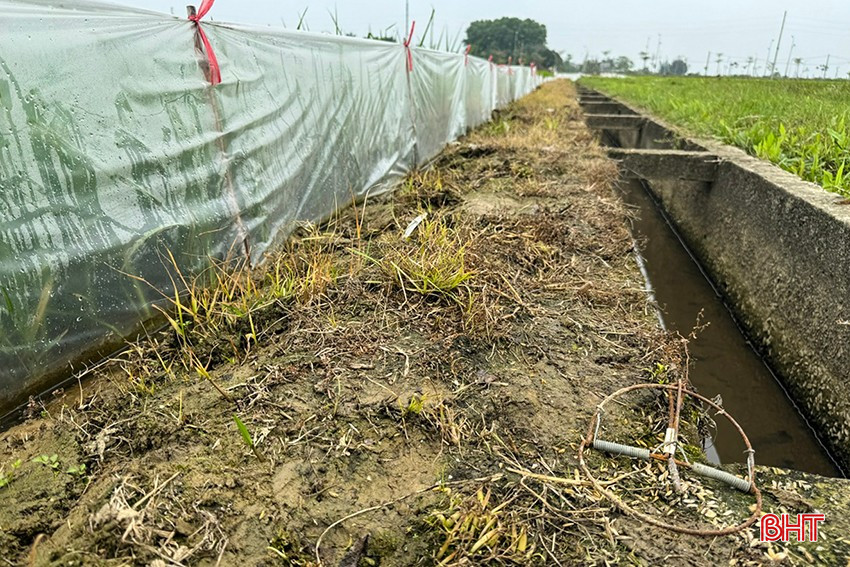
Reportedly, this year's spring rice crop has been damaged by rats in most communes and wards of Ha Tinh City, with over 20 hectares of rice fields severely affected. Local authorities have guided farmers to proactively control the rat infestation, such as setting traps, manually catching rats, and maintaining stable water levels to deter them from venturing deep into the fields. Additionally, farmers from various localities have been invited to visit Mr. Nguyen Tien Duong (Tien Tien Hamlet, Dong Mon Commune) to learn more about the habits, diet, and behavior of rats, and to practice improved rat trap techniques for more effective control.
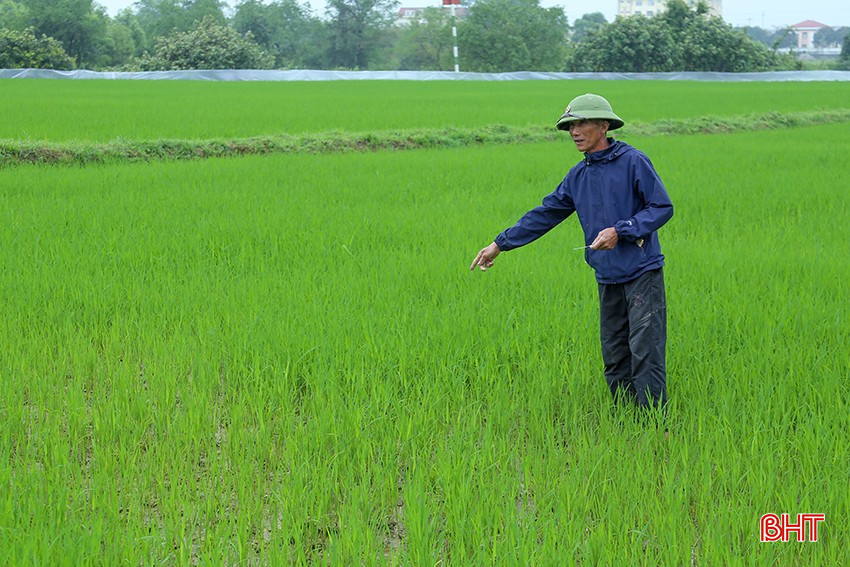
For nearly a month now, Cam Xuyen district has also seen a significant increase in rat infestations, particularly in areas near hills, villages, and high, shallow areas. Farmers have resorted to placing rat poison at the base of the fields; searching for burrows, digging them up, and destroying nests along field embankments, mounds, and slopes beside major roads near the fields; and setting up scarecrows… but rats continue to wreak havoc throughout the area.
After applying biological rat traps to nearly 8 acres of his family's rice fields, Mr. Tran Tuan (My Am village, Cam Quan commune, Cam Xuyen district) said: “In the past few years, there haven't been any major floods, so rats have reproduced a lot. They constantly gnaw at the rice plants from sowing to heading. I've tried many methods like baiting and setting traps, but the results have been negligible. As a last resort, I had to put up thick plastic sheeting to create a two-layer fence around the edges of the fields to prevent rats from getting inside and causing damage.”
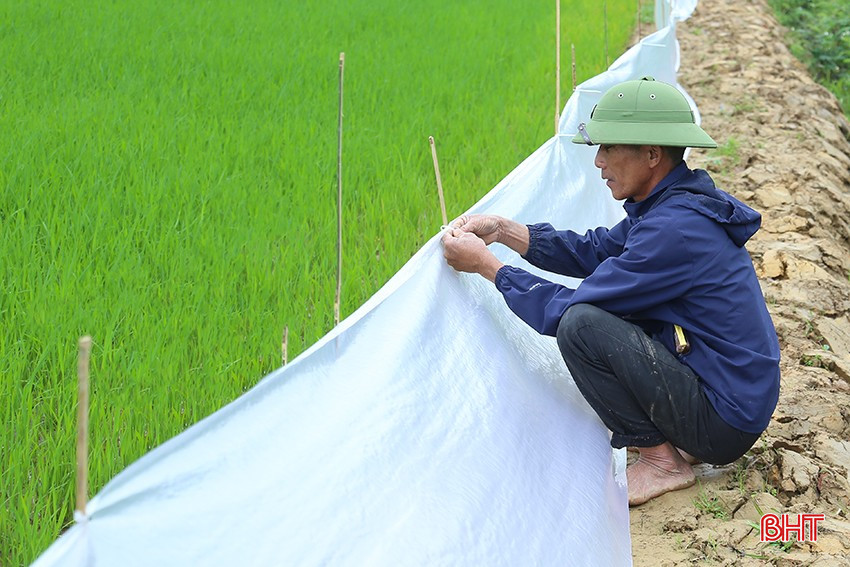
Not only in the plains, but also in mountainous districts such as Vu Quang, Huong Son, and Huong Khe, the problem of rats damaging rice crops is occurring.
Mr. Phan Van Tuan (Hamlet 3, Ha Linh Commune, Huong Khe District) said: “This season, the rat infestation is more severe, especially in the middle of the fields. In addition, this is also the time when rats reproduce strongly, increasing rapidly in number. The villagers here have to go out to the fields every day to check on the crops, put out bait, and set traps; they don't dare to be careless.”
According to information from the Provincial Department of Crop Production and Livestock, rats are currently damaging direct-seeded rice crops in most localities in the province, affecting hundreds of hectares, especially in areas near hills, villages, and high-lying, shallow areas. The average damage rate is 3-5%, reaching 10-15% in some areas, and up to 20% in localized locations. At this time, the rice crops have begun to enter the heading stage, becoming an attractive food source for these animals. Furthermore, this is also the breeding season for rats, and these rodents will rapidly increase in number and cause widespread damage. In areas heavily damaged by rats, the rice plants cannot recover, potentially significantly impacting the final yield.
To control rodent damage in the fields, a combination of measures is needed, adhering to several basic principles such as early, frequent, continuous, and widespread implementation. Besides digging burrows to catch rats or using traps and bait, people should use some types of rodenticides belonging to the anticoagulant group, which are less toxic to humans, livestock, and the environment.
Source: https://baohatinh.vn/nong-dan-ha-tinh-dat-bay-dao-hang-diet-chuot-pha-lua-xuan-post285052.html
![[Image] National Assembly discusses the implementation of the socio-economic development plan.](https://vphoto.vietnam.vn/thumb/1200x675/vietnam/resource/IMAGE/2026/04/20/1776696707422_ndo_br_img-20260420-185419-jpg.webp)
![[Photo] General Secretary and President To Lam meets with National Assembly delegates from ethnic minorities.](https://vphoto.vietnam.vn/thumb/1200x675/vietnam/resource/IMAGE/2026/04/20/1776696701056_a1-bnd-8331-3342-jpg.webp)



























































































Comment (0)