On June 22, US President Donald Trump declared he would "do what needs to be done" if Iran did not comply with the agreement with Washington, according to Reuters.
"If Iran doesn't do what it has promised, or if they don't behave appropriately, I will do what needs to be done," Trump told reporters.
The US president argued that preventing Iran from acquiring nuclear weapons was more important than concerns about the potential economic consequences of a prolonged military campaign, including the risk of a global economic recession.
When asked whether he would be willing to accept the risk of a global recession if he had to attack Iran in case it failed to fulfill the agreement, Trump replied: “With the way I’m doing it, no. That wouldn’t cause a recession.”
He went on to argue that the threat from nuclear weapons was far more worrying.
"If they don't comply... nuclear weapons are even more serious than economic recession," he added.
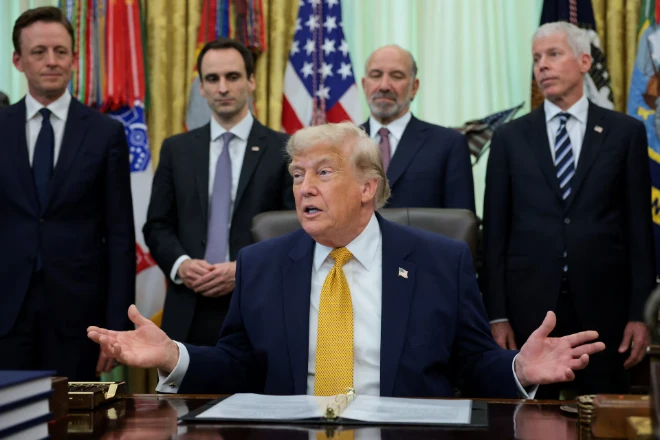 |
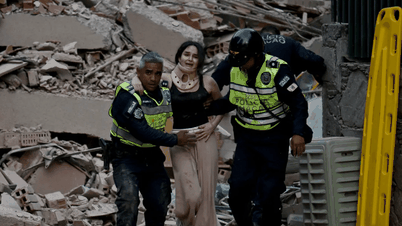
US President Donald Trump speaks in the Oval Office at the White House in Washington, D.C., on June 22. Photo: Reuters. You may also like  Iran reacts strongly to the latest US attacks.GD&TĐ - Ebrahim Azizi, chairman of Iran's National Security and Foreign Policy Committee, has issued an official statement regarding the latest US military operation.  Double earthquake in Venezuela: Why are they so rare and devastating?Earthquakes in Venezuela are considered a rare phenomenon, occurring frequently and causing unprecedented disasters.  The moment a woman was rescued after being trapped for two days in the Venezuelan earthquake.Nayarit Colmenare, 39, was rescued by Salvadoran rescue teams after being trapped for two days in the rubble on the sixth floor of an apartment building in Venezuela. |
President Trump and Iranian President Masoud Pezeshkian signed a provisional agreement between the US and Iran last week. A week after the signing, US and Iranian delegations completed the first round of talks on June 22nd as part of a 60-day negotiation roadmap.
Speaking at a press conference following the US-Iran talks in Burgenstock, Switzerland, US Vice President JD Vance rejected reports that Washington was preparing to transfer billions of dollars directly to Tehran.
According to Vance, current discussions focus on establishing mechanisms to ensure that all released funds are used only for approved purposes and not for military operations or proxy forces.
Commenting on the issue, Trump said that Iran was likely to use the money released from frozen assets to buy food entirely from the United States.
"All of that money will go back in the form of food purchases, which they desperately need. They have 91 million people and cannot ensure they have enough food. So, the money we're freeing up will go into the pockets of American farmers," Trump asserted.
However, Iran's semi-official Tasnim news agency quoted Iranian Central Bank Governor Abdolnaser Hemmati as saying that Tehran is not obligated to purchase agricultural inputs from the US under the current memorandum.



According to Tasnim , Mr. Hemmati stated that the remaining frozen assets could not necessarily be used only to purchase essential goods, but could also be used to purchase other goods not subject to sanctions.
Source: https://znews.vn/ong-trump-canh-bao-iran-post1662247.html

![[Photo] "Hanoi Lotus Festival" honors the lotus flower that has been associated with Vietnam for thousands of years.](https://vphoto.vietnam.vn/thumb/1200x675/vietnam/resource/IMAGE/2026/06/27/1782516943048_sen-ha-noi-2026-minh-duy-1-jpg.webp)






































![[Infographic] 16 fireworks display locations to celebrate the 50th anniversary of Ho Chi Minh City being honored with the name of President Ho Chi Minh](https://vphoto.vietnam.vn/thumb/402x226/vietnam/resource/IMAGE/2026/06/27/1782539591308_man-ban-phao-hoa-ruc-ro-dem-khai-mac-638jpg-17242995540161175940469.jpeg)