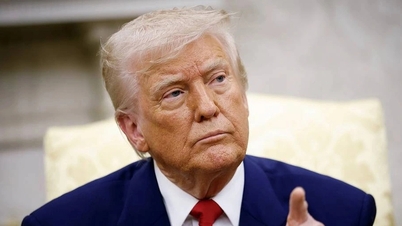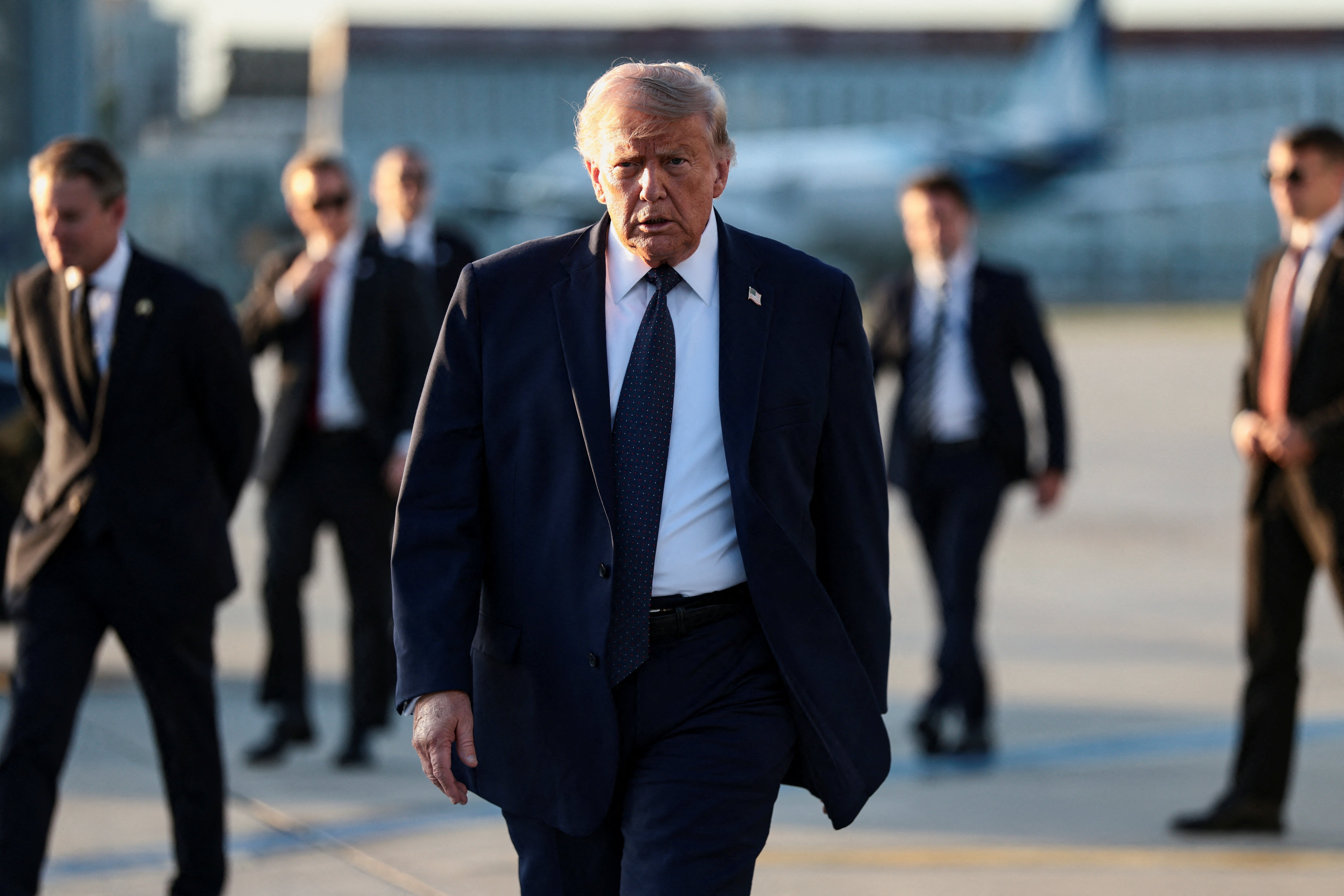
On June 18, President Trump called critics of the Iran deal "idiots," rejecting accusations that he had made too many concessions to end the war.
Responding to criticism that his administration hasn't been tough enough on Iran, Trump sharply asserted on social media that these people are "either jealous, or mean, or stupid."
He also cited the stock market rally and the drop in oil prices as evidence of the agreement's success.
Is Trump going against old advice?
Towards the end of the 2015 nuclear deal negotiations between the US and Iran, then a presidential candidate, Trump offered advice to Obama based on his own famous book, *The Art of the Deal *.
"The message to Obama on the Iran issue: The worst thing that can happen in a negotiation is to be too eager to reach an agreement," Trump wrote on social media at the time.
According to CNN , the Trump administration is now committing that very same taboo in its efforts to reach a memorandum with Iran. Furthermore, the White House doesn't seem to be trying to demonstrate that this is a document beneficial to the United States. What the administration is clearly demonstrating is its desire to withdraw from this conflict as soon as possible.
A U.S. official also urged the public not to "focus too much on the wording of the memorandum." "More important than the text itself is what the two sides understood and agreed upon behind the scenes," the official said.
President Trump also reiterated this view in a press conference on the sidelines of the G7 summit in France on June 17.
"Some things weren't even mentioned in the agreement. But we had certain unspoken understandings that didn't need to be written down. If they didn't do it, we might go back to bombing until they did," Trump said in France.
The memorandum released by the US on June 17 includes numerous concessions for Iran, including measures that take effect immediately and could help Tehran increase its financial resources.
Meanwhile, Iran's commitments have primarily focused on returning to pre-war conditions, including opening the Strait of Hormuz and reaffirming its commitment to nuclear non-possession. However, Iran has consistently maintained this commitment.
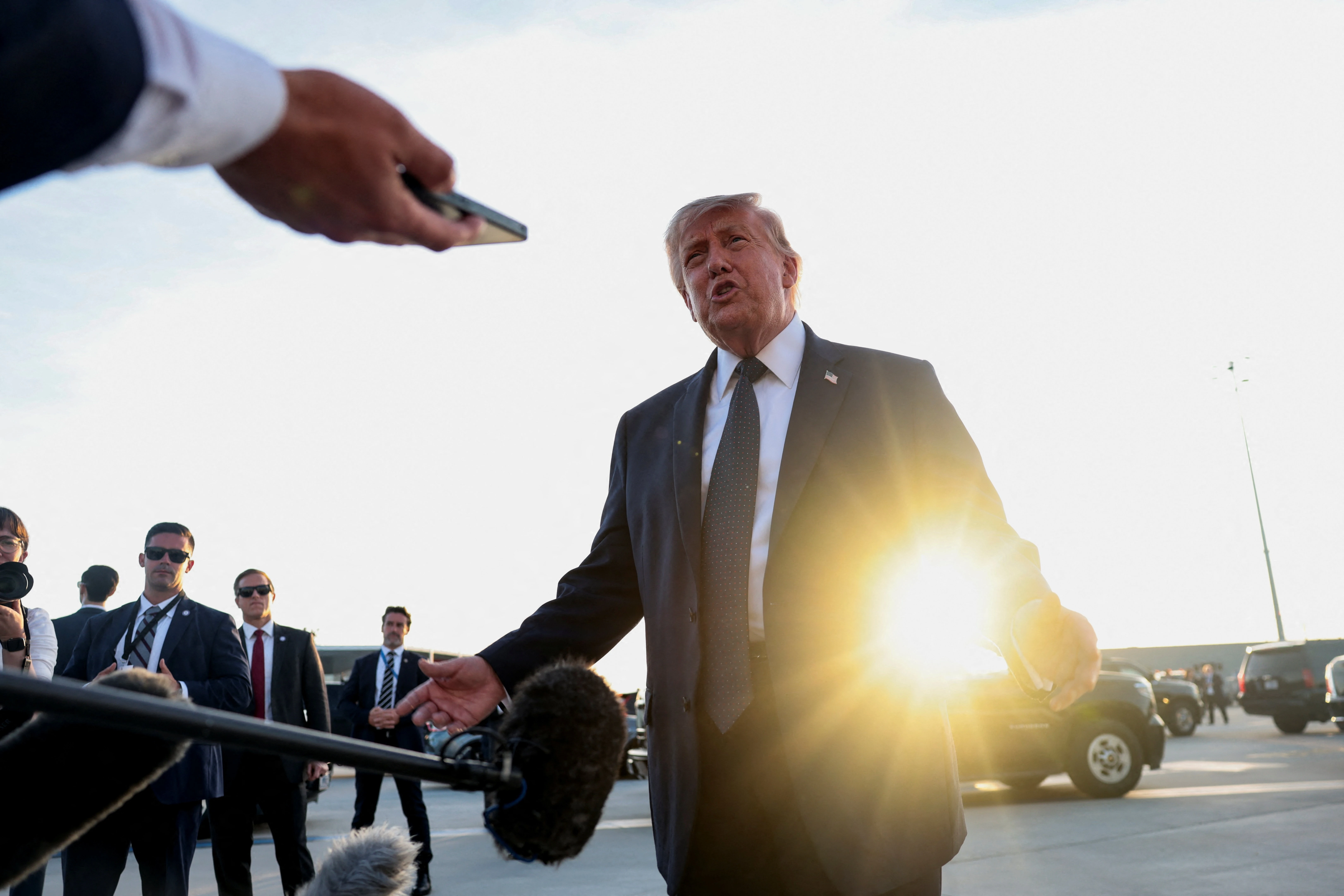 |
Mr. Trump gave an interview to the press in France on June 17. Photo: Reuters . |
Another statement from Trump in France also attracted attention, when he suggested that the memorandum was necessary to prevent a "global recession."
Trump argued: “Things can only go so far. When you corner someone, a lot of bad things can happen. First of all, the strait will never be reopened, because nobody wants billions of dollars worth of ships sailing through with missiles flying overhead and mines everywhere. In that case, the strait will have to stay closed for a long time.”
This is a fairly direct acknowledgment that Iran's leverage in the Strait of Hormuz has created enough pressure for the U.S. to seek a diplomatic solution, rather than prolonging the confrontation.
Why does Trump sympathize with Iran?



According to The Guardian , when entering the conflict with Iran, the US set maximum goals, but now it is trying to leave with rather modest results.
What the Trump administration is aiming for is a pragmatic decision to end a conflict that would require Trump and the Republican Party to pay a very high economic and political price if they are determined to achieve their maximum goals.
To quickly reopen the Strait of Hormuz, the US administration would have to abandon its grander goals, or face a "global recession," as Trump put it.
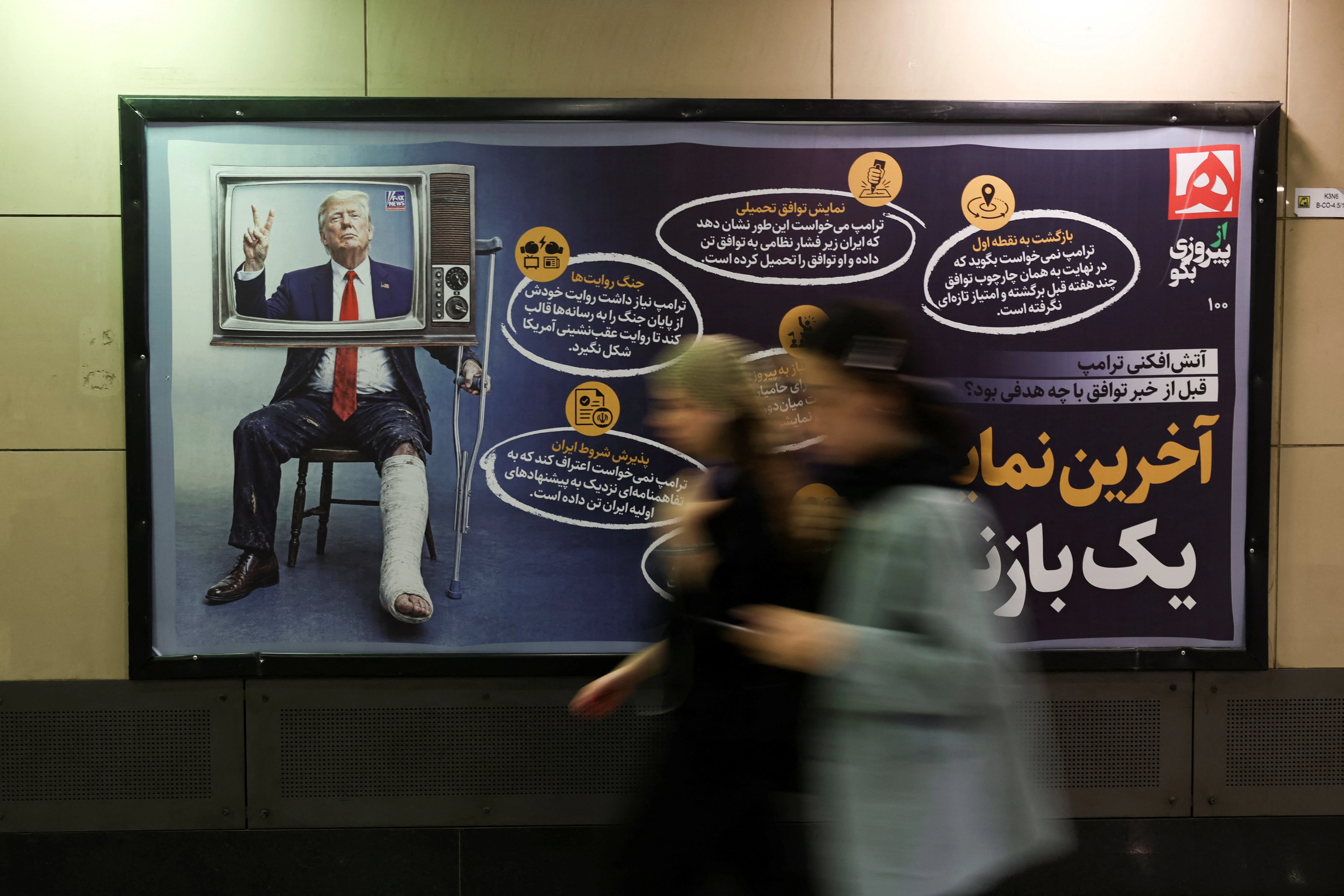 |
A street corner in Tehran, Iran, on June 17. Photo: Reuters . |
Barbara Leaf, a senior diplomat at the Middle East Institute, stated: “Washington quickly realized that an adversary who had spent four decades perfecting asymmetric warfare doctrine was facing a conflict unlike any they had ever been involved in. The rapid escalation of global economic losses ultimately directly impacted Americans, making this war unsustainable.”
For years, Trump consistently pointed to the nuclear deal with Iran under former President Barack Obama. Trump accused the Obama administration of transferring “loans of cash” to Iran in exchange for Tehran not developing nuclear bombs.
However, when it came to reaching an agreement with Iran, Trump had to justify the possibility of returning a much larger amount of assets to Iran, along with other financial incentives. The US also agreed to allow Iran and Oman to discuss the future of the Strait of Hormuz.
"That's not our money, it's their money. We froze that money at a certain point. Maybe we'll have to give it back," Trump said of the frozen Iranian assets.
On June 17, in several statements in France, Trump even proactively put himself in Iran's shoes. He argued that if America's Gulf ally Saudi Arabia possessed ballistic missiles, then Iran also had a point in wanting to possess similar capabilities.
Regarding Iran's uranium enrichment for civilian purposes, Mr. Trump stated: "It's awkward that neighboring countries are allowed to possess this technology, while Iran is prohibited from using nuclear power for civilian purposes. We need to be more realistic."
Ultimately, what is clearest right now is the Trump administration's pragmatic decision: to end the conflict as soon as possible.
To achieve that pragmatic goal, Trump was willing to go against his own "Art of Negotiation," lowering his ambitions, and even putting himself in the other party's shoes. Ultimately, that is precisely the negotiating mindset of a negotiator who knows when to advance and when to retreat.
Iran declares victory.
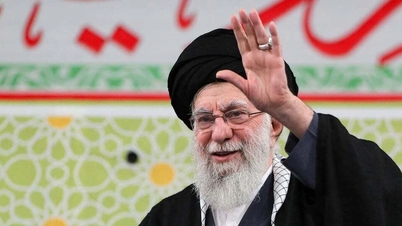
On June 18, Iranian Parliament Speaker Mohammad Ghalibaf affirmed that the recently signed agreement was proof of Tehran's victory over the United States. Iran called it a "historic document."
Under the agreement, Washington accepted a series of major concessions: lifting the naval blockade, easing oil sanctions, releasing frozen assets, and pledging $300 billion in aid for economic reconstruction. Tehran also specifically emphasized provisions related to the situation in Lebanon.
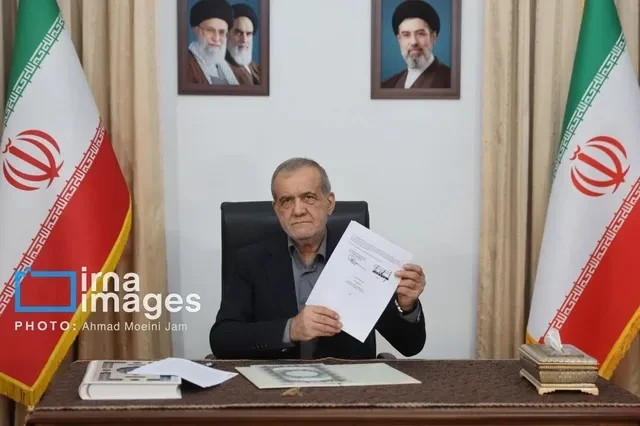 |
Iranian President Masoud Pezeshkian holds up the memorandum signed with the US on June 18, 2026. Photo: IRNA.  Vietnam encourages US businesses to expand investment in high technology.On the morning of June 26th, at the Government Headquarters, Deputy Prime Minister Ho Quoc Dung received Mr. Jeff Place, Supply Chain Director of Coherent Group (USA). During the meeting, the Deputy Prime Minister affirmed that Vietnam encourages US businesses to expand investment, especially in high-tech, innovation, and semiconductor industries.  Encourage U.S. businesses to expand investment in high-tech sectors.Deputy Prime Minister Ho Quoc Dung said that Vietnam welcomes US businesses to continue expanding their operations in Vietnam, especially in high-tech industries and sectors with high added value.  Vietnam and the United States strengthen cooperation in addressing the consequences of war.VTV.vn - On June 22, General Secretary and President To Lam received Acting Secretary of the US Navy Hung Cao. |
In return, Iran pledged to restore freedom of navigation through the Strait of Hormuz, but warned that the strategic route would not return to its previous state.
Regarding the nuclear issue, the document reaffirms Iran's commitment not to develop nuclear weapons. While uranium dilution significantly reduces the risk of proliferation in the short term, experts note that Iran still retains a significant amount of this material within its territory. In theory, Tehran could completely resume uranium enrichment if the agreement collapses in the future.
Although fighting has temporarily ceased, it is still impossible to say that the conflict has completely ended since the agreement reached on Sunday.
At the Evian-les-Bains summit, G7 leaders welcomed the effort. European countries – which do not support military action without UN authorization – also expressed concern about Iran's nuclear program, and worried that Tehran is gaining strategic advantage by withstanding pressure from superpowers and asserting control over the Strait of Hormuz.
The international community has unanimously welcomed the Memorandum of Understanding between the US and Iran. In its role as a mediator, Pakistan hopes this will lay the foundation for regional peace.
Russia and China hailed it as a positive step to de-escalate tensions. Hezbollah, in particular, declared the agreement a "major victory." All parties hope the document will pave the way for a sustainable diplomatic solution.
Source: https://znews.vn/ong-trump-chot-sai-deal-post1660996.html

![[Image] National conference summarizing one year of operation of the overall organizational model of the political system, the three-tiered government model.](https://vphoto.vietnam.vn/thumb/1200x675/vietnam/resource/IMAGE/2026/07/01/1782882811691_ndo_br_1-jpg.webp)