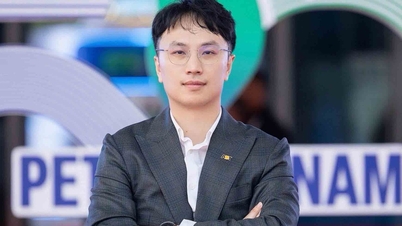
A reporter from HanoiMoi Newspaper interviewed Associate Professor Phan Thi Thanh Thao about the application and response to AI in Vietnamese higher education .
The shift in the role of the teacher
- Professor Phan Thi Thanh Thao, how do you assess the impact of artificial intelligence (AI) on higher education in Vietnam today?
- It can be said that AI is creating a revolutionary turning point for higher education, similar to the emergence of the Internet more than two decades ago. AI is not only changing how we search for information but also changing how we teach, learn, research, and administer universities.
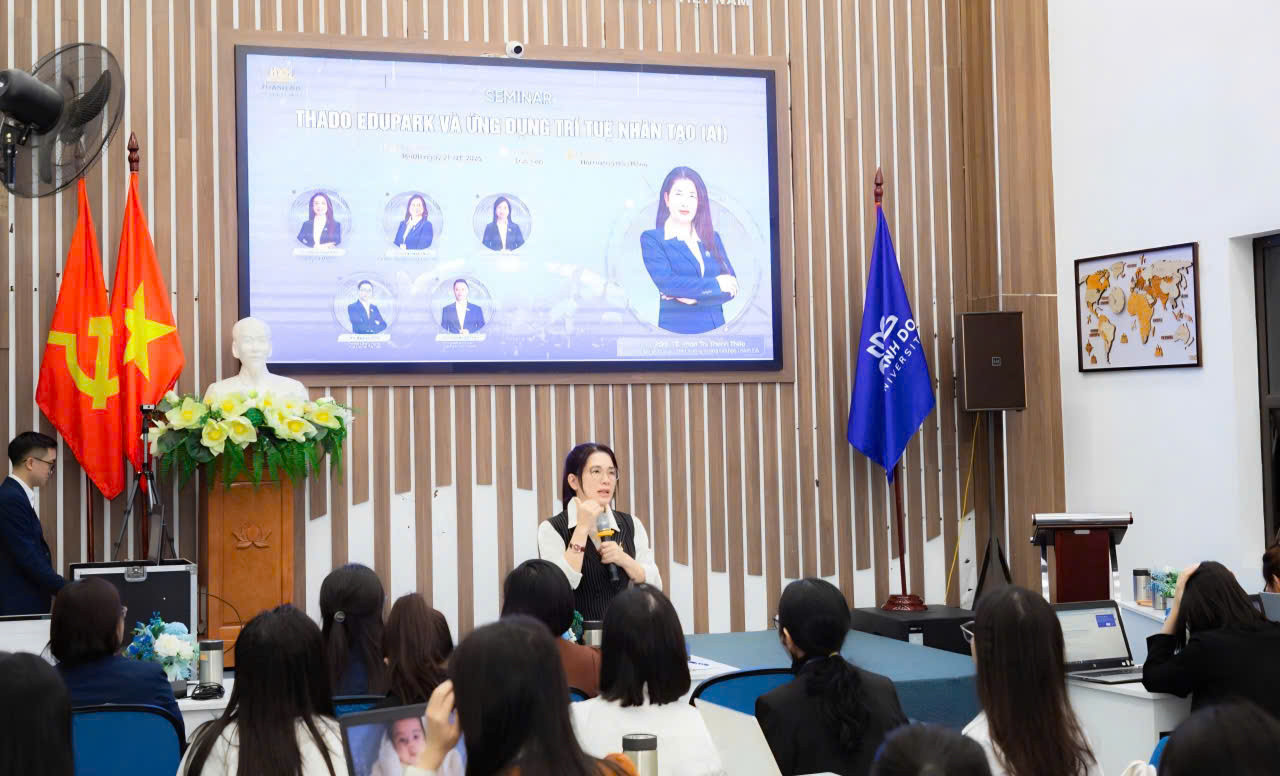
For Vietnam, AI presents both a great opportunity to narrow the gap with advanced education systems and many challenges regarding the quality of training, academic ethics, and the adaptability of faculty and students.
In my opinion, the crucial question now is no longer "Should we use AI?", but rather "How can we use AI effectively, responsibly, and to create value for learners?".
- In this wave of technology, how will the role of the teacher change so as not to become "obsolete," Madam?
- AI will not replace teachers, but it will certainly change the role of teachers.
In the past, instructors primarily focused on imparting knowledge. Today, with students able to access vast amounts of information with just a command, the role of instructors has shifted significantly towards designing learning experiences, guiding critical thinking, verifying information, directing research, and inspiring others.
What AI cannot yet replace is the ability to accompany, educate character, inspire motivation for learning, and connect knowledge with real-world contexts. This remains a core value of teachers in higher education.
- Many people are concerned that AI will make students lazy or dependent on technology. What is your opinion on this issue?
This is a well-founded concern if AI is used as a tool to replace human thinking.
However, if properly integrated into the training process, AI can become a "learning companion" that helps students learn more effectively, improve their self-learning skills, and develop problem-solving abilities.
It's crucial that universities adjust their assessment methods. If the test only requires memorization or recall of knowledge, AI can perform very well. But if it assesses analytical, creative, critical thinking, teamwork, communication, and problem-solving skills, then AI is merely a supporting tool and cannot replace the abilities of the learners.
So, what do students need to prepare for in the AI era, madam?



- I believe that students need to prepare four groups of competencies. Firstly, the ability to learn throughout life, because knowledge is constantly changing.
Secondly, it requires critical thinking skills to verify, evaluate, and select information generated by AI.
Thirdly, it involves the ability to use AI as a tool to support innovation, research, and problem-solving.
Finally, it is necessary to cultivate irreplaceable human qualities such as ethics, responsibility, cooperation, communication, and innovation. These are values that will become increasingly important in the age of AI.
Transform challenges into drivers of innovation.
- From theory to action, what kind of comprehensive strategy do Vietnamese universities need to adopt to respond to AI?
In my opinion, there are five key directions. First, develop a school-wide AI strategy instead of just encouraging its spontaneous use.
Secondly, we need to train faculty members in AI capabilities so that AI can become an assistant in teaching, research, and administration.
Third, integrate responsible AI skills into the curriculum for all students, regardless of their field of study.
Fourth, innovate testing and evaluation methods towards assessing competencies rather than just evaluating final results.
Finally, it is essential to establish clear regulations regarding academic ethics, transparency in the use of AI, data protection, and ensuring integrity in learning and research.
- How are these orientations being realized at Chengdu University, Madam?
At Chengdu University, we identify AI as one of the key drivers of digital transformation and educational innovation.
The school is implementing AI application training for its faculty, encouraging the use of AI in designing learning materials, building lectures, developing assessment methods, and supporting scientific research.
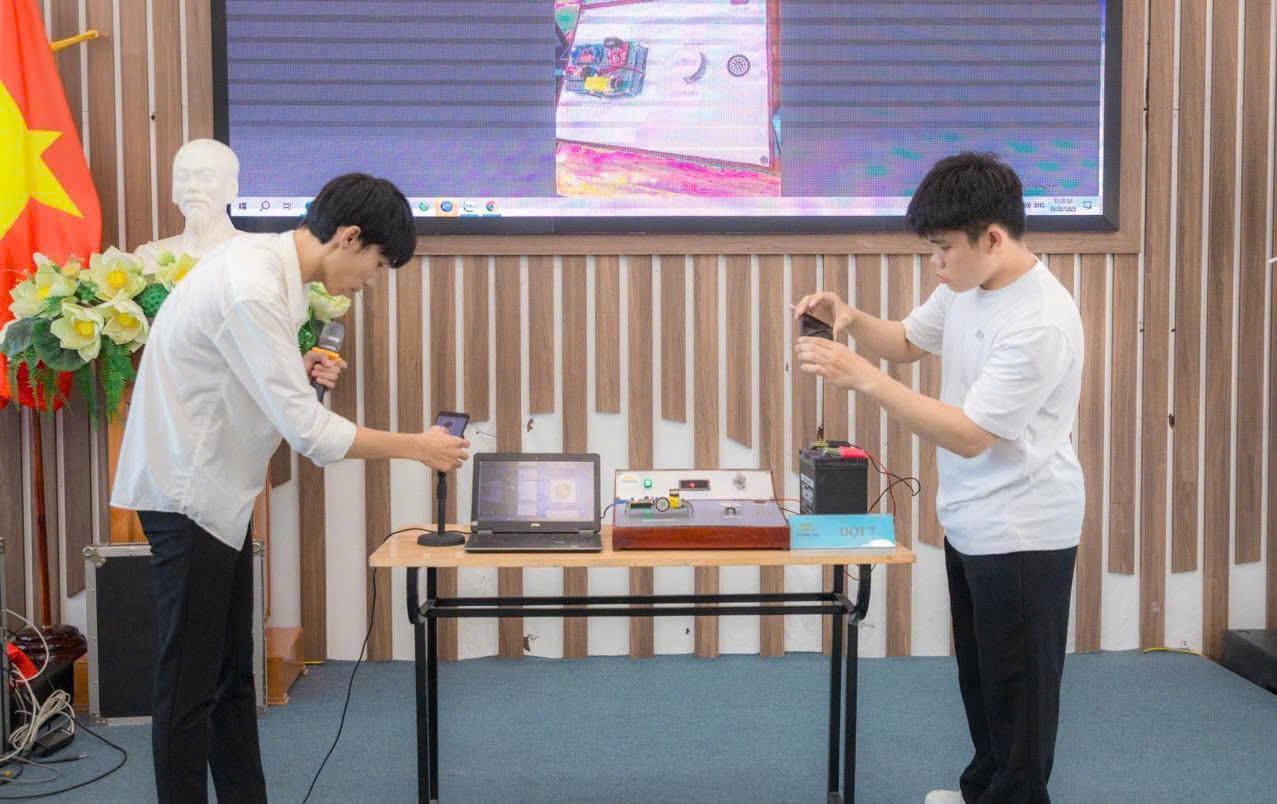
In parallel, we are developing guidelines on the responsible use of AI, enhancing project-based learning activities, case studies, and practical experiences to foster capabilities that AI cannot replace.
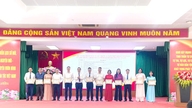
Our goal is not to train students to use a specific AI tool, but to train citizens who are capable of working effectively with AI throughout their studies and careers.
- From the perspective of a higher education administrator, how do you think Vietnamese higher education can transform AI from a challenge into a driving force for innovation and development?
- The history of education shows that each technological revolution presents new challenges, but also opens up unprecedented opportunities for development.
AI is not the destination, but a tool. What ultimately determines the quality of education is the people involved, the educational philosophy, and the innovative capacity of each training institution.
For Vietnamese universities, the key is not to chase after AI, but to proactively adapt, lead change, and build a learning environment where technology serves the holistic development of individuals.
At Chengdu University, we believe that the future of education is not about "AI replacing humans," but about "humans knowing how to leverage AI to create new values." Our goal is to train students with strong professional skills, innovative thinking, the ability to work with technology, and a sense of responsibility to the community. This also forms the foundation for contributing to the sustainable development of the country in the digital age.
Thank you very much, Madam!
Source: https://hanoimoi.vn/pgs-ts-phan-thi-thanh-thao-ai-khong-thay-the-nguoi-thay-nhung-buoc-nguoi-thay-phai-doi-moi-1208707.html
![[Image] Schools organize meetings and introduce teaching models to students admitted to grade 10.](https://vphoto.vietnam.vn/thumb/1200x675/vietnam/resource/IMAGE/2026/06/25/1782368077271_ndo_br_z7970052192242-1ec8daeb77a6eed1a4e9f58c564ddd3e-jpg.webp)
![[Photo] General Secretary and President To Lam attends the 13th National Congress of the Ho Chi Minh Communist Youth Union](https://vphoto.vietnam.vn/thumb/1200x675/vietnam/resource/IMAGE/2026/06/25/1782356968989_ndo_br_1-jpg.webp)


![[Photo] General Secretary and President To Lam receives Palestinian Ambassador Saadi Salama](https://vphoto.vietnam.vn/thumb/1200x675/vietnam/resource/IMAGE/2026/06/25/1782365384740_a1-bnd-9423-8322-jpg.webp)