

TP - Although there are 75 training programs related to semiconductor microchips (Physics, Mechanics, Materials Science , Computer Science, etc.), according to university leaders, opening a specific semiconductor microchip program is not simple. Based on current regulations regarding the conditions, procedures, and processes for opening training programs, a training institution must have a PhD in semiconductor microchips to be allowed to open this program.
TP - Although there are 75 training programs related to semiconductor microchips (Physics, Mechanics, Materials Science, Computer Science, etc.), according to university leaders, opening a specific semiconductor microchip program is not simple. Based on current regulations regarding the conditions, procedures, and processes for opening training programs, a training institution must have a PhD in semiconductor microchips to be allowed to open this program.
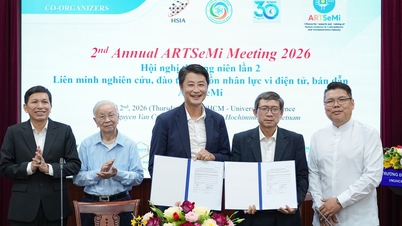
Associate Professor Tran Cong Hung from Saigon International University stated that currently, universities are only allowed to offer semiconductor integrated circuit (SIC) programs as specialized majors. If they were to open a SIC program according to the regulations of the Ministry of Education and Training , they would need PhDs in the specific field of semiconductor integrated circuits. Meeting this requirement would mean a university would have to wait another 10 years due to the waiting time for training.
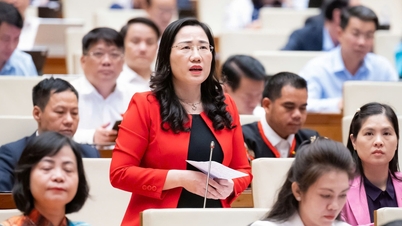
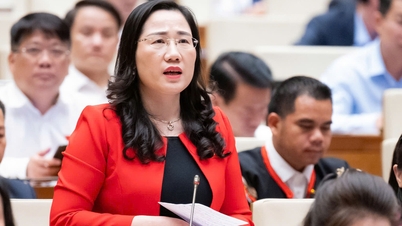
Regarding this concern, Ms. Nguyen Thu Thuy, Director of the Higher Education Department (Ministry of Education and Training), affirmed that the exact name of the semiconductor microchip major must be based on the list of pilot majors that the Ministry has announced. However, the Ministry of Education and Training has issued a new decision to add pilot majors. For example, two national universities have their own specific regulations allowing them to pilot majors outside the list. However, other universities need to consider this carefully.
According to Mr. Do Tien Thinh, in order to train high-quality human resources for the semiconductor industry, universities must upgrade their facilities and improve the qualifications of their lecturers. Currently, the majority of Vietnamese lecturers do not meet the requirements set by businesses.
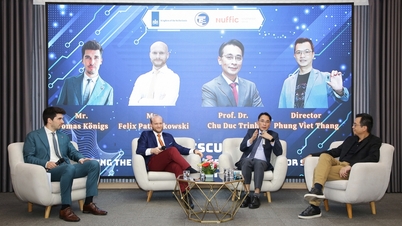
Mr. Do Tien Thinh, Deputy Director of the National Innovation Center (NIC) under the Ministry of Finance, stated that, based on the government's strategic direction, Vietnam will focus on the design stage as its core, requiring universities to train a sufficiently large number of qualified personnel to serve both domestic and international markets. Secondly, the focus will be on training personnel for assembly, testing, and packaging (ATP). This workforce will be used for both labor export and to serve FDI companies in Vietnam such as Intel, AmKor, and other corporations currently investing in Vietnam. While the production stage will require manpower, it will not be for Vietnam's immediate needs but rather for the needs of foreign factories.
However, the current limitation is that lecturers at Vietnamese universities are generally unable to meet the demands set by foreign companies. Therefore, in training human resources for the semiconductor industry, Vietnam is pursuing a parallel approach: simultaneously training lecturers and providing training for workers and students.
Training in navigating across rivers by feeling for rocks.
NIC has conducted several training courses for instructors, however, most were pilot programs. The current approach is to train according to the specific needs of employers. “Currently, we are just feeling our way across the river because there are too many programs. For example, programs from South Korea, the US… each have their own strengths. We are feeling our way across the river to choose the best and most suitable one,” Mr. Thinh said. According to Mr. Thinh, the curriculum consists of standards set by businesses facing labor shortages, such as TSMC (a world-leading semiconductor corporation from Taiwan, China). Vietnamese universities then follow these standards in their teaching. This is how NIC is collaborating with Vietnamese training institutions and corporations. It means training according to the specific requirements of businesses. NIC has piloted a smart transportation training model, commissioning two years of teacher training in Vietnam followed by two years of work for semiconductor companies in Taiwan, China. Thus, lecturers who possess both expertise and practical market knowledge will, upon returning to teach students in Vietnam, know what is relevant to the potential market. “The biggest challenge is that while the goal is to train 50,000 engineers, 5,000 graduates are already unemployed. Therefore, a strong solution is to work directly with the entities setting the job requirements. For example, Da Nang City is working with businesses preparing to invest there. They need to understand what job positions and skills are required to prepare training programs that meet those needs. Therefore, provinces and cities should survey the units preparing for investment, giving us time to prepare,” Mr. Thinh explained.
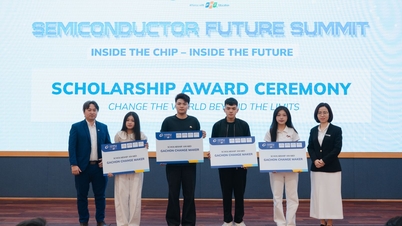
Regarding learners, the NIC representative suggested dividing them into groups. One group consists of graduates in related fields who can receive short-term training (9 months or less) to facilitate immediate transition, and NIC is focusing on this group. This group works for companies in Vietnam that require a large workforce. The second group requires long-term, formal training, and universities need to upgrade their facilities and faculty. More labs and scholarships for students are necessary. The government needs to support universities. Policies always have a time lag, but there are positive signs currently: businesses and universities are proactively responding to market demands. Another positive sign is the Politburo's Resolution 57 on breakthroughs in science, and the National Assembly's pilot resolution on science, technology, and digital transformation, which includes policies to support semiconductor manufacturing plants. Mr. Thinh assessed that Vietnam has prospects and is on the right track, but the speed of this depends on how much state support is provided and how well the country can engage in international cooperation.
Source: https://tienphong.vn/mo-nganh-vi-mach-ban-dan-phai-tinh-bai-toan-lau-dai-post1721677.tpo

![[Image] National Assembly discusses the implementation of the socio-economic development plan.](https://vphoto.vietnam.vn/thumb/1200x675/vietnam/resource/IMAGE/2026/04/20/1776696707422_ndo_br_img-20260420-185419-jpg.webp)
![[Photo] General Secretary and President To Lam meets with National Assembly delegates from ethnic minorities.](https://vphoto.vietnam.vn/thumb/1200x675/vietnam/resource/IMAGE/2026/04/20/1776696701056_a1-bnd-8331-3342-jpg.webp)





















































































Comment (0)