

Genital papillomatosis is a general term for many types of diseases, including genital warts, but it is still possible to distinguish genital warts from benign genital papillomas.
Dr. Vo Thi Tuong Duy, a specialist in Dermatology and Cosmetic Dermatology at Tam Anh General Hospital in Ho Chi Minh City, said that genital warts are nodules or bumps that grow in the genital area and are associated with many different diseases.
Risk factors for genital warts include: accumulation of harmful bacteria due to poor hygiene of the genital area; unsafe sexual intercourse; sexually transmitted infections such as herpes, chlamydia, gonorrhea, syphilis, HIV/AIDS; wearing unhygienic underwear; wearing tight clothing; frequent scratching of the genital area which inadvertently introduces dirt and bacteria; and using feminine hygiene products with an inappropriate pH level.
For the most part, papillomas such as genital warts, molluscum contagiosum, Fordyce spots, etc., are relatively benign, mainly affecting the aesthetics and psychology of the patient. However, with papillomas caused by viruses such as genital warts, molluscum contagiosum, etc., patients should see a doctor for early treatment. The different types of papillomas can be distinguished by observing their skin manifestations.
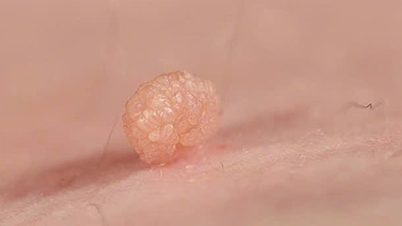
Benign genital papillomas are pinkish-white genital warts that are scattered, not clustered together, do not have a common stalk, and do not contain pus. Genital papillomas grow very slowly and hardly increase in size over time. In some cases, papillomas may grow on the tongue, but this is very rare.
Initially, genital warts appear as individual papules, which later develop into clusters resembling cauliflower or a rooster's comb, hence the name. Genital warts are pale pink, raised above the skin's surface, and increase in size and number over time. Besides the genitals, genital warts can also appear on the tongue, mouth, and anus, and are easily transmitted through sexual intercourse, from mother to child, and through contact with open wounds.

Unsafe sexual practices are a cause of genital warts. (Image: Freepik)
According to Dr. Vo Thi Tuong Duy, to diagnose genital warts, doctors perform a visual examination, inquire about symptoms, and review lifestyle and sexual habits. Blood tests help determine the cause of genital warts or any accompanying diseases (if any). A sample of the wart may be taken for biopsy to determine whether the patient has benign or malignant genital warts and the causative agent.
Because of their similar external appearance, benign genital warts are easily confused with warts caused by viruses. Therefore, when abnormal warts appear on the genitals, patients should immediately go to the hospital for diagnosis and timely treatment by dermatologists and cosmetic skin specialists.
Phuong Nga
Source link
![[Photo] General Secretary and President To Lam meets with National Assembly delegates from ethnic minorities.](https://vphoto.vietnam.vn/thumb/1200x675/vietnam/resource/IMAGE/2026/04/20/1776696701056_a1-bnd-8331-3342-jpg.webp)




![[Image] National Assembly discusses the implementation of the socio-economic development plan.](https://vphoto.vietnam.vn/thumb/1200x675/vietnam/resource/IMAGE/2026/04/20/1776696707422_ndo_br_img-20260420-185419-jpg.webp)


































































































Comment (0)