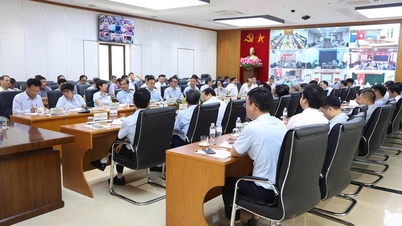
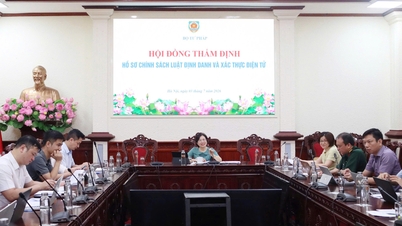
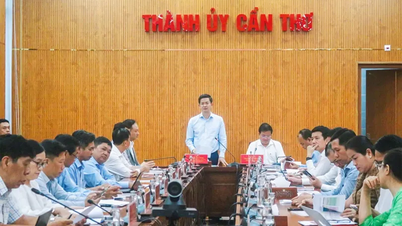
At the session, explaining some contents of the draft law, the Chairman of the National Assembly 's Committee on National Defense and Security, Le Tan Toi, said that the draft Law on Civil Defense had been considered and discussed at the fourth session at the end of 2022, and then revised and commented on at the specialized legal session in February 2023. It was then further refined and submitted to the Conference of National Assembly Deputies working in specialized committees in April 2023.
The draft law, after being reviewed, revised, and finalized, has 7 chapters with 57 articles.
Framework regulations to ensure the synchronized and effective implementation of civil defense activities.
According to Le Tan Toi, Chairman of the National Assembly's Committee on National Defense and Security, some delegates believe that the draft law has a broad scope and needs to be reviewed to avoid overlaps and conflicts with specialized laws. They suggest only stipulating general principles to ensure feasibility; proposing that the law be drafted by referencing provisions from other laws to avoid duplication or conflict; and adding provisions that are missing in other laws.
Clarifying this issue, Chairman Le Tan Toi stated: The scope of regulation of the draft Law on Civil Defense relates to activities, policies, measures... for preventing, combating, and mitigating the consequences of disasters, incidents, natural calamities, and epidemics, which are already stipulated in many relevant specialized laws. Therefore, the draft law needs to define its scope of regulation based on establishing principles and identifying the most general, comprehensive, and stable issues to ensure the synchronized and effective implementation of civil defense activities.
Based on the opinions of the delegates, the Standing Committee of the National Assembly has revised the scope of regulation; at the same time, it has reviewed and clarified other contents related to civil defense activities such as: Levels of civil defense (Article 7); Development of a national civil defense strategy (Article 11); Development of a civil defense plan (Article 12); Response measures at each level of civil defense, civil defense activities in emergency situations and wartime situations (Articles 23, 24, 25, 26, 27); Measures to remedy the consequences of incidents and disasters in civil defense (Article 28).
To provide a basis for implementing civil defense measures appropriate to each level, the draft law stipulates: Civil defense levels; the basis for determining civil defense levels; the measures to be applied at each level of civil defense and the authority of each level of government to apply them...
Delineating three levels of civil defense for responding to and mitigating incidents and disasters.



Notably, during the discussion, some delegates pointed out that the draft law stipulates three levels of civil defense; however, it also includes five levels of natural disaster risk. Therefore, they suggested researching and reviewing the classification of civil defense levels and natural disaster risk levels to ensure consistency and compatibility with other laws.
Clarifying the above concerns, Chairman Le Tan Toi stated: The purpose of classifying civil defense levels is to uniformly regulate the activities of all levels of government, civil defense forces, and the people in responding to and mitigating incidents and disasters.
Currently, regulations regarding the severity levels of different types of incidents vary across relevant specialized laws, tailored to the characteristics and specifics of each type of incident. The Law on Disaster Prevention and Control categorizes each type of natural disaster into five risk levels, each associated with a distinct color; the Law on Environmental Protection divides incidents according to administrative levels (local, district, provincial, and national); the Law on Infectious Disease Prevention and Control categorizes them by infectious disease groups (Group A, Group B, and Group C); and the Law on Atomic Energy divides incidents into five situational groups to serve as a basis for developing response plans.
"Therefore, the draft Civil Defense Law only stipulates the most general levels, depending on the type of incident or disaster, and applies appropriate response measures according to specialized laws," said Chairman Le Tan Toi.
Accordingly, based on information about natural disaster risks, infectious disease groups, or other risks announced by specialized agencies, local authorities assess and compare this information with the response and mitigation capabilities of the local government and civil defense forces to determine and declare the level of civil defense in their managed areas; and then apply appropriate response and mitigation measures.
Therefore, the local government's declaration of civil defense levels within its jurisdiction does not overlap with existing regulations on declaring risks of natural disasters, dangerous epidemics, or other risks.
Investment in and procurement of civil defense equipment must be made before an incident or disaster occurs.
Furthermore, during the discussion, some delegates also suggested that specific regulations should be established regarding the investment and procurement of civil defense equipment, ensuring it aligns with different levels of security; regulations should be in place for urgent procurement to ensure compliance with the law while meeting practical requirements; and this regulation should be reconsidered as it could lead to overlapping responsibilities among ministries and agencies when issuing related regulations on civil defense equipment.
Chairman Le Tan Toi clearly stated: The investment and procurement of civil defense equipment must be carried out before an incident or disaster occurs, ensuring the principle of early and proactive prevention. Therefore, it is unacceptable to wait until an incident or disaster of a certain level is declared before purchasing and equipping the necessary equipment.



In urgent cases, the procurement of additional or new civil defense equipment may be carried out through the direct procurement procedure (as stipulated in the draft Law on Bidding).
Accordingly, Clause 2 of Article 14 on civil defense equipment stipulates that the Ministry of National Defense shall preside over and coordinate with other Ministries, branches, and localities to submit to the Prime Minister for promulgation the list of civil defense equipment; and provide guidance on the production, stockpiling, and use of civil defense equipment.
At the same time, investment and procurement of civil defense equipment must be carried out according to civil defense plans at all levels. Therefore, it will limit overlapping regulations between ministries and agencies in the procurement and stockpiling of civil defense equipment.
GRASSLAND
Source