

The highlight of the program is the strong resurgence of nuclear energy with the construction of six new reactors and eight more on the option of using them, with the goal of ensuring a stable, carbon-free primary power source for decades.
Regarding renewable energy, PPE will adjust the pace of onshore wind power deployment, prioritizing "repowering" (replacing old turbines with high-capacity turbines) to reduce local conflicts; reduce solar power capacity to 6 GW/year, and increase investment in offshore wind, geothermal, and green gas.
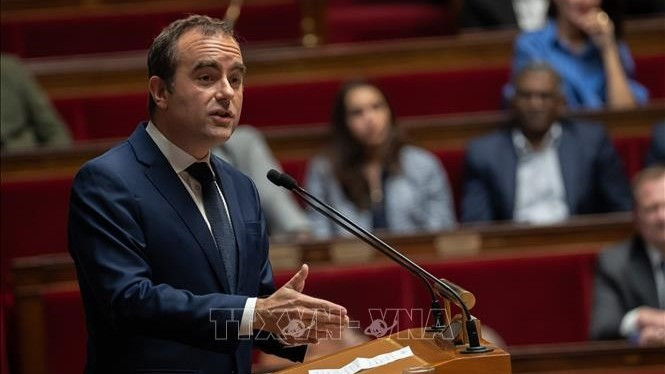
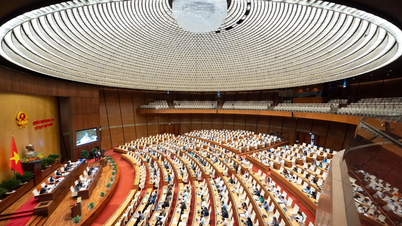
French Prime Minister Sebastian Lecornu addresses the National Assembly in Paris on October 16, 2025.
France's nuclear energy sector is facing a manpower challenge, needing up to 250,000 workers, along with enormous investment costs, while new reactors are not expected to become operational until the late 2030s.
PPE marks a return to the state's direction of cautiously reviving nuclear power, regulating renewable energy to avoid conflicts and overcapacity, and increasing the share of carbon-free energy to 60% by 2030.
This program establishes a clear policy framework for the next 10 years, while also opening up opportunities for evaluation and adjustment based on practice, preparing for important political decisions in 2027.
France's medium-term goal is to increase the share of non-carbon energy to 60% of total final consumption by 2030 in order to reduce dependence on fossil fuels and enhance national energy security.
PPE will guide the management of all energy in France, while also determining the production, consumption, and planning for nuclear, wind, solar, hydroelectric, green gas, and geothermal energy sources.
Source: https://mst.gov.vn/phap-chinh-thuc-hoi-sinh-dien-hat-nhan-197260216231848011.htm



![[Photo] Prime Minister Pham Minh Chinh receives the Chinese Ambassador to Vietnam](https://vphoto.vietnam.vn/thumb/1200x675/vietnam/resource/IMAGE/2026/04/05/1775397481797_ndo_br_dsc-5512-jpg.webp)











































![[INFOGRAPHICS] Exploiting children's personal images for profit can result in fines of up to 50 million VND.](https://vphoto.vietnam.vn/thumb/402x226/vietnam/resource/IMAGE/2026/04/06/1775442200854_1775442148.webp)


















Comment (0)