Village stories told through heritage trees.
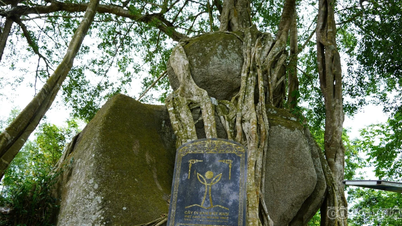
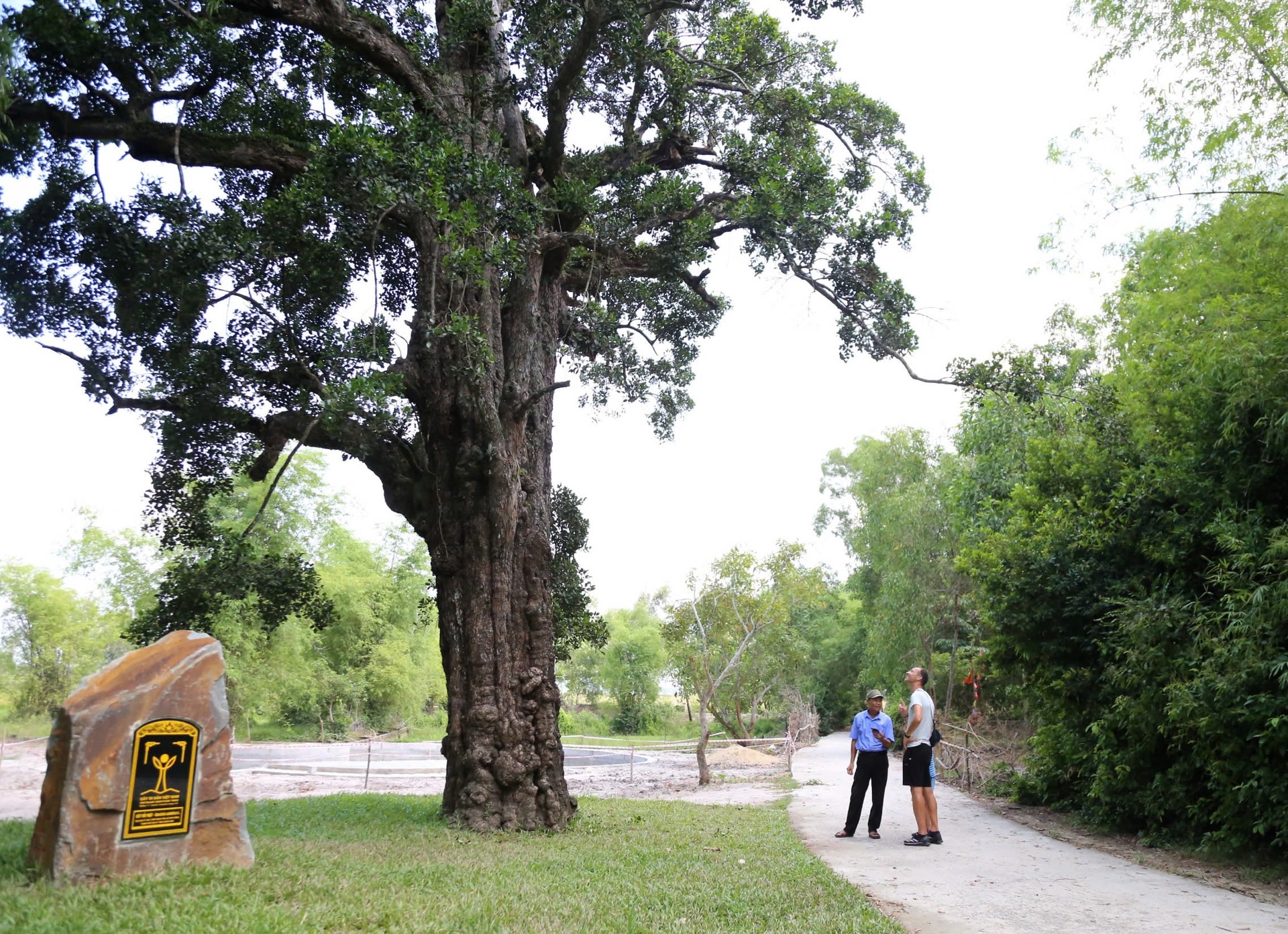
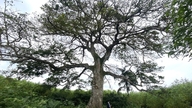
During his exploration of the Ky Anh Tunnels (Thach Tan neighborhood, Ban Thach ward), Mr. Smith, a tourist from Denmark, made his final stop at the Rỏi Mật tree, the village's Heritage Tree. As a nature lover, he quietly stood beneath the ancient tree, his hand touching its thick, rough bark, and attentively listened to the explanation. His initial curiosity quickly turned into surprise and delight when he learned that the tree was over 500 years old, planted in the early days of Thach Tan village. The Rỏi Mật tree became part of the tourist attraction not only because of its age and the title of "Heritage Tree," but also because of its close connection to the heroic resistance history of the local people and soldiers.
“Despite the brief explanation, I deeply felt the role of this ‘witness’ in the war. The tree acted as an observation post, helping the people monitor the enemy and promptly alert those hiding in underground shelters. Amidst the rain of bombs and bullets, the tree stood tall and firm, like the indomitable spirit of the people here,” Mr. Smith shared.
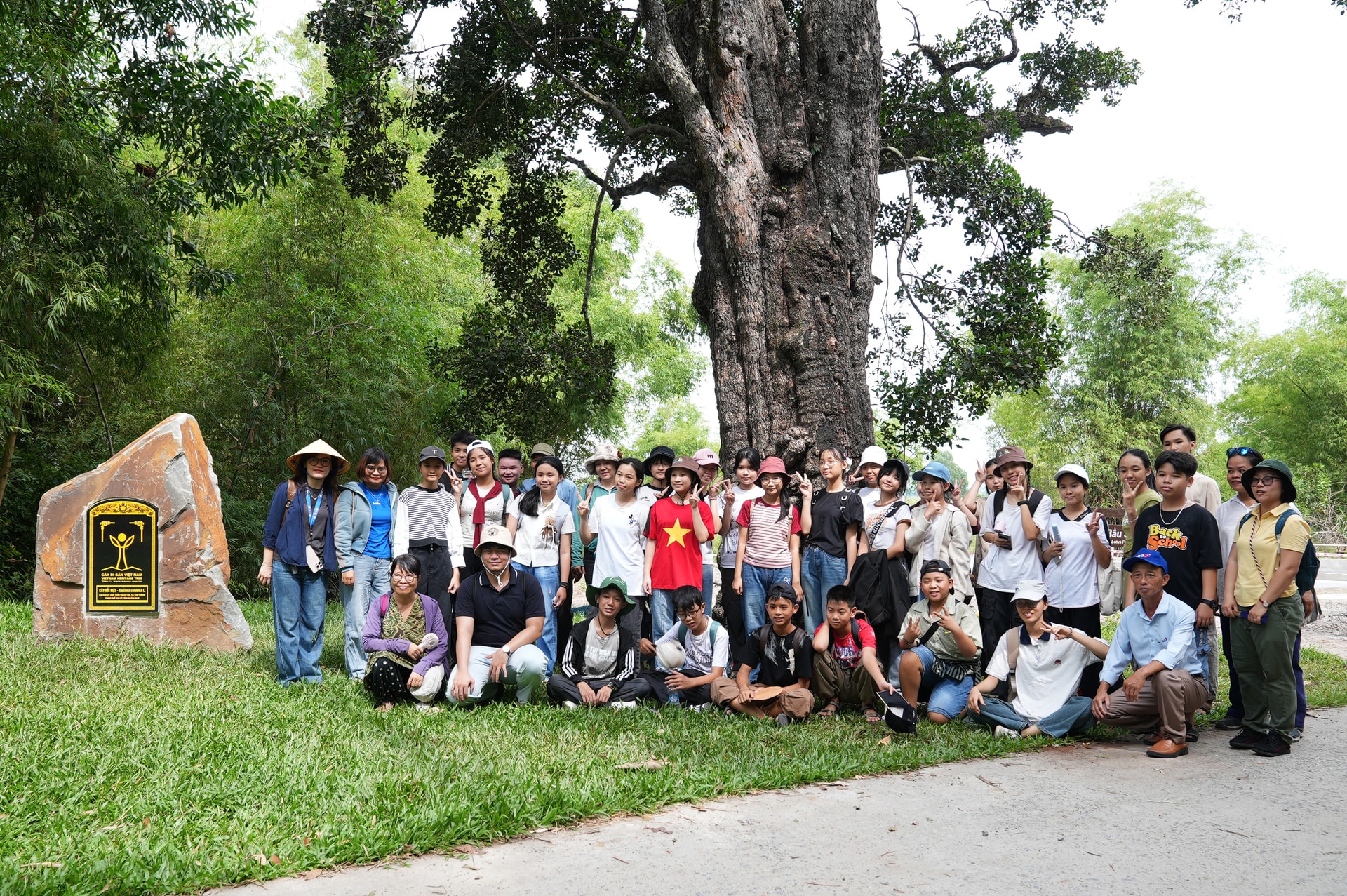
Mr. Huynh Kim Ta, Head of Thach Tan residential group and tour guide at Ky Anh Tunnel, said that the recognition of the honey locust tree as a Heritage Tree by the Vietnam Association for the Protection of Nature and Environment at the end of 2024 has brought great pride to the community. This title further honors the revolutionary tradition of Thach Tan – a village with only 27 households during the resistance war, but the homeland of 203 martyrs and 59 Vietnamese Heroic Mothers. This rich history elevates the value of this "green heritage".
“Since being included in the tunnel tour route, the honey locust tree has become more widely known. Tourists especially enjoy stopping in its shade to capture memorable moments. Aware of this, the villagers always voluntarily maintain cleanliness and clear the bushes around the base of the tree to create a spacious environment, providing the best experience for visitors,” Mr. Ta said.
Cultivating future heritage
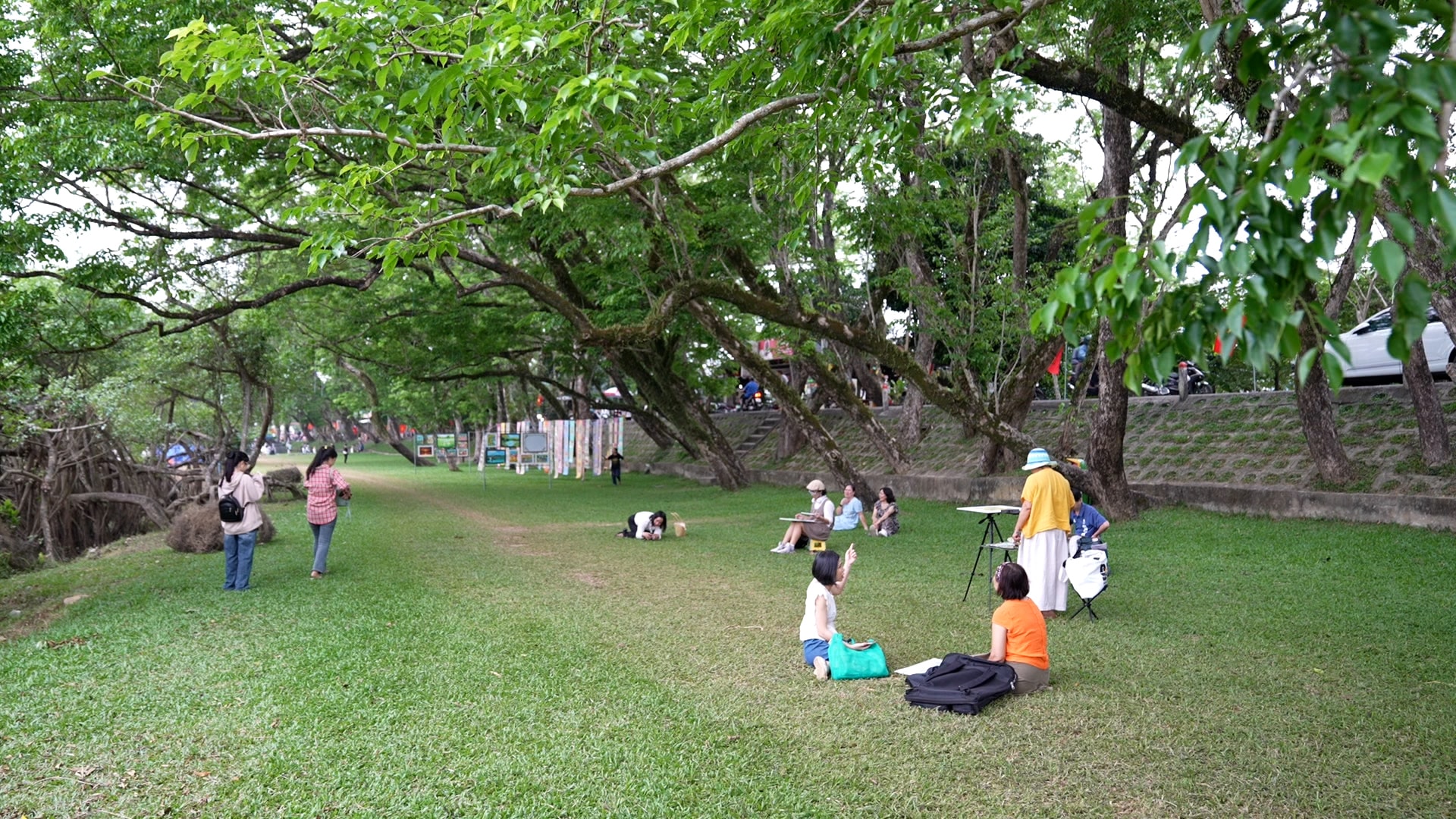
In Huong Tra Eco-village (Huong Tra Ward), a cluster of 12 Indian rosewood trees (commonly known as Dalbergia tonkinensis) are over two centuries old. In 2024, nine of them were officially recognized as Vietnamese Heritage Trees by the Vietnam Association for the Protection of Nature and Environment. This cluster currently shelters more than 100 other Dalbergia tonkinensis trees, creating a romantic "flower path" that captivates visitors.
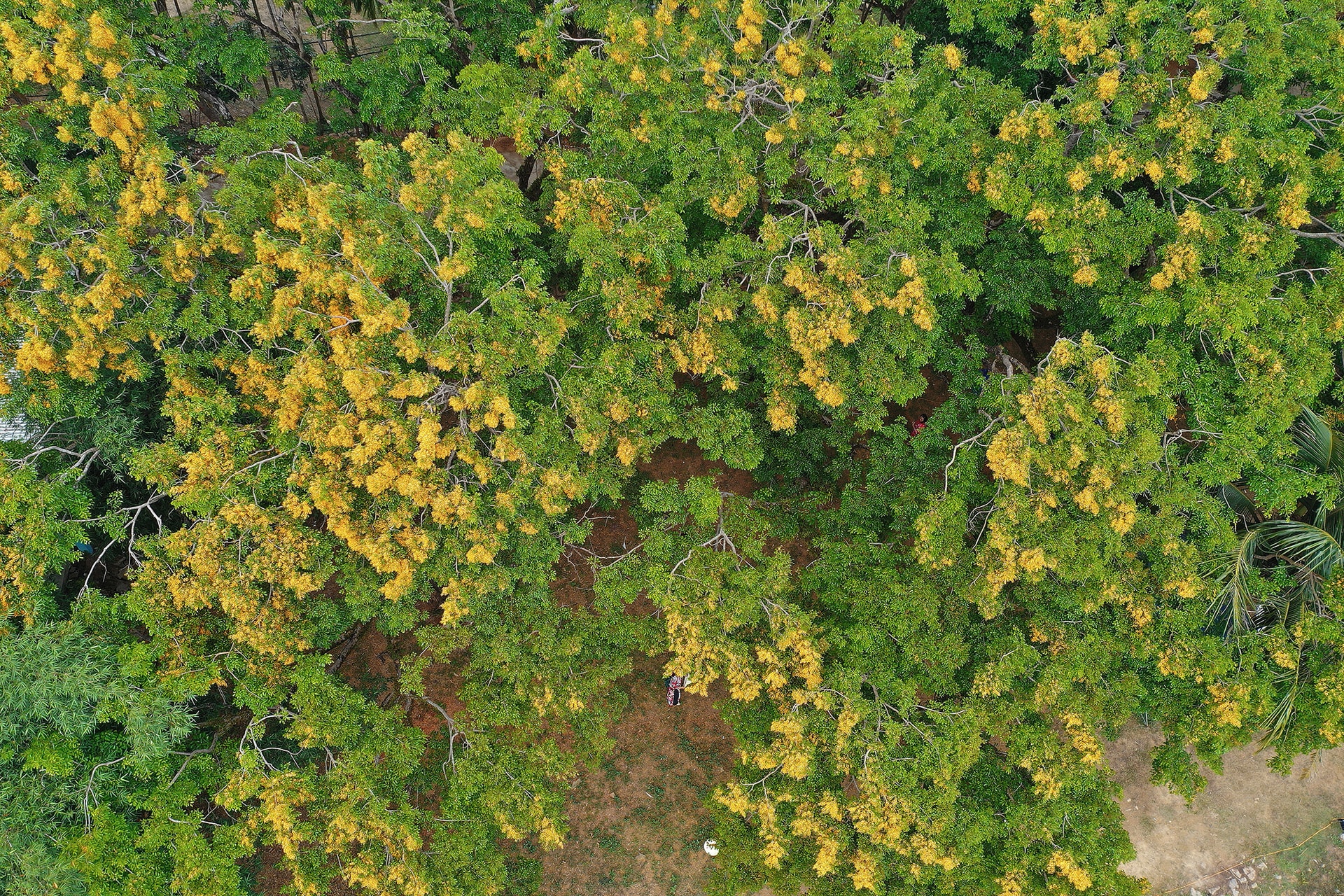


Over the years, the local government has continuously strived to develop Huong Tra eco-village through the blooming of the crape myrtle flower and the tree-planting movement for environmental protection. To date, more than 2,000 crape myrtle trees have been planted along the main roads in the southern part of the city. The pristine beauty of the crape myrtle blossoms has also been chosen as a distinctive symbol of the Huong Tra, Tam Ky, Quang Phu, and Ban Thach wards.
[ VIDEO ] - Mr. Nguyen Xuan Quang, from Huong Tra Tay residential group, Huong Tra ward, shares the local people's pride in the heritage Dalbergia tonkinensis tree:
Mr. Nguyen Van Em, head of the Huong Tra Tay residential group, commented: "In the context of rapid urbanization, the existence of this heritage cluster right in the heart of the city is clear evidence of a green, ecological city. If conservation efforts are carried out well, in the future there will be hundreds more qualified 'candidates' to become heritage trees."
“For the people of Huong Tra, the rosewood tree not only protects the land and the village but is also an invaluable asset connected to generations, a poignant memory for those who have left their hometown. Whether in bloom or when the leaves fall, the rosewood tree always possesses a unique beauty. I hope the locality will continue to exploit its tourism potential so that the Huong Tra rosewood tree brand can reach even further,” Mr. Em confided.
Since 2010, the Vietnam Association for the Protection of Nature and Environment has recognized more than 8,500 heritage trees across 34 provinces and cities. Notably, in the two border communes of Tay Giang and Hung Son, 2,557 trees have been honored, including 959 green lim trees, 1,146 po mu trees, 435 rhododendron trees, 16 banyan trees, and 1 giổi tree. Significantly, these tree clusters are located deep within pristine forests, home to thousands of trees of the same species, some hundreds of years old.
The core reason these communities are recognized is the unique forest conservation culture of the Co Tu people. Every year, the local government maintains a forest thanksgiving festival and tree-planting campaigns within the community. The combination of natural values, biodiversity, and indigenous cultural identity has created a foundation for developing unique experiential tourism products.
The livelihoods of people living under the forest canopy are also ensured through forest protection contracting policies, providing them with income from environmental services. In addition, models of growing medicinal plants under the forest canopy or planting forests for timber to build houses help people stabilize their lives and become more attached to the forest.




Elder Clâu Blao (Vòng village, Hùng Sơn commune) shared: “For the Cơ Tu people, owning heritage forests is a great source of pride, along with the responsibility of preservation. We always teach our children and grandchildren to continue the tradition, to love and protect the forest as if it were their own source of life, so that the forest will forever shelter and provide a prosperous life.”
According to Professor, Doctor of Science Dang Huy Huynh, Chairman of the Vietnam Heritage Tree Council, each honored heritage tree is a living "witness" to the local history, culture, and beliefs. He highly appreciates the fact that since the title was established in 2010, many communities and authorities have proactively applied for consideration. This is a key factor in promoting the value of heritage, closely linked to conservation and the exploitation of research potential for sustainable tourism development.
[VIDEO] - Unique rhododendron heritage forest in Hung Son border commune:
Source: https://baodanang.vn/phat-huy-gia-tri-cay-di-san-3318292.html



![[Image] National conference summarizing one year of operation of the overall organizational model of the political system, the three-tiered government model.](https://vphoto.vietnam.vn/thumb/1200x675/vietnam/resource/IMAGE/2026/07/01/1782882811691_ndo_br_1-jpg.webp)