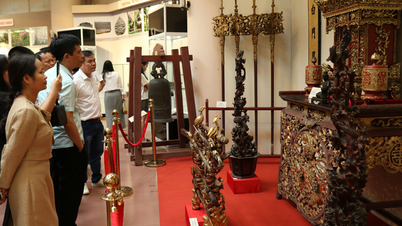
In recent years, thanks to the collaboration of the tourism industry, many revolutionary historical sites in the province have become attractive destinations, drawing large numbers of domestic and international tourists.
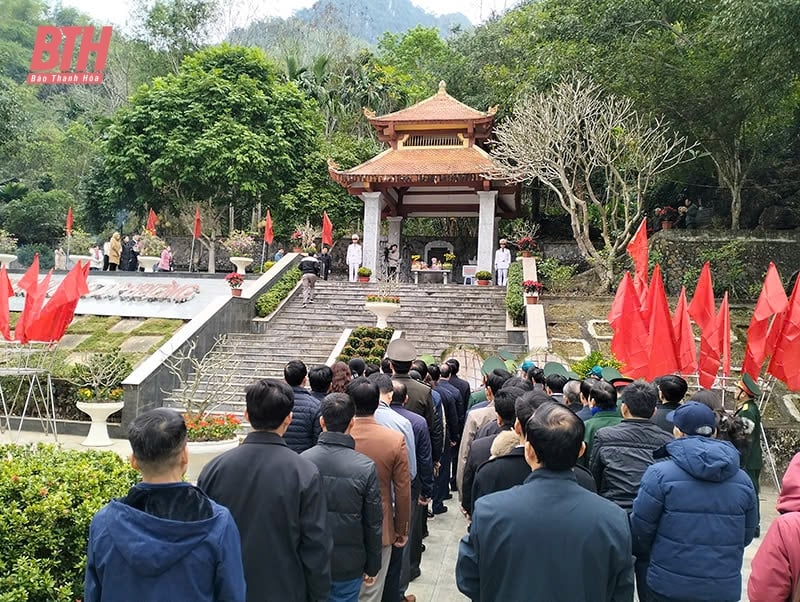
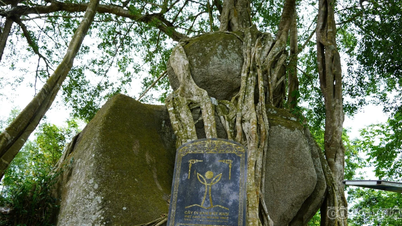
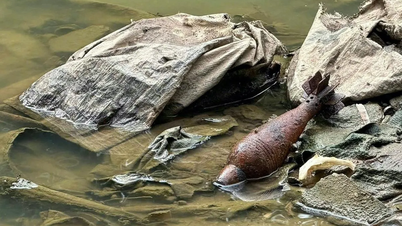
The Co Phuong cave historical site in Sai village, Phu Le commune (Quan Hoa district) has become a popular destination for tourism, education, and revolutionary tradition education, chosen by schools and tourists from both within and outside the province. According to historical records, during the resistance war against French colonialism, Co Phuong cave served as both a base and a transit point for food and weapons transported by our troops to Upper Laos , Northwest Vietnam, and later to support the Dien Bien Phu Campaign in 1954. In an attempt to cut off this vital supply route, the French colonialists resorted to all means, relentlessly bombing the area. On April 2, 1953, French aircraft unexpectedly bombed and devastated the Sai village area, resulting in the heroic sacrifice of many young volunteers and frontline militia members who bravely died while transporting food and supplies for the campaign. In Co Phuong cave alone, bombs and bullets destroyed the cave entrance, and 11 members of the civilian labor squad from Thieu Nguyen commune (Thieu Hoa district) who were sheltering inside bravely sacrificed their lives.
In 1999, the Provincial People's Committee provided funding for the construction of a memorial monument at Co Phuong Cave. In 2012, the Provincial People's Committee established a plan to renovate and restore the Co Phuong Cave Revolutionary Historical Relic Site. By 2019, Co Phuong Cave was classified as a national historical relic.



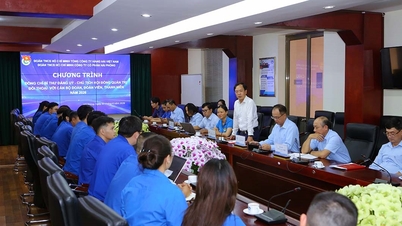
To attract tourists, Phu Le commune and Quan Hoa district have focused on preserving and promoting the value of historical relics. At the same time, they have strengthened propaganda and education for all levels of the population, especially the younger generation, about the heroic fighting traditions of their ancestors. Recently, the Quan Hoa District Youth Union also launched a digital transformation project in promoting historical and cultural relics at the Co Phuong cave historical site. Accordingly, tourists only need a smartphone to scan the QR code installed at the site to access complete information about the relic, the heroic sacrifices of the civilian workers on the front lines, etc. This also serves as a "bridge" bringing historical and cultural relics closer to the community, contributing positively to the preservation and promotion of cultural values, and helping to promote the image of Quan Hoa homeland.
Over the years, the historical site of the working and command bunker of the Standing Committee of the Thanh Hoa Provincial Administration during the period of resistance against the American imperialist war of destruction (1964-1972) in Hamlet 4, Thieu Trung Commune (Thieu Hoa District) has also become a "red address" attracting many tourists. According to historical records, the working and command bunker was built to ensure the safety of the province's highest leadership apparatus so that they could promptly command the resistance against the American imperialist war of destruction (1964-1972). During the period of resistance against the American invasion, from this working bunker, the Standing Committee of the Thanh Hoa Provincial Administration directly worked and effectively commanded the production and combat movement in Thanh Hoa. Among its significant contributions were the working and command bunker of Thanh Hoa province during the period of resistance against the American imperialist war of destruction, including major national historical events such as the Ham Rong - Nam Ngan victory, the Ghep ferry crossing, and Me Island.
To enhance the value of the historical site and transform it into an attractive tourist destination, Thieu Hoa district and Thanh Hoa province have invested in its restoration and preservation. Simultaneously, Thieu Trung commune has strengthened coordination with various organizations and the district's education and training sector to organize activities for youth union members and students, including beautifying the site, planting flowers and trees, holding youth union membership ceremonies, and organizing extracurricular activities and visits to historical sites. This demonstrates respect for the historical values of our ancestors while also helping young people understand their responsibilities and strive for excellence in their studies and personal development.
As a land of "spiritual and talented people," Thanh Hoa boasts a diverse and rich system of revolutionary historical relics, both in quantity and type. According to incomplete statistics, the province currently has 143 revolutionary historical sites and locations, including: houses, communal houses, temples, shrines, bridges, ferries, wharves, yards, airports, markets, trenches, fortifications, battlefields, etc. In recent years, with the attention and investment in restoring and preserving revolutionary historical relics, along with creative approaches in connecting these sites with tourism tours and routes in the province, the number of tourists visiting and experiencing these revolutionary historical sites has increased significantly. This not only contributes to the development of the province's tourism industry but also helps preserve and promote the value of historical relics, introducing and conveying to tourists the rich and heroic history of Thanh Hoa.



However, it must be frankly acknowledged that in some localities with historical revolutionary sites, investment in tourism development remains quite modest. Infrastructure and tourism services are still poor, lacking distinctive features, and the service workforce is not yet professional. The collaboration and development of tour programs and routes to create unique tourism products are fragmented and lack complete connectivity. Therefore, to "awaken" the potential of these "red addresses," the joint efforts of all levels of government, sectors, localities, and the people are needed to exploit and promote their value, turning historical revolutionary sites into attractive tourism products for visitors.
Text and photos: Nguyen Dat
Source: https://baothanhhoa.vn/phat-develop-tourism-from-revolutionary-historical-sites-226703.htm
![[Image] National conference summarizing one year of operation of the overall organizational model of the political system, the three-tiered government model.](https://vphoto.vietnam.vn/thumb/1200x675/vietnam/resource/IMAGE/2026/07/01/1782882811691_ndo_br_1-jpg.webp)