

Improving the efficiency of bad debt resolution
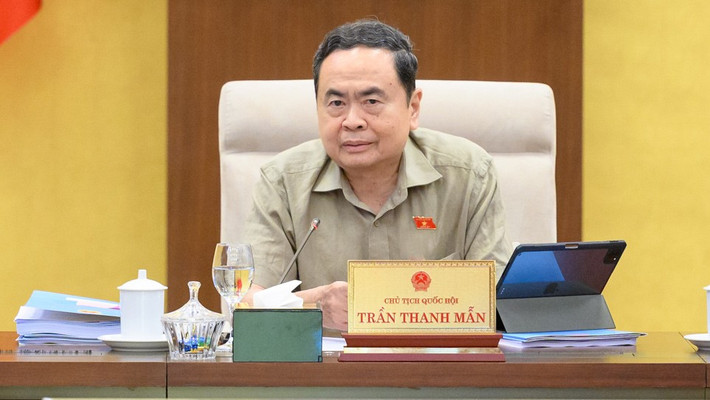
On the morning of April 24, continuing the 44th session, under the chairmanship of Deputy Speaker of the National Assembly Vu Hong Thanh, the Standing Committee of the National Assembly gave its opinion on the draft Law amending and supplementing a number of articles of the Law on Credit Institutions.

Deputy Speaker of the National Assembly Vu Hong Thanh presides over the session. Photo: Ho Long
Governor of the State Bank of Vietnam, Nguyen Thi Hong, presented the draft Law amending and supplementing several articles of the Law on Credit Institutions. Accordingly, the purpose of enacting the Law is to further codify the provisions of Resolution No. 42/2017/QH14, creating a comprehensive legal framework for handling non-performing loans, ensuring it aligns with practical realities to address the obstacles and difficulties that have hindered credit institutions, branches of foreign banks, and debt trading and resolution organizations from exercising their legitimate rights in handling non-performing loans and collateral assets, indirectly affecting their ability to rotate capital and access credit at reasonable costs for individuals and businesses.
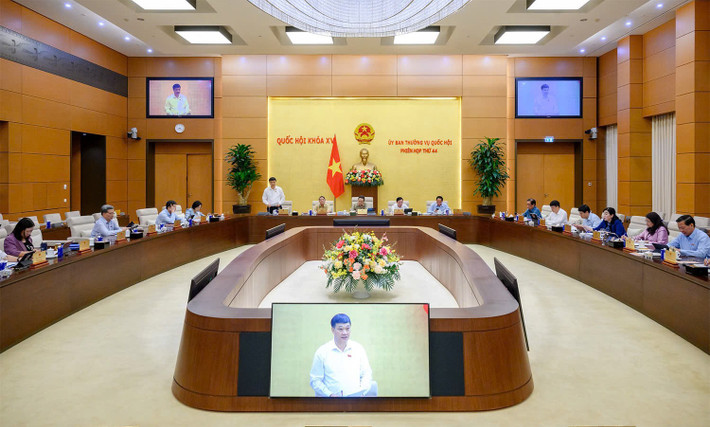
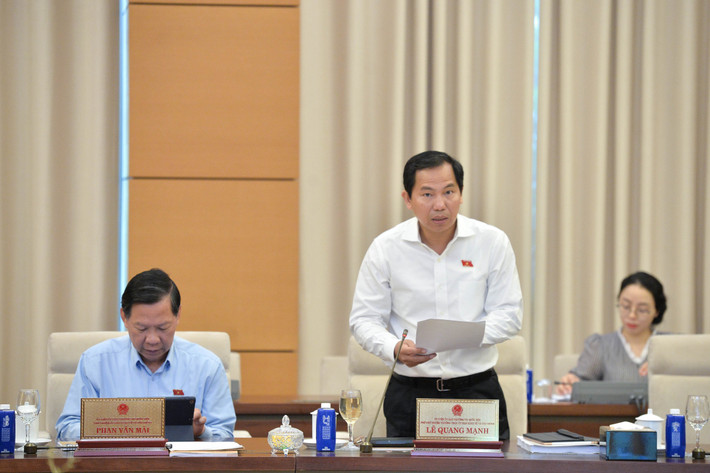
Presenting the preliminary review report on the draft Law, Deputy Chairman of the Standing Committee on Economic and Financial Affairs Le Quang Manh stated that the majority of opinions agreed on the necessity of enacting the Law to institutionalize the Party's policies, meet practical requirements regarding the decentralization of authority for special lending decisions; improve the efficiency of handling bad debts and collateral assets of credit institutions, and contribute to unlocking credit resources to serve the goal of economic growth. Many opinions suggested considering continuing the pilot implementation of the three policies proposed in this draft Law.
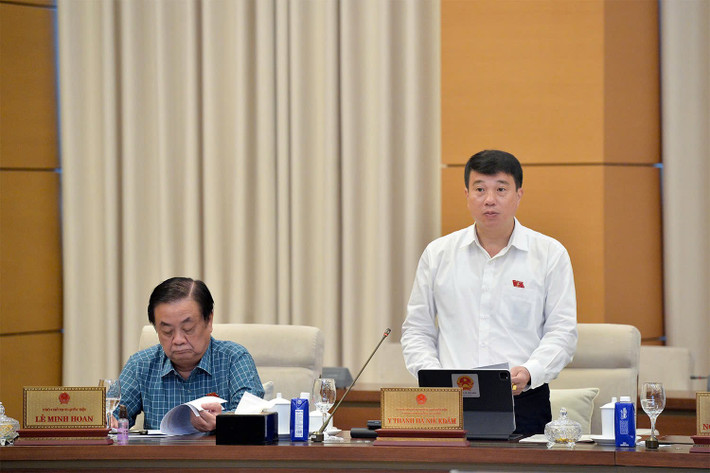
The Standing Committee of the Economic and Financial Committee requested further clarification on several issues, including: the political, legal, and practical basis for codifying the provisions of Resolution No. 42/2017/QH14; regarding the political basis, it is requested that a report be submitted to the competent authority for their opinion, as the handling of secured assets directly relates to the property rights of citizens; the constitutionality, legality, and consistency with the legal system and relevant international treaties; the proposed policies need to undergo thorough and comprehensive impact assessments on all relevant parties; and the inclusion of international experience regarding legal regulations in handling non-performing loans and secured assets of non-performing loans for reference and to propose solutions consistent with Vietnam's legal system.
Quantifying the impact of the three proposed policies to be enacted into law.
National Assembly Chairman Tran Thanh Man agreed with the codification of the regulations in Resolution No. 42/2017/QH14 on piloting the handling of bad debts of credit institutions, and also suggested continuing to identify and address the limitations since the review of the implementation of Resolution No. 42/2017/QH14 in order to amend and supplement one article of the Law on Credit Institutions.
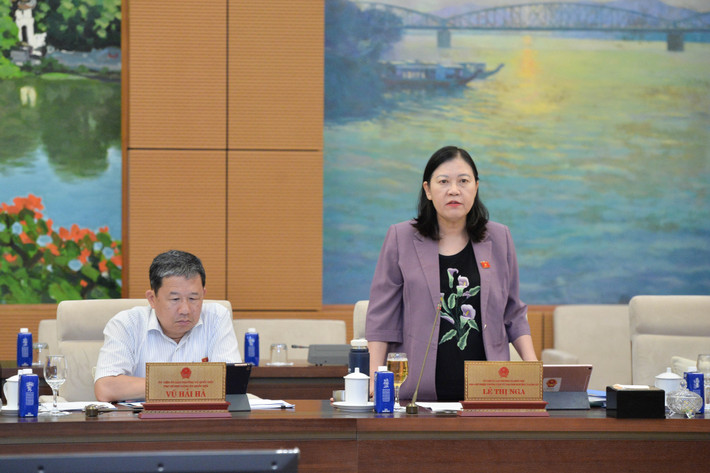
Noting the significant increase in bad debts in the recent period, the Chairman of the National Assembly proposed defining the policy scope to determine loan amounts in accordance with regulations, avoiding credit institutions loosening lending conditions; the State Bank of Vietnam must strictly manage bad debts.
Concluding the discussion, Vice Chairman of the National Assembly Vu Hong Thanh stated that the Standing Committee of the National Assembly basically agreed with the policies proposed by the Government.
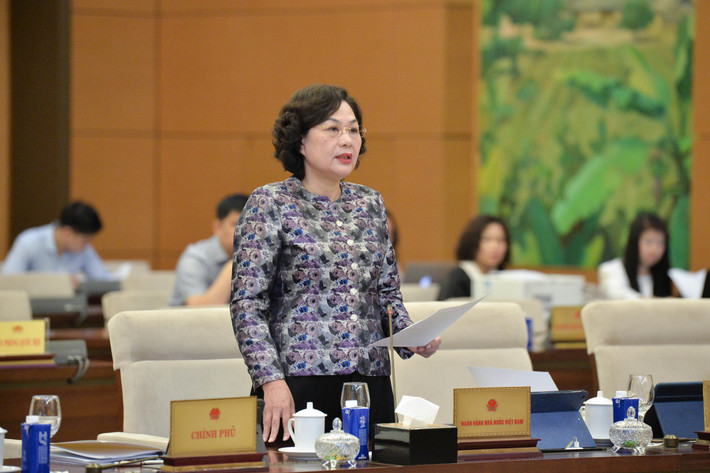
Governor of the State Bank of Vietnam, Nguyen Thi Hong, presents the draft law. Photo: Ho Long
The Vice Chairman of the National Assembly requested the Government to continue directing relevant agencies to further clarify eight groups of content: the political and practical basis; assessment of the current situation and causes of bad debts, the urgency and necessity of handling bad debts; quantifying the impact of the three proposed policies on handling bad debts; the proposed policies need to be thoroughly and comprehensively assessed for impact; the regulations need to be complete, transparent, objective, humane, feasible, and ensure the legitimate rights and interests of all parties, avoiding the bureaucratization of civil and economic relations; reviewing the scope of application of the three proposed policies, ensuring they only apply to loans that meet regulations, avoiding the loosening of lending conditions…
Source: https://daibieunhandan.vn/quan-ly-chat-che-no-xau-post411270.html


![OCOP during Tet season: [Part 3] Ultra-thin rice paper takes off.](/_next/image?url=https%3A%2F%2Fvphoto.vietnam.vn%2Fthumb%2F402x226%2Fvietnam%2Fresource%2FIMAGE%2F2026%2F01%2F28%2F1769562783429_004-194121_651-081010.jpeg&w=3840&q=75)





Comment (0)