

Developing a fintech hub is a cornerstone in the formation and development of the International Financial Center in Ho Chi Minh City.
According to the draft Resolution of the National Assembly on the establishment and operation of a financial center in Vietnam, the Ministry of Planning and Investment proposes a controlled trial (sandbox) of an exchange for assets and cryptocurrencies (digital assets, digital currencies) with a business model applying technology in the financial sector (fintech). Trading using digital assets and cryptocurrencies within the financial center is proposed to begin on July 1, 2026.
Proposal to test cryptocurrency.
Associate Professor Tran Hung Son, Director of the Institute for Banking Technology Development Research - Vietnam National University Ho Chi Minh City, emphasized that to build a fintech center as a pillar of an international financial center in Ho Chi Minh City, it is necessary to develop a fintech ecosystem. In this context, implementing a sandbox for financial technology activities is considered a key factor in promoting this development.
According to Mr. Son, Ho Chi Minh City needs to take the lead in implementing a sandbox for fintech activities in the city. In addition to the three areas where fintech solutions are being tested – mentioned in the draft Regulations on the controlled testing mechanism for fintech activities in the banking sector of the State Bank of Vietnam – Ho Chi Minh City could propose to be the locality testing digital currency in the near future. The city needs to establish a center to provide legal advice and support for fintech during the implementation process; and prepare a team of experts tasked with proposing and developing regulations, monitoring, and supervising the implementation.
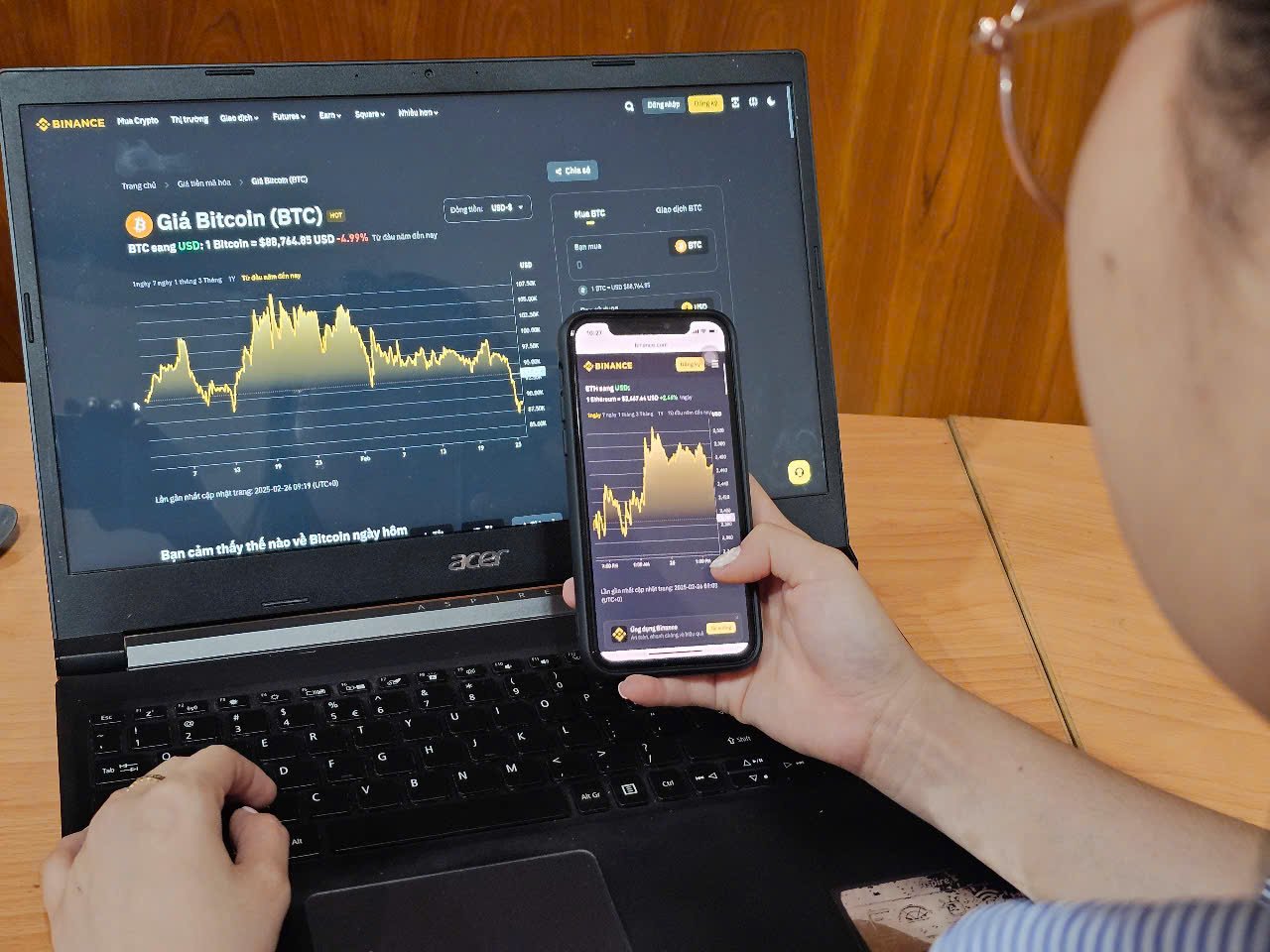
A legal framework is needed to regulate digital assets and cryptocurrencies in order to control risks and generate significant revenue. Photo: LE TINH
"Implementing a sandbox in Ho Chi Minh City will provide the city with an additional channel to showcase its development direction and build its brand as an international financial center in general and a fintech center in particular. Furthermore, it is necessary to listen to suggestions and proposals to develop appropriate policies and infrastructure conditions for the development of an international financial center," Mr. Son suggested.
Financial expert Phan Dung Khanh believes that the pilot program to open cryptocurrency and digital asset exchanges aligns with the government's policy of "abandoning the mindset of banning what cannot be managed." Vietnam's current policy is to promote the application of technology and artificial intelligence (AI) for economic development. Although there is no clear legal framework yet, statistics show that Vietnam consistently ranks among the world's leading countries in digital asset ownership.
"If we create a legal framework that allows for the testing of digital asset exchanges, we can both manage them effectively, collect taxes, and leverage technology for development. Bringing digital asset management under a framework will limit the misuse of these currencies for fraud and simultaneously promote knowledge about financial technology," Mr. Khanh observed.
"The Fintech Heart" of Southeast Asia
According to Mr. Pham Manh Cuong, founder of Wischain Co., Ltd. (specializing in consulting, building, and transferring Blockchain projects), international financial centers need to operate like dynamic private enterprises, continuously improving their "products and services" to attract capital flows from digital assets, bonds, stocks, etc.
This requires the center to have a flexible legal mechanism, an open business environment; preferential tax policies, and capital support for fintech businesses to stimulate service diversification. The blockchain ecosystem will help to increase transparency in transactions, reduce costs, control cash flow, and prevent illegal fundraising.
Currently, in addition to enacting laws, countries like South Korea, Singapore, and Thailand are creating long-term roadmaps with attractive tax exemptions and reductions, talent attraction policies, and effective public-private partnerships. Early recognition of digital assets has helped them gain market share and transform their financial centers into hubs connecting international capital flows.
"For Ho Chi Minh City to become the 'fintech heart' of Southeast Asia, it is necessary to perfect the legal framework, build a digital capital market, and aim to create confidence for global technology giants. Only when the legal and policy issues are resolved can its true potential be realized, turning the international financial center into a new growth engine for the economy," Mr. Cuong emphasized.
Ms. Le Ngoc My Tien, co-founder and CEO of Blockchainwork JSC, believes that combining fintech and blockchain technologies with advantages in infrastructure, technological human resources, high-tech parks, and research and development (R&D) centers will help the international financial center become a destination for many experts and technology giants worldwide . This will attract fintech-related businesses globally, while also expanding participation to other sectors such as retail and real estate. This will open the door for the international financial center to further boost the city's economy and become a leading technology hub nationwide.
However, according to experts, clear regulations on cryptocurrencies, user data protection, and a sandbox mechanism for businesses to test new technologies need to be established soon. In addition, more venture capital funds are needed to provide opportunities for newer businesses to access this promising environment.
However, defining how to regulate and manage it is not a simple problem. Economist Dr. Dinh The Hien believes that crypto assets and cryptocurrencies are a trend but come with significant risks and require in-depth research. Regarding the proposal to open a cryptocurrency exchange at the Ho Chi Minh City International Financial Center in 2026, careful consideration of the timing is necessary.
According to Dr. Hien, the Ho Chi Minh City International Finance Center must first excel in the traditional financial sector, aiming to maximize the availability of financial institutions and products that are popular in global financial centers, before moving on to other types of services.
"If we are to bring digital assets and cryptocurrencies into a legal framework, we must selectively choose exchanges that are licensed, regulated, and taxed by the state. In recent times, besides Bitcoin and Ethereum which have yielded profits, many investors have suffered heavy losses from other virtual currencies, even counterfeit ones," he expressed his concern.
2 groups of tasks that need to be done
Dominic Scriven, Chairman of Dragon Capital Fund Management Company, believes that when building an international financial center, Vietnam can apply two groups of tasks. First, attracting foreign resources. Secondly, the financial center could add functions such as mobilizing capital for infrastructure, high-tech businesses, e-commerce, and green finance...
"Establishing an international financial center is a very long process, requiring a well-planned strategy and clear approaches," Dominic Scriven emphasized.
(*) See the Nguoi Lao Dong newspaper from the issue dated February 27th.
Source: https://nld.com.vn/quan-ly-tai-san-so-tien-so-buoc-di-can-thiet-co-hoi-cho-trung-tam-tai-chinh-quoc-te-196250227205406467.htm


![[Photo] Da Nang: A sea of people respectfully paying homage to the Bodhisattva Avalokiteshvara.](https://vphoto.vietnam.vn/thumb/1200x675/vietnam/resource/IMAGE/2026/04/06/1775454198203_ndo_br_lh24-jpg.webp)
![[Photo] National Assembly Chairman Tran Thanh Man takes the oath of office](https://vphoto.vietnam.vn/thumb/1200x675/vietnam/resource/IMAGE/2026/04/06/1775453300886_ndo_br_1-2229-jpg.webp)




















![[Photo] Sidewalks in Vung Tau ward are now more spacious.](https://vphoto.vietnam.vn/thumb/1200x675/vietnam/resource/IMAGE/2026/04/06/1775455388046_5-6796-jpg.webp)






















































Comment (0)