

Every time I go to Hue , I get to enjoy the sour shrimp and pork dish. Hue's sour shrimp is already famous far and wide, and when eaten with perfectly boiled pork belly, it's incredibly delicious and makes you want to eat a lot of rice. But no matter how delicious those two dishes are, they wouldn't be truly authentic without the accompanying vegetables and fruits.
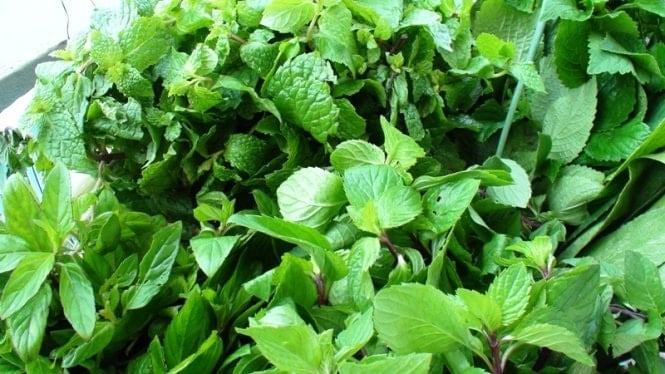
My mother-in-law always prepares a salad with finely chopped lettuce, a handful of raw bean sprouts mixed with aromatic herbs, and thinly sliced figs or cucumbers. This dish can be wrapped in rice paper, but we usually don't use it. Pick up a piece of boiled pork belly, wrap it with the vegetables, and dip it into the bright red fermented shrimp paste. The richness of the pork blends with the sour and spicy taste of the shrimp, and the fresh, crisp, fragrant, slightly bitter, sweet, and pungent flavors of the vegetables… I couldn't stop praising it. I was impressed by the flavor of the accompanying vegetables. They're just common vegetables found anywhere in the country. But try them once in the ancient capital, and you'll immediately notice the truly different spicy and pungent taste. My husband half-jokingly says that Hue's barren land, where plants don't grow quickly, allows the essential oils to accumulate more intensely than in other regions with fertile soil.
People in Hue specifically call a type of herb "rau thơm" (fragrant herb). But in my hometown, "rau thơm" is a general term for aromatic herbs, often used as accompaniments or added to dishes to enhance flavor, such as mint, coriander, dill, and perilla. Actually, in cuisine , "rau thơm" refers to a broad range of vegetables and roots like onions, garlic, galangal, turmeric, and fruits like pepper and lemon, which have a distinctive aroma due to volatile essential oils. Each type can be used in many dishes, but some combinations have become such a unique recipe and identity that the absence of any one component would feel incomplete. For example, a mixed rice paper salad without lime or a few sprigs of dill is like beef pho without basil. Easygoing people might just shrug it off, but discerning and sophisticated eaters would find it quite irritating.
When I was a child, the houses in my village were very simple. The spacious gardens with sparse fences were always lush with various vegetables. Many days, when it was time to cook dinner, unsure what to make, I would go to a few neighbors' houses and immediately find a handful of fresh herbs for a delicious soup. The same went for herbs. For water spinach salad, my parents would send me to the house at the end of the village to ask for a turmeric leaf. For stir-fried shrimp, I would go to the house next door to pick a few ginger leaves. For crab stew, I would definitely go to my uncle's house to pick mint leaves. I loved its gentle aroma, somewhat similar to perilla. Mint leaves are long and thin, only about half the size of basil leaves, and even thinner. Crab stew, made with fermented rice, has a tangy, refreshing taste, and is served with thinly sliced banana blossoms, chopped water spinach, and mint leaves – nothing could be more delightful on hot summer days. But I haven't seen that mint variety for a long time. In my neighborhood now, every house is spacious, clean, and beautiful, with smooth concrete yards and gardens. Visiting each other's houses is often awkward because of the high walls and gates. Life is comfortable and prosperous; there's no longer the need to run over to each other's houses to ask for a few sprigs of herbs like in the old days.
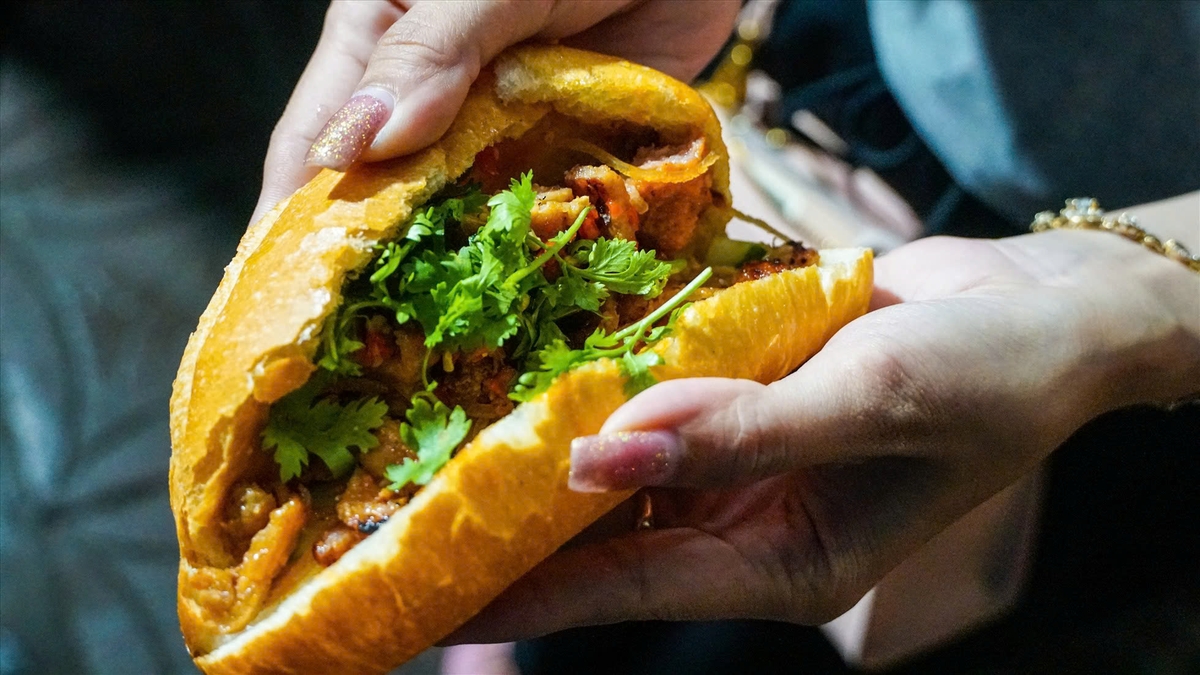
After green onions, cilantro is perhaps the most commonly used herb. This herb, with its soft, light green leaves, can complement a wide variety of dishes, from vegetable and bone broth soups, sour and crunchy mixed salads, spring rolls, and fresh rolls to porridge, noodles, pho, sticky rice with pork floss and sausage, egg and sausage sandwiches, or, most simply, smoothies… Every time I go to the market, no matter what vegetables I buy, I don't need to ask; after packing my groceries, the vendors always slip in some green onions and cilantro, a subtle and thoughtful gesture to please customers.
But this mildly fragrant herb, beloved by most Vietnamese, is a nightmare for many foreigners. I once studied in South Korea. One time, my supervising professor invited the entire research group to eat at a Vietnamese restaurant. Entrusted with ordering, we immediately chose beef pho and spring rolls. The professor seemed to enjoy the pho, but he carefully instructed the waiter not to put cilantro in his bowl. When we ate the spring rolls, I noticed he didn't eat cilantro either. He explained that cilantro was too strong and he didn't like adding it to his food. At the time, I simply thought it was a personal preference. Later, after spending more time in Korea and reading the news, I learned that many Koreans dislike this herb because its smell is similar to soap. Watching Korean actors participate in cooking shows featuring Vietnamese dishes, meticulously picking out individual sprigs of cilantro from their bowls of pho, or showing obvious embarrassment when encountering a dish with even a hint of cilantro, reveals just how much they dislike this herb. Koreans even jokingly tell each other to memorize this mantra before going to Vietnam: "Please don't put cilantro in my meal." This is due to the culinary culture of each country. In Korea, there are very few types of pungent herbs, and the preparation methods differ from those in Vietnam. Even with cilantro, Koreans often batter and deep-fry it, then dip it in chili sauce or marinate it in a sauce (made with soy sauce, vinegar, chili, sugar, salt, and roasted sesame seeds) for several days to allow the flavors to infuse before using it with rice or grilled meat to mask its strong, pungent smell.
This shows just how much there is to discuss about the various herbs used for seasoning and garnishing. For me, aromatic herbs are the embodiment of the subtle soul of Vietnamese cuisine. They evoke a sense of longing when near home, and even more so when far from home. This feeling is similar to the old folk song that describes: "When I leave, I remember my homeland; I remember the water spinach soup, I remember the pickled eggplant." Let me replace the water spinach soup and pickled eggplant with Vietnamese coriander, basil, sawtooth coriander… aromatic herbs that can be found anywhere on this beautiful S-shaped land.
For me, herbs are the embodiment of the subtle soul of Vietnamese cuisine. They evoke a sense of affection when we're close to home, and even more so when we're far from our homeland.
Source: https://daidoanket.vn/rau-thom-thuong-nho-10301399.html



![[Photo] Prime Minister Pham Minh Chinh receives the Chinese Ambassador to Vietnam](https://vphoto.vietnam.vn/thumb/1200x675/vietnam/resource/IMAGE/2026/04/05/1775397481797_ndo_br_dsc-5512-jpg.webp)



















































































Comment (0)