

The cost of producing solar cells has dropped dramatically over the past 10 years, but the world's leading scientists continue to search for solutions to make solar cells truly clean energy.
Today, December 4th, the VinFuture 2024 week's series of scientific seminars for life began in Hanoi. In the session "Materials for a Sustainable Future," leading global energy scientists shared their concerns about developing new materials for solar cells and sustainable applications.
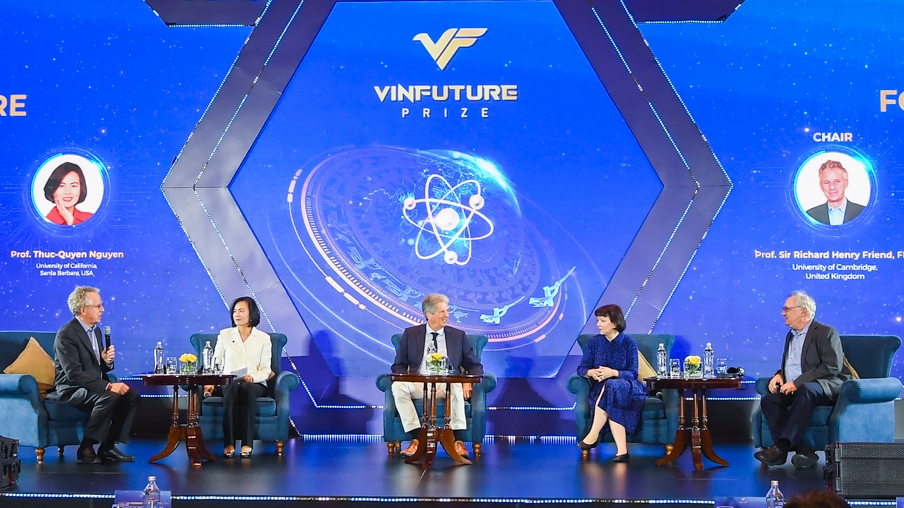
The world's leading scientists continue to search for solutions to make solar cells truly a clean energy source.
Solar panel prices have dropped tenfold.
According to Professor Martin Green of the University of New South Wales (Australia), the price of solar panels has seen a dramatic drop over the past decade. The selling price of solar panels has fallen from $1 USD/1W (in 2009) to $0.1 USD/1W now. The price of a single panel is now only $70 USD. The output of one solar thermal power plant can replace 10 coal-fired power plants. When global energy demand increases to 1 TB gigawatt (1 billion GW) in the next year, we will increase installed capacity, and the cost will be even lower.
This achievement is thanks to the tireless exploration of scientists to apply the most advanced technology, making the conversion of solar energy into electricity as efficient as possible. From an efficiency of 15%, silicon solar cells have now approached the theoretical efficiency limit, reaching 29.4%.

Professor Martin Green, University of New South Wales (Australia)
Professor Marina Freitag from Newcastle University (UK) presented on parallel solar cell technology (which helps solar cells capture the most sunlight), emphasizing the role of combining other materials with silicon, with perovskite emerging as a promising example due to its abundant natural availability. By using silicon and perovskite in parallel, each specifically designed to capture different colors of sunlight, the solar cell achieved a very impressive efficiency of 33.9%.
Plastic waste weighs as much as "1 billion African elephants".
According to Professor Seth Marder, Director of the Institute for Renewable and Sustainable Energy (USA), the problem is that humanity is currently paying too high a price for this "miracle material," silicon. Currently, only 9% of plastic waste is recycled. The world has 6.3 billion tons of plastic waste, posing a very serious threat to human health. "6.3 billion tons – that's the weight of 1 billion African elephants and heavier than the combined weight of all the people in the world," Professor Seth Marder emphasized.
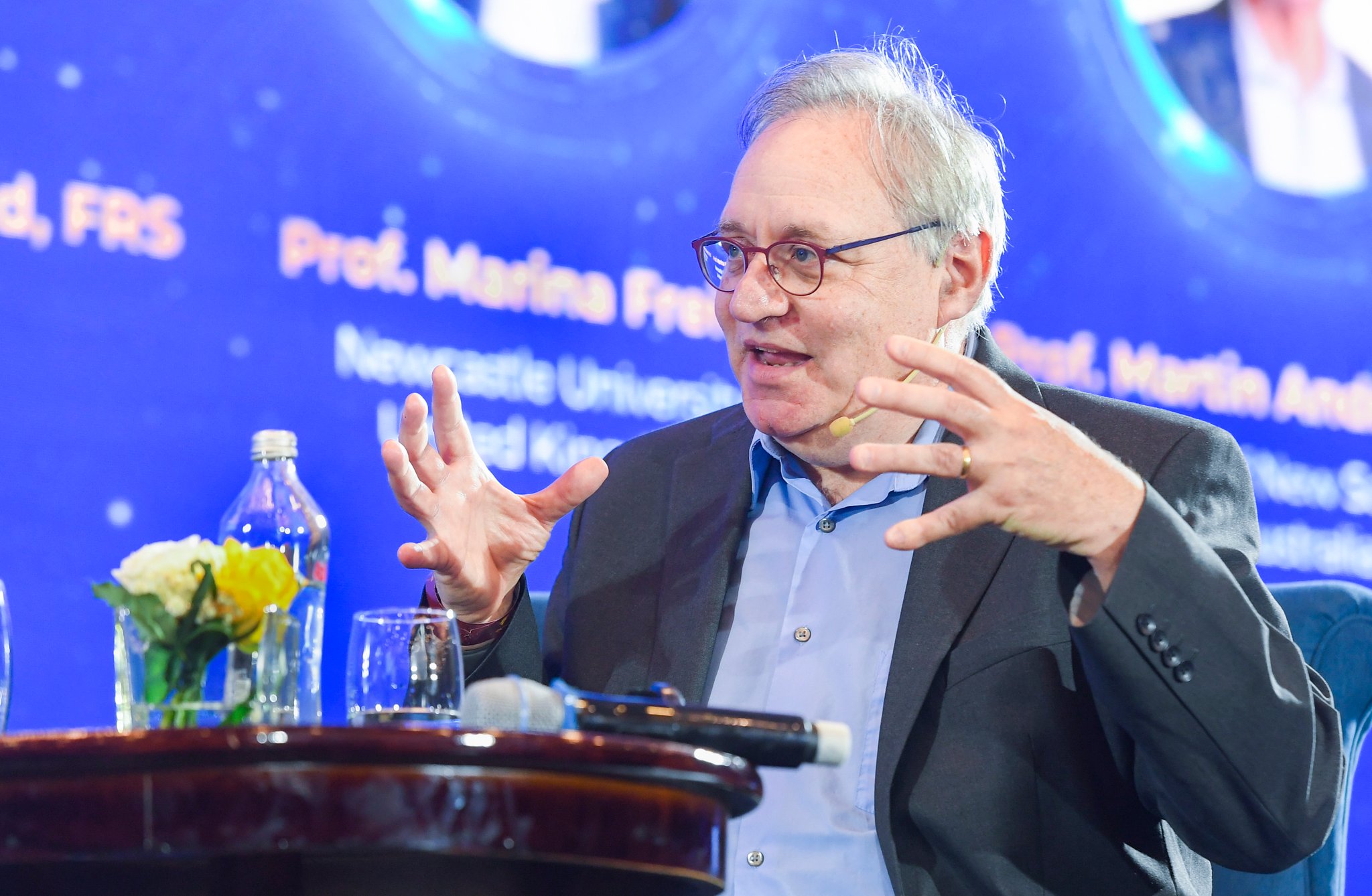
Professor Seth Marder, Director of the Institute for Renewable and Sustainable Energy (USA)
Professor Marina Freitag also stated that the production of silicon solar cells requires extremely high temperatures – above 1,000°C, which means a lot of energy is needed. Silver, the material used in electrical connections, is becoming increasingly scarce (the solar power industry currently uses up to 15% of global silver production).
Parallel technology (using additional perovskite material) allows for up to 85% less silicon usage compared to conventional solar cells, while generating more electricity. The perovskite layer can be processed at temperatures below 200°C, which means significantly lower energy consumption during production.
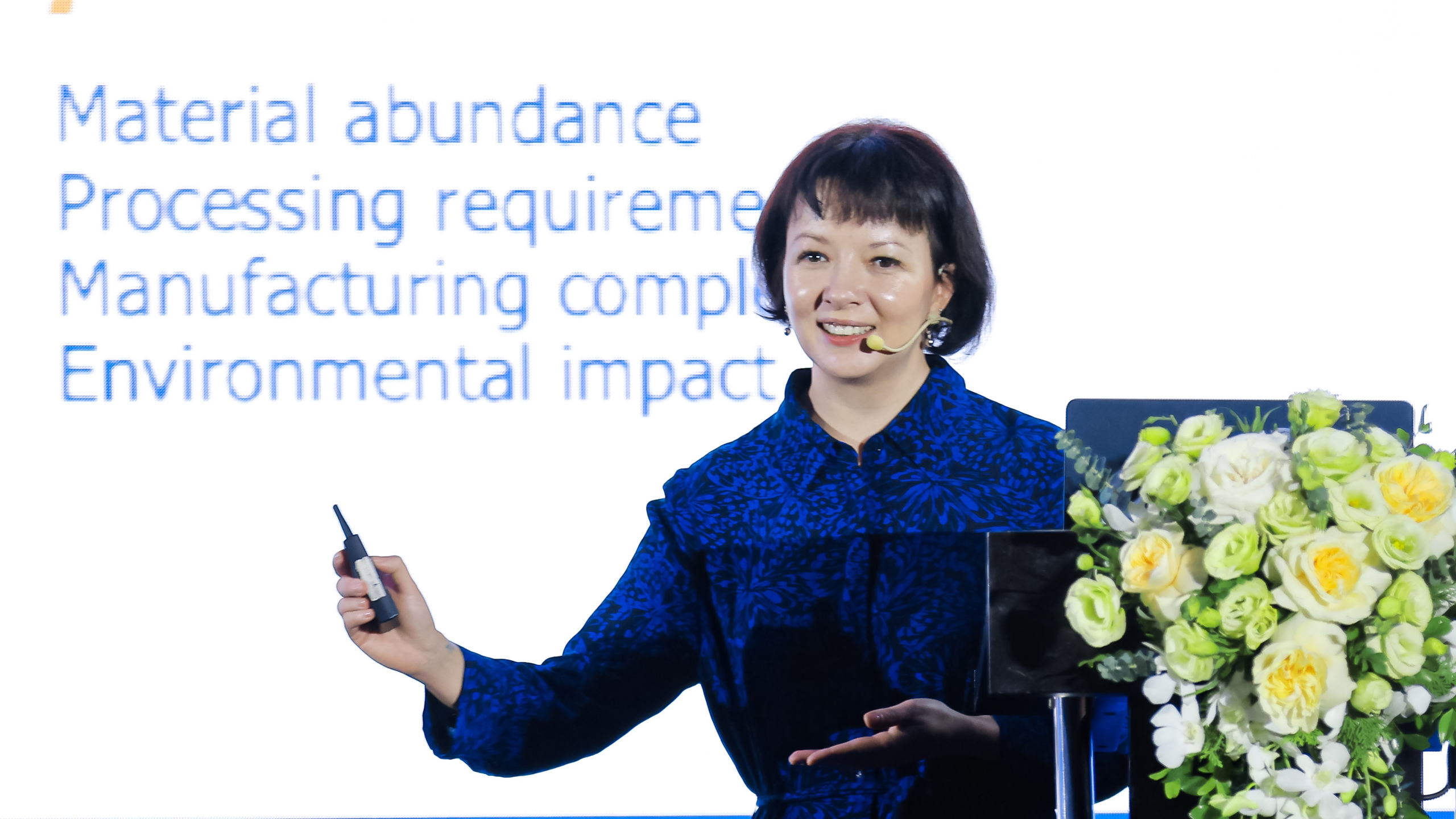
Professor Marina Freitag, Newcastle University (UK)
The problem with perovskite is that it contains lead, even at a concentration of only 0.3g/ m² , but dealing with this after the solar cells reach the end of their lifespan is very complex. Therefore, the choice of materials, technology, and design must ensure that after the end of their lifespan, all solar panels can be completely disassembled, their components recovered and reused with minimal waste.
"We are in a pivotal phase of solar energy technology. The climate crisis demands that we scale up solar power production to unprecedented levels, aiming for an annual solar power capacity of 3 TW (1 TW equals 1 quadrillion W - PV) by 2030. However, this process needs to be done sustainably from the outset. The materials we choose today will impact the planet for decades to come," said Professor Marina Freitag.
Source: https://thanhnien.vn/pin-mat-troi-re-thoi-thi-chua-du-185241204191516673.htm


![[Photo] National Assembly Chairman Tran Thanh Man attends the groundbreaking ceremony for the National Highway 1A spatial axis project.](https://vphoto.vietnam.vn/thumb/1200x675/vietnam/resource/IMAGE/2026/05/19/1779161360398_ndo_br_bnd-1412-jpg.webp)
![[Photo] Capturing the moment the tide recedes at Yen Binh Son rapids - a million-year-old scenic spot in Quang Ngai.](https://vphoto.vietnam.vn/thumb/1200x675/vietnam/resource/IMAGE/2026/05/19/1779175463885_yen9-1199-jpg.webp)





























































![[Photo] General Secretary and President To Lam receives Indian Defense Minister Rajnath Singh](https://vphoto.vietnam.vn/thumb/402x226/vietnam/resource/IMAGE/2026/05/19/1779184046302_anh-man-hinh-2026-05-19-luc-16-46-58.png)


















Comment (0)