

Addressing 3 outstanding issues
According to a survey by the Center for Science and Technology Information and Statistics (CESTI) from 2014-2018, only 13% of science and technology projects had their results successfully commercialized. Meanwhile, 37% of science and technology projects were at a stage of completion ready for transfer but had not yet been commercialized.
According to the Ho Chi Minh City People's Committee, the lack of specific support mechanisms from public policies has resulted in only 20% of the 500 startup projects supported by the Ho Chi Minh City Innovation Startup Center being connected to venture capital or large business partners. The lack of connection and support mechanisms from intermediary organizations means that only 10% of domestic scientific research, technology development, and innovation results are integrated into investment projects at the Ho Chi Minh City High-Tech Park Management Board (SHTP). This lack of linkage and resources leads to a loss of competitive advantage for scientific research, technology development, and innovation results in the market, especially in the high-tech and innovation sectors, where speed of implementation is crucial.
Therefore, the Ho Chi Minh City People's Committee has implemented a pilot project on policies to create incentives for commercialization, quickly bringing research results and intellectual property created with state budget funds into production and business during the 2026-2028 period (the Commercialization Project). The beneficiaries of this policy are agencies assigned to manage state budget funds in the field of science and technology; research organizations and universities carrying out science and technology and innovation tasks using the Ho Chi Minh City state budget; science and technology enterprises, innovative startups, and other relevant organizations and individuals in the city.
According to Mr. Le Thanh Minh, Deputy Director of the Ho Chi Minh City Department of Science and Technology, the city's project focuses on addressing three crucial issues: Mechanisms for granting authority to organizations and individuals not acting as the lead organization for assets generated from the implementation of tasks using state budget funds; preferential policies and support for intermediary activities to develop products for market; and mechanisms for controlling and evaluating the effectiveness of commercialization activities. These mechanisms aim to create conditions for the rapid commercialization of research results, promoting the socio-economic value of the city…
Notably, Ho Chi Minh City also provides partial funding from the state budget for the total cost of implementing science, technology, and innovation tasks to stimulate businesses and attract socialized resources to participate in the development of science and technology products, scientific research results, technology development, and innovation using state capital through direct allocation.

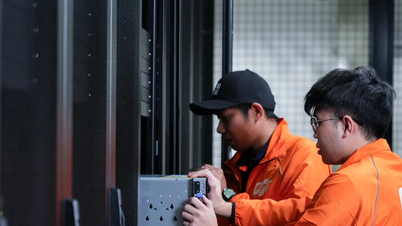
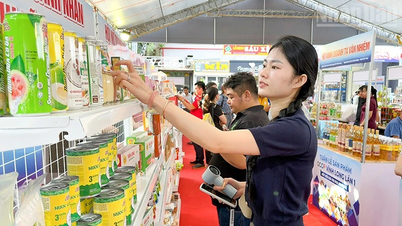
The company's equipment is showcased at the technology market. Photo: TAN BA
Unify databases
The new phase of the Ho Chi Minh City Technology Exchange continues to implement various activities with diverse forms and information to support small and medium-sized enterprises (SMEs) in technology transfer, innovation, and enhancing competitiveness. Alongside the exchange is the expanded version of the Techport Innovation and Technology Transfer Portal, comprehensively upgraded in terms of interface, technology platform, and database, meeting the requirements of the city's expanded administrative boundaries after July 1, 2025. The system has consolidated data from three technology exchanges into a single unified database, containing over 25,000 technologies and equipment, 3,500 suppliers, and 1,400 experts, and is seamlessly integrated with the National Technology Exchange Database (Techmart Vietnam).
Larger exchange
The commercialization of research results, technological development, and innovation is also closely linked to the development of the Ho Chi Minh City Technology Exchange. The Ho Chi Minh City People's Committee's decision to approve the "Ho Chi Minh City Technology Exchange - New Phase" project marks a significant step in perfecting the science and technology market infrastructure, promoting technology transfer, and commercializing research and innovation results in the city.
Mr. Vuong Dinh Thanh, Acting Director of CESTI, informed: The exchange is organized and operated according to a model combining a physical trading space and a digital trading platform, aiming to expand access for businesses, organizations, and individuals to technology solutions and intellectual property within and outside the city. The exchange provides a full range of transaction support services, from receiving technology needs, bidding and selling offers, consulting and brokerage, to appraisal, valuation, negotiation support, contract signing, and post-transfer monitoring; standardized business processes ensure transparency, safety, and efficiency… therefore, the exchange will create many breakthroughs in the development of the science and technology equipment market in the future.
The platform's goal by 2030 is to connect technology supply and demand for at least 1,500 businesses and individuals annually through technology transfer promotion events, on-demand information provision, online trading platforms, and direct consultations with experts. Simultaneously, it aims to support the signing of at least 50 technology transfer and equipment purchase contracts per year, focusing on increasing the percentage of technologies with clear intellectual property documentation and independent valuation to over 70% of the total technologies offered for sale by 2030.
This place also forms a technology database classified according to Technology Readiness Level (technology readiness level - and by priority industrial development sectors), allowing for the assessment of the maturity and practical applicability of technologies, providing businesses and investors with an objective basis for selecting, negotiating, and implementing technologies…
The Ho Chi Minh City Department of Science and Technology has been assigned by the City People's Committee to lead and coordinate with other departments and agencies to implement the two aforementioned projects. This demonstrates Ho Chi Minh City's new approach to the science and technology market. These projects are expected to contribute to improving the efficiency of investment in science and technology, promoting the development of science and technology enterprises and innovative startups in Ho Chi Minh City. Representatives from the Department of Science and Technology believe this is a new step forward in the policy of developing the science and technology market, and in the coming time, this field will flourish, bringing many benefits and contributing to the city's development.
Promote the risk acceptance mechanism.
The commercialization project for the period 2026-2028 will be implemented using a "policy sandbox" model, focusing on directly removing bottlenecks in the commercialization of research, aiming to bring at least 10 science and technology products to market according to "Made in Vietnam" standards, increasing the percentage of intellectual property assets formed from state budget funds that are commercially exploited to 8%-10%, creating a foundation for a sustainable innovation ecosystem in Ho Chi Minh City. A new feature of the project is a more flexible mechanism for granting rights to exploit, apply, and commercialize research, allowing the transfer of research results to organizations and individuals with the capacity and need for application in cases where the lead unit does not implement the project, thereby shortening the time to bring products into production and business. The project allows for partial financial support from the state budget to complete products, conduct pilot production, and register for intellectual property protection; The matching funds do not recalculate the value of the budget already invested in the previous task, helping to reduce the financial pressure on participating businesses. The controlled risk acceptance mechanism is identified as a key feature, creating a testing ground for the commercialization of research… with a transparent mechanism that promotes innovation.
KIM THANH
Source: https://www.sggp.org.vn/rong-cua-thi-truong-san-pham-post840327.html



![[Image] Bridges and roads connecting the eastern part of Ho Chi Minh City](https://vphoto.vietnam.vn/thumb/1200x675/vietnam/resource/IMAGE/2026/04/16/1776328595108_ndo_br_bh-vt5-jpg.webp)


















































![[Photo] National Assembly Chairman Tran Thanh Man meets with the Speaker of the Georgian Parliament](https://vphoto.vietnam.vn/thumb/402x226/vietnam/resource/IMAGE/2026/04/16/1776338494029_anh-man-hinh-2026-04-16-luc-18-21-21.png)

















Comment (0)