

(NLĐO) - After spending the Lunar New Year holidays in the bustling city, we decided to take a "healing" spring trip to the picturesque Ta Lai ethnic village.
We set off from Bien Hoa City along National Highway 20 to Tan Phu District ( Dong Nai Province). We passed the Ta Lai Bridge spanning the picturesque Dong Nai River. Up here, the air began to cool down, the scorching sun gone, and I felt a slight chill, similar to the air in Da Lat.
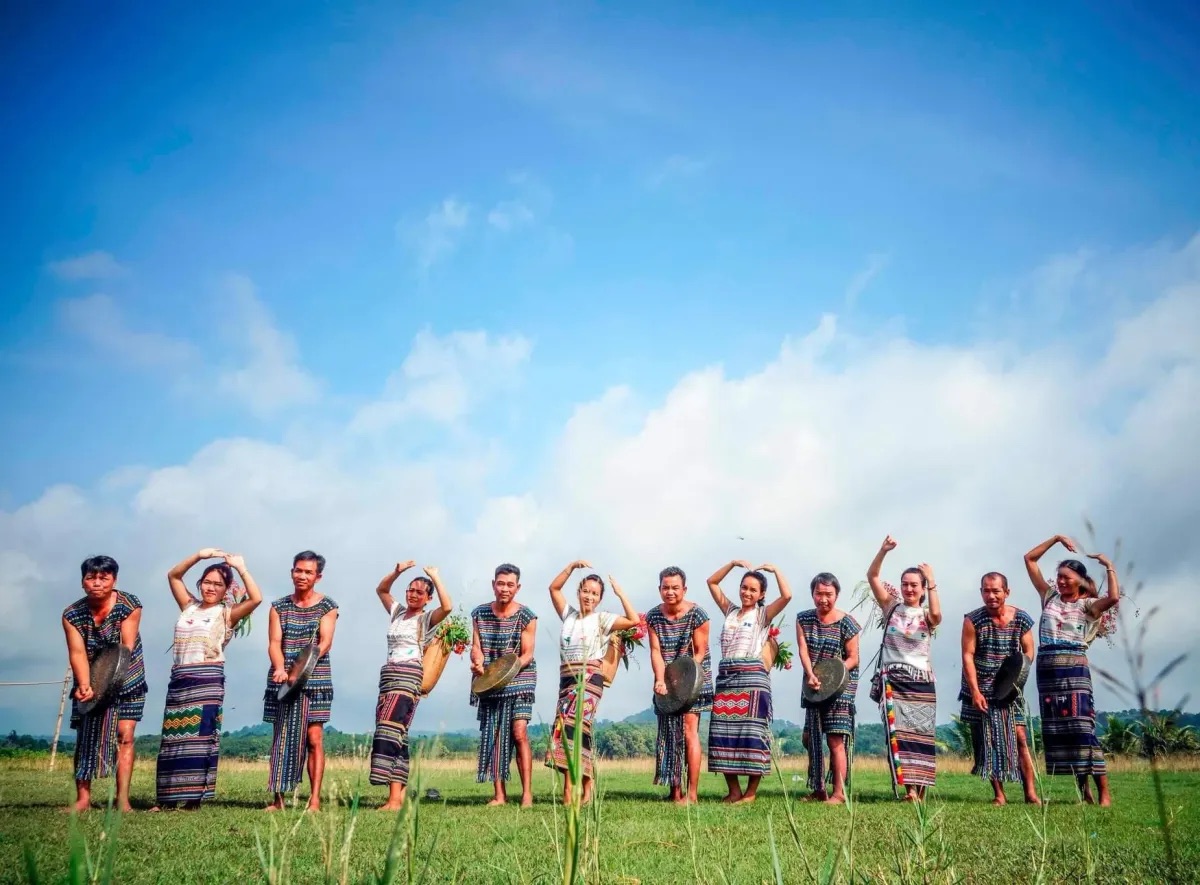
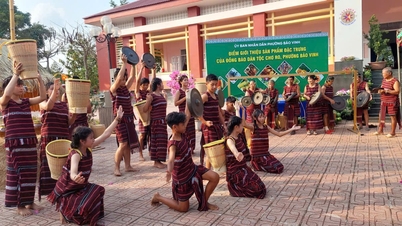
Celebrating the Rice God (Photo: Pham Quoc Hung)
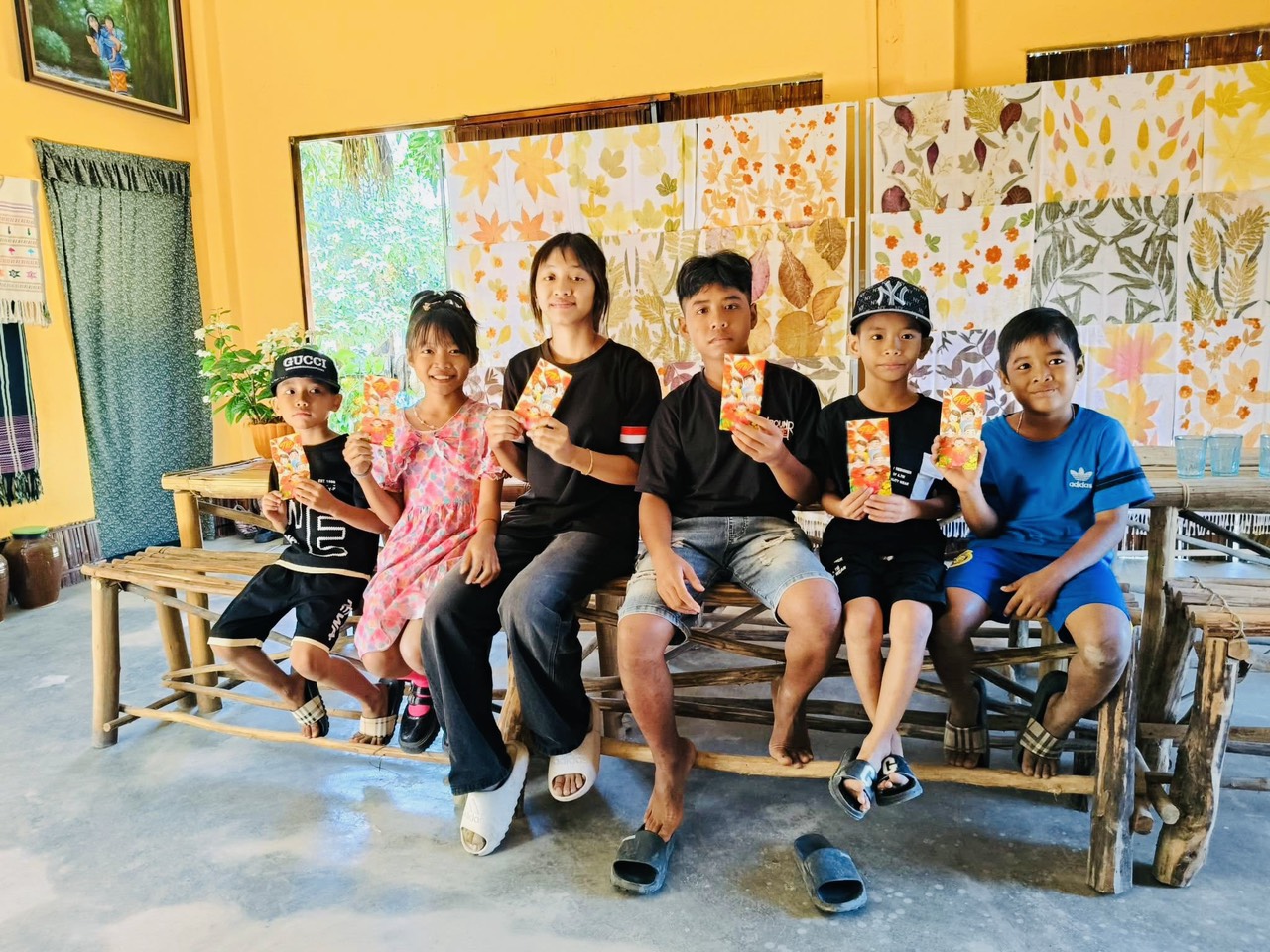
Children in Ta Lai smile brightly as they receive New Year's lucky money.
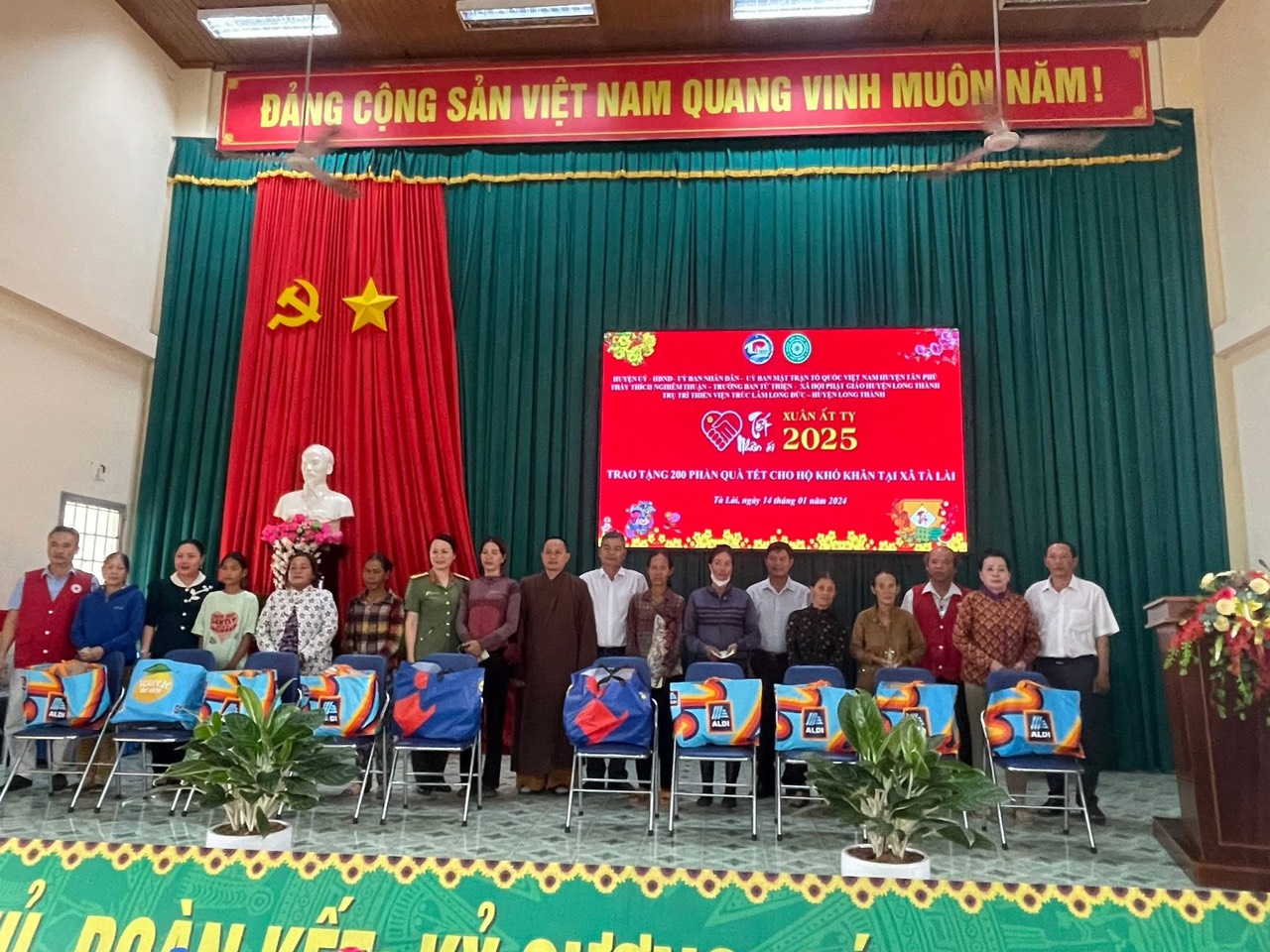
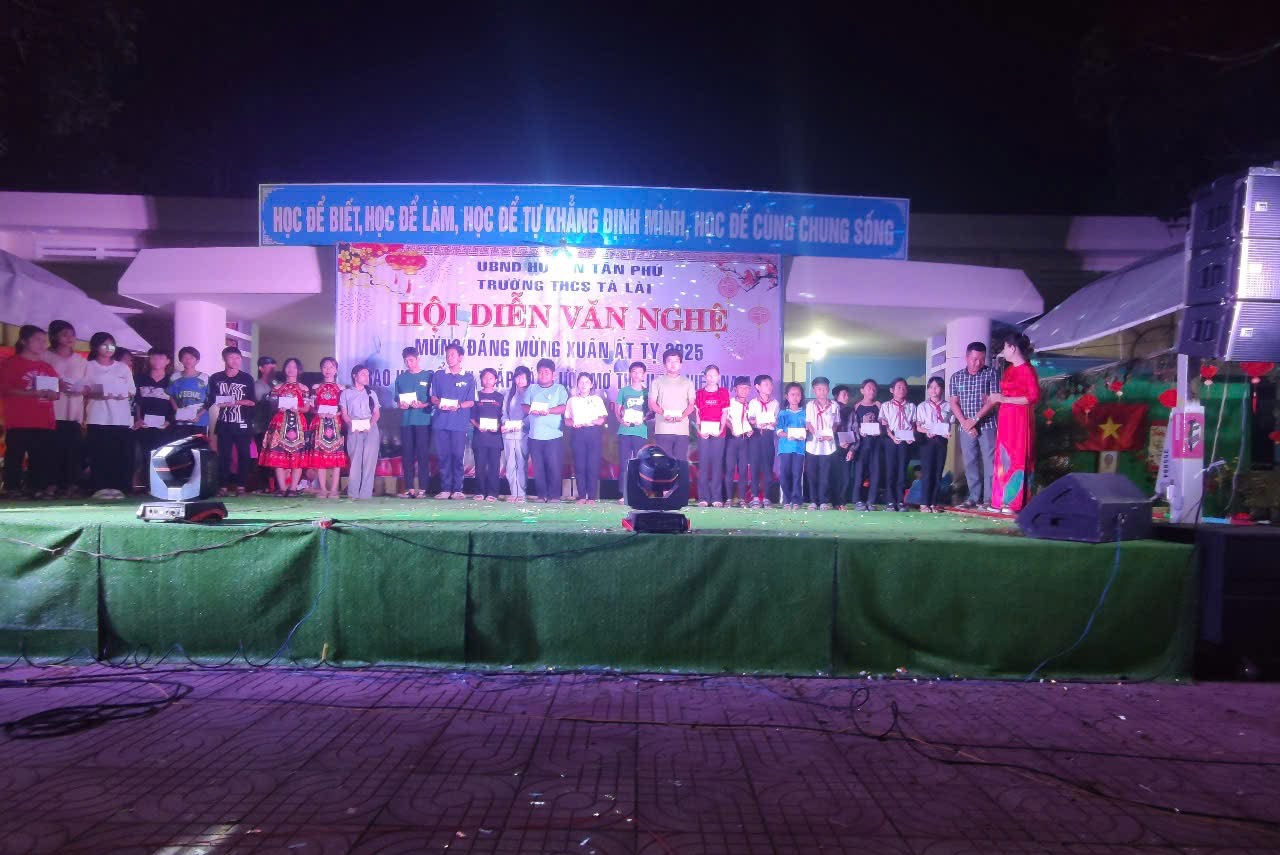
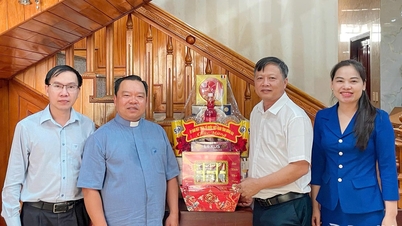
Families and students in Tai Lai receive Tet gifts.
My friend Hung, who works in Tan Phu district, said that Ta Lai commune was formed by separating from Phu Lap commune in Tan Phu district. It was once a remote and disadvantaged area, home to many ethnic minority groups, mainly the Ma, S'tieng, Tay, Nung, and Thai people.
Therefore, the spiritual life of the people here is extremely unique and diverse. Here, the community-based tourism model is implemented by the indigenous people themselves to preserve their own ethnic culture. They are people who are always concerned about how to integrate their ethnic culture without it being diluted or lost over time.
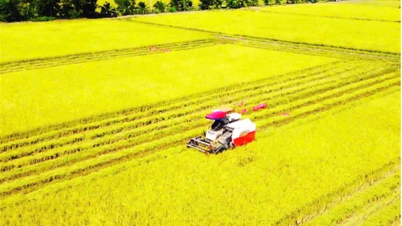
When I inquired about the rice field nicknamed "European Field," Mr. Hung laughed and said: "That's the C8 field of the people in Hamlet 4. In the past, the villagers only planted one rice crop, but since the New Rural Development program and the investment and construction of the irrigation system, they have proactively intensified cultivation and increased cropping seasons to improve their lives. In the past, during Tet (Lunar New Year), this place was just a barren, cracked land. But now it has a different appearance; the field is lush and green like a young girl."
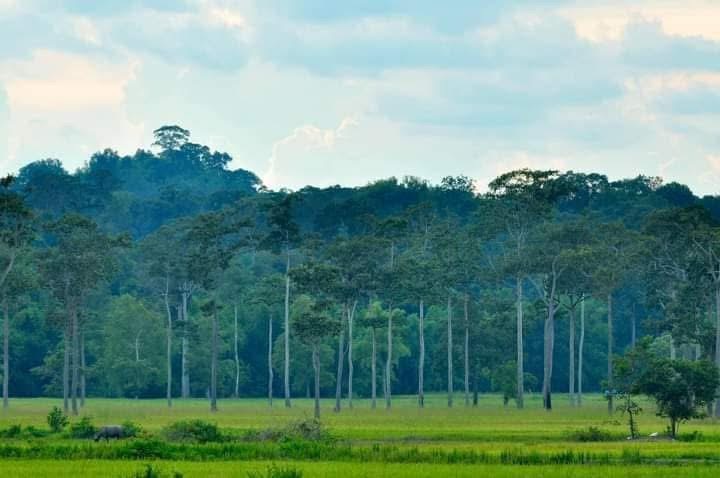
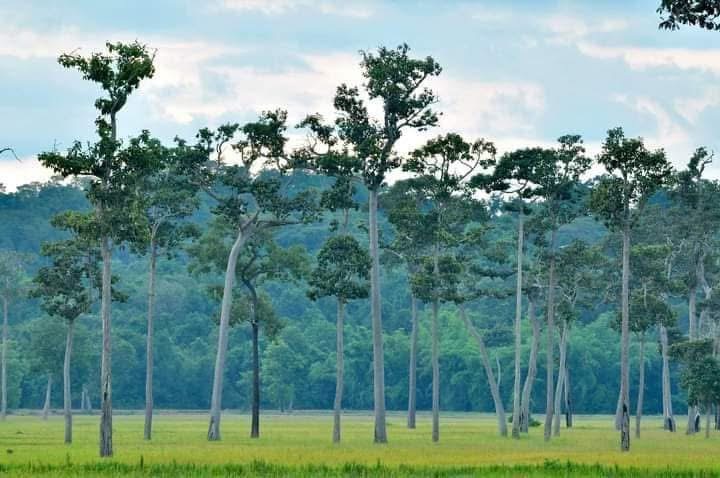
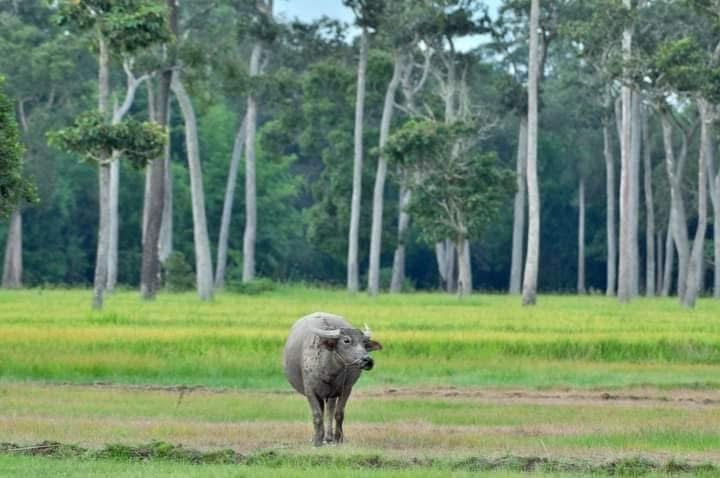
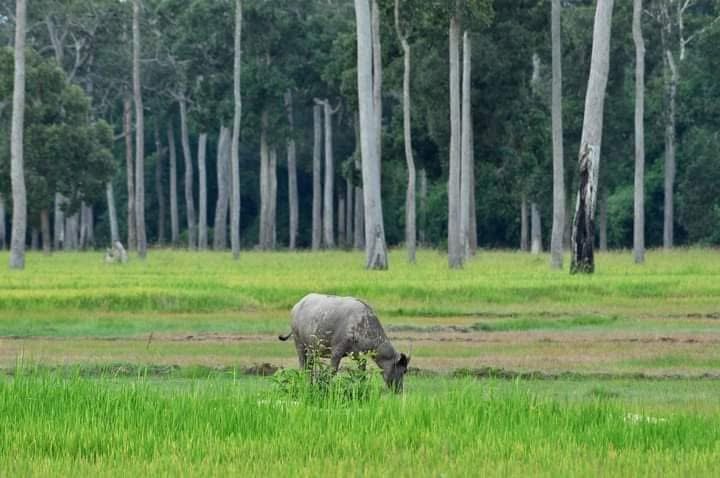
The rice fields, nicknamed "European fields," are full of poetic and peaceful charm.
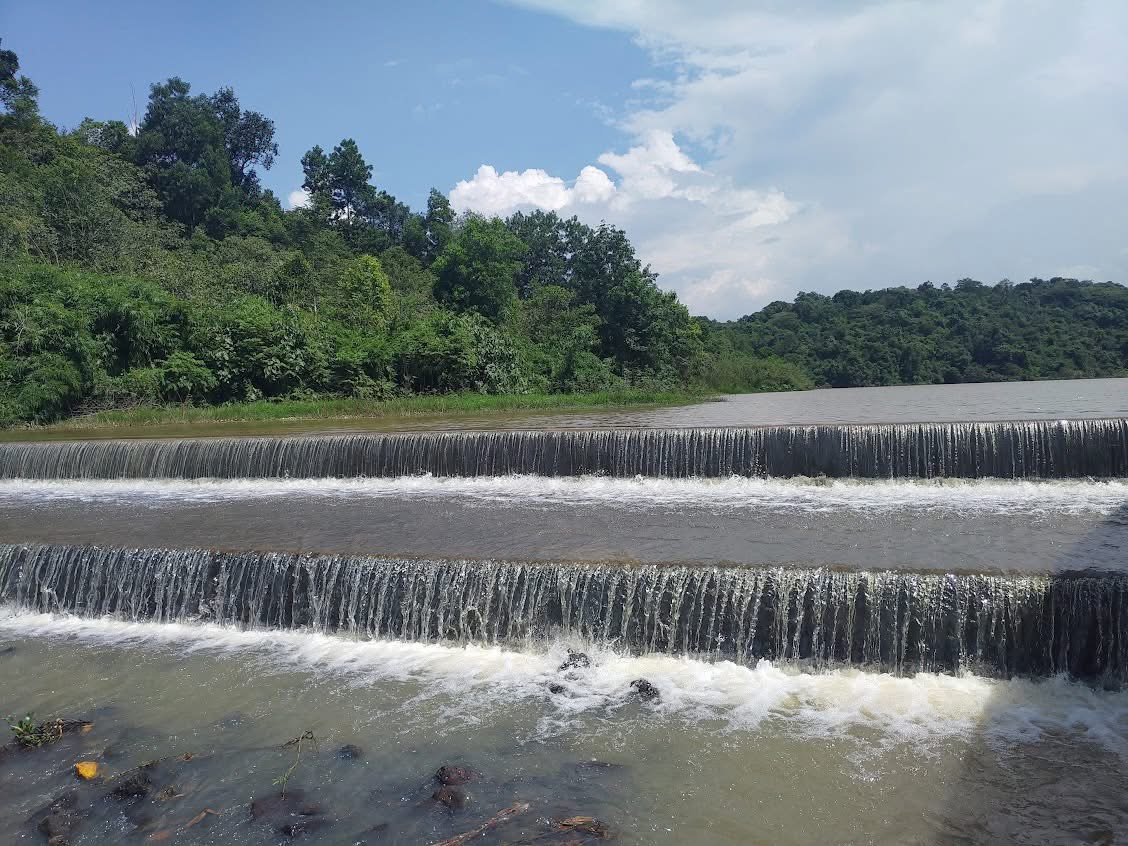
The Van Ho Dam is as beautiful as a painting.
Standing before the rice fields, I felt the beauty bathed in the bright morning sun. The spring fields were bathed in sunshine and gentle breezes, the roads leading to them paved with concrete. Lush green rice paddies stood beside rows of straight oil palm trees. Buffaloes grazed slowly, creating an incredibly peaceful rural atmosphere. The oil palm trees stood silently in the middle of the field. Suddenly, I felt an overwhelming sense of peace.
Many tourists enjoy admiring the flowers, fields, and taking photos for social media. We followed Hung to the "Van Ho Dam." It's hard to describe the dam's dreamy beauty; it's like a painting. The white water cascades across like a soft silk ribbon amidst the rolling hills. Interestingly, tourists can walk on the dam's overflowing surface without fear of falling.
We continued our journey into the village. Unlike where I live, the Tet decorations here were quite simple and modest. But we were amazed by the sight of the Ma people drying their colorful scarves in their gardens. We learned that the women of the Chau Ma and S'Tieng ethnic groups are very skilled at weaving brocade.
Seeing my curiosity about brocade weaving, Mr. Hung took me to visit the home of a woman in the brocade weaving village. After talking to her, I learned that most women of the Ma ethnic group are taught how to weave brocade by their mothers before getting married.
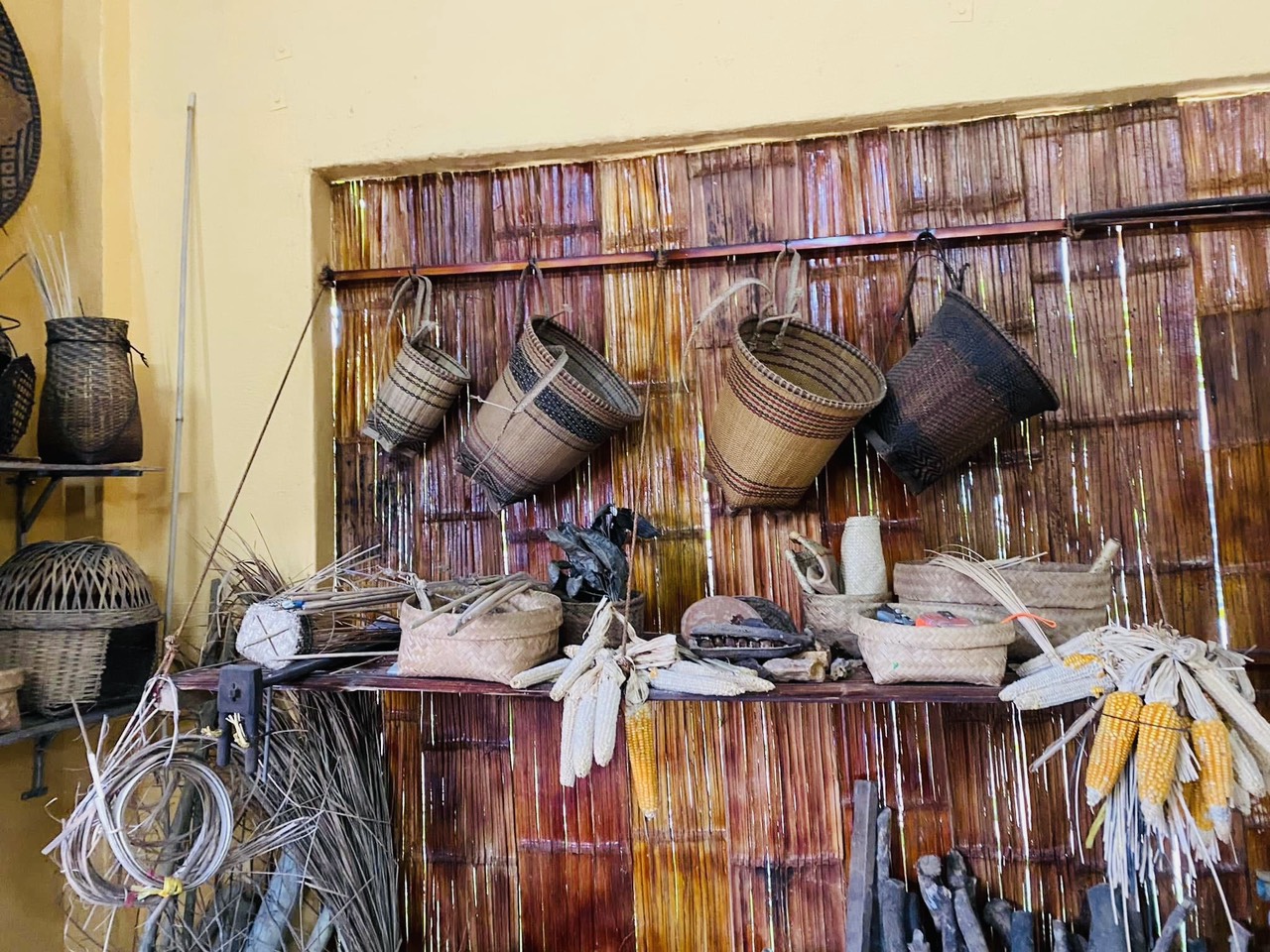
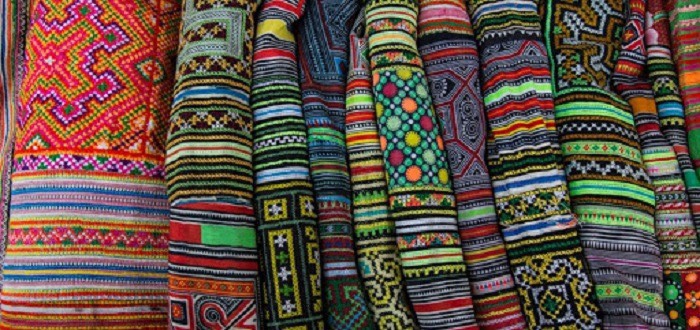
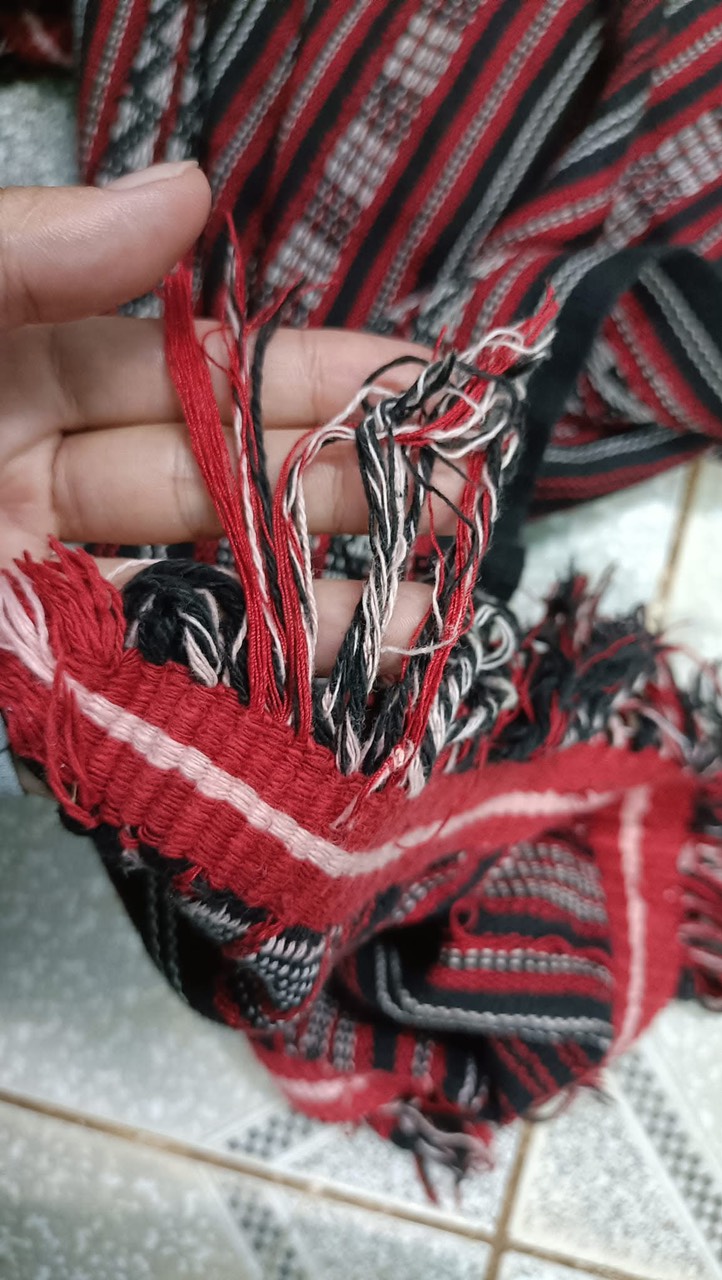
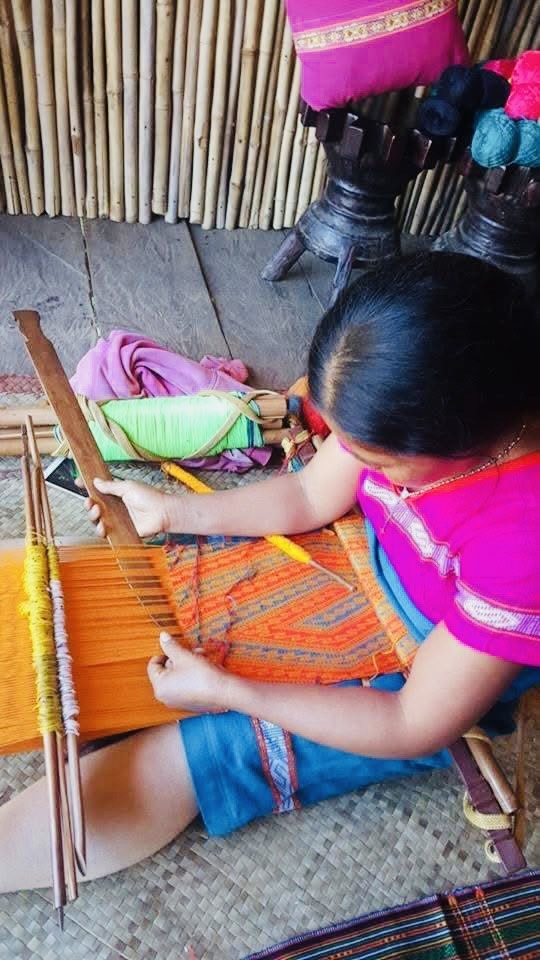

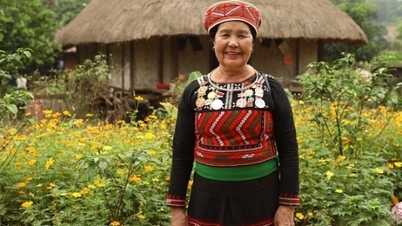
The women of the Chau Ma and S'Tieng ethnic groups are very skilled at weaving brocade.
But nowadays, very few people in the village still know how to weave. Brocade is no longer just simple clothing; it has become much more diverse, encompassing bags, backpacks, wallets, scarves, blankets, pillows, bracelets, and more. Weaving a piece of brocade involves many steps, such as arranging the warp threads, creating patterns, and weaving, all done manually by hand. The finished brocade pieces feature diverse patterns stylized from the shapes of birds, animals, flowers, leaves, lamps, and more.
I sat engrossed, watching the woman diligently weaving, and only then did I truly appreciate the skill, meticulousness, and aesthetic sense of the local women. Taking advantage of the few days of Tet (Lunar New Year), these women still work tirelessly weaving incredibly unique products to earn extra income and improve their lives.
Over the years, the Party Committee and the local government have paid great attention to the material and spiritual lives of the people here. Therefore, in addition to investing in infrastructure, the government focuses on preserving and promoting the traditional cultural values of the ethnic groups and boosting tourism. As a result, every spring in Ta Lai brings a new vitality and a strong transformation.
Source: https://nld.com.vn/ru-nhau-ve-ta-lai-chua-lanh-196250201080544155.htm


![[Image] National Assembly discusses the implementation of the socio-economic development plan.](https://vphoto.vietnam.vn/thumb/1200x675/vietnam/resource/IMAGE/2026/04/20/1776696707422_ndo_br_img-20260420-185419-jpg.webp)

![[Photo] General Secretary and President To Lam meets with National Assembly delegates from ethnic minorities.](https://vphoto.vietnam.vn/thumb/1200x675/vietnam/resource/IMAGE/2026/04/20/1776696701056_a1-bnd-8331-3342-jpg.webp)










































































Comment (0)