


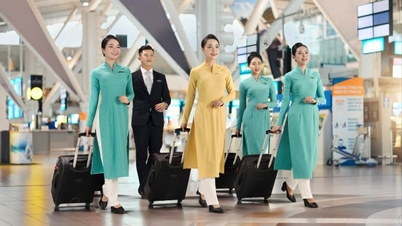
Every March, from cities to villages, offices and schools, the Vietnamese women's ao dai (traditional dress) shines with a dazzling array of colors and styles. The "Ao Dai Week" program, launched annually by the Vietnam Women's Union on International Women's Day (March 8th), not only celebrates the beauty of this traditional attire but also spreads cultural values, creating a community-building event across the country.
From the very beginning of March, walking through the streets of Hanoi, it's easy to spot groups of women gracefully wearing traditional ao dai dresses, enjoying the spring festivities, taking photos by lakes, in parks, in front of offices, or at temples and historical sites. On social media, pictures and stories surrounding the charming ao dai are shared more frequently. It has become a tradition; the color of the ao dai serves as a familiar "signal" heralding the season of honoring women.
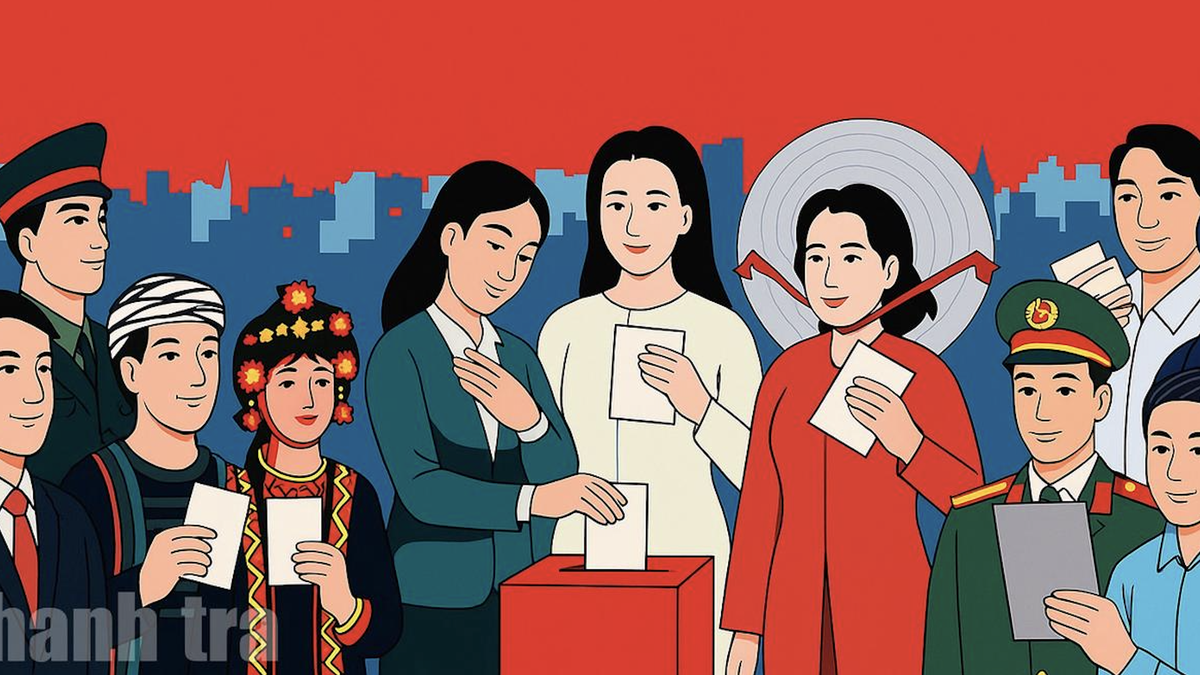
In 2026, the Vietnam Women's Union will launch the "Ao Dai Week" from March 1st to 8th nationwide, in commemoration of the 116th anniversary of International Women's Day (March 8th, 1910 - March 8th, 2026), the 1,986th anniversary of the Hai Ba Trung Uprising, and to celebrate the election of deputies to the 16th National Assembly and representatives to People's Councils at all levels for the 2026-2031 term.
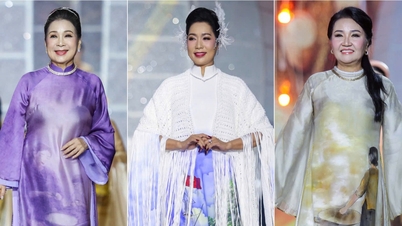
In Hanoi, in response to the "Hanoi Ao Dai Month" launched by the Hanoi Women's Union, numerous agencies, schools, and companies are enthusiastically participating in the movement of wearing traditional ao dai, holding photo contests, and ao dai fashion shows.
On Sunday morning, March 8th, approximately 100,000 members and women in Hanoi are expected to simultaneously participate in folk dance performances at public locations associated with cultural and historical heritage, with three main venues at Yen So Park, Cau Giay Park, and Trang Bung Phung Khac Khoan flower garden (Thach That commune).
The dances performed to music praising the homeland, the country, the Party, and President Ho Chi Minh not only create a joyful atmosphere but also encourage physical exercise and enhance the spiritual life of locals and tourists.
In Ho Chi Minh City, the 12th Ao Dai Festival, themed "Golden Threads - Weaving Aspirations," contributes to a vibrant and joyful atmosphere in March. The festival includes 17 activities spread throughout the city, from the opening ceremony on the evening of March 6th at the President Ho Chi Minh Monument Park and Nguyen Hue Walking Street, to mass performances and parades at various tourist destinations, historical sites, and parks.
This year, the festival brought together 37 designers, 600 actors and models, and 37 ambassadors from various fields. The large participation of creative individuals shows that the ao dai is not only a traditional memory but also a source of inspiration for renewal, meeting increasingly diverse aesthetic tastes.
In Dien Bien, the "Ao Dai Week" took place close to the 2026 Hoa Ban Festival. Thousands of women of diverse ages and professions paraded along streets filled with pristine Hoa Ban flowers, creating a highlight that beautified the local cultural and tourism landscape.
In Hue, a region designated as the "Capital of Ao Dai" (Vietnamese traditional dress), programs encouraging women to wear ao dai at work and in community events continue to be maintained. The "Ao Dai of Love" program has donated nearly 2,000 ao dai to disadvantaged members in various communes and wards, striving to ensure 100% of members have an ao dai to wear on important occasions, including the upcoming election day… This widespread impact demonstrates that the ao dai still holds a lasting place in contemporary life.
Even though fashion is constantly changing with countless trends, the ao dai (traditional Vietnamese dress) always holds a place of honor in the wardrobes of most Vietnamese women. The custom of wearing the ao dai during festivals, Tet (Lunar New Year), engagement ceremonies, weddings, and other important events has been passed down through generations.
The ao dai (Vietnamese traditional dress) is present as a symbol, a way to introduce the homeland when representing Vietnam at international diplomatic forums, on the stages of art and beauty contests across the globe…
Before putting on the outfit, the wearer always carefully irons and adjusts every crease. This small act is like a silent ritual, a reminder of neatness and the importance of maintaining a good image, not only for the individual but also for the national culture.
Dr. Dang Thi Bich Lien, former Deputy Minister of Culture, Sports and Tourism and President of the Vietnam Ao Dai Culture Association, has repeatedly affirmed that the ao dai is a symbol of the Vietnamese character, a "living heritage" that needs to be preserved and spread.
The ao dai (Vietnamese traditional dress) is increasingly prominent in festivals, community activities, education, and tourism. Recently, the Vietnam Ao Dai Culture Association has collaborated on numerous parades, exhibitions, and performances in Hanoi and Thai Nguyen; simultaneously, it has implemented the "Ao Dai Connect" program with the Ministry of Foreign Affairs, establishing ao dai heritage clubs in Asia and Europe, bringing the image of the ao dai closer to international friends.
Over the years, "Ao Dai Week" has become a widely influential cultural event. Each Ao Dai worn not only celebrates the gentle and graceful beauty of Vietnamese women but also conveys pride in tradition to a wide audience both domestically and internationally.
More importantly, it is a concrete way for each individual to participate in preserving and promoting the value of heritage in the context of integration. It is a practical step towards the early recognition of the ao dai as a national intangible cultural heritage, and further, as an intangible cultural heritage of humanity.
Source: https://nhandan.vn/ruc-ro-ao-dai-thang-ba-post946606.html
![[Photo] Prime Minister Pham Minh Chinh meets with representatives of female leaders and managers of central agencies and presents the Kovalevskaia Award 2025.](https://vphoto.vietnam.vn/thumb/1200x675/vietnam/resource/IMAGE/2026/03/06/1772789429283_ndo_br_dsc-1149-jpg.webp)







![[Photo] People in Ho Chi Minh City experience the green space at Ly Thai To Park No. 1.](https://vphoto.vietnam.vn/thumb/1200x675/vietnam/resource/IMAGE/2026/03/06/1772783731988_01-9003-png.webp)































Comment (0)