

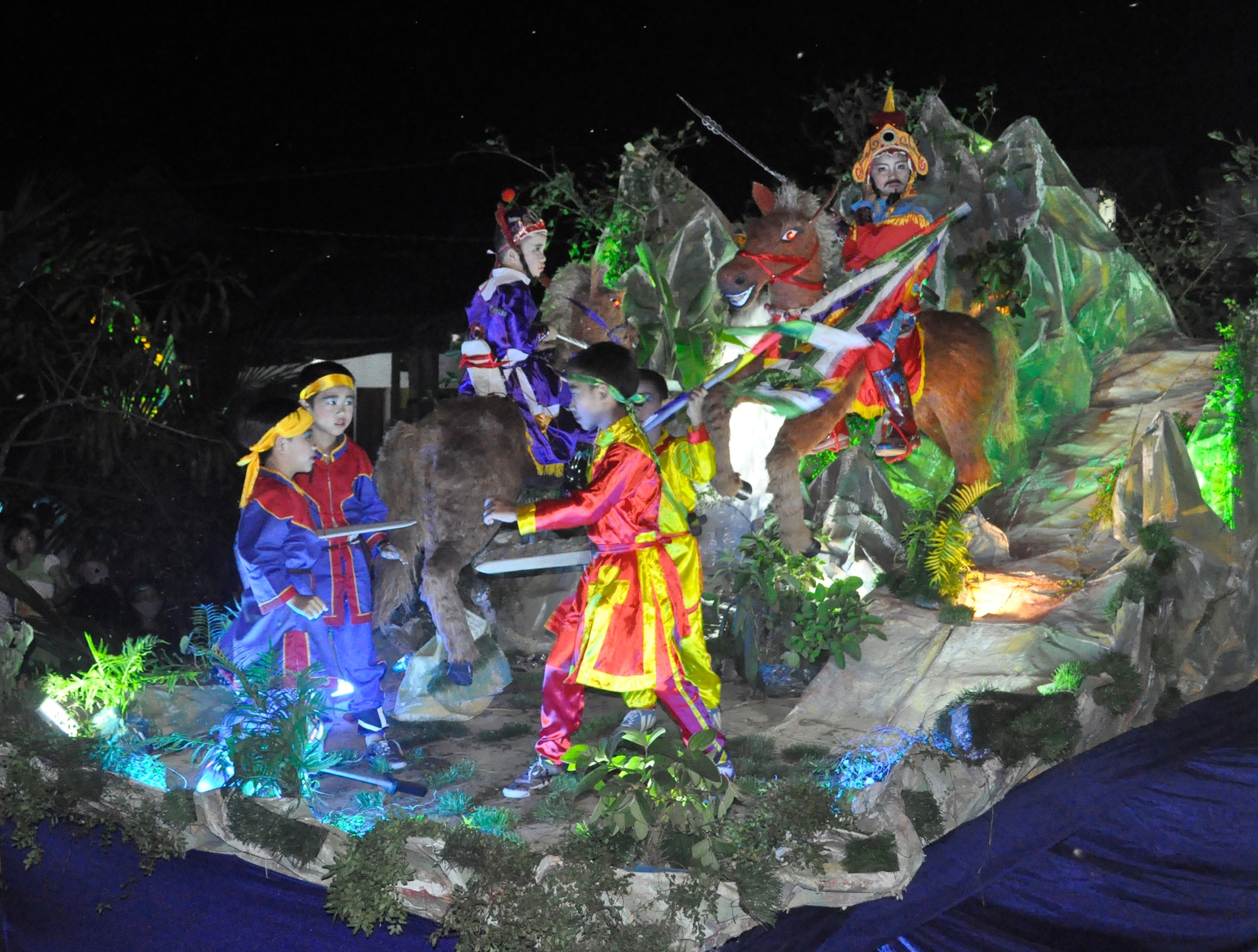
The sound of gongs and drums resounds along the Truong Giang River, and the colorful procession of floats and boat races fills the entire Binh Trieu (Thang An) area with excitement. The procession of the Lady of Cho Duoc float is not only a folk religious ritual but also a harmonious symphony of the people's hearts, a shining example of gratitude and community solidarity among the residents of Quang Nam province.
From the person who opened the market and brought good fortune.
Legend has it that more than two centuries ago, in Phiếm Ái village (Đại Lộc district), there was a girl named Nguyễn Thị Của, born in 1799, renowned for her virtue and intelligence. She passed away at the age of 18 but often "manifested herself to save people," eradicate evil, and bestow blessings upon the villagers.
In the 5th year of Emperor Tự Đức (1848), during a "travel" through the Phước Ấm area along the Trường Giang River, she noticed that the place was "dense with trees and plants, and the scenery was picturesque," making it very suitable for establishing a market. While the people were still hesitant, she entered a trance, claiming to be "the Great Lady of Phường Triều, establishing this market."
From then on, boats came and went busily, and houses sprang up close together. The market became prosperous and was called "Cho Duoc," meaning "suddenly a thriving market."
Out of gratitude to the goddess who opened the market and helped the people with their livelihoods, the people erected a shrine to worship her and held annual ceremonies. Because of her protection of the country and sheltering of the people, and her evident divine intervention, the Nguyen dynasty granted her a royal decree authorizing her to be worshipped as Trai Thuc Duc Bao Trung Hung Trung Dang Than.
On July 25th, the 9th year of Khai Dinh (1924), she was promoted to the rank of "Trang Huy Duc Bao Trung Hung Thuong Dang Than, specially authorized for worship, to commemorate the national celebration and to clearly demonstrate the rules of worship".
From a small ritual, the procession of the Lady of Cho Duoc's palanquin has become a distinctive religious festival of the coastal residents of Quang Nam province, where people entrust their faith and pray for a peaceful life, prosperous business, and a bountiful harvest.
The vibrant colors of the festival along the Yangtze River.
According to the Legend of the Miraculous Goddess recorded in 1919, the festival has existed since the late 19th century. Initially, merchants in Cho Duoc organized it annually on the 12th day of the first lunar month, later changing it to every three years. Today, the procession of the Goddess takes place on the 10th and 11th days of the first lunar month.
From the afternoon of the 10th, the villagers held a ceremony to commemorate the wandering souls who had no place to rest. After the ceremony, amidst the resounding gongs and drums and the thick smoke of incense, the dragon boat was carried out on the Yangtze River as a message to the wandering souls, hoping they would protect the villagers and keep them safe.
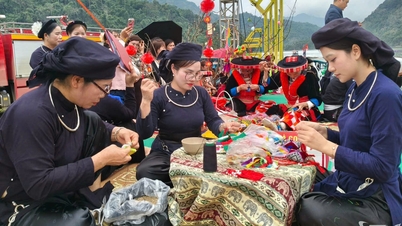
On the morning of the 11th day of the first lunar month, Phuoc Am village was bustling with activity. Groups of people, dressed in traditional long robes and headscarves, carrying ceremonial flags and accompanied by gongs and drums, gathered at the Lady's shrine. The offerings to the Lady were simple yet respectful: fresh flowers, cakes, sticky rice, betel nuts, and other offerings. The entire ceremonial committee, dressed in traditional long robes, recited the ceremonial prayers to the solemn sounds of ceremonial music. The rituals of offering incense, wine, and tea created a sacred yet intimate atmosphere.
Following the main ceremony, the festival begins with the entire village participating in a traditional boat race. On the Truong Giang River, colorful boats carved with dragons, fish, and other motifs race swiftly amidst cheers and shouts of encouragement. The race is not only a fun activity at the beginning of the year, but also demonstrates the chivalrous spirit and enduring will of the people living along the river.
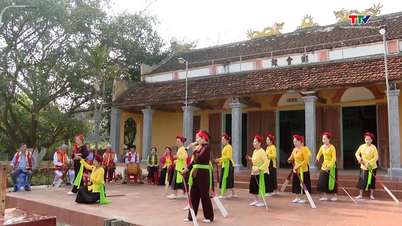
In particular, the most anticipated part is the procession that takes place in the evening. When the chief eunuch reports to the Goddess to escort the eunuch out of the mausoleum, a long procession of flags, fans, gongs, and drums stretches out in the shimmering torchlight. Along the way, villagers on both sides set up altars and burn incense to welcome the procession. Following behind are elaborately decorated floats, each float featuring a vibrant painting depicting folk plays, didactic stories, or images of folk heroes.
To create vibrant processions, the artisans of Phuoc Am began working on the floats on the third day of Tet (Lunar New Year), conducting a trial run on the night of the tenth, and finally the main procession on the night of the eleventh. The floats parade around the market and along the main roads in the village, creating a dazzling spectacle of colors, sounds, and the joy of the spring festival. Thousands of people from all over flock to Cho Duoc Market, simply to immerse themselves in the crowds and the resounding drums under the moonlight of the first lunar month.
More than just a folk festival, the procession of the Lady of the Market is also a ritual of gratitude to the founder of the market, a symbol of community spirit. Despite many ups and downs, the festival has been preserved and revived by the people of Phuoc Am after years of interruption, and is increasingly spreading.
In 2014, the Ministry of Culture, Sports and Tourism recognized the Bà Chợ Được Procession as a National Intangible Cultural Heritage, acknowledging its unique values in beliefs, folk art, sculpture, and performance. Since then, every spring, the sound of gongs and drums resonates along the Trường Giang River, recalling the ancient folk song:
"Every year on the eleventh of January"
"Procession, traditional singing, and boat races to express gratitude."
Besides being a time for villagers to gather their descendants, the procession of floats has become a meeting point for tourists from all over. Amidst the lively sounds of gongs and drums and the vibrant colors of the floats, the people express their hopes for peace, favorable weather, and prosperity.
Having existed for over a century, the procession of the Lady of Cho Duoc's palanquin remains a vivid testament to the enduring cultural vitality of the people of Quang Nam: genuine, resilient, and full of gratitude.
Source: https://baodanang.vn/ruoc-co-hat-bo-dua-thuyen-tri-an-3325995.html


![[Image] A brilliant symphony and explosive power in the skies of Da Nang.](https://vphoto.vietnam.vn/thumb/1200x675/vietnam/resource/IMAGE/2026/05/31/1780196945787_anh-man-hinh-2026-05-31-luc-10-08-51.png)










![[Video] Sunset at Lap An Lagoon – Where the sun sets over the fishing nets](https://vphoto.vietnam.vn/thumb/340x192/vietnam/resource/IMAGE/2026/05/31/1780192137701_beach-landscape-sea-water-nature-grass-745871-pxhere-com.jpeg)








































































Comment (0)