

 |
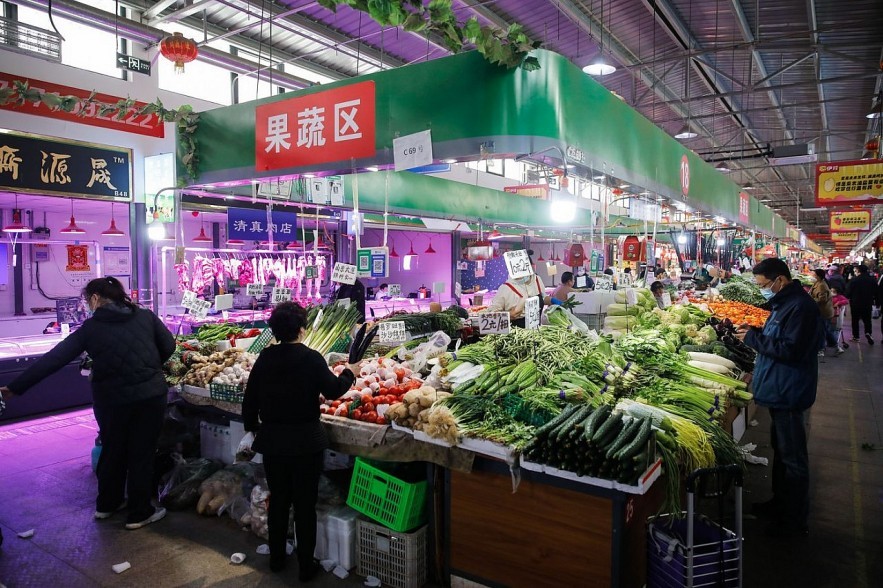
| China's inflation in June 2023 was near 0%, surprising economists . (Source: Reuters) |
Deflation risk
Just six months ago, economists worried that China's reopening after nearly three years of strict COVID-19 containment policies would lead to a surge in economic activity, exacerbating soaring global inflation.
But currently, even though consumers have returned to shopping and entertainment services, the reopening has not yielded the results the world had hoped for. The real estate sector remains weak, youth unemployment is high, and the $35 trillion debt of local governments has weighed on economic growth, causing domestic consumer prices to stagnate.
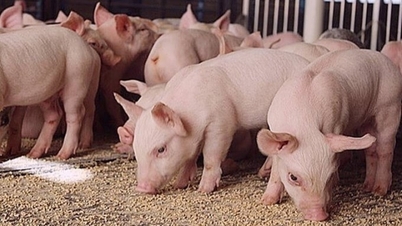
According to China's National Bureau of Statistics (NBS), the country's consumer price index (CPI) in June 2023 was near 0%, surprising economists who had expected a 0.2% increase. This marks China's lowest inflation rate since February 2021, primarily driven by lower pork and energy prices.
Meanwhile, core inflation (excluding the more volatile food and energy prices) fell 0.1% to 0.4%, from 0.6% in May.
Commenting on the figures, Zhang Zhiwei, chief economist at Pinpoint Asset Management Ltd, said: “The risk of deflation is very real. Both measures of inflation add further evidence that the recovery is weakening, with concerns about deflation weighing on consumer confidence.”
Nomura analysts predict that inflation will "slip further" next month, to -0.5%.
Also in June 2023, China's producer price index (PPI) fell 5.4% year-on-year. This was the sharpest decline in producer prices in over seven years and the ninth consecutive month of decline for the index.
Economist Harrington Zhang of Nomura noted that the PPI result was largely due to a sharp drop in raw material prices and weakened demand from manufacturers.
Amid signs of weak growth and falling producer prices, the Chinese government and the People's Bank of China (PBoC) have been working to boost spending and investment in the country.
While other countries have been continuously raising interest rates to combat inflation, the People's Bank of China (PBoC) decided to cut its key medium-term interest rate in June. The Chinese State Council also pledged to take stronger measures to boost economic growth.
Nomura analysts believe that the latest inflation data will prompt the world's second-largest economy to roll out more fiscal and monetary stimulus packages throughout this year.
Analysts emphasized: "The extremely low inflation rate supports our view that the PBoC is likely to implement two more policy interest rate cuts in the remainder of the year."
The alarm bells ring
An economy mired in deflation can be a nightmare scenario for a country.
Gregory Daco, chief economist at Ernst & Young (EY), explains: “The economy being stuck in this deflationary environment is a real risk. In terms of growth potential, if the economy faces both deflationary risks and a high debt environment at the same time, that’s the worst-case scenario.”
| China is facing a “balance sheet downturn” similar to what was seen during Japan’s “lost decade” in the 1990s. |
Mr. Daco noted that deflation makes debt more expensive and also delays consumer spending and investment. Therefore, deflation delays growth and increases the cost of debt.
Richard Koo, chief economist at the Nomura Research Institute, warns that China is facing a “balance sheet recession” similar to what was seen during Japan’s “lost decade” in the 1990s. At that time, consumers and businesses shifted from investing and spending to reducing debt due to persistent deflation.
According to Daco, this impact could be even worse in China because the country lacks a social safety net. Without government support, Chinese consumers are forced to save more instead of spending and investing to boost economic growth.
Economist Daco asserted: “This has been a long-standing and structural problem in the world’s second-largest economy for decades. Consumers tightening their belts and increasing savings is one of the reasons why, despite facing difficulties, Beijing has still seen impressive growth trajectory.”
Good news for the Fed
While deflation certainly won't help China's economy, it could be good news for the US Federal Reserve, which is trying to curb inflation.
Ed Yardeni, president of market research firm Yardeni Research, suggests that China's deflationary situation could cause the US PPI index to "unexpectedly fall."
He noted: "Historically, the PPI of the world's largest economy has a 'high correlation' with that of China due to the close level of trade between the two countries. Beijing's weak post-pandemic recovery could be a cause of deflation for the global economy."
Economist Daco, however, says that while no central bank wants to see deflation, the Fed might be pleased to see "deflation from the rest of the world."
However, experts believe that while China's deflationary situation may be good news for Fed officials, it poses a long-term risk to the global economy.
The rise of China, from a developing nation to a global superpower and a major economic rival of the United States since the 1990s, has reshaped the world. Persistent deflation could alter this reality.
In particular, for Generation Z (those born between 1997 and 2012) of the world's second-largest economy – who are struggling with record-high unemployment rates of over 20% – deflation is a disaster on the verge of breaking out.
Source
![[Image] Nearly 125,000 Hanoi students completed the Literature exam for the 10th grade entrance exam.](https://vphoto.vietnam.vn/thumb/1200x675/vietnam/resource/IMAGE/2026/05/30/1780117233041_ndo_br_thiet-ke-chua-co-ten-2-png.webp)




























![[Photo] Admire the coral "masterpiece" amidst the million-year-old heritage of Dak Lak province.](https://vphoto.vietnam.vn/thumb/1200x675/vietnam/resource/IMAGE/2026/05/30/1780107638639_y25-jpg.webp)











































































Comment (0)