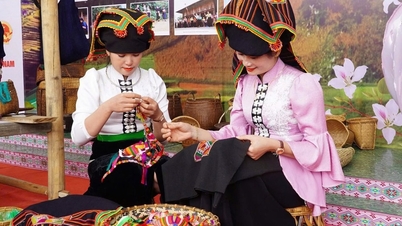
Foreign tourists visit the traditional weaving craft of the Cham people. Photo: THANH THANH
The unique craft of brocade weaving
The brocade of the Cham people in An Giang has a long history, with unique patterns and designs, and a variety of products such as hats, cloaks, sarongs, bags, and headscarves... worn on important occasions like festivals, holidays, celebrations, and weddings. Cham brocade products often use traditional patterns such as squares, shuttles, fans, sawteeth, suns, and flowers in many colors. Sometimes, new and modern patterns are combined with traditional ones to create a more vibrant and fresh look.
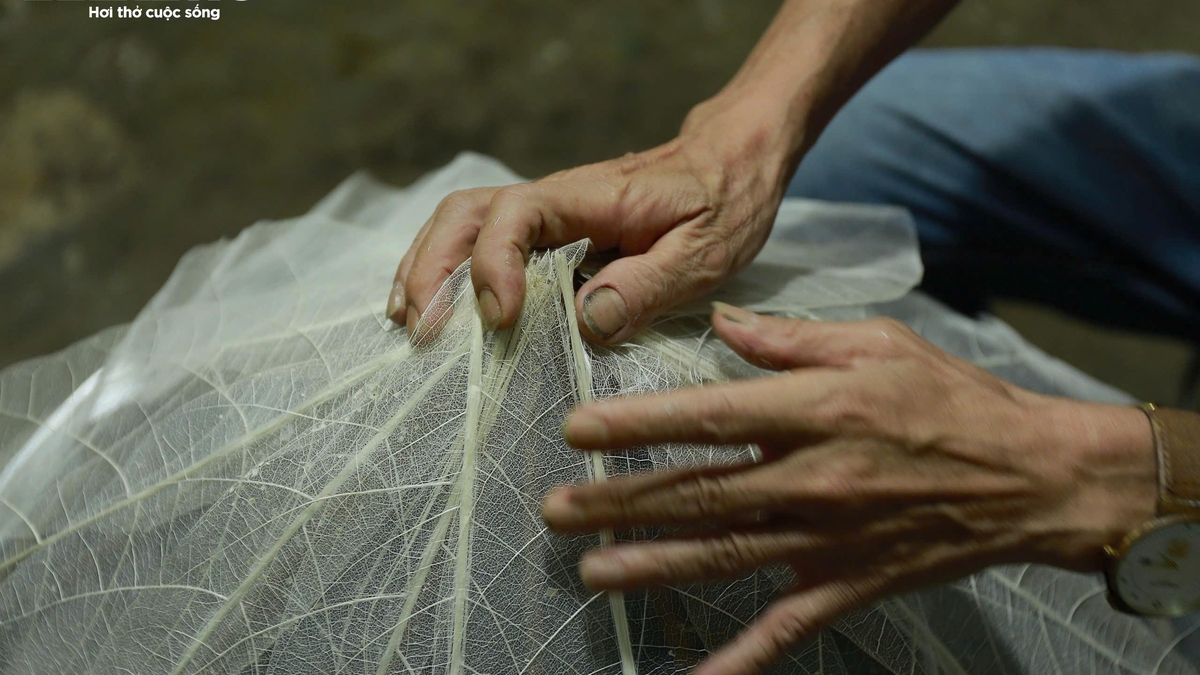
The Cham people hand-weave silk threads dyed with natural colors from leaves, tree sap, tree bark, and the fruit of the *Morus alba* plant. Furthermore, the dyers carefully combine these ingredients to create a wide range of colors. Dyeing the silk threads is a crucial step; without experience or carelessness, the threads will be unevenly dyed, resulting in poor-quality brocade fabric. Therefore, each brocade product is not only unique in its color combination but also showcases the weaving technique and the intricate patterns, requiring many steps and considerable time.
Ms. Salyha, a resident of Chau Phong commune, shared: “Besides the conventional weaving method using weft threads to create patterns on the loom during weaving, weavers have to spend a lot of time carefully aligning each silk thread on the warp threads of the loom to ensure that the desired pattern is created without any inaccuracies. The unique feature of this weaving technique is that it makes the pattern stand out against the fabric background and the weft threads without being obscured by the colors.”

In recent years, traditional craft village tourism has become increasingly attractive to tourists, especially foreign visitors, due to its long-standing cultural values and unique handcrafted products. Previously, FaLa's family, residing in Vinh Hau commune, like many other Cham families, only produced and processed traditional brocade products based on orders or had to travel around selling them, resulting in low income. Since the development of brocade weaving village tourism, the number of tourists visiting the Cham village has increased significantly, improving the economic situation of Cham families. "Tourists are impressed with the traditional handicrafts. Besides buying souvenirs, tourists are also very interested in trying their hand at some stages of the weaving process and taking photos with Cham people in traditional costumes weaving," FaLa shared.
Over time, the weaving craft of the Cham people in An Giang has preserved its unique techniques, resulting in high-quality, smooth, glossy, and durable products. With the development of trade, the textile products of the Cham people in An Giang, especially silk sarongs reflecting the rich cultural identity of the Cham ethnic group, have been widely showcased at fairs and exhibitions both domestically and internationally.
Appealing traditional dishes
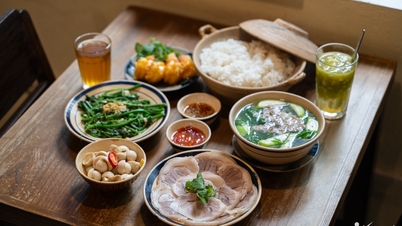
Utilizing readily available and distinctive ingredients, the Cham people in An Giang have meticulously and skillfully created unique, delicious traditional dishes that reflect their rich cultural heritage. Many appealing dishes exist, such as "com ni" (rice cooked in a special sauce), "ca pua" (a type of curry), "tum lo mo" (a type of stew), etc. "Com ni" is prepared with great care, requiring the selection of high-quality rice, which is washed with a little salt, rinsed thoroughly, and drained. It is then stir-fried with butter (a type of butter specifically used in Muslim cuisine), cinnamon, and cloves. After stir-frying, a sprinkle of roasted cashew nuts is added and mixed well. The entire mixture is then placed in a pot with spices and curry powder and simmered over low heat. When almost cooked, rich coconut milk is poured over it, and the heat is reduced until fully cooked.
Cà púa is a traditional dish of the Cham people during festivals and holidays, usually eaten with rice. Generally, cà púa is not much different from curry, except that cà púa consists entirely of meat without potatoes, vegetables, or any other ingredients, and it is especially rich and spicy. Another example is tung lò mò, which in the Cham language means beef sausage. Tung lò mò is made from fresh, high-quality beef thigh, shank, or lean meat. All the meat is finely chopped and marinated with a few secret spices, including leftover rice, wine, ginger, etc., giving it a very different flavor compared to sausages of the Kinh, Hoa, or Khmer people. Walking around a Cham village, you'll see rows of attractive red sausages drying every few houses. Tung lò mò can be grilled or fried, served with fresh vegetables, pickled cucumbers, and dipped in chili sauce or salt and pepper with lemon – all very appealing.
The traditional cakes of the Cham people are diverse and abundant, each with its own name depending on its shape and preparation method. During traditional Cham celebrations and festivals, these delicious cakes are a precious gift offered by the host to guests. After the meal, a few of these tasty cakes serve as dessert, showing the host's appreciation. Previously, almost every household made cakes for important occasions, but nowadays only the elderly or those who make cakes themselves remember all the traditional Cham cake recipes. Ms. Faty, residing in Chau Phong commune, shared: "Making traditional Cham cakes is very hard work, but I am very happy to have contributed a small part to preserving the craft and traditional culture of my people."


Source: https://baoangiang.com.vn/sac-mau-van-hoa-cham-a488414.html

![[Photo] The 13th National Congress of the Youth Union conducts personnel work.](https://vphoto.vietnam.vn/thumb/1200x675/vietnam/resource/IMAGE/2026/06/24/1782299943080_ndo_br_1-6868-jpg.webp)
![[Photo] Opening Ceremony of the 13th National Congress of the Ho Chi Minh Communist Youth Union](https://vphoto.vietnam.vn/thumb/1200x675/vietnam/resource/IMAGE/2026/06/24/1782286753905_ndo_br_1-8510-jpg.webp)

![[Photo] General Secretary and President To Lam attends the Central Public Security Party Committee Conference](https://vphoto.vietnam.vn/thumb/1200x675/vietnam/resource/IMAGE/2026/06/24/1782302063612_a1-bnd-9302-9166-jpg.webp)