

From the fields to the deep forests
With decades of dedicated research on mosquitoes, Professor Vu Sinh Nam of the National Institute of Hygiene and Epidemiology (NIHE) stated that Vietnam has recorded over 200 mosquito species belonging to 17 genera, of which 4 genera can transmit diseases to humans. Anopheles mosquitoes transmit malaria; Culex mosquitoes transmit Japanese encephalitis; Mansonia mosquitoes transmit elephantiasis; and Aedes mosquitoes transmit dengue fever caused by the Dengue virus (commonly known as dengue hemorrhagic fever).
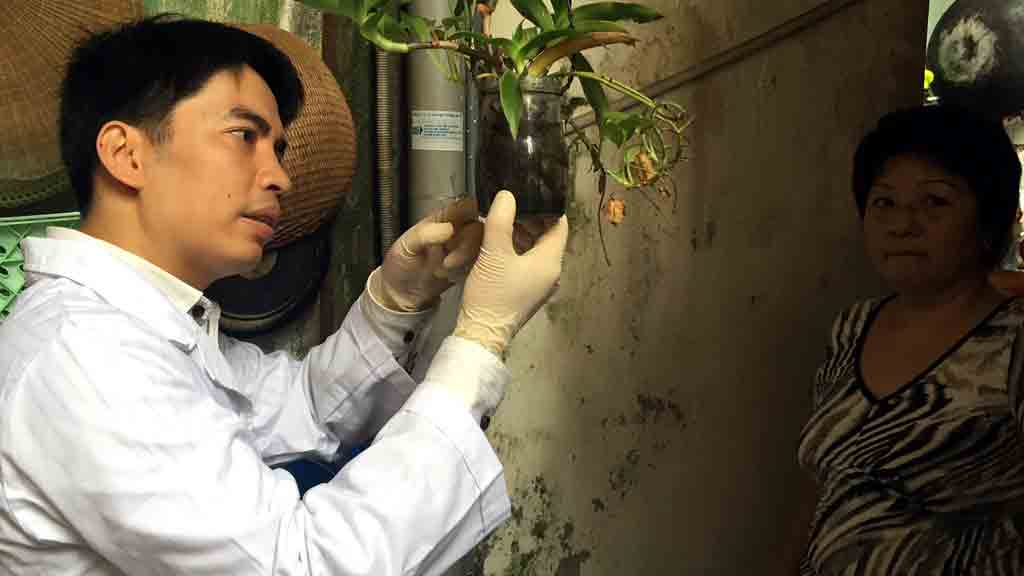
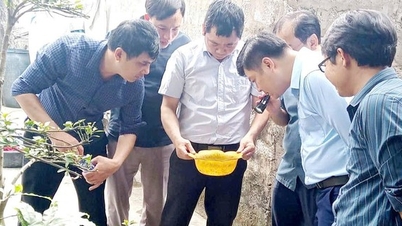
NIHE experts guide people in Hanoi on how to eliminate mosquito breeding grounds that transmit dengue fever.
Among dangerous mosquito-borne diseases, malaria has been largely brought under control. The mosquitoes that transmit this disease are distributed and live in mountainous forests and remote areas, not very close to humans, so the potential for disease spread is limited in these mountainous regions, especially among groups of people who go into the forest and sleep in their fields.
The Culex mosquito, which transmits Japanese encephalitis, is a mosquito that commonly breeds, roosts, and spreads outdoors, such as in rice paddies, paddy fields, and bushes, hence its name, the field mosquito. These mosquitoes typically fly out to feed on animal or human blood at dusk; they breed and develop most actively in the summer during hot, rainy weather. Thanks to the Japanese encephalitis vaccine, this disease is being effectively controlled.

Professor Vu Sinh Nam (right in the photo) and other scientists have spent decades researching the characteristics of mosquitoes that transmit dengue fever, contributing to the development of solutions to control the disease.
Regarding elephantiasis, the Department of Preventive Medicine ( Ministry of Health ) stated that Vietnam eradicated the disease in 2019. Therefore, mosquitoes that transmit elephantiasis are temporarily not a major threat to public health.
City mosquitoes wake up at the same time as people.
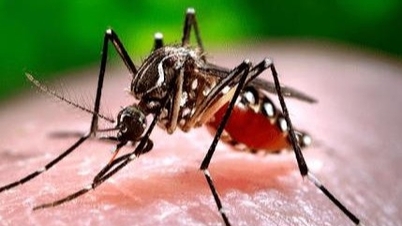
Professor Vu Sinh Nam stated that among the four mosquito species that transmit diseases, the most "intelligent" and "closest" to humans are the Aedes mosquitoes, with Aedes aegypti being the most dangerous. This mosquito is black with white spots on its body and legs, hence it is often called the striped mosquito.
Aedes mosquitoes closely follow human routines. Early mornings and late evenings are the two times when they are most active, which is also when people wake up and return home from work. They "reside" indoors, in dark corners, on clothes, bedding, and other household items. In particular, female Aedes mosquitoes only feed on human blood. Only with human blood can mosquito eggs develop. This species of mosquito is also known as the "bourgeois mosquito" or "urban mosquito" because it only chooses to lay its eggs in places with clean water.
Mosquito surgery
According to Professor Vu Sinh Nam, to assess the extent to which Aedes mosquitoes "cope" with insecticides, scientists still have to catch mosquito larvae and raise them in the laboratory. After about 7-10 days, the larvae develop into mosquitoes, at which point the mosquitoes are tested with the chemical dose.

Professor Vu Sinh Nam (right in the photo) and other scientists have spent decades researching the characteristics of mosquitoes that transmit dengue fever, contributing to the development of solutions to control the disease.
Along with assessing the risk of chemical resistance, studies also evaluate the life cycle and reproductive capacity of Aedes mosquitoes, thereby determining the most effective mosquito control measures. Mosquito surgery is one method used for this assessment.
Through meticulous "surgical procedures," the "surgeons" observe the reproductive system (oviducts, ovaries) of female mosquitoes. Each time a mosquito lays eggs, it leaves a "node" and a marker. Female mosquitoes lay eggs a maximum of 4-5 times, with 4-5 nodes marked on the oviduct. After spraying insecticide, if the mosquito population caught has few or no nodes, the spraying was considered effective.
According to Professor Nam, female mosquitoes live for about a month, sucking human blood every 3-5 days to lay their eggs; each time they lay about 100 eggs. In a lifespan of about 30 days, a female mosquito can produce 300-500 offspring.
More and more "young mosquitoes" are carrying the virus.
Scientists at NIHE say that dengue fever mosquitoes have a high degree of digestive compatibility compared to other mosquito species. With malaria mosquitoes and Japanese encephalitis mosquitoes, they need to suck a certain "amount" of blood sufficient for their eggs to develop. If the amount is less than necessary, the blood only serves as food.
"However, with Aedes mosquitoes, they lay eggs in abundance, just as many as they suck blood. In one blood meal, an Aedes mosquito can feed on many people. Therefore, if there are 4-5 people in a house, just one Aedes mosquito infected with the Dengue virus can easily infect everyone, causing the whole family to contract dengue fever," Professor Nam explained.
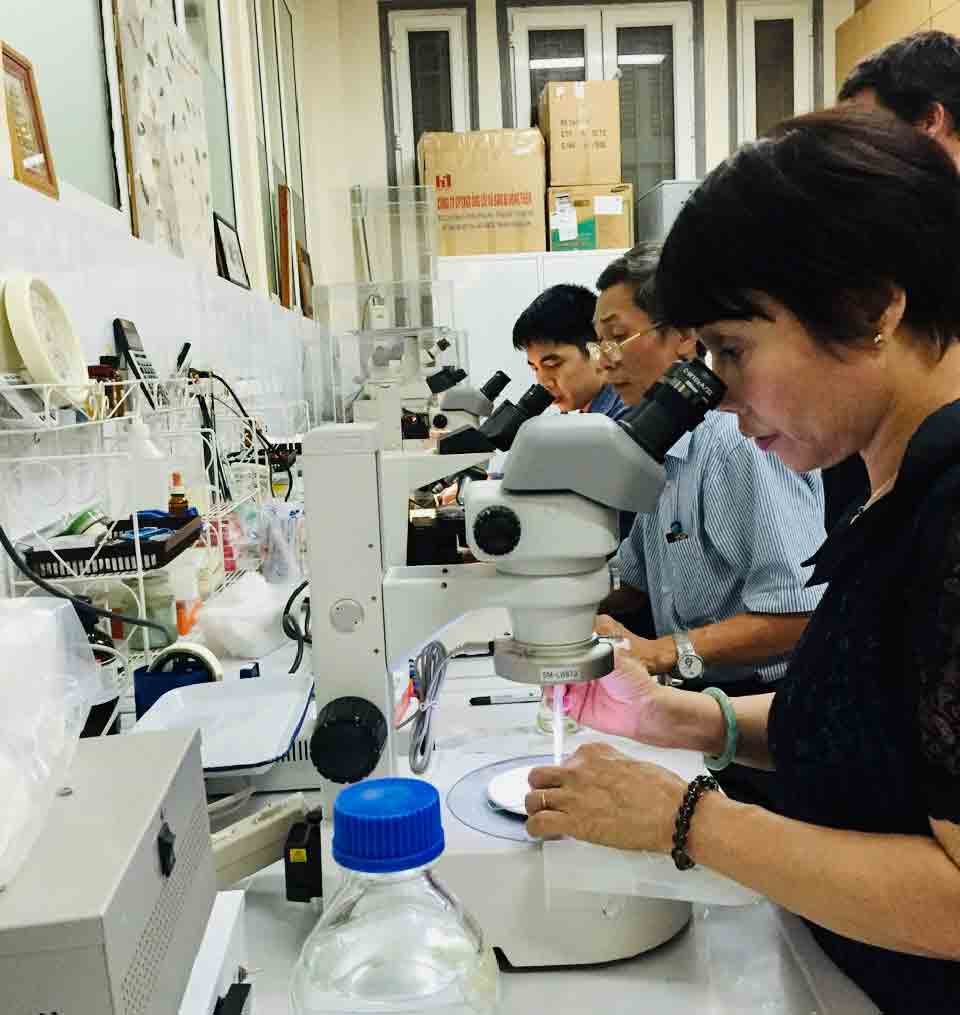
NIHE experts are studying Aedes mosquitoes.
Notably, recent studies show that previously, the rate of virus transmission from Aedes mosquitoes to their offspring was very low, about 1 in 4,000 to 1 in 6,000; but recently, the rate of transmission has increased significantly, to about 1-3%. This fact may change our understanding of the origin and spread of the disease in the community. Previously, they had to feed on the blood of infected people to transmit the disease. But now, their offspring, the "young mosquitoes," are born with the virus already present and can transmit the disease more easily.
"Therefore, if you miss even one breeding ground for hundreds of mosquito larvae, a new generation of mosquitoes will spread and bite people and transmit the disease within 7-10 days. Studies estimate that for every one dengue fever case diagnosed, there are actually about 122 other cases of silent infection in the community," Professor Nam noted.
"The presence of the Dengue virus in the community, along with a large population of Aedes mosquitoes, makes dengue fever persistent and prone to outbreaks. We hope that everyone in the community will join hands to eliminate mosquito larvae and disease-carrying mosquitoes, and work with the health sector to implement measures to prevent this disease," Professor Nam shared.
Vaccine expectations
Currently, there are two dengue fever vaccines recognized worldwide: the Sanofi Pasteur vaccine (France) and the Takeda vaccine (Japan). The Takeda vaccine can protect against all four types of the virus and does not depend on whether the vaccinated person has previously had dengue fever. The WHO is reviewing and will soon issue recommendations on dengue fever vaccination.
The Ministry of Health is currently reviewing and approving Takeda's dengue vaccine in Vietnam. With the vaccine available, the community will have another tool to prevent dengue fever outbreaks caused by Aedes mosquitoes.
Professor Vu Sinh Nam
Source link


![[Photo] General Secretary and President To Lam meets with National Assembly delegates from ethnic minorities.](https://vphoto.vietnam.vn/thumb/1200x675/vietnam/resource/IMAGE/2026/04/20/1776696701056_a1-bnd-8331-3342-jpg.webp)


![[Image] National Assembly discusses the implementation of the socio-economic development plan.](https://vphoto.vietnam.vn/thumb/1200x675/vietnam/resource/IMAGE/2026/04/20/1776696707422_ndo_br_img-20260420-185419-jpg.webp)




































































































Comment (0)