What makes the festival heritage in Ba Chẽ unique is that they all take place in areas inhabited by ethnic minorities and are enthusiastically participated in by the various ethnic communities.
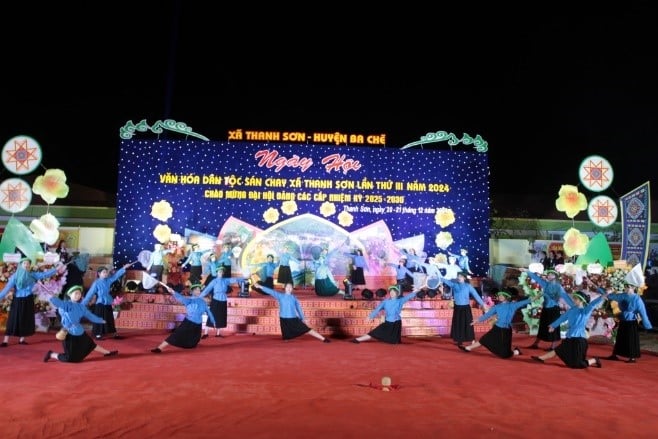
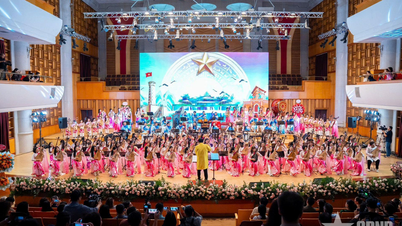
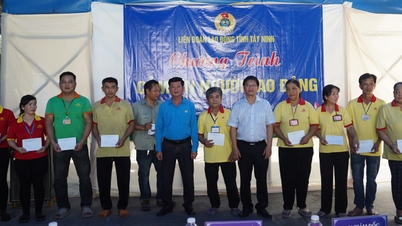
Opening Ceremony of the 3rd San Chay Ethnic Culture Festival in Ba Che District, 2024.
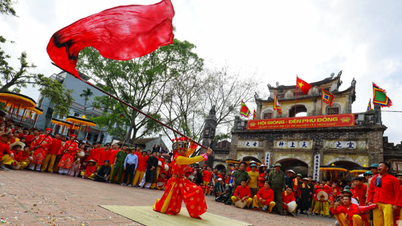
Ba Chẽ district currently has several unique festivals, such as: the Golden Tea Flower Festival, the Dong Chuc Temple Festival (Luong Minh commune), the Ban Vuong Festival (Nam Son commune), the San Chay Ethnic Culture Festival (Thanh Son commune), the Highland Cultural Market (Luong Minh commune), the Tay Ethnic Culture Festival, the Lang Da Temple Festival (Thanh Lam commune), the Ong Temple - Ba Temple Festival (Nam Son commune)... These festivals have contributed to promoting the image of the land and people of Ba Chẽ, along with its typical and distinctive local culture, to a wide audience of people and tourists inside and outside the province.
Notably, starting in 2020, the Ban Vuong Festival, an important traditional festival in the spiritual life of the Dao people, was held for the first time. The festival reenacts the Dao people's "sea voyage" to settle in a new land and commemorates their ancestor, Ban Vuong, praying for favorable weather, bountiful harvests, and prosperity and happiness for their descendants. Beyond spiritual worship, the festival aims to preserve cultural heritage and promote tourism potential through the unique cultural characteristics and beauty of the costumes, rituals, beliefs, and cultural activities of the Dao people in particular, and the ethnic groups of Ba Che district in general. It also provides an opportunity for artisans and the Dao community to meet, interact, exchange experiences, and raise awareness in preserving and promoting the traditional cultural values of the Dao people in the era of national integration and development.
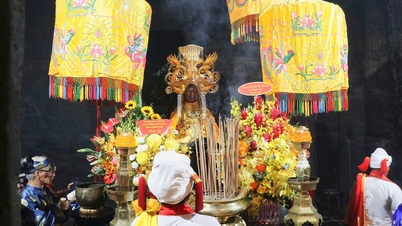
The festivals all include a solemn ceremonial part with common rituals such as: sacrificial rites, erecting the ceremonial pole, procession of palanquins, offering sacrifices to the pole, digging holes for planting seeds, plowing the fields at the beginning of spring, rice planting competitions, etc. The festive part is lively and joyful with cultural performances, competitions in traditional sports such as tug-of-war, stick pushing, crossbow shooting, stilt walking, wooden clog walking, volleyball, rice cake making competitions, sticky rice cake pounding, and the introduction and sale of OCOP products and local agricultural products. The Ông-Bà Temple Festival also includes a water procession, palanquin procession, incense offering, fish release, OCOP product exchange, men's and women's boat racing competitions, rice cake making, tug-of-war, stick pushing, blindfolded drum beating, and bamboo pole dancing.

The fire-jumping ritual in the Ban Vuong festival (Nam Son commune, Ba Che district).
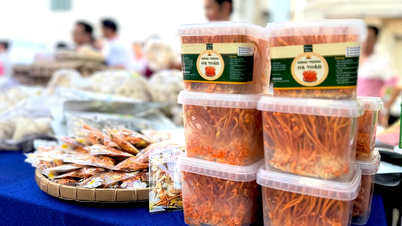
Ba Chẽ District also organizes many ethnic cultural festivals and highland markets. The activities of these highland cultural markets, registered at the beginning of 2024, have attracted over 8,400 visitors for interaction and trade. For example, the highland cultural market in Luong Minh commune has maintained its unique characteristics as a highland market, operating on the 4th, 14th, and 24th of each lunar month. Visitors can buy agricultural products, medicinal herbs, OCOP products, experience local cuisine, visit the reservoirs of the four highland communes, and explore the Dong Chuc communal house.
Alternatively, the Dap Thanh market is held on the 1st, 6th, 11th, 16th, 21st, and 26th of each lunar month. At the market, visitors can purchase agricultural products, medicinal herbs, and local OCOP (One Commune One Product) products, experience unique local cuisine, enjoy rafting on the Ba Che River, and admire the picturesque scenery of the Dap Thanh mountains and forests. In addition, there are many propaganda art programs – film screenings, circus performances, and political poster exhibitions – held in Dap Thanh and Don Dac communes, attracting over 800 visitors.
Festival tourism is gradually becoming an attractive tourism product in Ba Che district. In 2024, the district attracted over 35,000 visitors, mainly those attending festivals. Over 7,200 visitors stayed overnight. These visitors were primarily those attending festivals and sightseeing during the spring season, mainly from provinces and cities such as Hai Phong, Hai Duong, Hanoi, Hung Yen, Bac Giang, Lang Son, Yen Bai, Thai Binh, and Thanh Hoa. These figures are encouraging signs for the preservation and promotion of festival heritage values, contributing to the sustainable development of the local economy .






























































Comment (0)