In a recent interview, Tim Cook stated that Apple is facing increasing cost pressures as demand for memory chips for AI data centers surges globally. This is tightening the supply for the consumer electronics industry and driving up the prices of critical components.
"Unfortunately, price increases are unavoidable. We have made every effort to mitigate the massive price hikes imposed on us by our suppliers and to protect our customers from these increases. However, the current situation has become unsustainable," said Cook.

The wave of AI investment is creating fierce competition for memory chip supplies, especially DRAM and high-bandwidth memory (HBM), components that play a vital role in AI servers.
According to Cook, more and more production capacity is being shifted to the AI sector, leaving a more limited supply of chips for consumer devices.
Earlier this month, associations representing the automotive, retail, and electronics industries in the U.S. also warned that memory chip shortages could cause sharp price increases for many consumer goods and disrupt supply chains.



While confirming the price adjustment plan, Apple's CEO did not disclose the specific timing, the expected increase, or which products would be affected. This information comes as Apple is reportedly preparing to launch its first foldable iPhone in September, along with the iPhone 18 Pro and iPhone 18 Pro Max models.
Cook stated that Apple is under significant pressure from a shortage of DRAM memory chips. As supply tightens and manufacturers continuously raise prices, Apple's production costs are also increasing.
According to Apple's CEO, the company expects the supply and price of memory chips to return to normal soon to ease pressure on consumer products.
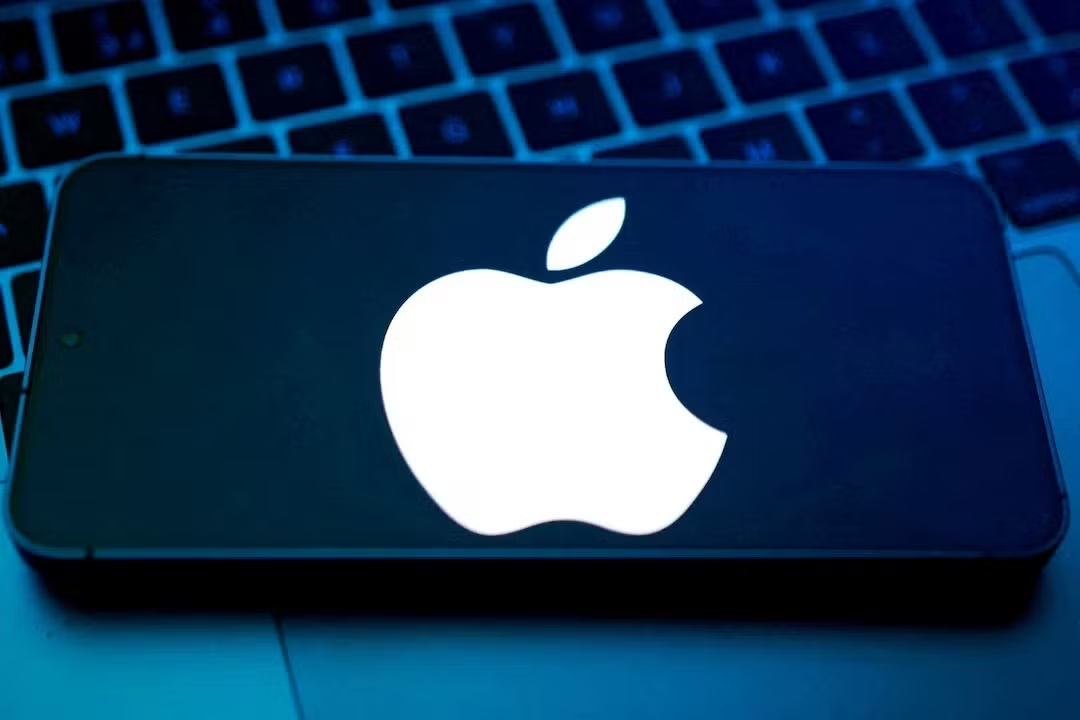
Facing the risk of a prolonged shortage, Apple has indicated its readiness to use its vast cash reserves to support the expansion of memory chip production capacity in the market. However, Mr. Cook affirmed that the company has no plans to build its own memory chip or storage memory manufacturing plants.
In addition, the Apple CEO also mentioned the possibility of expanding supply sources from China – which has many large memory and storage chip manufacturers. However, current national security regulations may require American companies to obtain licenses if they want to cooperate with Chinese suppliers.



When asked whether these restrictions should be eased, Cook suggested that all options should be considered to address the supply shortage. “We should look at all possible sources of supply,” he said.
Apple's CEO's statements suggest that the AI craze is not only transforming the technology industry but is also having a direct impact on the consumer electronics market, with iPhone and other Apple device buyers likely to bear some of the increased costs in the near future.
Source: https://tienphong.vn/sap-tang-gia-iphone-post1852252.tpo

![[Photo] Opening Ceremony of the 13th National Congress of the Ho Chi Minh Communist Youth Union](https://vphoto.vietnam.vn/thumb/1200x675/vietnam/resource/IMAGE/2026/06/24/1782286753905_ndo_br_1-8510-jpg.webp)
![[Photo] General Secretary and President To Lam attends the Central Public Security Party Committee Conference](https://vphoto.vietnam.vn/thumb/1200x675/vietnam/resource/IMAGE/2026/06/24/1782302063612_a1-bnd-9302-9166-jpg.webp)

![[Photo] The 13th National Congress of the Youth Union conducts personnel work.](https://vphoto.vietnam.vn/thumb/1200x675/vietnam/resource/IMAGE/2026/06/24/1782299943080_ndo_br_1-6868-jpg.webp)