


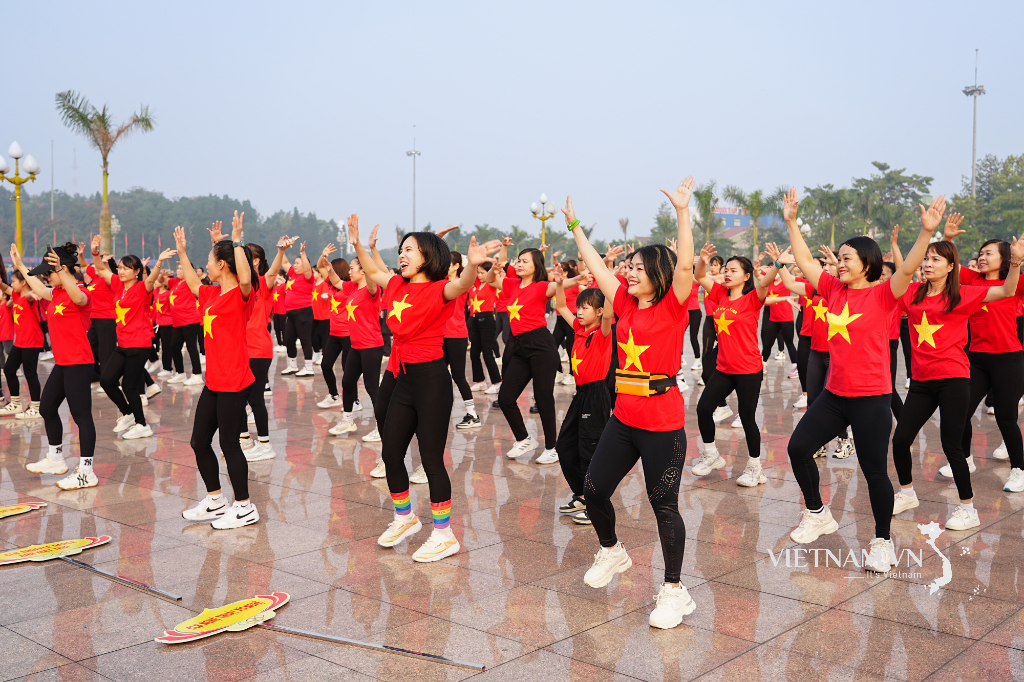
The people of Minh Chau island commune ( Hanoi City) were delighted during a cultural performance celebrating the 80th anniversary of the August Revolution and National Day on September 2nd; and also celebrating the successful conclusion of the First Congress of the Minh Chau Commune Party Committee.
There are times when a nation cannot move forward without pausing to look deeply within itself. In 2025, our country has chosen a difficult but emotionally charged path as it undertakes a restructuring of its administrative apparatus, geographical boundaries, and development space. This is not an undertaking to shrink the country, but to reorganize its strength. From central government decisions to the quiet changes in island communities, mountainous regions, cities, and border areas, it is a silent but resolute journey. A journey to bring the government closer to the people, to lay the foundation for governance, and to open up a long-term future for the nation and its people.
Because in the course of development, the history of every nation has moments when it is forced to choose: either continue moving forward with old inertia or accept stopping to self-correct, even knowing that the road ahead will be bumpy and full of obstacles. Nations that hesitate often pay the price with prolonged stagnation, while those that dare to confront themselves often open up a new cycle of development.

Enhancing disaster prevention skills and strengthening grassroots initiative in Minh Chau island commune (Hanoi). Photo: Nguyen Quan.
Perhaps it's not an exaggeration to say that our nation enters 2025 at such a critical juncture. After nearly four decades of Doi Moi (Renovation), the country has achieved significant socio -economic successes, the scale of the economy has expanded, and its international standing has been increasingly affirmed. But these very achievements also place new demands on the national governance apparatus. As development expands and social life becomes more diverse and complex, a cumbersome, layered, and fragmented system not only slows progress but also erodes social trust.
Looking back at the history of administrative reforms in our country, we can see that there have been previous periods of streamlining and reorganization. However, the fundamental difference in 2025 is that the reorganization will not take place in isolation or locally, but within a larger context. This involves restructuring the apparatus simultaneously with decentralization, control of power, and reorganization of the national development space. This is no longer a purely organizational "merging and separating" process, but a systemic self-rectification.

Former Deputy Minister of Home Affairs Nguyen Tien Dinh during an interview with a VTV Times reporter. Photo: Hai Hung.
Back in late March 2025, in an interview with VTV Times, former Deputy Minister of the Interior Nguyen Tien Dinh also stated that reorganizing the administrative apparatus and units is not simply about reducing the number of departments or streamlining personnel, but rather a restructuring of how the State operates. According to him, if it only stops at "merging for simplicity" without clear delegation of authority, established accountability, and effective control mechanisms, the apparatus may be streamlined in form but may not necessarily become stronger in substance.
Rearranging the country, therefore, is not simply administrative reform. It is a process of restructuring the power structure, reorganizing how the State operates, and, more profoundly, redefining the relationship between the government and the people. This is a difficult and highly sensitive task that cannot be done halfheartedly, but it is also unavoidable if the country wants to progress further.

Efforts are underway to implement educational projects for children in the mountainous region of Lai Chau province in the final days of 2025. Photo: Nguyen Quan.
When streamlining the organizational structure becomes a requirement for development.
Report 523-BC/BTCTW of the Central Organizing Committee has outlined a comprehensive picture of the process of reorganizing the administrative apparatus and units in 2025. A series of intermediate agencies have been eliminated, a two-tiered local government model has been implemented synchronously nationwide, and decentralization and delegation of power have been strengthened, coupled with clearly defined responsibilities for each level and individual. Tens of thousands of personnel positions have been streamlined, and tens of trillions of dong in recurrent expenditures have been saved, creating room for investment in development and social welfare.
But viewing those numbers solely as achievements misses the core issue. The most important aspect of the streamlining process isn't about "how much is reduced," but about "how it's reorganized." The new system is designed with fewer hierarchical levels, clearer functions, and greater transparency of responsibilities. Tasks no longer go through multiple doors, and decisions no longer drift between different levels. Power is more decentralized, but at the same time, accountability is tightened.

Dialogue with residents regarding the issuance of land ownership certificates ("red books") was organized by the leaders of Vinh Hung ward after the two-tiered local government model came into operation. Photo: Nguyen Quan.
This spirit is reflected throughout Prime Minister Pham Minh Chinh's leadership in 2025. From the requirement to "complete each task thoroughly," to the motto "clear responsibilities, clear tasks, clear timelines, clear accountability," from urging regular reports to strengthening substantive inspections and supervision – all demonstrate a management approach that rejects half-hearted efforts. There is no longer room for a superficial approach or simply reporting results. Actual results become the sole measure of success.
It is noteworthy that streamlining the administrative apparatus does not mean loosening management; on the contrary, it places higher demands on operational capacity. When more power is decentralized to local authorities, the pressure of responsibility also increases. The grassroots level must not only implement policies but also proactively solve problems and be accountable to the people and higher levels for the final results. This is the most concrete quantifiable aspect of the two-tiered local government model.
On a macro level, reorganizing the country is a strategic decision. But the true value of that decision is only confirmed when it is implemented in daily life – where every small change can shift people's perceptions and beliefs.

Building schools for children in the mountainous region of Lai Chau. Photo: Nguyen Quan.
Quiet changes shape beliefs.
Amidst the vast expanse of the Red River, Minh Chau island commune was once an isolated area. Every time residents needed to complete administrative procedures, they had to cross by ferry, which was time-consuming, costly, and inconvenient. With the implementation of the two-tiered local government model, this geographical distance has been gradually shortened in a very simple way: procedures are handled right at the commune level, and officials proactively deliver results directly to people's homes.
These seemingly small actions make a big difference. Government is no longer a distant concept, but is present in daily life. When natural disasters strike, commune officials and functional forces rush to help people harvest crops and relocate livestock. After the storm, the simple words of gratitude from the people become the most genuine measure of the effectiveness of the new system. In Minh Chau, the reorganization of the community is felt through closeness and a spirit of service.

The people and soldiers of Minh Chau commune join hands to save the vegetable crop before typhoon No. 10. Photo: Nguyen Quan.
In Van Ban commune, Lao Cai province, the story takes on a different nuance. After the merger, the area expanded, the population grew, and the diversity of ethnic groups and customs increased significantly, leading to a noticeable rise in administrative pressure. The commune's Public Administration Center quickly became operational, gradually establishing a system for receiving and processing applications for the people. The rate of applications processed on time and the number of online applications have increased, indicating positive progress.
But Van Ban also reflects a frank reality: mergers do not automatically create development. A larger area requires higher administrative capacity, digital transformation requires infrastructure, quality human resources, and time to adapt. There are delays in processing documents due to system errors, and some citizens (and even officials) are unfamiliar with technology. These setbacks do not diminish the value of the decision; on the contrary, they highlight the need to continue improving institutions, investing resources, and supporting the infrastructure so that the new system can truly operate smoothly. The author of this article was very impressed by the statement, even the very practical concern, of the Chairman of the People's Committee of Van Ban Commune, Vu Xuan Thuy, that: "We cannot merge the map without merging the pace of development."

Chairman of the People's Committee of Van Ban commune (Lao Cai province), Vu Xuan Thuy, in an interview with VTV Times. Photo: Hai Hung.
In Hanoi, Vinh Hung ward has become another example of the ongoing administrative restructuring process. Shortly after implementing a two-tiered government model, the locality held a public dialogue on land use right certificates – a long-standing bottleneck. Land, a highly sensitive and complex area, was discussed openly, without avoiding historical wrongdoings or evading outstanding cases.
That dialogue may not have resolved all issues immediately, but it established an important precedent for local authorities to confront institutional weaknesses. Each land registration file is not just an administrative procedure, but also a measure of governance capacity, coordination ability, and accountability. In Vinh Hung, the restructuring of the urban landscape was challenged by the most thorny questions of urban life, where people's trust had been eroded by long-standing problems.

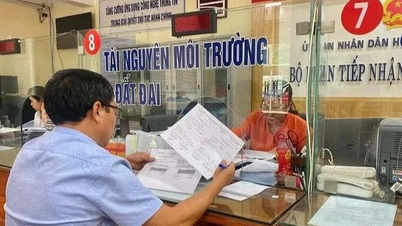
People of various ethnic groups in Van Ban commune (Lao Cai province) conduct transactions at the Public Administration Center. Photo: Nguyen Quan.
Further north, in the Northwest region, in Lai Chau, the process of national reorganization is taking shape with an even longer-term vision. Integrated boarding schools are being built in border communes, where the learning conditions for children of ethnic minorities are still lacking. On these construction sites amidst the mountains and forests, each brick laid is not just to build a school, but to open up a continuous and sustainable educational journey for thousands of children.
There, administrative reform is measured not only by governance efficiency, but also by human values. When children in mountainous regions have access to well-equipped schools and stable boarding facilities, their futures are no longer limited by geographical distance or living conditions. Investing in education in border regions, within the broader context of national restructuring, is an investment in the long-term future of the nation – a future that leaves no one behind.
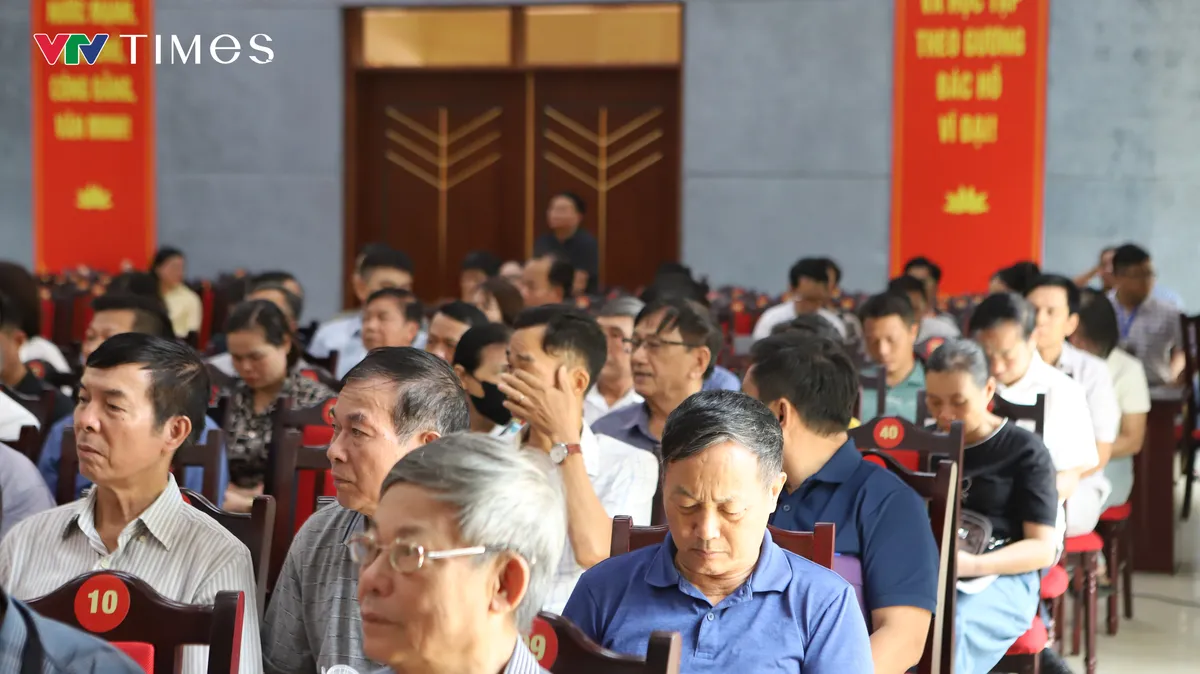
A large number of residents of Vinh Hung ward (Hanoi) held a dialogue with ward leaders regarding the procedures for issuing land use right certificates, also known as "red books". Photo: Nguyen Quan.
Step confidently into the future.
Four different locations, four distinct spaces – island communes, mountainous areas, urban areas, and border regions – partly reflect four facets of a major policy decision. In each place, the restructuring of the country takes on a unique character, but they share a common point: the policy only truly becomes meaningful when it is implemented in daily life, when people feel the change through concrete, however small, experiences.
Reorganizing the country is not a miracle. It doesn't instantly eliminate all difficulties or level all regional disparities. On the contrary, it exposes challenges more clearly and forces the system to face greater pressure. Local officials have to shoulder a larger workload and heavier responsibilities, but they also have the opportunity to do the right job and prove their capabilities in a more transparent mechanism.

From today's beginnings, we will continue to build the future of our country. Photo: Nguyen Quan.
I was very impressed by the sharing of Colonel and journalist Nguyen Hoa Van (former Editor-in-Chief of Border Guard Newspaper and Deputy Head of Political Affairs of the Border Guard) that, at the national level, the reorganization of the country is like a self-rectification. And at the individual level, it is a change in perception of the State, the government, and the future. According to him, when the apparatus is reorganized, it will be more streamlined, effective, and efficient; the remaining (and equally important) factor will depend on the capabilities of the people in operating it.
A new spring has arrived, and perhaps there are still difficulties and bottlenecks that need to be addressed and improved. But it is undeniable that 2025 marks a crucial turning point as our country chooses to confront itself, choosing to tackle the most challenging tasks before moving further. Ultimately, reorganizing the nation is not about closing a chapter, but about opening a new journey – the journey of a nation confidently stepping into the future with a more solid foundation of governance and a deeper, more enduring social trust…
Source: https://vtv.vn/sap-xep-lai-giang-son-de-dat-nuoc-di-xa-hon-100260219215637913.htm








































































Comment (0)