Water used for firefighting can become a source of pollution.
In many industrial fire incidents, attention is often focused on the flames, smoke, property damage, and human risk. Once the fire is under control, many believe the most dangerous part is over. However, the reality is that after the fire is extinguished, another environmental incident can still begin: firefighting water contaminated with chemicals.
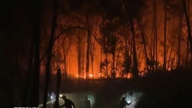
The chemical plant fire in an industrial cluster in Hai Phong in 2025 is a prime example of this risk. Firefighting is mandatory, urgent, and vital. However, at chemical storage facilities, the large amount of water used to extinguish fires can carry unburned chemicals, soot, and other impurities into manholes, sewers, and stormwater drainage systems, then spread to ditches, irrigation canals, rivers, surface water sources, and aquaculture areas. In such situations, stormwater drainage systems, designed for rapid water drainage, can become "highways" carrying pollutants beyond the boundaries of the production facility.
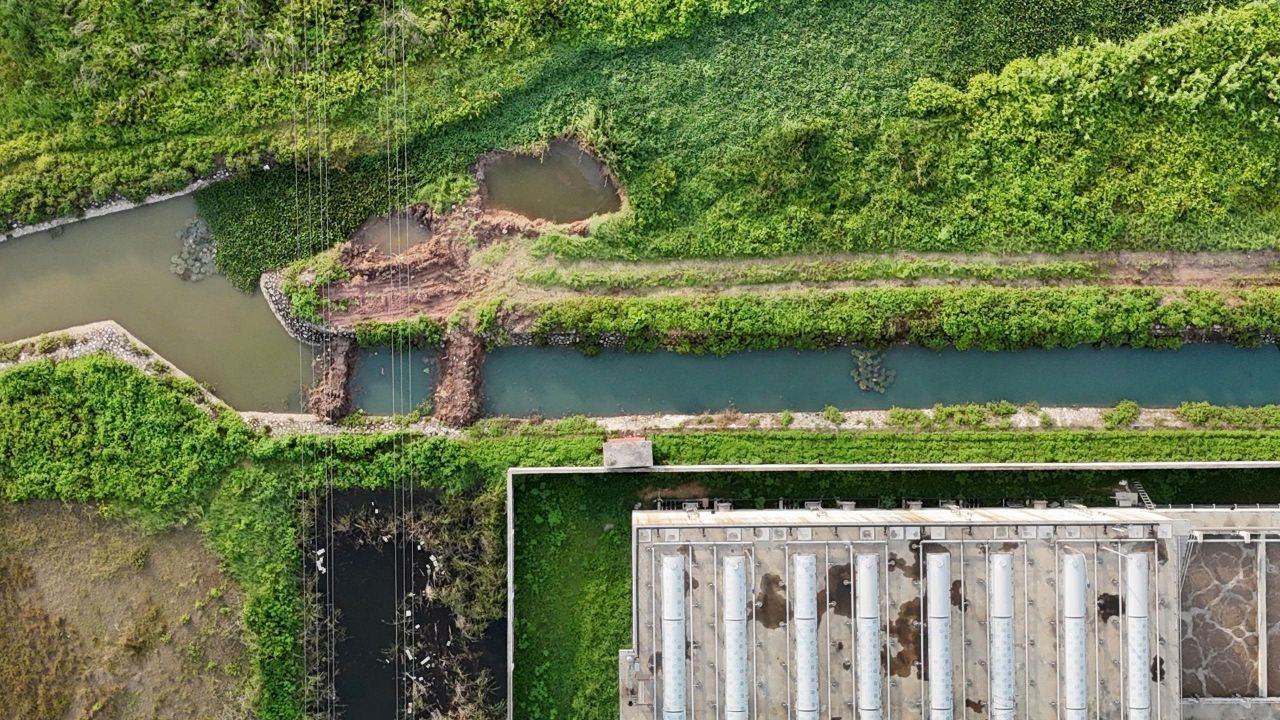
The aftermath of the fire showed the factory building almost completely collapsed. Firefighting water mixed with chemicals and impurities had seeped into the stormwater drainage system, posing a risk of spreading pollution to irrigation ditches and surrounding water sources. In this situation, the response task goes beyond simply cleaning up the scene; the primary objective is to prevent the spread of pollutants.
Here, forces from the Vietnam Center for Environmental Incident Response approached the scene with a priority on controlling the spread of pollution. Due to the risk of the factory collapsing and the potential for toxic gas to remain, the site was remotely surveyed for safety using unmanned aerial vehicles (drones). Based on this, drainage points, manholes, sewer lines, and drainage ditches were identified to implement measures to isolate and prevent the flow of polluted water into the external environment. The concentrated chemically contaminated water remaining in manholes and underground sewers was pumped and collected using specialized equipment. However, this is only the first step in the response process.

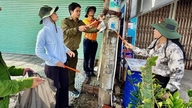
The next challenge is handling the large volume of chemically contaminated firefighting water after collection. If all of this water has to be transported by tanker trucks to a treatment facility, the number of trips will be enormous, leading to high costs and increased risks during transportation.
Notably, at that time, Hai Phong was facing the risk of heavy rain due to the influence of Typhoon Wipha. With the storm approaching, leaving the emergency tanks full of chemically contaminated water posed many risks; while transporting thousands of cubic meters of hazardous liquid waste to the roads was also a very stressful option. At this point, responding to the environmental incident was no longer simply a technical problem but a race against time.
The on-site treatment solution implemented in this case has proven to be highly effective. Instead of relying entirely on long-distance transportation, the Center uses a mobile, modular equipment system to handle the treatment directly at the site, controlling each stage of the process. This approach significantly reduces the number of tanker trucks that need to be mobilized, minimizes traffic risks, saves costs, and quickly frees up the capacity of the emergency storage tank, creating additional safety space against the risk of storms and heavy rain.
Fire prevention , firefighting, and environmental response must go hand in hand.
This reality shows that firefighting and environmental incident response are two inseparable tasks. Firefighting forces prioritize saving lives, extinguishing fires, and preventing their spread. Simultaneously, where possible, environmental specialists should participate in determining the direction of water flow for firefighting, assessing the feasibility of blocking, isolating, or recovering water at appropriate locations, and developing plans for storing and treating any chemically contaminated water generated.
If the incident is viewed simply as a fire or explosion, it's easy to miss the "golden hour" for environmental response. When chemicals are carried by fire-fighting water deep into the underground sewer system, control becomes much more difficult. Especially if heavy rain follows, rainwater can further wash away residual chemicals, spreading them into the environment. In that case, a fire within a factory could turn into a large-scale environmental incident.
This story also highlights a clear management requirement: in industrial zones, clusters, and facilities with chemical hazards, fire prevention and firefighting plans must be linked to environmental incident prevention and response plans. It's not enough to simply equip facilities with fire extinguishers, water tanks, pumps, and escape routes; it's also necessary to determine: where firefighting water will flow if a fire occurs, which drainage systems can carry pollution away, and what mechanisms are in place to promptly mobilize environmental incident response forces.



This requires inter-agency coordination between fire safety, environmental, chemical, industrial park infrastructure, local authorities, and professional response forces. If this coordination is prepared in advance, all parties will know their responsibilities in the very first hours after an incident occurs.
A fire may be extinguished within hours, but the environmental consequences of chemically contaminated firefighting water can be long-lasting if not properly controlled. Therefore, firefighting operations at facilities with chemical hazards need to be viewed more comprehensively: extinguishing the fire is an urgent task, while controlling the water used for extinguishing the fire after it is put out is essential to prevent a secondary environmental incident.
Source: https://daibieunhandan.vn/sau-dap-lua-la-bai-toan-moi-truong-10421833.html

![[Photo] General Secretary and President To Lam works with the Party Committee of the Government on the work of preventing and combating storms, floods, extreme natural disasters and climate change.](https://vphoto.vietnam.vn/thumb/1200x675/vietnam/resource/IMAGE/2026/06/29/1782729441945_a1-bnd-0385-9454-jpg.webp)


![[Photo] National Assembly Chairman Tran Thanh Man attends the Conference to announce the Master Plan for Hanoi Capital City with a 100-year vision.](https://vphoto.vietnam.vn/thumb/1200x675/vietnam/resource/IMAGE/2026/06/29/1782709639728_ndo_br_1-jpg.webp)



































































![[Image] Building an elevated road through the Ma Da forest.](https://vphoto.vietnam.vn/thumb/402x226/vietnam/resource/IMAGE/2026/06/29/1782724737750_anh-man-hinh-2026-06-29-luc-16-18-43.png)