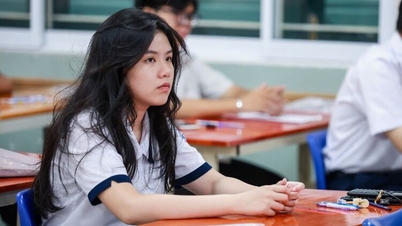
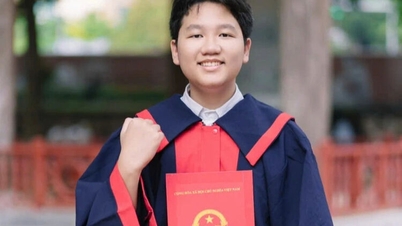
The 2026 university admissions season is taking place amidst the implementation of many new regulations aimed at improving the quality of incoming students and increasing transparency. Establishing a minimum admission threshold based on high school graduation exam results, limiting the number of application preferences, and organizing centralized admissions on a common system demonstrate that students' career choices require increasingly careful and realistic consideration. Making informed and strategic choices is how students demonstrate responsibility for their own future.
With a limited number of options, candidates need to carefully consider their choices and order of registration. Each option represents an opportunity, so registration shouldn't be scattered or based on luck. The order of preferences should accurately reflect one's interests, career aspirations, and abilities. The highest-ranked option should be the field of study that the candidate truly desires to pursue and is willing to enroll in if they meet the admission requirements.
Regarding the choice, many experts have offered advice, with the common point being to choose a major before choosing a school. In reality, the obsession with degrees and brand names leads many students to choose schools based on reputation and the desire to become students of a famous institution, without truly understanding what they will study and what they will do after graduation.
Meanwhile, nowadays, the value of a degree is no longer determined by the name of the school but by the competence the student develops during their training. A field of study that matches one's abilities, interests, and career goals will create long-term motivation for learning, helping students develop their strengths. Conversely, pursuing a field of study solely because of trends or family pressure can easily lead to discouragement, giving up, or working in a different field after graduation. There are too many real-world examples of this.



In particular, it is necessary to acknowledge the reality of the workforce needs of society. Vietnam is entering a new phase of development with very high demands for high-quality human resources in fields such as technology, digital transformation, artificial intelligence, semiconductors, new energy, logistics, automation, and smart manufacturing... Of course, this does not mean that all students must flock to the fields currently considered "hot".
The job market is constantly evolving. A profession that is in high demand today may not retain its appeal four or five years from now when students graduate. The most sustainable factor remains the genuine competence of the learners. Society needs people who are skilled, capable, and have the ability to learn throughout their lives, rather than those who possess a degree in a trending field but lack passion and relevant skills.
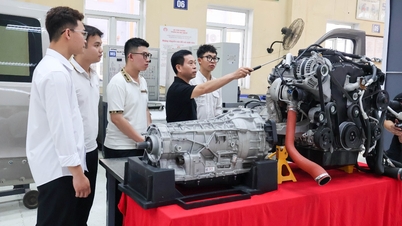
Many experts also note that candidates and their families need to change their perspective on the path to success. In many families, university is still seen as almost the only option. However, the reality of economic development and current labor market demands shows that vocational education is opening up many opportunities. Many vocational students find employment early, earn good incomes, and have clear opportunities for advancement. Therefore, the important thing is not to go to university at all costs, but to find the path that best suits one's abilities and goals.
The high school graduation exam has ended, but the journey of choosing a future has only just begun. Scores may open up opportunities, but it is self-understanding, understanding of the profession, and understanding the needs of society that will help each student go far on their chosen path. In the important decisions of youth, choosing the right direction is always more meaningful than rushing forward.


Source: https://giaoducthoidai.vn/sau-ky-thi-la-lua-chon-tuong-lai-post781762.html
![[Image] Schools organize meetings and introduce teaching models to students admitted to grade 10.](https://vphoto.vietnam.vn/thumb/1200x675/vietnam/resource/IMAGE/2026/06/25/1782368077271_ndo_br_z7970052192242-1ec8daeb77a6eed1a4e9f58c564ddd3e-jpg.webp)


![[Photo] General Secretary and President To Lam receives Palestinian Ambassador Saadi Salama](https://vphoto.vietnam.vn/thumb/1200x675/vietnam/resource/IMAGE/2026/06/25/1782365384740_a1-bnd-9423-8322-jpg.webp)
![[Image] Ho Chi Minh City: Ma Lang area, Chicken-Rice Market about to change its appearance](https://vphoto.vietnam.vn/thumb/1200x675/vietnam/resource/IMAGE/2026/06/25/1782377698627_ndo_br_m1-jpg.webp)