

Amendments to the Public Investment Law will drastically reduce the number of stalled or uncompleted projects.
According to assessments by National Assembly deputies, the policy proposals in the draft revised Law on Public Investment will help minimize the situation of "capital waiting for projects, and projects waiting for capital".
Promote decentralization and delegation of authority, minimizing the situation where "capital is waiting for projects, and projects are waiting for capital."
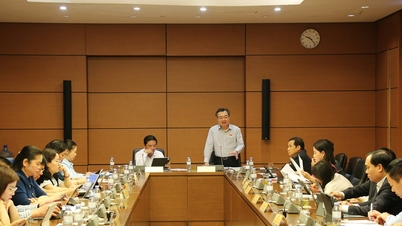
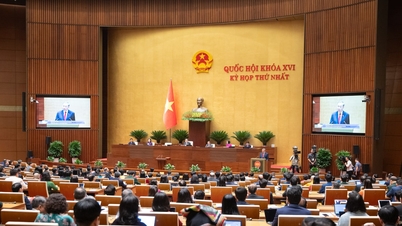
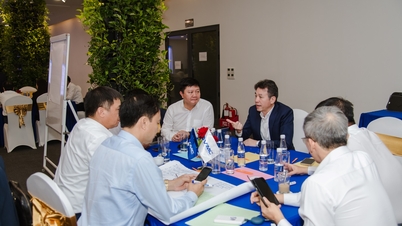
This afternoon (October 29), the National Assembly held group discussions on the revised Public Investment Law project. The strong decentralization and delegation of power to local authorities was particularly supported by National Assembly deputies.
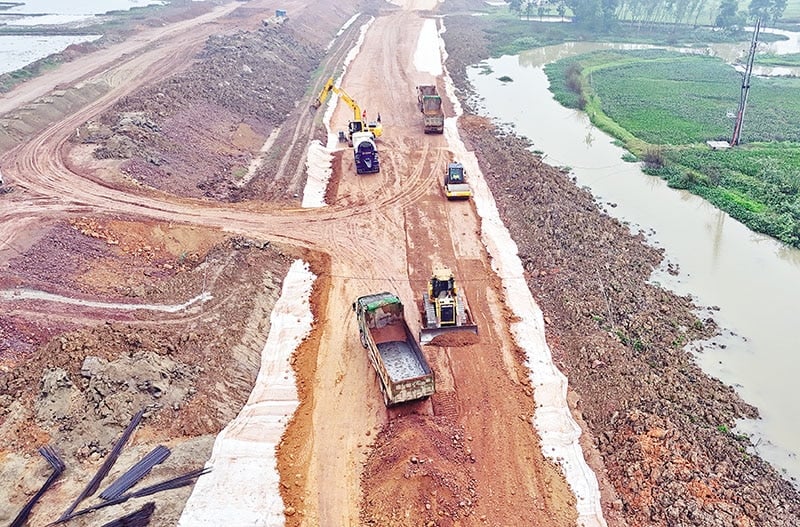 |
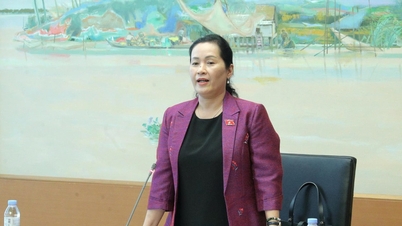
According to delegate Tran Van Khai ( Ha Nam ), decentralizing authority to People's Committees at all levels to decide on investment policies for Group B and Group C projects under local management will create proactiveness for People's Committees at all levels, especially at the provincial level, in deciding on investment policies for Group B and Group C projects under their management, in order to meet the requirements of completing investment procedures and building public investment plans.
Furthermore, decentralizing the authority to adjust medium-term public investment plans using local budget funds among budget-using units to People's Committees at all levels will enable provincial People's Committees to proactively adjust capital plans early, providing a basis for central and local ministries and agencies to implement them, thereby accelerating disbursement and improving the efficiency of capital utilization. At the same time, it facilitates the management of medium-term public investment plans by People's Committees at all levels, ensuring timely capital allocation, minimizing the current situation of "capital waiting for projects" and "projects waiting for capital," and preventing delays in injecting capital into the economy , thus accelerating infrastructure development and promoting socio-economic growth and development.
Representative Pham Trong Nghia (Lang Son) argued that the draft regulation would reduce the processing time by about 3 months (currently 6-7 months). However, Representative Tran Van Khai (Ha Nam) suggested maintaining the current regulation to ensure compliance with the Constitution and maintain consistency within the legal system.
Regarding the authority to decide on investment policies, the draft Law also strongly decentralizes power to ministries, sectors, and localities. Accordingly, the head of a ministry or central agency decides on the investment policy for Group A projects under their management with a capital scale of less than 10,000 billion VND; Group A projects from 10,000 billion VND to less than 30,000 billion VND fall under the authority of the Prime Minister. People's Committees at all levels decide on the investment policy for Group B and Group C projects under local management.
According to delegate Pham Trong Nghia, this decentralization of power creates proactive opportunities for localities, but it requires a thorough assessment of the appraisal and evaluation capacity of the agencies and individuals authorized to make decisions, ensuring feasibility and effective management of public investment capital. At the same time, it is necessary to study mechanisms for control and handling to ensure the effective organization, implementation, and management of public investment activities for these projects.
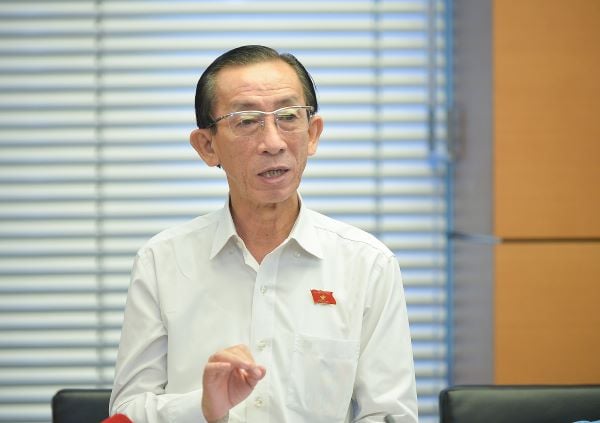 |
| Representative Tran Hoang Ngan (Ho Chi Minh City): The amended Public Investment Law, with its many groundbreaking policies, if passed, will significantly reduce the number of stalled or abandoned projects. |
Regarding land clearance – one of the biggest obstacles currently facing public investment projects – the draft revised Law on Public Investment allows for the separation of compensation, support, resettlement, and land clearance into an independent project for all project groups. This regulation was supported by most delegates. In an interview with the Investment Newspaper, delegate Tran Hoang Ngan (Ho Chi Minh City) commented that separating land clearance into an independent project, unifying the handling of inter-regional projects, has been piloted and proven effective in practice, helping to quickly resolve obstacles in the implementation of public investment projects. Therefore, the draft revised Law on Public Investment's codification of these proven effective provisions is essential. In addition, the provisions promoting decentralization and delegation of power in the draft law are also major breakthroughs; if passed, they will contribute to resolving the slow disbursement of public investment capital, and the number of frozen or stalled projects will be significantly reduced.
The bill, once passed, will be a major breakthrough.
Speaking at today's group discussion session, Minister of Planning and Investment Nguyen Chi Dung affirmed that the policy proposals put forward in this revised draft Law on Public Investment have all been reviewed, summarized, and selected to address truly urgent and important issues, most importantly, in line with the spirit of removing obstacles to promote development and promptly institutionalizing the regulations, policies, and decisions of the Party and the National Assembly. In particular, it represents a shift in thinking from a management-oriented mindset to a new mindset of both management and openness, fostering and promoting development.
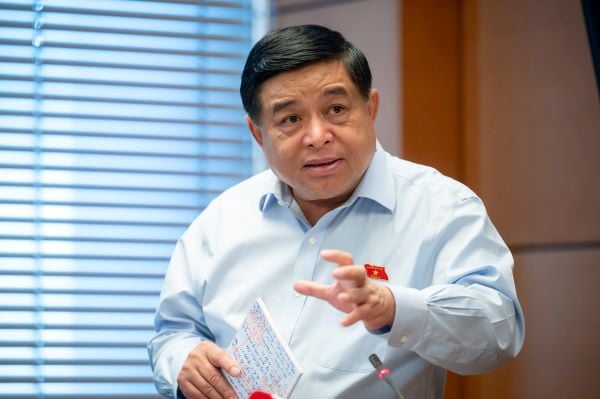 |
| Minister of Planning and Investment Nguyen Chi Dung |
According to the Minister, if the amended Public Investment Law is passed by the National Assembly at this session, it will be very timely in preparing for the medium-term public investment plan for the next period; any delay would cause many negative consequences. Of course, quality should not be sacrificed for time, but with this draft law, the Government has selected very mature, very clear, and very urgent issues. If passed, this draft law will be a major breakthrough.
Regarding specific issues, the Minister emphasized the policy proposal to separate land clearance into an independent project for all project groups. Currently, the disbursement of public investment capital is very slow, one of the main reasons being obstacles in land clearance. According to current regulations, subsequent steps such as land clearance, surveying, assessment, and resettlement can only be carried out after an investment decision is made, which is very time-consuming. Separating the land clearance phase will shorten the time for investment preparation. Most importantly, separating the phases and assigning specific responsibilities to each phase will accelerate the project implementation process.
Another groundbreaking innovation in the draft revised Law on Public Investment, as emphasized by the Minister, is the decentralization of power, in line with the spirit of the 10th Central Committee Conference. Some delegates expressed concern that the effectiveness of decentralization might not be as desired due to the limited capacity of commune and district levels.
However, the Minister affirmed that decentralization depends on the decision of higher authorities; if they deem the capacity insufficient, decentralization will not be implemented, ensuring flexibility in management. If the assigned level feels they lack sufficient capacity, they can also request to withdraw.
Regarding concerns raised by some delegates about decentralizing the authority to adjust medium-term public investment plans using state budget funds between ministries, central agencies, and localities from the Standing Committee of the National Assembly to the Prime Minister, the Minister stated that if projects had to be "gathered together" and wait for the Standing Committee to convene before submission, it would cause localities to miss opportunities. Therefore, allowing the Prime Minister to make the decision is the most flexible approach, although the National Assembly will still control the overall budget.
Source: https://baodautu.vn/sua-luat-dau-tu-cong-se-giam-manh-du-an-trum-men-dap-chieu-d228669.html

![[Image] National Assembly discusses the implementation of the socio-economic development plan.](https://vphoto.vietnam.vn/thumb/1200x675/vietnam/resource/IMAGE/2026/04/20/1776696707422_ndo_br_img-20260420-185419-jpg.webp)

![[Photo] General Secretary and President To Lam meets with National Assembly delegates from ethnic minorities.](https://vphoto.vietnam.vn/thumb/1200x675/vietnam/resource/IMAGE/2026/04/20/1776696701056_a1-bnd-8331-3342-jpg.webp)

















![[Infographic Series] Historical Sites in Dong Nai: Long Khanh Provincial Administrative Building, Long Khanh Town Party Committee Base, Xuan Loc Temple - Xuan Hoa Pagoda Complex](https://vphoto.vietnam.vn/thumb/402x226/vietnam/resource/IMAGE/2025/9/26/1331532306fb4ad18e4a849e5c64202a)

































































Comment (0)