

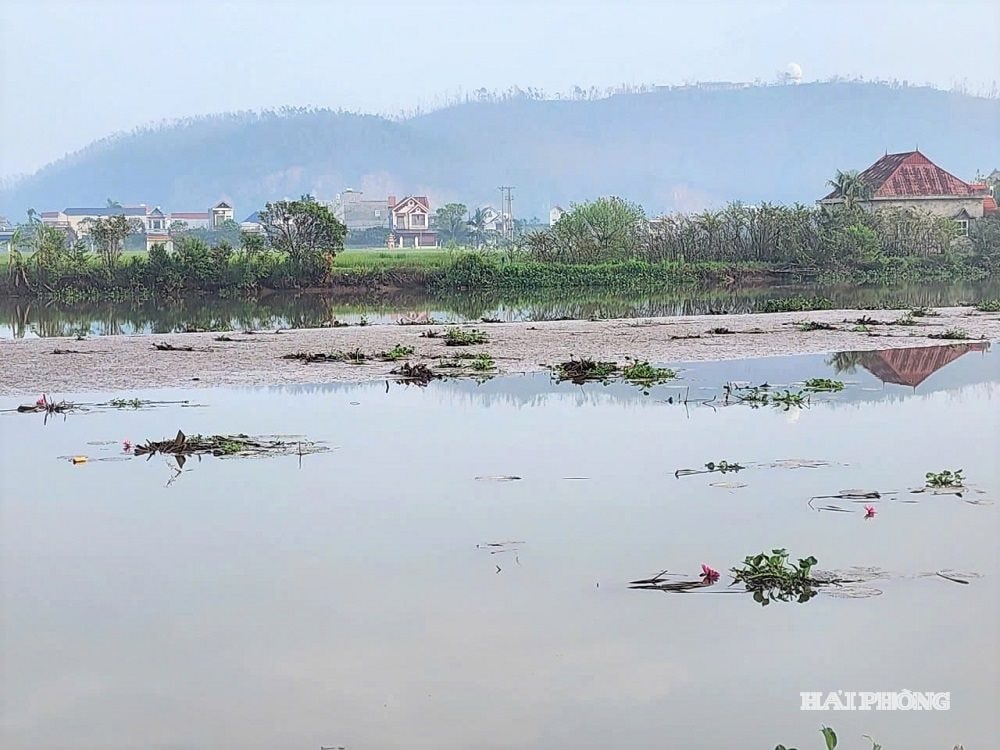
Many areas are silted up and shallow.
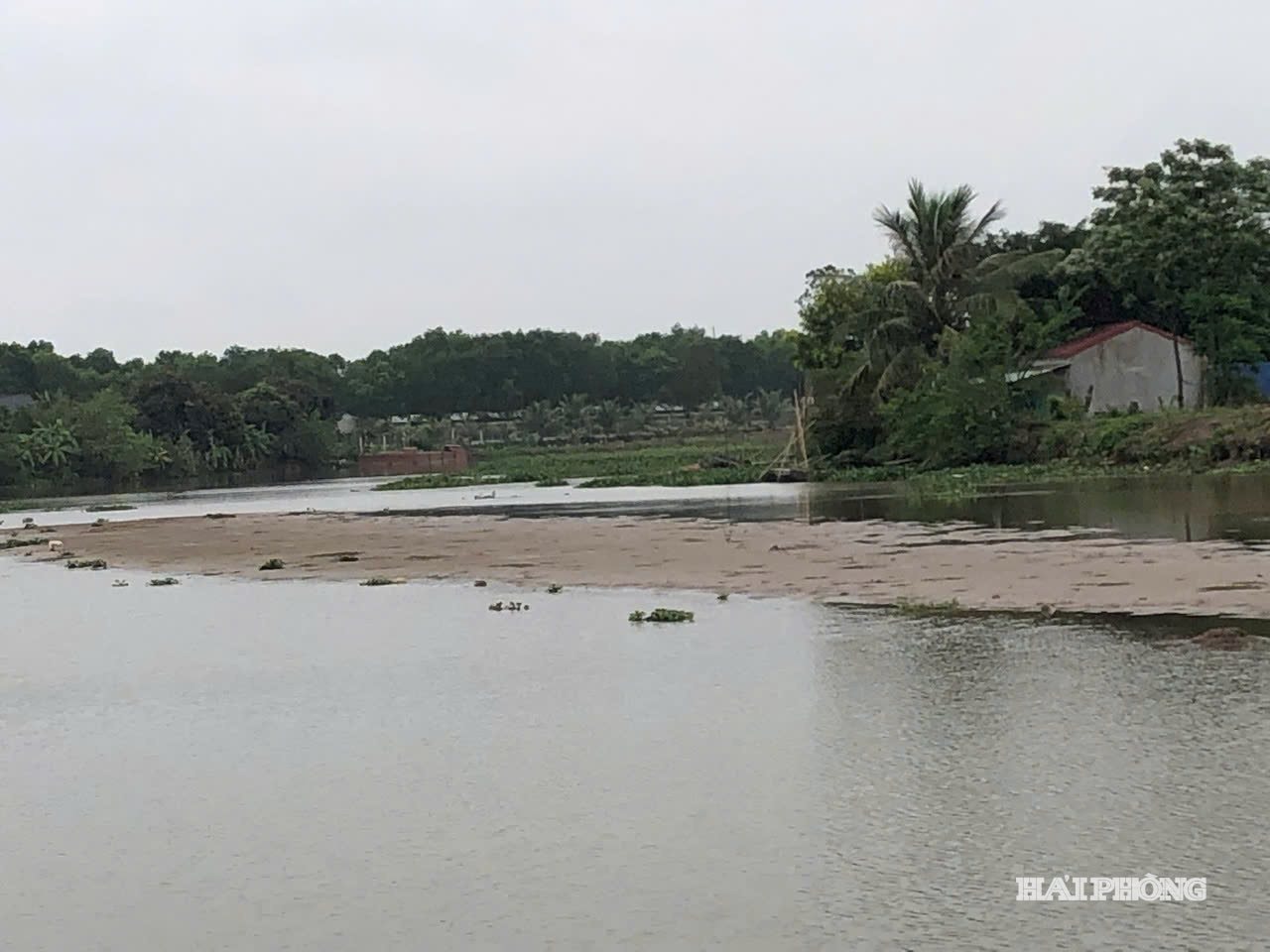
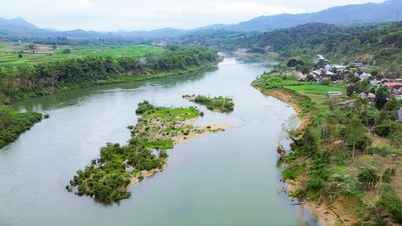
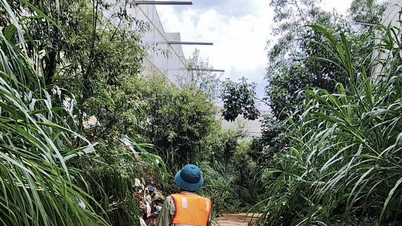
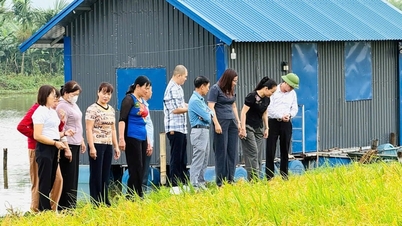
Recently, while accompanying officials from the Da Do Irrigation Works Exploitation One-Member Limited Company to inspect the irrigation protection corridor on the Da Do River, reporters from Hai Phong Newspaper and Radio and Television observed many locations along the river experiencing siltation, with some areas even forming mounds of earth rising above the water surface. For example, the siltation along approximately 4 km from Doi Bridge to Co Tieu sluice gate affects the river's ability to channel and regulate water for irrigation and drainage.
According to statistics from the Da Do Irrigation Works Exploitation Company Limited, as of now, there are approximately 19 silted-up and shallow points scattered along the Da Do River from upstream to downstream. Typical examples include: the upstream section of Hoa Binh Bridge in Kien Thuy commune; the section from Dong Voc sluice gate to Ong Pho sluice gate in An Lao commune; the upstream section of Hoa Binh Bridge in Kien Hung commune; the upstream and downstream sections of Bridge 354 in Kien Hung commune; the upstream section of Thu sluice gate in Kien Thuy commune; and the downstream section of Viet Han Bridge in Kien Thuy commune… The silted-up points are 0.6 m to 1.5 m higher than the riverbed elevation, and in some places even up to 2 m.
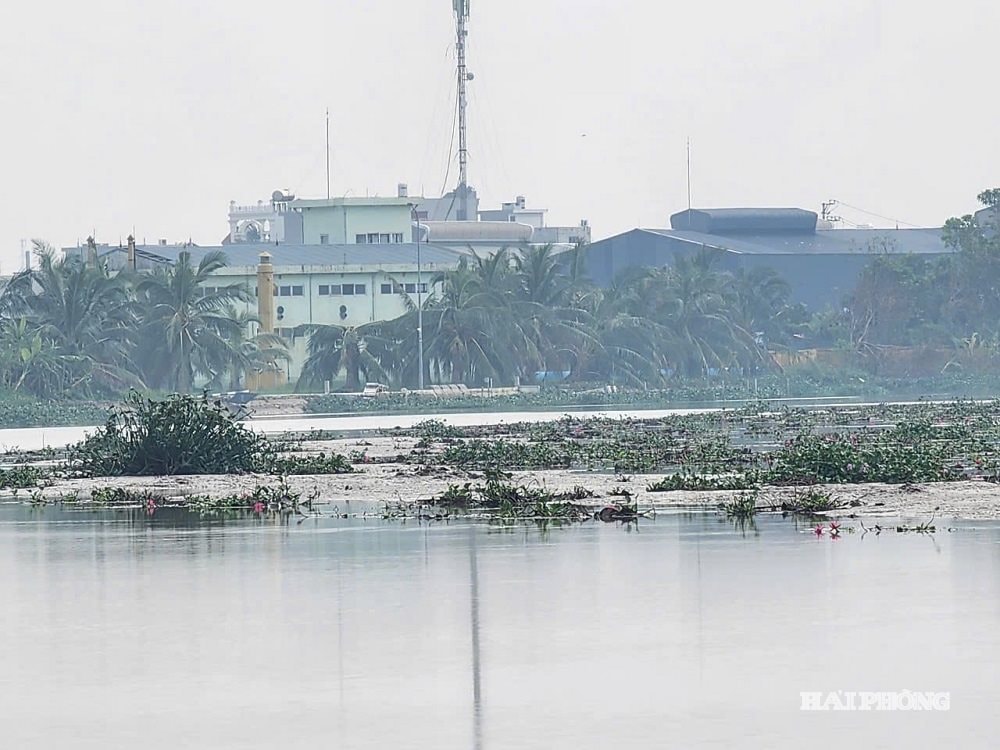
According to Mr. Do Van Trai, Chairman of Da Do Irrigation Works Exploitation One-Member Limited Company, the cause of the sedimentation points is that the Da Do River has not been dredged for many years, and a significant amount of sludge from residential areas and cultivated fields is dumped into it annually. Along the Da Do irrigation system, there are more than 300 interconnected first and second-level canals serving both irrigation and drainage purposes. Due to the very small slope of the canals and their simultaneous use for both irrigation and drainage, the canal beds are heavily silted. According to surveys by consulting agencies, the thickness of the silt and sand layer that needs to be dredged to ensure the necessary water transport for irrigation and drainage averages over 1.0 meter.
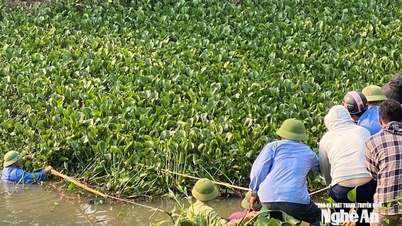
To address this situation, the company has recently organized the removal of water hyacinths to clear the waterway, and coordinated with local authorities to clear some ponds and swamps adjacent to the river, along with building embankments in some sections to prevent encroachment and expand the riverbed. However, for large-scale areas of sedimentation and shallow areas, the company is unable to dredge due to the high cost involved.
We hope the dredging project will be implemented soon.
The Da Do irrigation system spans the land area of five former districts of Hai Phong city: Kien An, Duong Kinh, Do Son, An Lao, and Kien Thuy, with a total natural area of 33,980 hectares, of which 32,587 hectares require drainage and 16,018 hectares are agricultural land. The Da Do irrigation system is responsible for actively draining water from the 32,587 hectares of natural land within the system; providing irrigation water for 16,018 hectares of agricultural land, 457 hectares of forest land, and 2,990 hectares of aquaculture land. Annually, it supplies an average of 85.22 million m³ of raw water for industry and urban areas, 3.316 million m³ for livestock farming, and 22.10 million m³ for environmental purposes.
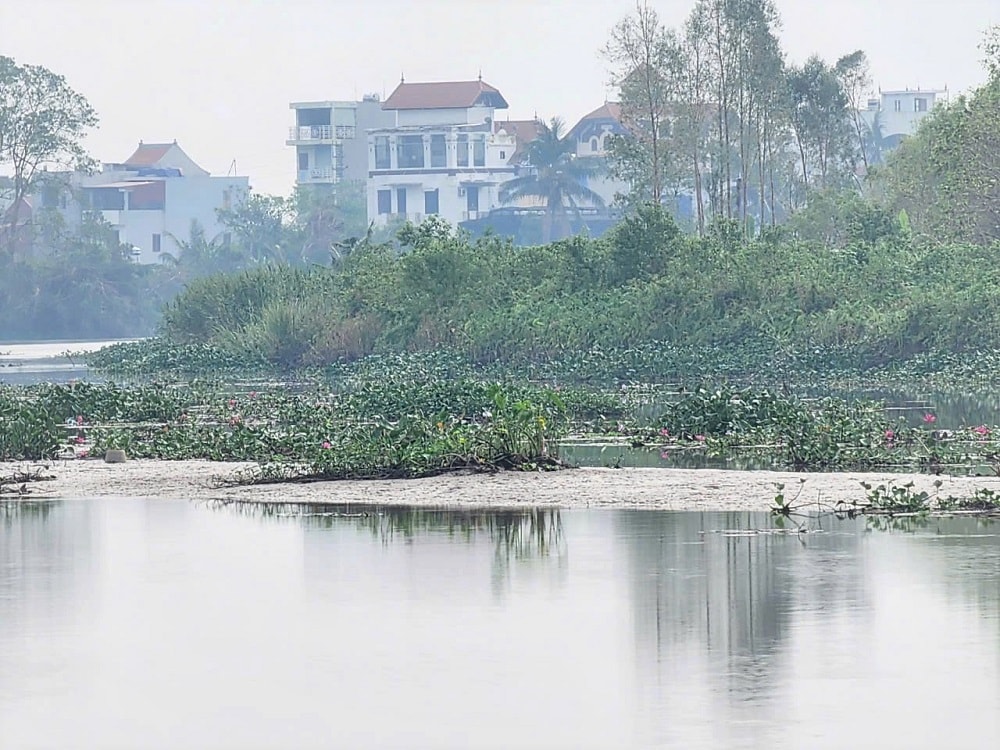
The appearance of sedimentation and siltation points in the system significantly affects water regulation, hindering the production of over 30,000 hectares of rice and other crops. Simultaneously, it reduces water storage capacity during the 5 dry months, impacting the supply of drinking water to approximately one-third of the population in the eastern part of Hai Phong, as well as water treatment plants and industrial zones and clusters within the city.
In order to improve the operational capacity for water regulation, irrigation, drainage, and people's livelihoods in recent years, the central government and the city have focused on investing in the renovation and upgrading of a number of structures along the route, mainly sluices along the canal banks and some key structures, initially overcoming the shortcomings arising along the river.
Reportedly, the Department of Agriculture and Environment has proposed that the city allocate 3,288 billion VND from the medium-term public investment capital for the period 2026-2030 to protect and improve the water quality of three rivers: Da Do, Gia, and Re. Of this, the project to protect and improve the water quality of the Da Do River (dredging, embankment construction, reinforcing banks, and building structures on the Da Do canal) is expected to cost over 2,000 billion VND. This aims to address shallow areas, some low-lying and eroded canal banks, damaged regulating culverts on the riverbanks that fail to regulate water flow into the first-level canals, and the direct discharge of wastewater into the Da Do River, which affects water quality.
To meet the requirements and tasks of socio -economic development of the city in the coming period and to ensure water security for the area, Da Do Irrigation Works Exploitation One-Member Limited Company hopes that the comprehensive investment in renovating and dredging the Da Do River will be implemented soon.
TIEN DATSource: https://baohaiphong.vn/song-da-do-cho-duoc-nao-vet-523948.html

















































































Comment (0)