

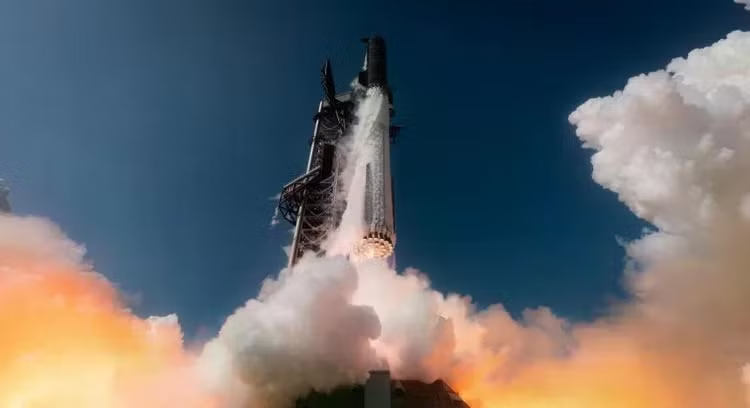
SpaceX's Starship V3 giant rocket prototype made its first launch into space from Texas at 5:30 PM on May 22nd (5:30 AM on May 23rd Hanoi time).
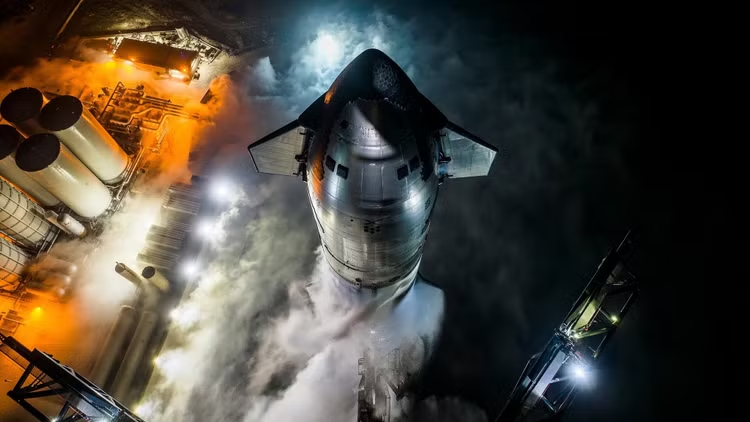
This mission, codenamed Flight 12, was a suborbital launch. The company did not aim to recover and reuse the rocket stages, so they did not return to base but landed in the sea.
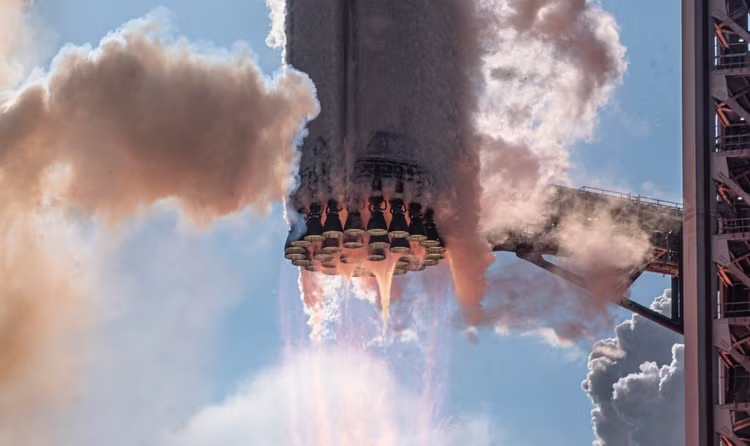
During liftoff, one of the 33 engines in the lower Super Heavy booster stage malfunctioned, but the launch continued. A few minutes later, the Super Heavy booster separated from Ship 39 – the upper stage of the Starship V3 rocket.
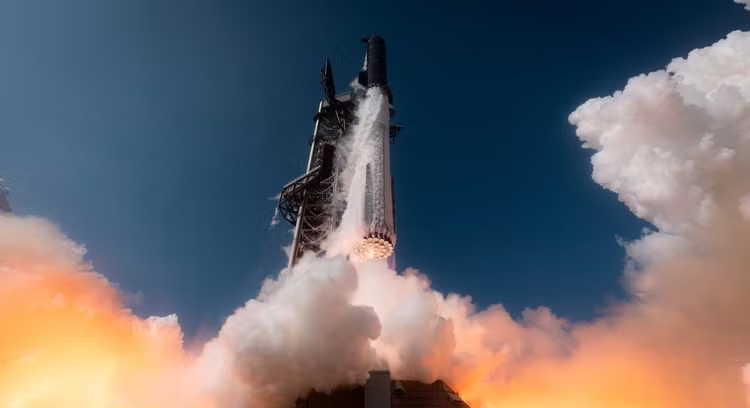
Starship continued its journey even though one of its six engines failed, forcing the remaining five engines to fire longer to compensate. Dan Huot, a SpaceX spokesperson, stated that Starship V3 remained in orbit "within acceptable limits." Meanwhile, Super Heavy returned to Earth, crashing into the Gulf of Mexico.
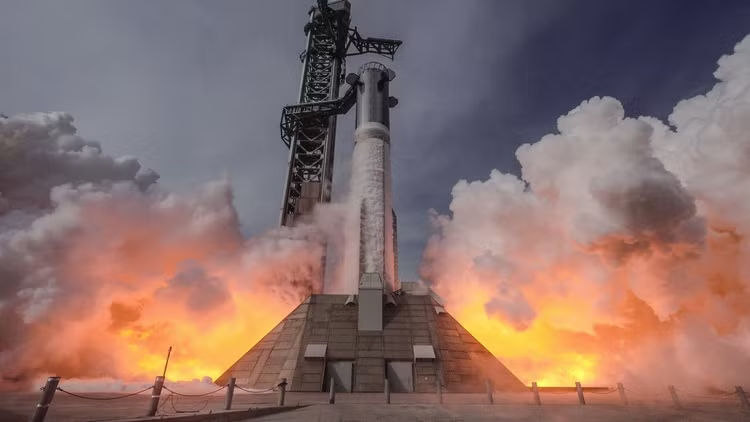
This is the 12th test flight with Starship since 2023, but it's the first launch this year and also the first for V3 – the newest version of Starship that replaces V2, which successfully completed its final test flight in mid-October last year.
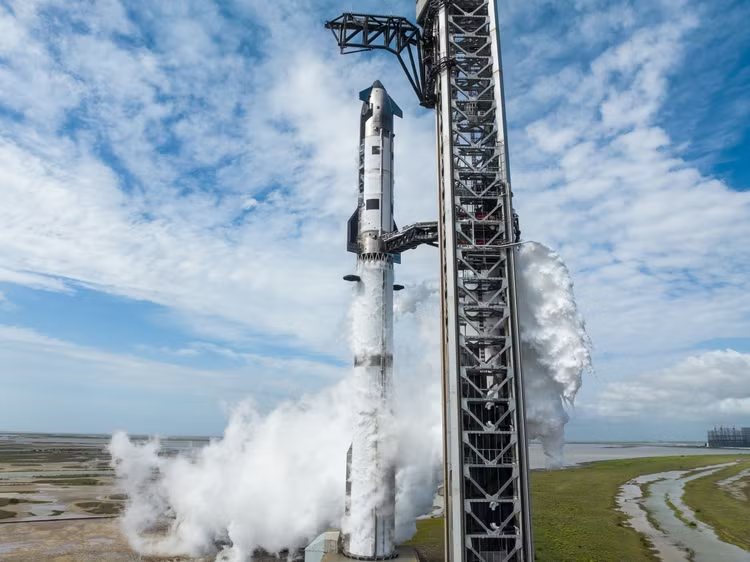
The V3 is the largest and most powerful rocket ever built, reaching a height of approximately 124 meters. The V3's Super Heavy booster stage is equipped with 33 Raptor 3 engines, estimated to provide around 8.2 million kg of thrust at liftoff, nearly 10% more than previous Super Heavy generations. The Ship, the upper stage of the V3, uses 6 Raptor 3 engines, generating over 1.5 million kg of thrust.
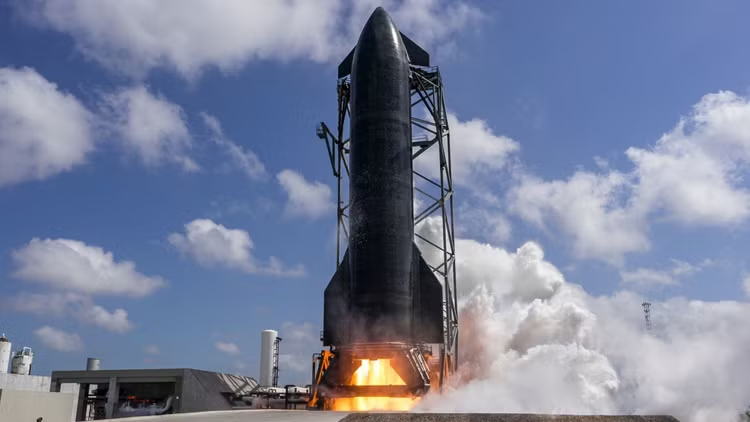
With this design, Starship V3 has a significantly larger payload capacity, capable of carrying 100 tons of cargo to low Earth orbit, far exceeding the 35 tons of V2. V3 is also about 1.5 meters taller and features a new two-tiered docking system. Additionally, V3 has only three instead of four stabilizing fins for descent, each about 50% larger than the fins of V2.
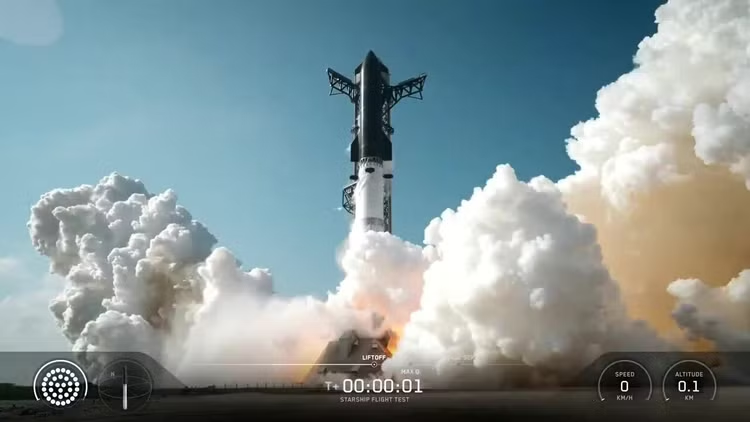
Although SpaceX has no intention of recovering Ship 39, this stage of the rocket appears to have "survived" the re-entry into the atmosphere without any signs of heat shield burnout, as seen in some recent test flights.
The V3 lifted off from launch pad number 2, a new launch pad with upgrades that allow for faster rocket recovery and easier preparation, at SpaceX's Starbase in South Texas. "New rocket, new launch pad, we're learning a lot about these systems as we operate them for the first time," said Dan Huot, a SpaceX spokesperson.
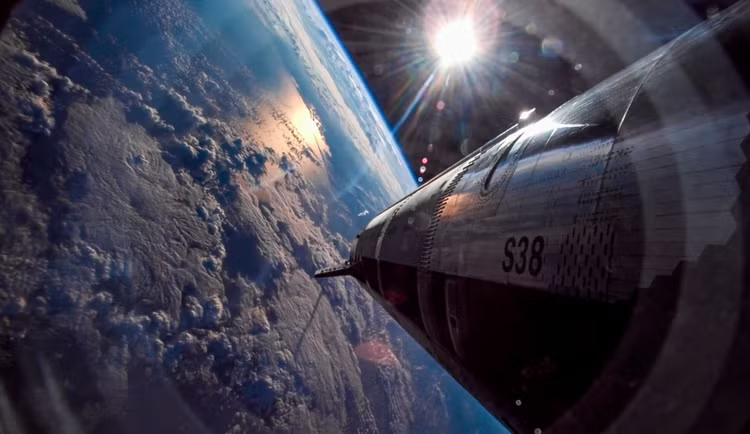
Twenty minutes after launch, V3 began deploying the 22 dummy Starlink internet satellites it carried. Among these were two "Dodger Dogs" satellites equipped with cameras, which helped to photograph Starship in space. Space assessed that this process went smoothly and much faster than previous payload deployments.
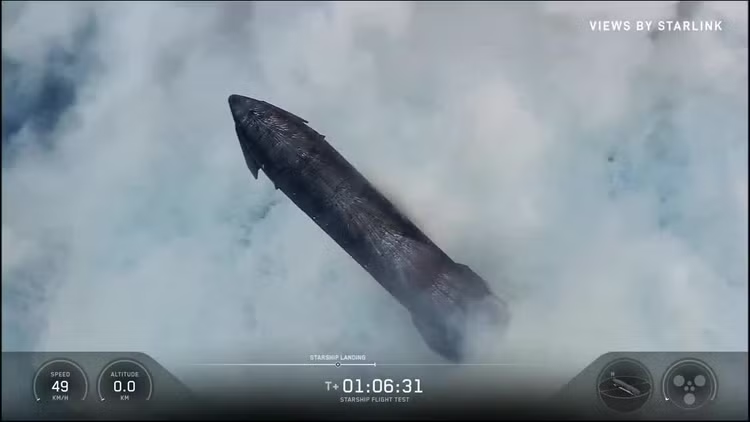
Fifty minutes after launch, Ship 39 began its re-entry into the atmosphere. At approximately 6:40 PM on May 22nd (6:40 AM on May 23rd Hanoi time), Starship landed in the Indian Ocean with both engines, tilted downwards, and exploded as expected. The test concluded to applause and cheers from SpaceX employees.
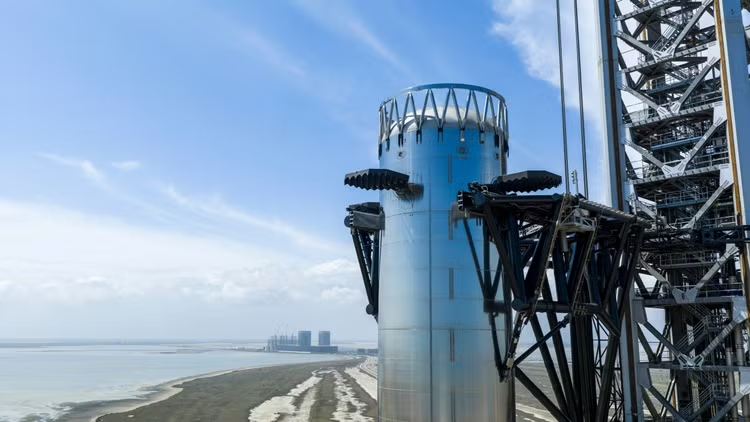
SpaceX designed Starship to be completely reusable and has successfully recovered Super Heavy booster stages using the launch tower's "rod" arms, catching the booster in mid-air.
However, the company has yet to attempt to capture the upper stage of the Ship. Depending on the outcome of the first V3 launch, SpaceX may try this in the upcoming Flight 13 or 14 mission.
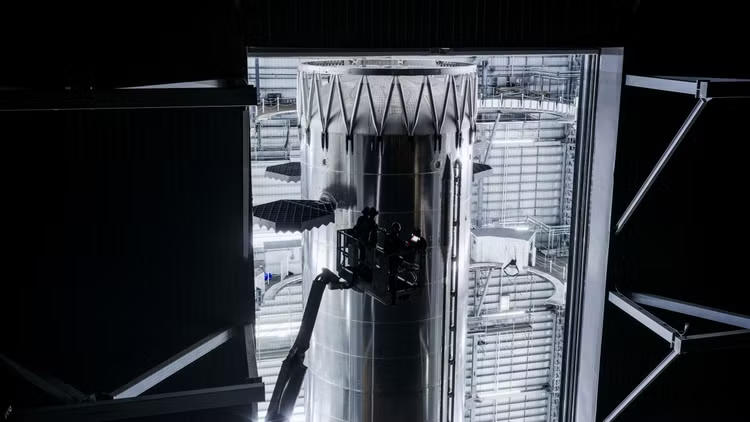
The V3 is a major upgrade over its predecessors, the V2 and V1, and incorporates key components that enhance the vehicle's operational capabilities, including a docking port for refueling in space.
This capability will be essential for future missions, when Starship needs to fly beyond low Earth orbit, as in NASA's Artemis program.
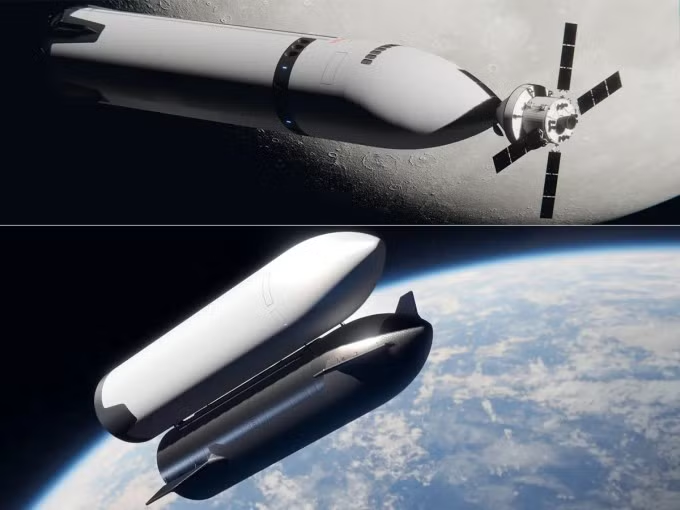
NASA has signed a contract with SpaceX to use Starship as one of the lunar landers for the Artemis program. The deadline for completing the vehicle is fast approaching.

The Artemis III mission, scheduled for late 2027, will send the Orion spacecraft and its crew into low Earth orbit to meet and dock with Starship, thereby assessing the in-orbit connectivity of the two vehicles. If successful, Starship will carry astronauts to the surface of the Moon in the Artemis IV mission, scheduled for 2028.
Source: https://khoahocdoisong.vn/spacex-phong-thanh-cong-ten-lua-starship-v3-manh-nhat-the-gioi-post2149101373.html












![[INFOGRAPHIC] Ugreen FineTrack 2 Soccer Design](https://vphoto.vietnam.vn/thumb/402x226/vietnam/resource/IMAGE/2026/05/25/1779680273219_info-bongdinhvi-a-thumb-jpg.webp)







![[GALLERY] Elon Musk shocks with the statement that people may not need to go to work.](https://vphoto.vietnam.vn/thumb/402x226/vietnam/resource/IMAGE/2026/05/24/1779625359765_el-png.webp)







































































Comment (0)