

The popularity of the Hallyu wave has propelled K-food to spread rapidly across the global culinary map. Korean dishes are becoming increasingly popular and are winning the hearts of many diners around the world .
Dishes like bibimbap, bulgogi, kimchi, and tteokbokki have become iconic Korean food beloved by international audiences. However, Hallyu-style cuisine doesn't stop at showcasing traditional dishes; it goes further by creating new and more appealing dishes, including those that portray Korean food as nutritious.
Many diners and consumers have given positive reviews to Korean food products, ranging from traditional to modern, noting their good quality and reasonable prices compared to items from other countries.
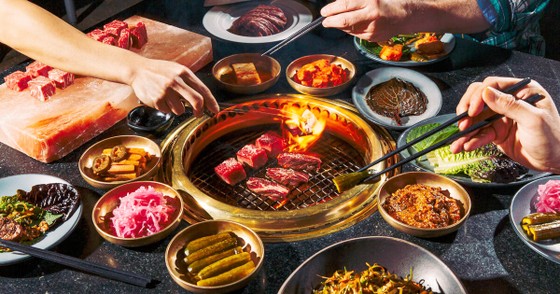 |
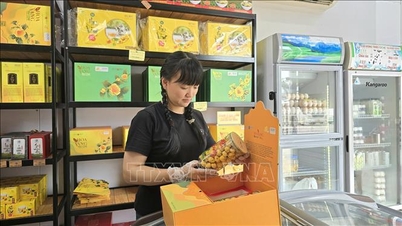
Korean cuisine attracts foreign diners. |
For this reason, many Korean restaurants opening in Asia, Europe, and North America have become familiar destinations for customers. According to the Korean Food Foundation, there are currently more than 10,000 Korean restaurants worldwide, and this number is expected to continue to grow. As demand for Korean dishes such as bibimbap and traditional rice wine (macoli) increases, the expansion of food businesses into overseas markets is also becoming more rapid.
The dishes featured are becoming increasingly diverse and appealing. They're not just appearing on the small screen; they're also gradually becoming more widely featured in music videos and internationally acclaimed films.
In 2020, the film Parasite, which won the Oscar for Best Picture – the first film in South Korean history – introduced the famous Chapaguri noodle dish. Following the film's release, Chapaguri noodles were launched in 20 countries, generating sales of 30 billion won (US$25.5 million).
In the drama Crash Landing on You (2020), the main character ate the golden olive chicken while watching a football match between South Korea and Japan. Immediately, Genesis BBQ's chicken became famous. As of 2022, Genesis BBQ had over 193 restaurants in 17 different countries. Most visitors try the golden olive chicken.
Based on meticulous research into the characteristics and culinary styles of the local people, Korean food producers have diversified their products, from restaurants and eateries to packaged foods, contributing to the rapid growth of K-Food.
According to KBS, Nongshim announced preliminary revenue of 855.9 billion won (US$658.5 million) and profit of US$42.9 million in the third quarter of this year, a 103.9% increase compared to the same period last year.
Samyang Foods reported revenue of 335.2 billion won (US$258 million) and profit of 43.4 billion won (US$33.4 million), a 124.7% increase compared to the same period in 2022. Of this, more than 70% of total revenue came from overseas business operations.
According to the Korea Agro-Fisheries Food and Beverage Corporation and the Korea Customs Service, South Korea's instant noodle exports in the first quarter of this year exceeded $200 million for the first time, a 14.3% increase compared to the previous record ($181.93 million in the first quarter of 2022).


































































































Comment (0)