The Tu-95MS aircraft's power poses a threat to Ukraine.
At least 40 Russian strategic bombers were damaged or destroyed in a drone attack carried out by the Ukrainian Security Service (SBU).
Báo Khoa học và Đời sống•02/06/2025
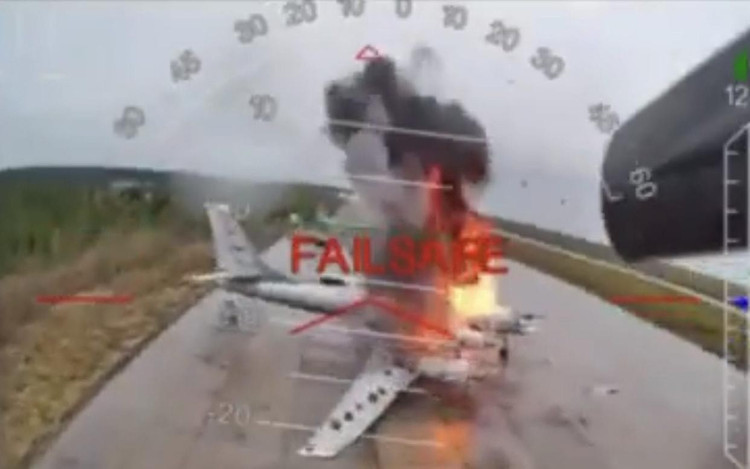
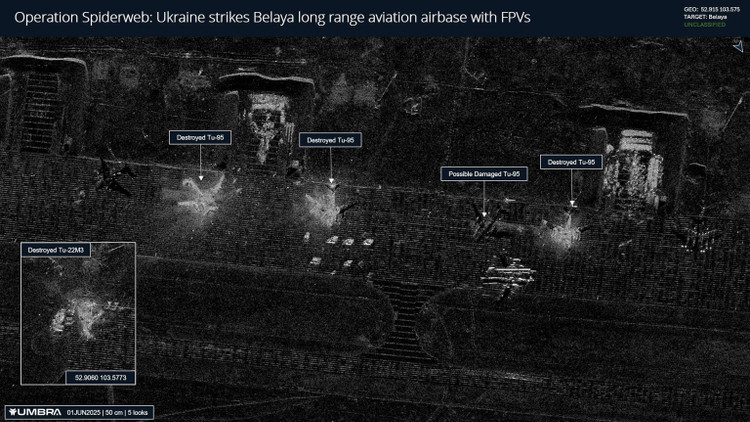
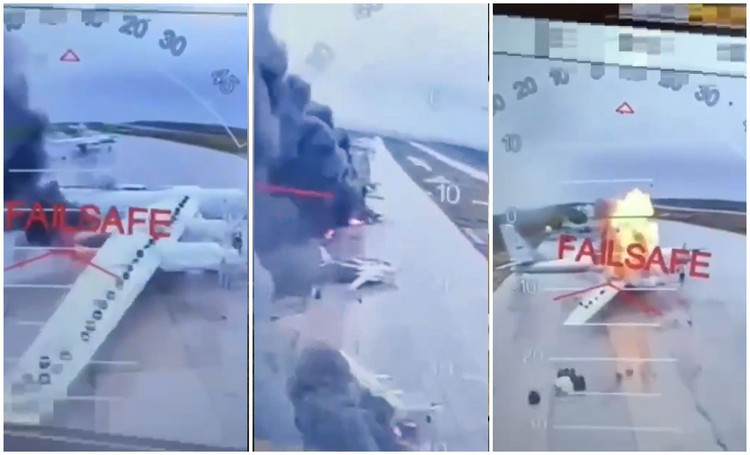
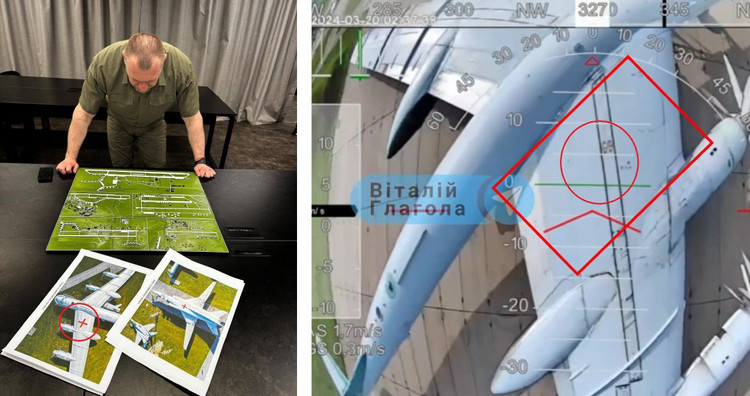
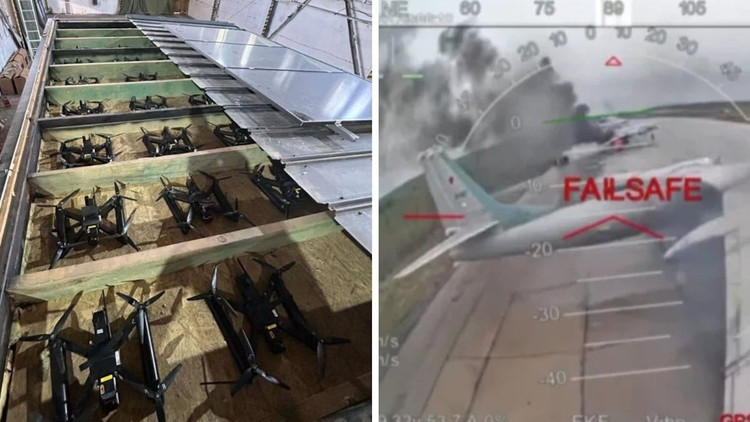
On June 1st, the Russian Ministry of Defense confirmed that Ukraine carried out a large-scale drone attack on several of its military airfields, damaging some Tu-95 strategic bombers in the raid. According to SBU figures, at least 40 Russian strategic bombers were hit in the audacious attack on five air bases across Russia simultaneously: Belaya air base in the Irkutsk region, Olenya in Murmansk province, Diaghilev air base in Ryazan province, and Ivanovo air base in Ivanovo province.
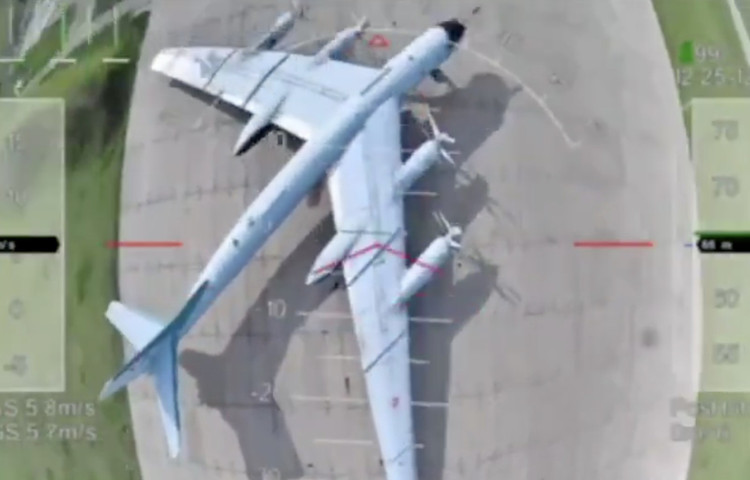
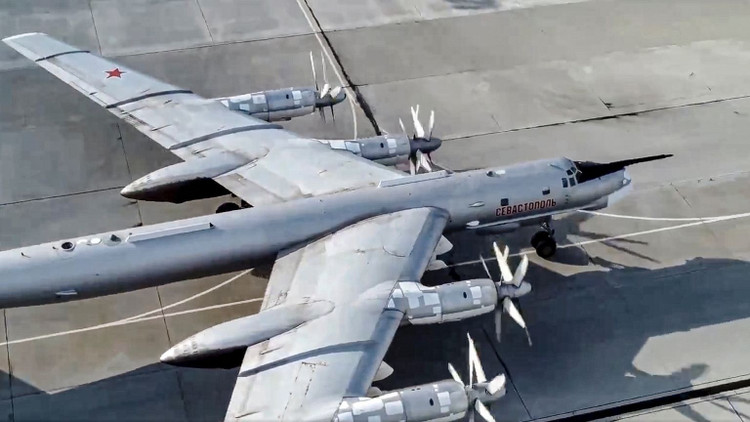
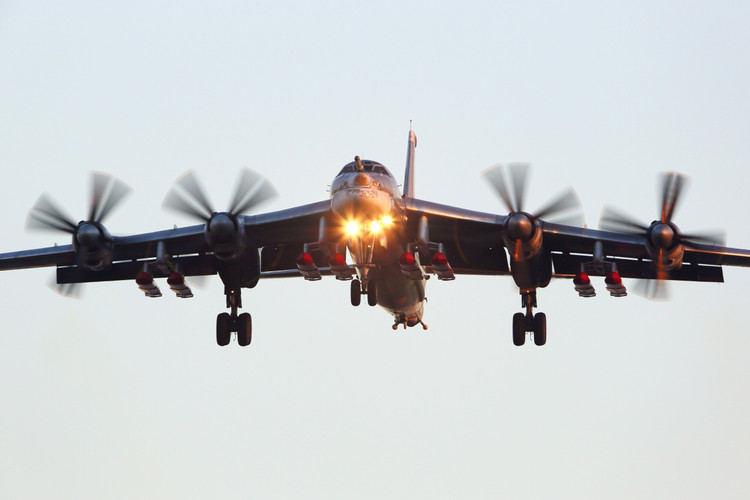
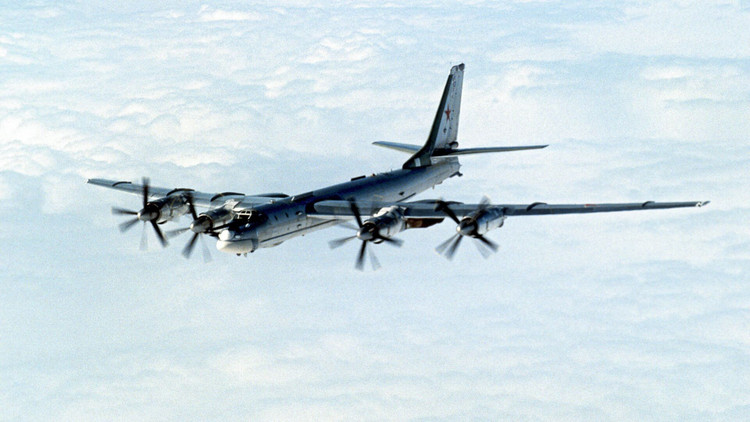
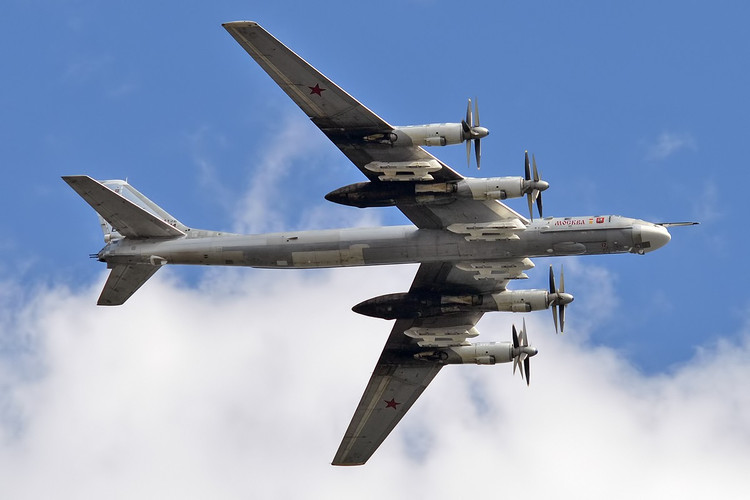
Videos released by Kyiv show numerous Russian bombers standing still as Ukrainian suicide drones rain down on them. According to the SBU, the attack neutralized 34% of Russia's strategic air force. Among the damaged Russian bombers, the Tupolev Tu-95 squadron suffered the heaviest losses. This is a long-range strategic bomber that entered service with the Soviet (later Russian) Air Force in the early 1950s. To date, the Tu-95 is the bomber with the longest service life in the world , followed closely by the B-52 Stratofortress of the US Air Force. Although it entered service in 1956, the Tu-95 did not begin participating in a real conflict until 2015 when Russia launched its counter-terrorism operation in Syria. Subsequently, in the special military operation in Ukraine, the Tu-95 played a key role in long-range missile strikes against Ukrainian territory.
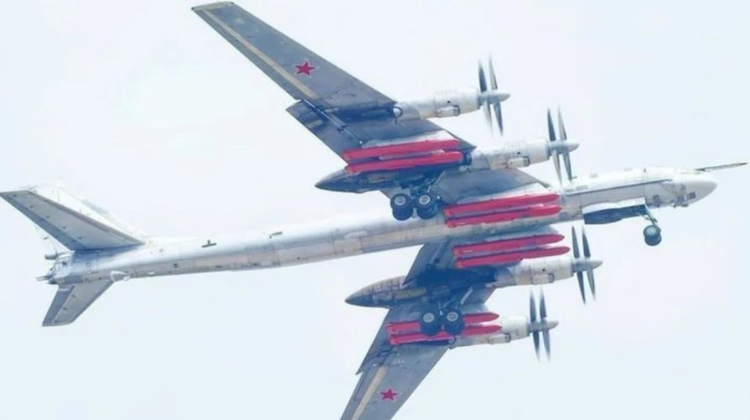
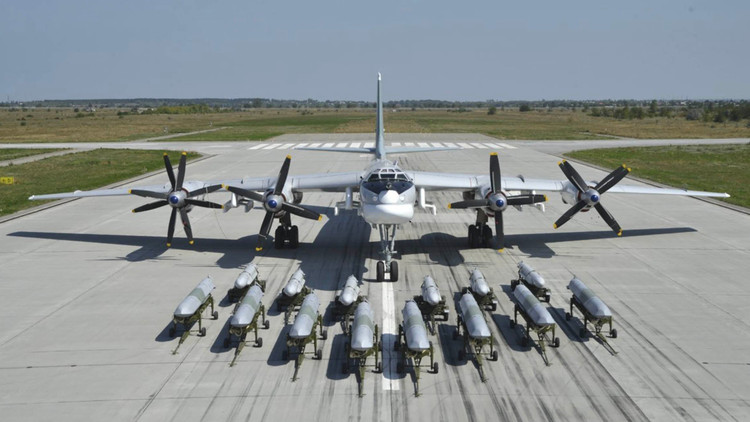
Compared to other popular bomber aircraft in the world today, the Tu-95 is the only one still using propeller engines. With four Kuznetsov NK-12MPM turboprop engines, the most powerful engines in the world today, the Tu-95 has a cruising speed of approximately 920 km/h. Over time, the Tu-95 has undergone numerous upgrades to address new threats and keep pace with technological advancements. The latest version, the Tu-95MS, continues this direction, incorporating new, advanced engines, avionics, and weapons systems, as well as a longer operational range. The Tu-95MSM can now carry a wider variety of precision-guided missiles, including the Kh-101 and Kh-102 cruise missiles, as well as some of the longest-range weapons in Russia's arsenal. The upgrade includes four additional underwing pylons for eight missiles, as well as improvements to the main weapons bay to accommodate missiles up to 7.5 meters long. These missiles are capable of striking targets at distances exceeding 5,000 km, keeping the bomber out of reach of most air defense systems and minimizing risks. The large payload capacity not only increases the Tu-95MSM's offensive power but also enhances its versatility in all situations. This also allows the Tu-95MSM to perform a variety of missions, from conventional deterrence to nuclear deterrence.
In the context of the escalating conflict in Ukraine, these missiles have proven their ability to conduct long-range attacks on high-value targets, allowing Russia to penetrate deep into enemy territory and minimize risks to its fighter aircraft. Besides their long-range capabilities, the Kh-101 missiles can be used as decoys to deceive enemy radar and missile defense systems. This countermeasure is considered a crucial tool for overcoming modern missile defense networks. Based on the above information, it can be confirmed that the Tu-95MS bomber is considered a key asset of the Russian strategic air force until the 2030s. However, as the Russian Air Force gradually introduces newer bombers, such as the Tu-160M and the upcoming PAK DA stealth bomber, the role of the Tu-95MS in the fleet may diminish.
The extent of the strategic damage caused by Ukraine's attack and destruction of a significant number of Tu-95MS aircraft is unclear, but it may have symbolic significance. This seemingly outdated aircraft is still considered one of Moscow's mainstays in its arsenal, particularly for long-range airstrikes.

 Báo Khoa học và Đời sống•02/06/2025






![[Photo] National Assembly Chairman Tran Thanh Man attends the policy seminar to promote Vietnam-Türkiye cooperation.](https://vphoto.vietnam.vn/thumb/1200x675/vietnam/resource/IMAGE/2026/04/16/1776351415367_vna-potal-chu-tich-quoc-hoi-tran-thanh-man-du-toa-dam-chinh-sach-thuc-day-hop-tac-viet-nam-tho-nhi-ky-8705791-jpg.webp)












![[Image] Bridges and roads connecting the eastern part of Ho Chi Minh City](https://vphoto.vietnam.vn/thumb/1200x675/vietnam/resource/IMAGE/2026/04/16/1776328595108_ndo_br_bh-vt5-jpg.webp)

































![[Infographic] Details of the Hanoi-Quang Ninh High-Speed Railway Project](https://vphoto.vietnam.vn/thumb/402x226/vietnam/resource/IMAGE/2026/04/16/1776338188424_anh-man-hinh-2026-04-16-luc-18-16-10.png)

![[Photo] National Assembly Chairman Tran Thanh Man meets with the Speaker of the Georgian Parliament](https://vphoto.vietnam.vn/thumb/402x226/vietnam/resource/IMAGE/2026/04/16/1776338494029_anh-man-hinh-2026-04-16-luc-18-21-21.png)




















Comment (0)