






At the most recent World Cup held in the United States, legendary Roger Milla was present, and he scored against Russia at the age of 42 years and 39 days. To this day, that remains the oldest player to score a goal in World Cup history. But putting aside the record-breaking number, while the presence of a player around 40 years old was unusual in the past, it is quite normal today.
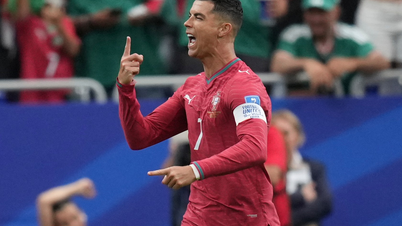
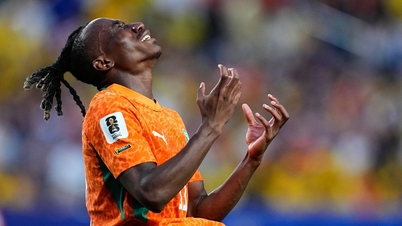
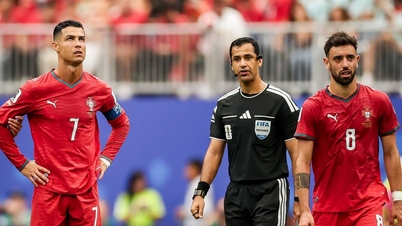
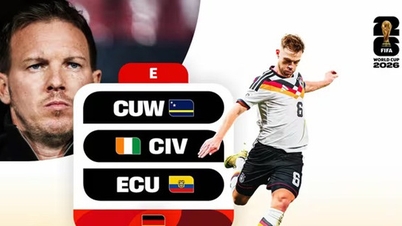
The first round of the 2026 World Cup has concluded. Ronaldo (41 years old), Messi (39 years old), Modric (41 years old), Neuer (40 years old), Ochoa (41 years old), Dzeko (40 years old), Vozinha (40 years old)... have all appeared in different ways, with different performances. This will probably be their last major tournament. These names have created a memorable and meaningful tournament.
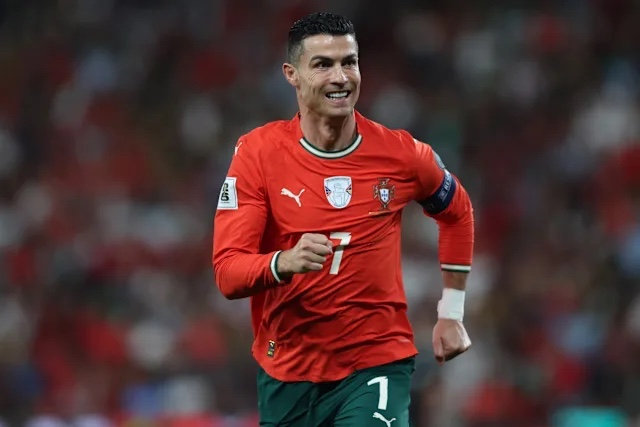 |
| Ronaldo still has excellent physical fitness. Photo: AP |
How is it possible that so many middle-aged players are appearing in the world's biggest, most intense, and highest-pressure tournament? It's because the World Cup has expanded to 48 teams. But that's not all. More than 20 players aged 38 to 40 are participating this year, suggesting that the peak playing age for players has been raised, whereas they would have long since retired around 33 to 35.



"Maintaining optimal physical condition until age 40 depends on a combination of factors. The first factor is training: Not just training more, but training better, managing volume with the support of technology, and adjusting exercises based on individual condition. A crucial factor strongly influencing training performance recently is increased strength training. It's a fundamental component for maintaining muscle mass, essential for prolonging a sporting career and protecting professional athletes from avoidable injuries and damage," writes a study by a Spanish sports science team published in El País.
Lately, players have relied heavily on the constant presence of professionals both on and off the field. They have nutritionists, analysts, and personal trainers; even their sleeping habits are carefully considered.
It's a well-known fact that some positions have longer career lifespans; five of the eight players over 40 at the 2026 World Cup are goalkeepers. The all-time record holder, Essam El Hadary (Egypt), was 45 years and 161 days old when he played at the 2018 World Cup, and he was also a goalkeeper. The rest usually play in the center of the attack, even if they previously played on the wing or central midfield, positions that demand very high physical fitness. A prime example is Ronaldo. The exception is perhaps Modric, who continues to play attacking midfield in his 40s, a position that demands extraordinary physical prowess. Beyond the fact that no one is better than them in that position, there's also the spiritual significance, the affirmation of something called class.
Milla of the 1994 World Cup had the appearance of someone with a somewhat aged look, an unsteady gait, and a smile missing a few teeth. The whole world rejoiced with Cameroon and Milla. Today, Ronaldo's teeth are still bright white, and players over 40 still stand alongside younger generations with robust physical and mental strength. They are truly examples of sacrifice and extraordinary strength that defies the laws of time!



Source: https://www.qdnd.vn/the-thao/worldcup-2026/suc-manh-phi-thuong-thach-thuc-thoi-gian-1044993


![[Photo] Opening Ceremony of the 13th National Congress of the Ho Chi Minh Communist Youth Union](https://vphoto.vietnam.vn/thumb/1200x675/vietnam/resource/IMAGE/2026/06/24/1782286753905_ndo_br_1-8510-jpg.webp)
![[Photo] General Secretary and President To Lam attends the Central Public Security Party Committee Conference](https://vphoto.vietnam.vn/thumb/1200x675/vietnam/resource/IMAGE/2026/06/24/1782302063612_a1-bnd-9302-9166-jpg.webp)
![[Photo] The 13th National Congress of the Youth Union conducts personnel work.](https://vphoto.vietnam.vn/thumb/1200x675/vietnam/resource/IMAGE/2026/06/24/1782299943080_ndo_br_1-6868-jpg.webp)