

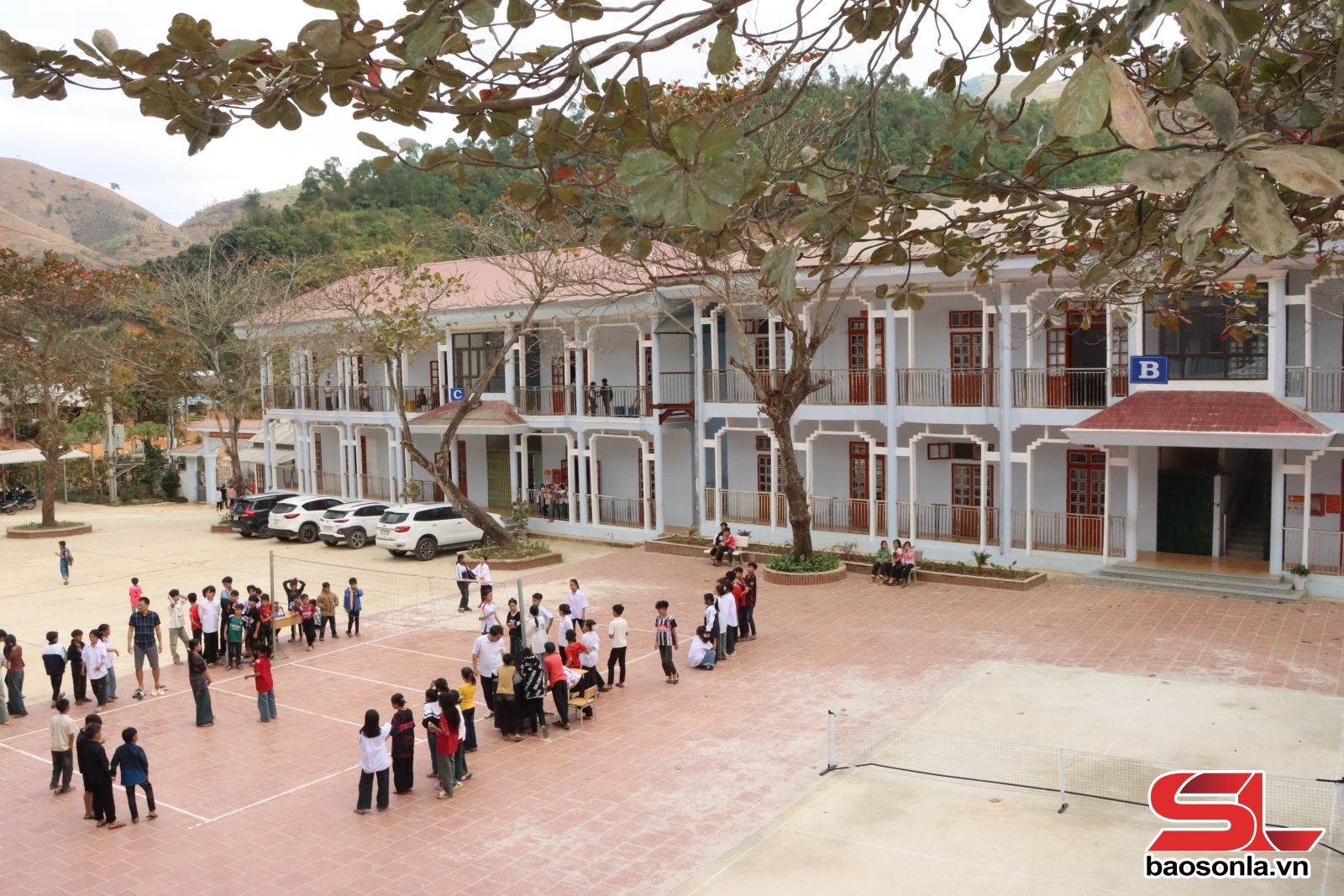
Welcoming us at the headquarters, Comrade Va A Gau, Chairman of the People's Committee of Muong Cai Commune, informed us: The commune has 14 villages, 1,218 households, and over 6,500 inhabitants. From 2024 to the present, the commune has received investment from the State for projects to resettle residents in Ta Lat village; build the Sai Khao bridge; construct a kindergarten in Muong Cai village; build a cultural house in Sai Khao village; and pave roads to Huoi Khe and Hang Lia villages with concrete. To date, 100% of villages have year-round accessible roads; 10 out of 14 villages have standard cultural houses; and 95% of households have access to clean water. The commune has achieved 13 out of 19 criteria for building new rural areas; and all 3 schools meet national standards.
Based on the potential and advantages of each village, the commune proposes appropriate economic development solutions. For example, in villages far from the commune center, people are encouraged to switch from low-economic-efficiency crops to forestry; planting ramie; growing bamboo shoots; and developing large-scale livestock farming in a concentrated manner. In lowland villages, the focus is on promoting trade and services; and planting longan and mango trees.
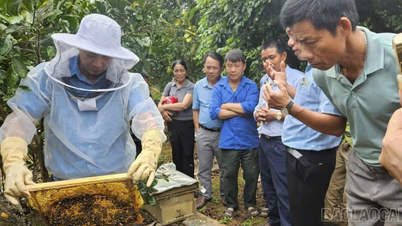
Over the past two years, the commune, in coordination with specialized agencies of the district, has organized 12 training courses to transfer techniques for fruit tree cultivation, livestock farming, and the improvement of neglected gardens for the people; implemented a pilot project on 40 hectares of "AP1 Green Ramie" cultivation for bark harvesting in Sai Khao, Huoi Hua, Huoi Muoi, Co Bay, and Na Don villages. It has also developed models for growing longan and mango in Na Ngua, Na Kham, and Phieng Pieng villages...
In addition, the commune effectively utilizes capital from national target programs to support people in developing their economy. Social organizations act as guarantors for loans to members from the Social Policy Bank, with a total outstanding loan balance of over 29 billion VND; they also cooperate with the Agricultural and Rural Development Bank to provide loans under Government Decree No. 55/ND-CP, with a total outstanding loan balance of over 10 billion VND, helping poor households access capital for economic development.
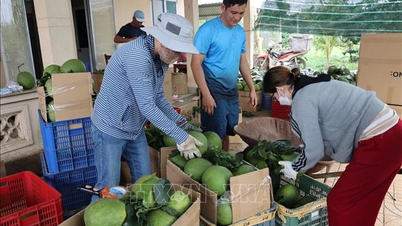
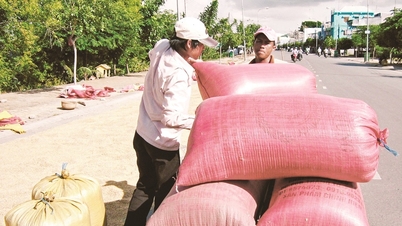
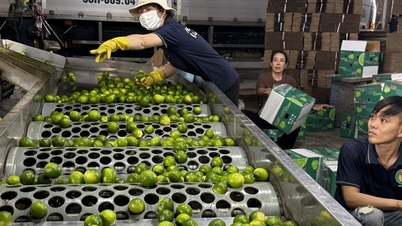
To date, the people in the commune are intensively cultivating over 400 hectares of paddy and upland rice, ensuring food security; caring for 811 hectares of hybrid corn; and tending to over 860 hectares of various fruit trees, yielding more than 900,000 tons per year. They raise nearly 3,200 buffaloes and cows; over 500 goats; 3,400 pigs; 59,300 poultry of various kinds; and 650 bee colonies. In addition, they cultivate 23 hectares of elephant grass, used as feed for large livestock kept in enclosures. Every year, the commune People's Committee focuses on preventing and controlling diseases in livestock and poultry; guiding people to carry out regular vaccinations to prevent diseases in their animals.
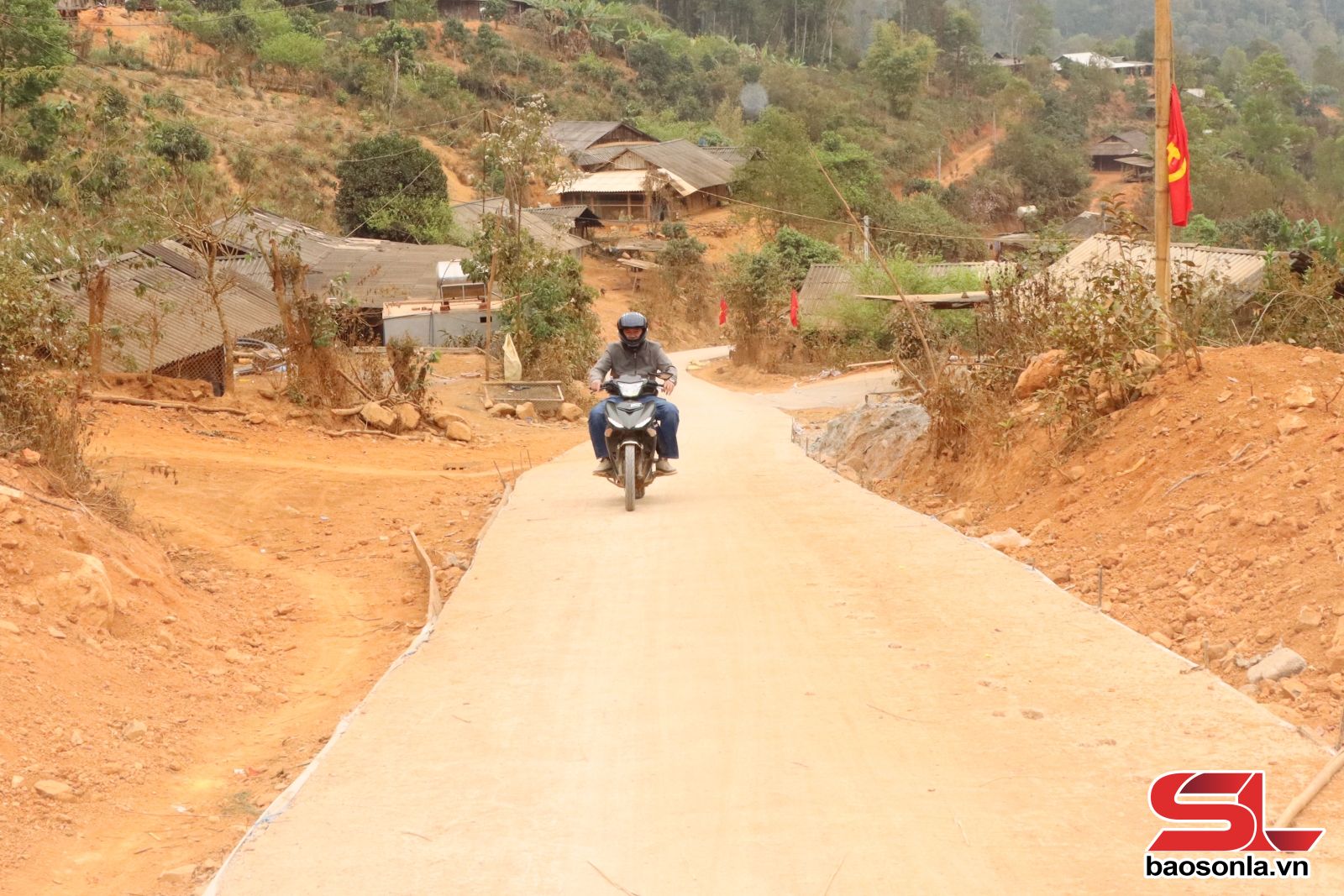
Following the clean concrete road to Na Ngua village, we visited the fruit tree farming model of Mr. Lo Van Thuong's family. The 3-hectare orchard is planted with a mix of early-ripening and main-season longan and mango trees, all currently flowering and bearing fruit. Mr. Thuong said: "During the production process, we received guidance from officials of the District Agricultural Service Center and commune officials on production techniques according to VietGAP standards, yielding 30 tons of fruit annually. In addition, the family raises 4 breeding sows, 60 fattening pigs, and 7 buffaloes and cows. After deducting expenses, we earn nearly 300 million VND in profit each year."
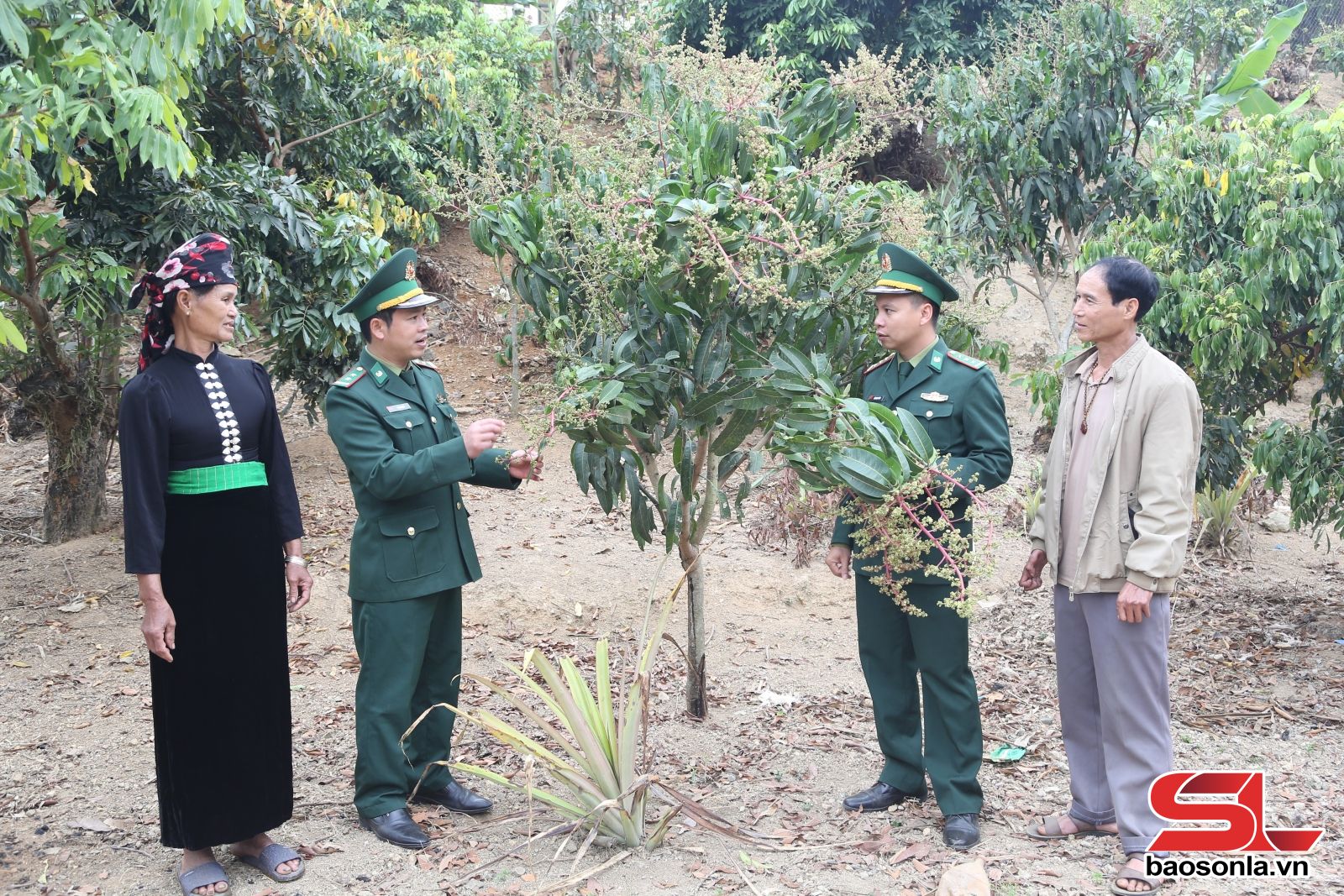
Regarding Huoi Khe village, the changes in this area are also easily noticeable. At the end of 2024, from the National Target Program for socio-economic development in ethnic minority and mountainous areas, Song Ma district invested in expanding the road into the village to 4 meters wide and over 10 kilometers long. Currently, land clearance has been completed and more than 1 kilometer of the internal village road has been paved with concrete.
Mr. Song Ba Lai, head of Huoi Khe village, excitedly said: "The village has 90 households, over 500 inhabitants, 100% of whom are Mong ethnic people. When the road to the village is completed, it will help people travel and trade goods more easily. The whole village is currently cultivating 340 hectares of corn and cassava; 5 hectares of oranges; raising 600 livestock; and taking care of more than 2,300 hectares of forest. In 2024, 12% of households in the village will still be poor."
The changes in Muong Cai are proof of the effective implementation of policies and guidelines to support people in border areas, contributing to strengthening the people's trust in the Party and building increasingly developed border communes.
Source: https://baosonla.vn/xa-hoi/suc-song-moi-muong-cai-ZPWaJYJHR.html

























































Comment (0)