

In 1995, Mr. Hung Xuan Thanh (currently the Party Secretary of Cu Te village, Cu Pui commune) and 39 H'Mong households left Hoang Su Phi district ( Ha Giang province) to find a new land with one aspiration: to come to the Central Highlands to have a life free from hunger and poverty.
Their first stop was Ea Rot village (Cu Pui commune), but they were not allowed to clear the land, so the households continued to move beyond the Ea Lang mountain range to the area bordering the Krong Bong River (belonging to Khanh hamlet, Cu Pui commune). Guided by the local people, they erected temporary shelters and cleared land for farming. Since then, along with the H'Mong ethnic community in the two villages of Ea Rot and Ea Bar, Cu Pui commune has added a new H'Mong settlement: Ea Lang village.
 |
| The land for the construction of Cu Pui Secondary School in Ea Lang village (Cu Pui commune) was purchased with money contributed by the H'Mông people. |
Mr. Thanh recalled with emotion: "Life in the early years was extremely difficult. We relied on corn and cassava. Every harvest season, we would take the corn and cassava to the market in the commune to exchange for rice and food. The soil for cassava cultivation became barren with each season, and people would abandon the land and go into the forest to clear land. Many people almost gave up. What we wished for most at that time was to not go hungry and not have to leave the land again."
Gradually, the H'Mông people in Ea Lang village learned how to grow coffee, cashew nuts, and other crops, which are the main crops of the local ethnic minorities. With the support of the People's Committee of Cu Pui commune, the barren land that used to grow cassava was improved to convert the crop structure.
In 2006, the Hmong people migrated to Ea Lang village in increasing numbers. A project to resettle free migrants was implemented, involving 500 Hmong households and dividing Ea Lang village into four hamlets (Ea Lang, Ea Uol, Cu Te, and Cu Rang). Although settled, the Hmong people were preoccupied with farming and providing for their basic needs, while their children's education was almost completely neglected. Without schools or classrooms, these children grew up in the wilderness illiterate.
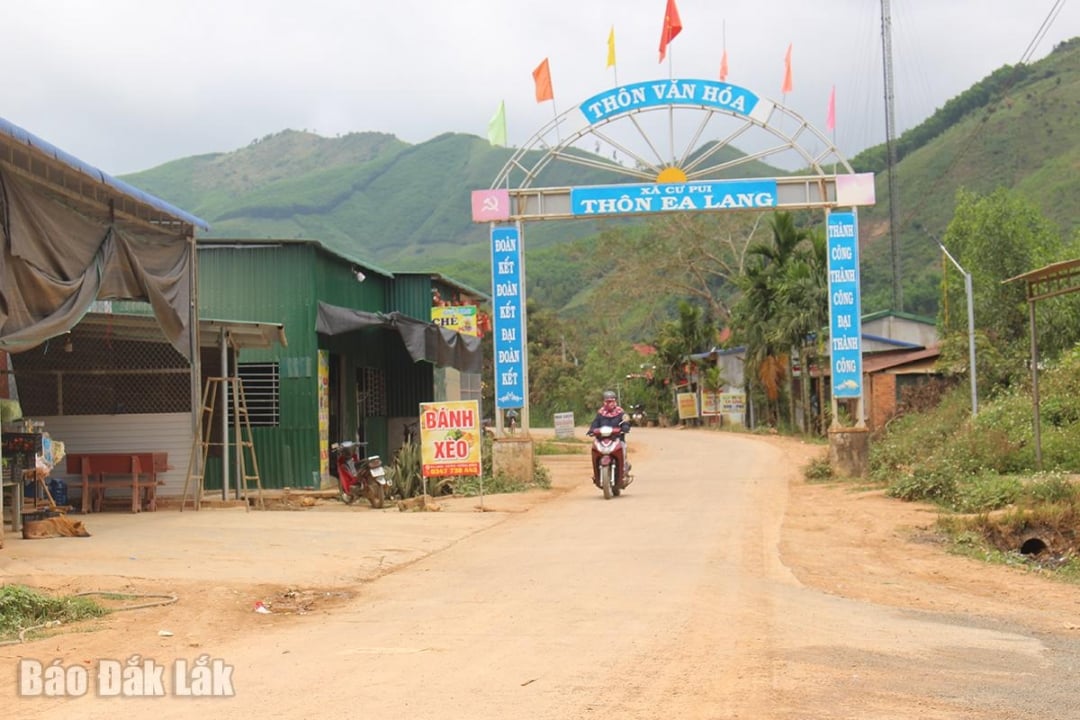 |
| Ea Lang village (Cu Pui commune, Krong Bong district) today. |
When the economy stabilized, the people paid attention to the task of "nurturing future generations," seeking ways to overcome difficulties. Accordingly, each family in the village voluntarily contributed 5,000 dong to buy land, then contributed labor to build the school, while the government assigned teachers to stay in the village. "At that time, everyone was in agreement. If we didn't have money, we contributed our labor; some even sold their cows to contribute to the fund for buying land to build the school," Mr. Thanh confided.
Thanks to collective efforts and unity, the first classrooms were built. From a few simple classrooms, today, the six villages of Ea Lang, Cu Te, Cu Rang, Ea Uol, Ea Bar, and Ea Rot have a system of well-equipped schools from preschool to junior high school. The days of children following their parents to the fields or dropping out of school are over. Many students who completed their secondary education have gone on to study at vocational schools, colleges, and universities.
Along with education , local authorities also support people in accessing loans and providing guidance on farming techniques to develop production. Many households have switched to planting acacia trees, pineapples, and coffee intercropped with fruit trees to increase their income. Concrete roads are also gradually replacing footpaths, making travel and trade more convenient.
Gone are the days of makeshift wooden houses; many families have built sturdy homes with electricity, clean water, and internet access. Children are growing up knowing nothing but farming, but also receiving education and having access to technology. Unlike their ancestors, the younger generation of H'Mông people born in Cư Pui no longer carry the memory of migration; their aspirations extend beyond simply having "food and clothing," aiming for sustainable poverty alleviation and village development.
Young couple Chau Seo Su (born in 1995) and Giang Thi Tong (born in 1998), graduates of Dak Lak Vocational School, decided to return to Cu Pui commune to start their own business. They boldly invested nearly 2 billion VND (including 500 million VND borrowed from the bank) to open a complex of food and beverage services and sports facilities in Ea Lang village. “Currently, our business is starting to make a profit, and we’ve already paid off 50% of the bank loan. We also have plans, if we have enough finances, to buy a truck and start a transportation service,” Mr. Su shared.
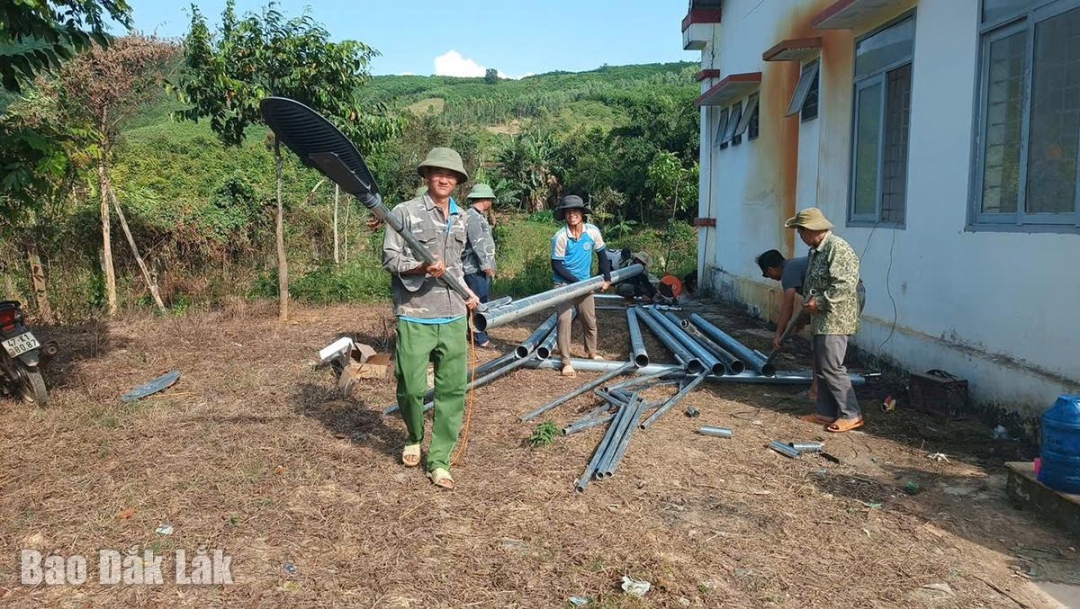 |
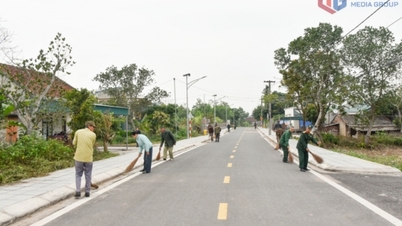
| The people of Ea Lang village are supporting the youth union members in carrying out the "Lighting up the rural roads" project on the Ea Lang - Ea Uôl inter-village road. |
Meanwhile, the family of Mr. Chang Seo Long (born in 1992, residing in Cu Te village) owns over 9 hectares of agricultural land planted with acacia and coffee trees. To change from traditional farming methods, Mr. Long purchased a tractor, a agricultural product dryer, and invested in an irrigation system for his coffee plantation… Thanks to this, in the past two years, Mr. Long's family has become one of the millionaires in the village, earning 100-200 million VND per year.
Although deeply rooted in the Central Highlands, the Hmong people's ancestral homeland in the northern mountains remains ever-present in their spiritual lives. This is reflected in stories told around the hearth, the traditional Hmong dances, the lively sounds of the Hmong flute during festivals and New Year celebrations, and even in cultural and sporting activities organized by the local government. Integrating into the community of 13 ethnic groups living together in Cu Pui, the Hmong people from the mountainous region of Ha Giang have contributed to creating a vibrant and diverse cultural tapestry in this area.
After nearly three decades of settling in this new land, the hardships of the early days have faded, but the journey of the H'Mông people in Cư Pui has not yet ended. Dreams and aspirations are still being nurtured. And so, in the history of the H'Mông community in Cư Pui commune, there will be another story of overcoming difficulties, of those who have stayed rooted in their land and villages, building a new life of prosperity and well-being.
Source: https://baodaklak.vn/xa-hoi/202503/suc-song-moi-tren-vung-dat-kho-c54148c/






























































Comment (0)