

Students who spend hours in an inactive environment with air conditioning blowing on them are more likely to get sick. What can be done to prevent this?
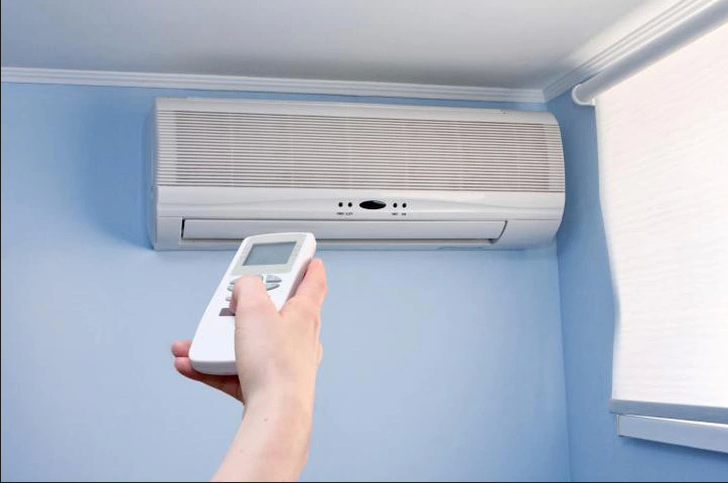
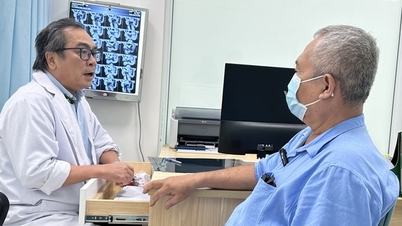
Doctor Hoang believes that the temperature in an air-conditioned room should only be set between 25°C and 28°C; setting the temperature too low is not good for children - Photo courtesy of TTO.
Submit your question. To Tuoi Tre Online , reader Vo Anh Tuan commented that with the current hot weather, air conditioners are very effective for everyone in regulating temperature. However, the downside of air conditioners in classrooms is that they can cause students to have fevers, rhinitis, and sore throats.
How to use air conditioners properly? Here are the opinions of reader Vo Anh Tuan and advice from Doctor Nguyen Huy Hoang, Vietnam-Russia Hyperbaric Oxygen Center, Ministry of National Defense .
Many students are falling ill from sitting in air-conditioned rooms?
I have a friend who is the parent of a 9th-grade student in Ho Chi Minh City. Recently, he has been complaining that the air conditioning in his son's classroom is too cold, causing his son to constantly have a fever.
Whenever I had a high fever, he took me to the hospital for a check-up; if it was a mild fever, I went to school. Every time we went for a check-up, the diagnosis was rhinitis or pharyngitis.
He said that it wasn't just his child who was experiencing this, but other children in his child's class were also affected. For more than ten days now, 2-3 students in his child's class have been absent from school each day. Some days, 4-5 students were absent. By the end of October 2024, his child's class had a total of 91 absentees, mostly concentrated towards the end of the month.
He and several other parents spoke with the homeroom teacher, requesting that the air conditioner temperature be increased. The teacher accepted the request, but the situation remained unchanged.
A few days ago, he complained that another parent had a different opinion, saying that it wasn't cold at all, so why were parents complaining and wanting the temperature raised?
He was very unhappy with that comment. He argued that parents only stay in the classroom for one or two periods during class meetings. Teachers, on the other hand, are busy moving around, talking, and lecturing, so they don't feel cold, while the students sit still in one place.
Spending hours without exercise in air-conditioned rooms makes it impossible not to get sick.
My friend's explanation makes sense.
You shouldn't sit in an air-conditioned room for more than 4 hours.
Discussing this issue, Dr. Nguyen Huy Hoang, from the Vietnam-Russia Hyperbaric Oxygen Center, Ministry of National Defense, said that sitting in air-conditioned rooms for too long or using air conditioning improperly can pose a risk to children's health.
Dr. Hoang believes that the temperature in an air-conditioned room should only be set between 25°C and 28°C; setting the temperature too low is also not good for children.
In addition, improper use of air conditioners or supplemental fans can also lead to children catching colds. For children with weak immune systems, this can affect their respiratory system, causing rhinitis and pharyngitis.
Sitting in an air-conditioned room for too long, staying indoors all day, or having the air conditioner on continuously is not good for you. You should take breaks to allow fresh air into the room.
Furthermore, children's respiratory illnesses, rhinitis, and pharyngitis are not only caused by air conditioning but also by many other factors such as exercise, diet, and seasonal changes in weather.
According to Doctor Hoang, overcrowded classrooms, poor nutrition, and lack of physical activity can all lead to a higher risk of respiratory illnesses among students.
Doctor Hoang advises that, to minimize the health effects of sitting in air-conditioned rooms, one should first avoid setting the air conditioner to a very low temperature and should not sit in an air-conditioned room for too long.
Generally, you should only sit for about 3-4 hours, then take a break to get some fresh air in the room.
In some cases where air conditioning must be used for extended periods, humidification measures such as misting systems should be implemented to prevent the air from becoming too dry. For those with respiratory problems, using saline solution drops in the eyes and nose can also help prevent respiratory illnesses.
Finally, it is necessary to strengthen the immune system by providing adequate nutrition, a varied diet, regular exercise, and sufficient rest.
A basin of water can be placed in the classroom.
That basin of water will provide moisture to the airflow, and the students' bodies will lose less water, especially their respiratory tracts. Experience shows that the rate of rhinitis decreases significantly when this is done.
That water container could be an aquarium or something similar, which would also make a good decoration for the classroom.
Additionally, to save electricity, you can install a wall-mounted fan directly below the air conditioner. When this fan is turned on, the cool air is quickly distributed to areas far from the air conditioner and will be more evenly distributed without having to lower the air conditioner's temperature.
With this approach, maintaining the temperature at 28 degrees Celsius can increase cooling efficiency without lowering the air conditioner's temperature.
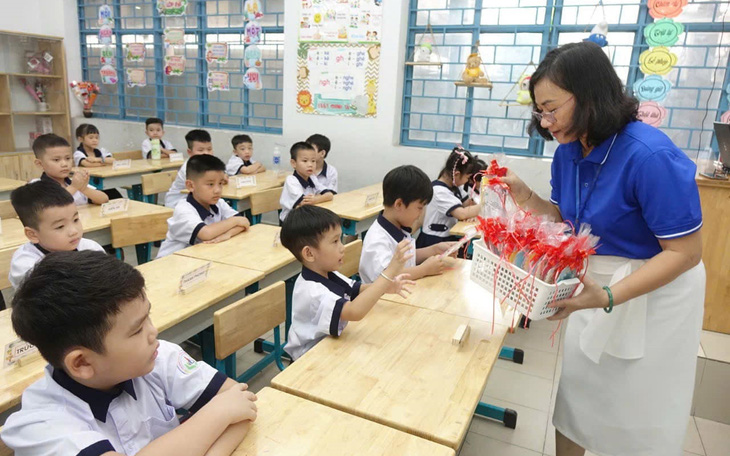 The school year begins with heated debate over air conditioning in classrooms.
Source: https://tuoitre.vn/suot-ngay-ngoi-may-lanh-de-mac-benh-gi-20241116092719471.htm
![[Image] National Assembly discusses the implementation of the socio-economic development plan.](https://vphoto.vietnam.vn/thumb/1200x675/vietnam/resource/IMAGE/2026/04/20/1776696707422_ndo_br_img-20260420-185419-jpg.webp)



![[Photo] General Secretary and President To Lam meets with National Assembly delegates from ethnic minorities.](https://vphoto.vietnam.vn/thumb/1200x675/vietnam/resource/IMAGE/2026/04/20/1776696701056_a1-bnd-8331-3342-jpg.webp)


























































































Comment (0)