

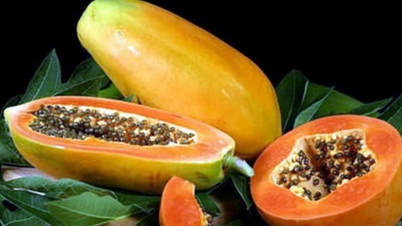
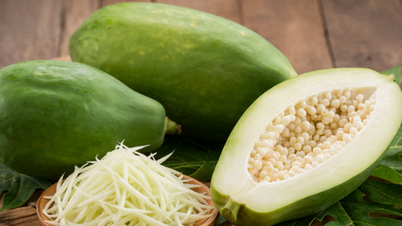
Papaya is a common food. It can be used green as a vegetable (in salads, stir-fries, stews, and soups) or eaten ripe as a fruit.
The flesh of unripe papaya contains 88% water, 11% carbohydrates, and negligible amounts of fat and protein. 100g of papaya provides 43 kcal, 75% of the daily requirement of vitamin C, 10% of the daily requirement of vitamin E, and folate. Unripe papayas secrete sap, which can cause irritation and allergic reactions in some people.
According to Traditional Medicine Practitioner Bui Dac Sang of the Hanoi Traditional Medicine Association, papaya is a delicious and easy-to-eat fruit that is very good for health and has medicinal properties. For a long time, science has researched and discovered that eating papaya has a positive effect in preventing colorectal cancer.
The fiber in papaya can "collect" disease-causing toxins in the colon and protect healthy cells from infection.
Papaya also contains nutrients such as folate, vitamin C, beta-carotene, and vitamin E, which help reduce the risk of colorectal cancer, especially by preventing free radicals from damaging DNA. Therefore, increasing your papaya consumption is also a good way to prevent colorectal cancer.
In addition to helping prevent colorectal cancer, traditional medicine practitioner Bui Dac Sang said that papaya contains lycopene, which has a positive effect on men in reducing the risk of prostate cancer.
People who regularly eat foods rich in lycopene, such as papaya, tomatoes, carrots, dark grapes, and watermelon, reduce their risk of prostate cancer by up to 82% compared to those who do not eat these foods.
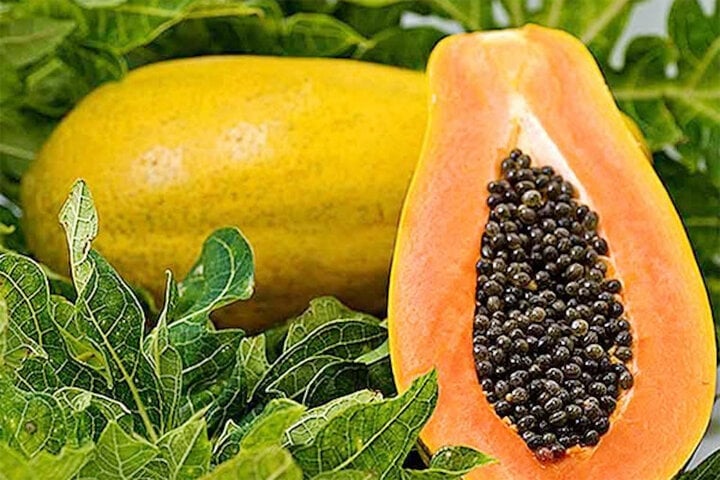
Papaya has medicinal properties.
According to the Clinical Nutrition Center of K Hospital, papaya contains the enzyme papain (which helps break down protein), which inhibits bacteria, reduces swelling after surgery, and destroys the protein membrane surrounding cancer cells, helping the body to kill cancer cells. Experimental studies have shown that lycopene in papaya inhibits the growth of breast and liver cancer cells.
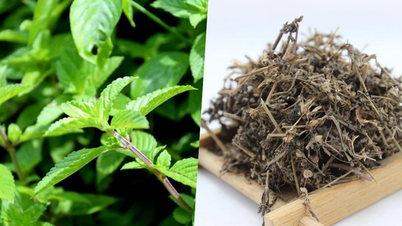
Besides the fruit, papaya leaves are also used in cooking, and many people use them as a medicinal herb. Papaya leaves contain small amounts of protein, lipids, and carbohydrates, as well as fiber, beta-carotene, several vitamins (B1, B2, B3, B6, B9, C), and minerals (calcium, magnesium, iron, phosphorus, potassium).
Papaya leaves also contain several bioactive substances that have antioxidant, antipyretic (flavonoids, comaurins), anticancer (cyanogenic glycosides), and antidiabetic (quinones) effects.
Papaya leaves are being studied for their effects and properties on disease. One study using extracts from dried papaya leaves showed that they inhibit the growth of certain tumor cells, enhance cytotoxicity against cancer cells, and modulate genes related to anti-tumor activity.
Papaya leaves offer benefits, but also pose potential risks; furthermore, drug-herb interactions may occur between papaya leaves and certain medications used to treat diabetes and some antibiotics.
Experts advise against using natural papaya leaf juice for medical treatment without consulting a healthcare professional.
Source

![[Image] Shipbuilders exposed to steel and record-breaking heat.](https://vphoto.vietnam.vn/thumb/1200x675/vietnam/resource/IMAGE/2026/06/04/1780545781745_ndo_br_img-5402-4683-jpg.webp)

























































![[Video] Sunset at Lap An Lagoon – Where the sun sets over the fishing nets](https://vphoto.vietnam.vn/thumb/1200x675/vietnam/resource/IMAGE/2026/05/31/1780192137701_beach-landscape-sea-water-nature-grass-745871-pxhere-com.jpeg)






































Comment (0)