If pho represents a sophisticated and labor-intensive culinary creation, then banh beo is a testament to the Vietnamese ingenuity in transforming the most basic ingredient: rice. These pristine white, small cakes, nestled in small bowls shaped like jackfruit seeds, along with the vibrant orange-red color of dried shrimp, have captivated the taste buds of generations. However, behind the humble name "banh beo" lies a fascinating sharing of knowledge and stories about linguistic thinking, culinary science , and cultural shifts.
Why is it called bánh bèo?
To answer the question of why it's called "bánh bèo," we need to go back in time and look at the naming conventions of rice- farming communities . Ancient Vietnamese people didn't use abstract, flowery words to name dishes, but rather relied on sound (bánh xèo), cooking methods (bánh cuốn, bánh nướng), or the physical shape of the dish.
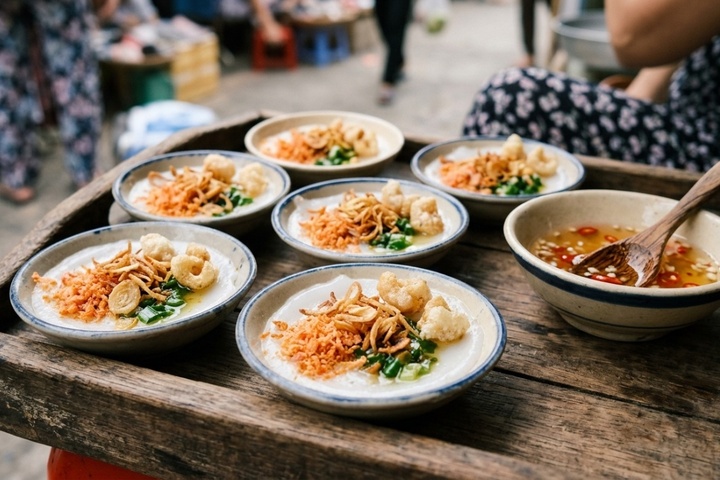
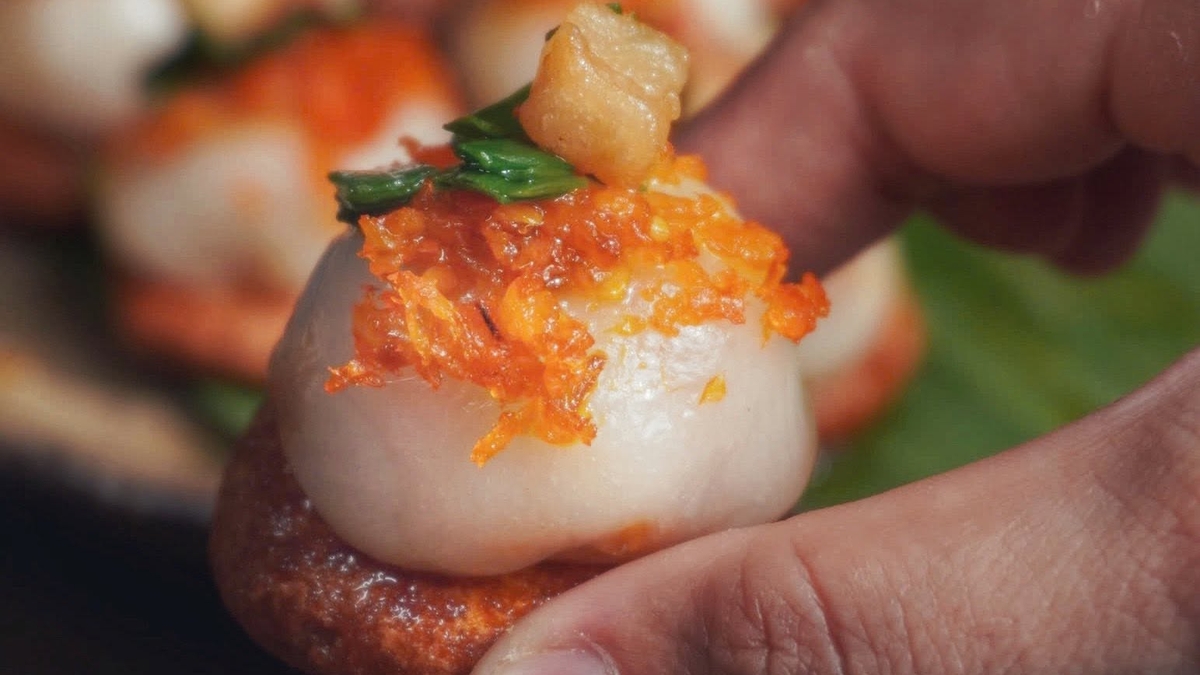
Banh beo is a familiar Vietnamese snack. (Photo: Provided)
Bánh bèo belongs to the third category. When the rice flour mixture is poured into small, shallow cups and steamed, the resulting product is a thin sheet of dough with slightly upturned edges, a gradually thinning border, and a central indentation often called a coin-shaped swirl.
Its round, delicate shape and concave center closely resemble the water hyacinth leaves floating on ponds, lakes, and rivers in rural areas. This visual resemblance led the locals to use the word "beo" (water hyacinth) to name the cake.
Besides its shape, from a socio-cultural perspective, some argue that the word "bèo" in Vietnamese also implies cheapness and commonness, as in the phrase "cheap as bèo." Initially, it was a snack for the poor working class, made from leftover, scarce ingredients and extremely cheap. Therefore, the name "bánh bèo" accurately describes both its physical form and reflects the economic segment of the dish in history.
A properly made bánh bèo (steamed rice cake) must have a central indentation (or swirl) to hold the shrimp, meat, and scallion oil filling. Many people fail when making bánh bèo at home because the cakes end up flat. From a food science perspective, creating this "leaf-like" shape is an excellent application of thermodynamic principles.
The main ingredients of the cake are rice flour mixed with a small proportion of tapioca starch to increase elasticity, along with water. When the bowls of liquid batter are placed in the steamer, the high temperature of the steam affects the surface of the bowls. Because the ceramic/porcelain bowls conduct heat quickly, the batter at the outermost edges will immediately undergo starch gelatinization and solidify first.
At this stage, the batter in the center is still liquid. Under the pressure and kinetic energy of the boiling steam churning in the sealed pot, the liquid batter in the center will be violently swirled and pushed to the sides. When the entire bowl of batter is fully cooked, the coagulation process ends, leaving a perfect, deep indentation in the center. This skillful application of heat energy and steam pressure demonstrates the extremely sophisticated culinary thinking of the ancients.
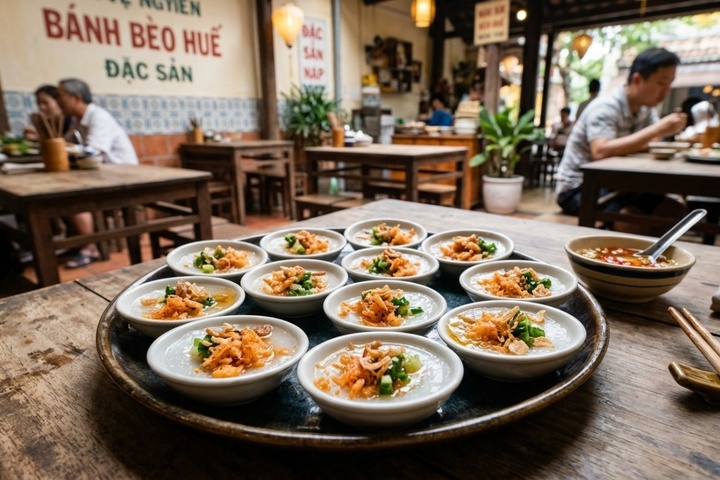
Banh beo is typically made from steamed rice flour, served with a dipping sauce and a variety of fillings that vary depending on the local culinary culture. (Photo: IG)
Banh beo varies from place to place.
Although popular nationwide, the birthplace of bánh bèo is considered to be Hue. In the ancient capital, bánh bèo was both a street food sold by hawkers and was elevated to a royal dish served to the emperors of the Nguyen dynasty. Hue bánh bèo is very small, poured into small bowls the size of a jackfruit seed, with a thin layer of batter, topped with dried shrimp, crispy pork cracklings, and served with a sweet fish sauce made from shrimp shells.
However, following migrations southward, bánh bèo has transformed to adapt to the new ecological environment. In Quang Nam, bánh bèo has become larger and thicker, with a filling of minced meat, shrimp, and wood ear mushrooms cooked into a thick paste, reflecting the hearty and flavorful eating habits of the people of Quang Nam.
When traveling south to the Mekong Delta, thanks to the fertile soil of the coconut-growing region, banh beo takes on a completely new look. Southerners add rich coconut milk to both the batter and the accompanying sauce. Besides savory fillings (minced meat, dried shrimp), Southern banh beo also has a sweet version with rice flour mixed with pandan leaves, served with mashed mung beans and thick coconut milk.



An interesting linguistic point is that in the last decade or so, the word "bánh bèo" has transcended culinary boundaries to become a popular slang term among Vietnamese youth. Based on the physical characteristics of the cake: pure white, soft, delicate, and easily crumbled, young people have used the word "bánh bèo" to refer to girls who are coquettish, feminine, like to wear pink, ruffled clothes, and have a delicate, vulnerable personality that needs protection.
Initially, the word carried a slightly sarcastic connotation of uselessness, but over time, it has been neutralized and become an adjective describing a very ordinary personal style for women, "girly style".
According to VTC News
Source: https://baoangiang.com.vn/tai-sao-goi-la-banh-beo-a490937.html



![[Photo] Strengthening character and expertise: Intense training for artillery soldiers.](https://vphoto.vietnam.vn/thumb/1200x675/vietnam/resource/IMAGE/2026/06/30/1782815602541_lu-368-1875-4571-jpg.webp)